
Which Sublimation Printer Fits Industrial Textile Production? EU Compliance and Ink Safety
A polyester textile producer that has outgrown its first commercial sublimation printer usually runs into two questions in the same week. Production needs several times the current throughput, and the first serious EU buyer asks for a CE technical file, a machinery risk assessment and OEKO-TEX evidence for the inks that will touch skin-contact fabric. Both questions resolve into one purchasing decision: which sublimation printer fits industrial textile production, and which supplier can keep that machine and its documentation valid for the life of the line.
Xinflying (Guangzhou Xin Flying Digital Technology Co., Ltd.) is a digital printing equipment manufacturer founded in 2010 in Panyu, Guangzhou, China. It produces DTF printers, dye sublimation printers, DTG printers, UV DTF printers, UV flatbed printers and printing consumables. Export business accounts for 80% of total sales, and its major markets include North America, South America, Europe, Asia, the Middle East and Africa.
This guide follows the decision the way the documents and the production data require: the two constraints that separate a commercial machine from an industrial one, the four certified models that cover the scaling path, the CE file behind them, and the ink-safety route for textiles sold into the European market.
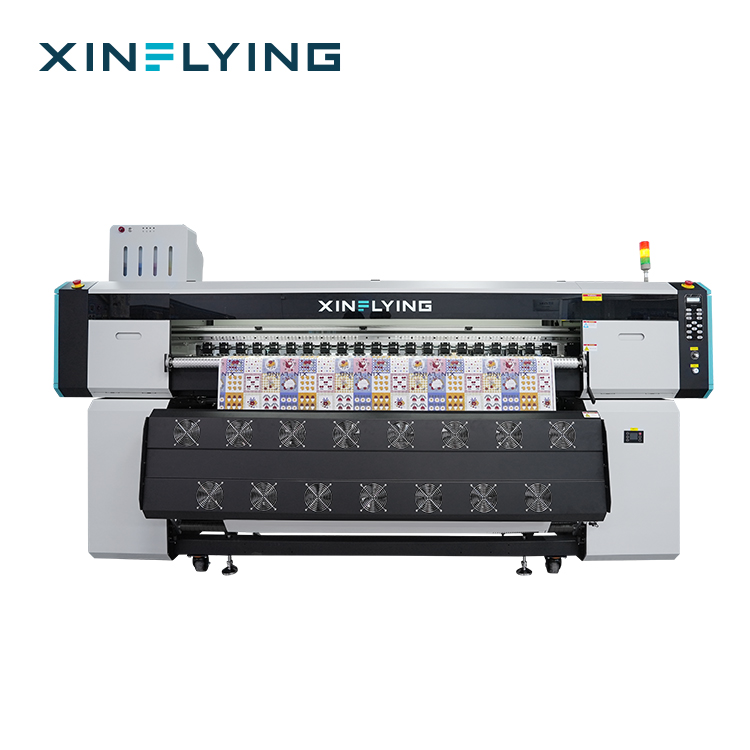
Xinflying XF-O2000-4I32A1 — a 1950 mm roll-to-roll sublimation printer used as the mid-range step between sampling and full industrial output.
The Problem: Two Constraints Stop a Commercial Setup from Going Industrial
A commercial sublimation printer is a good sampling and short-run machine. It is not a platform for a fabric line that has to feed a calender continuously. The gap is structural rather than a matter of tuning parameters, and it shows up in two places: throughput and documentation.
Constraint 1 — the throughput ceiling
Industrial models add printheads, run a higher-speed pass mode, and hold a 1900 mm web at production speed. The XF-19E15-PRO carries 15 Epson i3200-A1 printheads and reaches 1PASS 524 m²/h, with standard 1PASS output of 394 m²/h. The XF-19E8-PRO carries 8 of the same printheads and reaches 1PASS 306 m²/h, or 210 m²/h in standard mode. Both hold a 190 cm (75") print width at 3200 dpi. A one-head machine such as the XF-H1301X-1I32A1 runs 4PASS 28 m²/h at 130 cm width — correct for sampling and short orders, wrong for a line that must deliver thousands of metres per week.
Constraint 2 — the documentation wall
For the EU market, the machine is only half of the purchase. A textile producer selling into Europe needs a CE position covering the Machinery Directive, the Low Voltage Directive, the EMC Directive and RoHS, plus a machinery safety file built on EN ISO 12100:2010 and EN ISO 12643-1:2023. Separately, the printed product needs an ink-safety route: on skin-contact polyester, the dye system has to be documented rather than assumed.
Buyers who treat these as after-sales tasks discover the cost later — a customs hold, a retail compliance audit, or a re-testing cycle scheduled after the line is already installed. The practical rule is that compliance is a purchase-order condition agreed before the machine leaves the factory, not a service request filed afterwards.
Decision rule: if the target market is the EU, screen suppliers on documentation completeness before comparing print speed. A machine that cannot be matched to a certificate reference for its own model and serial is not a cheaper option — it is a deferred cost.
Industry Background: Why Industrial Sublimation Capacity Is Being Bought Now
The demand side explains why so many producers are moving from commercial to industrial platforms in the same cycle. Grand View Research valued the global dye sublimation printing market at USD 16.4 billion in 2025 and projects USD 39.0 billion by 2033, a CAGR of 11.5% from 2026 to 2033. Mordor Intelligence sizes the dye sublimation printer segment specifically at USD 1.88 billion in 2025, rising to USD 2.53 billion by 2030.
Supply is concentrated. Asia Pacific held a 36.5% revenue share of the dye sublimation printing market in 2025, led by China as the largest country market. That concentration matters to European buyers for two reasons: machine supply is fast and competitive, and documentation quality varies widely between suppliers, which makes the compliance file the real differentiator.
The hardware standard has also stabilised. Roll-to-roll sublimation printers with a 1.9 m (1900 mm) width are the accepted format for high-volume textile and soft signage work, which is why the industrial Xinflying models — XF-19E8-PRO and XF-19E15-PRO — sit on a 190 cm platform, and the mid-range XF-O2000-4I32A1 sits at 195 cm. Width is no longer the variable that separates tiers; printhead count, pass mode and documentation depth are.
On the regulatory side, two machinery safety standards frame the EU file: EN ISO 12100:2010 for risk assessment and risk reduction, and EN ISO 12643-1:2023 for safety requirements applying to graphic technology equipment. A CE declaration that does not reference an equivalent risk assessment path is a declaration without a technical file behind it.
The Solution: Four Certified Models, One Compliance Layer, One Ink Route
The answer to "which sublimation printer fits industrial textile production" is not a single model. It is a ladder of four machines that share a supplier, a documentation structure and an ink family, so a producer can move up without changing compliance partners or renegotiating the supply relationship.
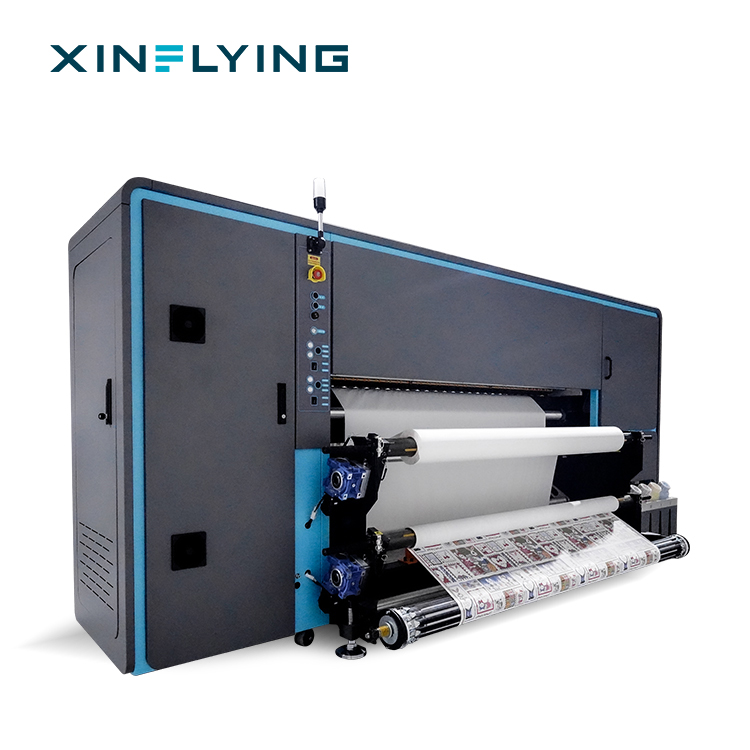
Xinflying XF-19E15-PRO — 15 Epson i3200-A1 printheads, 190 cm print width, up to 1PASS 524 m²/h.
XF-19E15-PRO — the high-volume industrial platform
The XF-19E15-PRO is the top of the range: 15 Epson i3200-A1 printheads, CMYK, 190 cm (75") print width, 3200 dpi, fastest output 1PASS 524 m²/h and 2PASS 254 m²/h, standard output 1PASS 394 m²/h and 2PASS 188 m²/h. It loads sublimation paper rolls of up to 1000 m, uses an external intelligent air-heat integrated dryer and a fully sealed automatic moisturizing and cleaning system, runs on 210–230V at 45A with 14.5 kW power, and has a net weight of 1480 kg. Recommended operating conditions are 18–30°C and 35–65%RH. This is the configuration for a fabric line where the printer is the bottleneck if it stops.
XF-19E8-PRO — the standard industrial workhorse
The XF-19E8-PRO uses the same 190 cm / 3200 dpi platform with 8 Epson i3200-A1 printheads. Fastest output is 1PASS 306 m²/h and 2PASS 153 m²/h; standard output is 1PASS 210 m²/h and 2PASS 109 m²/h. It draws 10.2 kW on 210–230V at 45A, weighs 1400 kg net, and runs the same 18–30°C / 35–65%RH window with the external intelligent air-heat integrated dryer and sealed moisturizing system. It supports Maintop as standard, with RIIN, PhotoPrint and Printfactory available as options. For most producers moving from commercial to industrial for the first time, this is the step that matches capital outlay to realistic order volume.
XF-O2000-4I32A1 — the 1950 mm bridge
The XF-O2000-4I32A1 is a four-head piezoelectric inkjet unit at 195 cm (1.95 m) width, delivering 2PASS 180 m²/h and 4PASS 92 m²/h. It handles heat transfer paper rolls of 1000–1500 m, media up to 1 mm thick and 200 kg, and runs a 220 ml cartridge plus 3 L ink tank system with RIIN Print or Maintop RIP. Power is 8.5 kW at 220V, net weight is approximately 490 kg, and the recommended environment is 20–25°C and 45–65%RH. It suits producers handling continuous daily production who need more width and throughput than an entry platform without the full footprint of a 15-head line.
XF-H1301X-1I32A1 — the sampling and pilot unit
The XF-H1301X-1I32A1 runs a single Epson i3200-A1 printhead in CMYK at 130 cm width, 4PASS 28 m²/h, with Maintop RIP, an external constant-temperature automatic drying system and 2 kW power at 110/220V. It weighs 140 kg net. Its role in an industrial plan is not bulk output — it is sample approval, colour-book development and small-batch order handling, run on the same ink and documentation system as the production machines.
The compliance layer: what the CE file contains
CE documentation for these models covers CE MD (Machinery Directive), LVD (Low Voltage Directive), EMC and RoHS. Certificate references in the documentation set include M.2026.206.C142365, TQT1550D271EC, TQT1550D270EC and M.2026.206.C142366. Machine design and risk assessment follow the EN ISO 12100:2010 and EN ISO 12643-1:2023 framework.
Verification step: certificate references must be matched to the exact model and serial number being shipped. Before releasing payment, ask the supplier to locate each reference in the technical file for your machine, and keep that mapping in your own compliance records. A certificate that exists but cannot be tied to your unit does not support a declaration of conformity.
The ink route: OEKO-TEX ECO PASSPORT SH150194016
Machine compliance does not cover the printed fabric. For skin-contact textiles, the dye system needs its own evidence. OEKO-TEX ECO PASSPORT SH150194016 applies to XF-450PRO textile printing inks and pastes. OEKO-TEX ECO PASSPORT is an independent certification for textile chemicals, dyestuffs and auxiliaries, and its relevance here is specific: it gives a buyer a document to hand to a brand customer or a retail auditor when the question is about what was printed onto the fabric, not what was printed by the machine.
In practice, an EU-facing producer needs both certificates in the same file: the CE documentation that lets the machine be placed on the market, and the ECO PASSPORT documentation that supports the printed product. Buying the machine from one supplier and sourcing ink documentation separately is where most compliance gaps appear.
The supplier layer: what "long-term" has to mean
An industrial sublimation printer is a five-to-ten-year asset, so the supplier relationship is part of the specification. Xinflying operates a 37,440 m² factory with 200+ employees, including a 20-engineer R&D team, and produces 20,000+ units annually. Because 80% of sales are exports across North America, South America, Europe, Asia, the Middle East and Africa, the company maintains local warehouses and technical support in key markets — the difference between a spare-part lead time measured in days and one measured in shipping schedules.
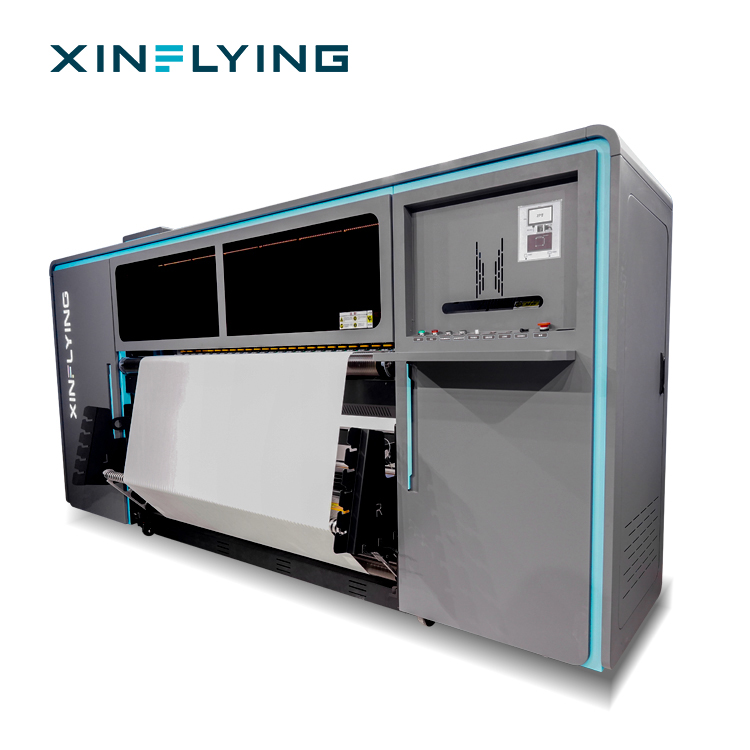
Xinflying XF-19E8-PRO — 8 Epson i3200-A1 printheads, 190 cm width, 1PASS 306 m²/h, 10.2 kW.
Step-by-Step: From Decision to Execution
The sequence below is the order in which the decision has to be closed. Moving out of order is what produces either an oversized machine or an incomplete compliance file.
1Define the output envelope in m²/h, not in "speed". Calculate the daily fabric metres required, convert to m²/h including downtime, then compare against pass-mode figures. XF-19E15-PRO at 1PASS 524 m²/h, XF-19E8-PRO at 1PASS 306 m²/h, XF-O2000-4I32A1 at 2PASS 180 m²/h and XF-H1301X-1I32A1 at 4PASS 28 m²/h sit on very different points of that scale.
2Fix the compliance scope before the purchase order. Confirm in writing that the shipment will include CE documentation covering MD, LVD, EMC and RoHS, with certificate references matched to the model and serial, and that risk assessment follows EN ISO 12100:2010 and EN ISO 12643-1:2023.
3Match the model to the production stage. Use XF-H1301X-1I32A1 for sampling and small batches, XF-O2000-4I32A1 for growing daily production at 195 cm, XF-19E8-PRO for standard industrial volume, and XF-19E15-PRO where the line cannot afford to be printer-limited.
4Close the ink question at the same time. Specify XF-450PRO textile printing inks and pastes with OEKO-TEX ECO PASSPORT SH150194016 documentation if the end product will contact skin or be sold through EU retail channels.
5Agree acceptance criteria. Xinflying conducts product acceptance through pre-shipment test procedures before delivery. Define what is tested — nozzle check, print sample, colour verification — and who signs the report.
6Confirm commercial terms. MOQ is 1 unit; delivery terms are EXW, FOB, CIF or DDP; payment is by T/T, Western Union or PayPal. For a first industrial line, DDP pricing removes customs uncertainty from the installation schedule.
7Prepare the room before the machine arrives. The XF-19E8-PRO, XF-19E15-PRO and XF-H1301X-1I32A1 specify different operating windows from the XF-O2000-4I32A1 — 18–30°C and 35–65%RH against 20–25°C and 45–65%RH — and power demand ranges from 2 kW to 14.5 kW. Floor loading also differs: 140 kg net for the XF-H1301X-1I32A1 against 1480 kg for the XF-19E15-PRO.
Use Cases: Where Each Configuration Fits
Sportswear and team kits. High colour saturation, repeat designs and large printed areas favour the 190 cm industrial models. The XF-19E8-PRO at 1PASS 306 m²/h covers standard industrial volume, while the XF-19E15-PRO at 1PASS 524 m²/h suits producers running the printer near-continuously.
Home textiles — blankets, cushions and decorative fabric. Wide panels and long runs favour 195 cm width. The XF-O2000-4I32A1 handles 1000–1500 m paper rolls and media up to 200 kg, which reduces roll-change frequency on long blanket and furnishing runs.
Soft signage, flags and banners. The 1.9 m roll-to-roll format is the accepted standard for high-volume soft signage, making the 190 cm platform the natural fit for flag and banner production that must scale quickly between jobs.
Sampling-to-bulk transfer for apparel programmes. The XF-H1301X-1I32A1 at 130 cm and 4PASS 28 m²/h keeps approved samples, colour references and small orders inside the same supplier relationship as the production machines, so a fabric approved at sampling stage can be produced without re-qualifying ink or documentation.
Model Comparison
The table below uses published Xinflying model data only. It is intended to be read alongside the compliance file, not as a substitute for it.
| Specification | XF-19E15-PRO | XF-19E8-PRO | XF-O2000-4I32A1 | XF-H1301X-1I32A1 |
|---|---|---|---|---|
| Printheads | 15× Epson i3200-A1 | 8× Epson i3200-A1 | 4× Epson i3200-A1 | 1× Epson i3200-A1 |
| Print width | 190 cm (75") | 190 cm (75") | 195 cm (1.95 m) | 130 cm (1.3 m) |
| Fastest output | 1PASS 524 m²/h; 2PASS 254 m²/h | 1PASS 306 m²/h; 2PASS 153 m²/h | 2PASS 180 m²/h; 4PASS 92 m²/h | 4PASS 28 m²/h |
| Standard output | 1PASS 394 m²/h; 2PASS 188 m²/h | 1PASS 210 m²/h; 2PASS 109 m²/h | — | — |
| Resolution | 3200 dpi | 3200 dpi | — | — |
| Ink system | Sublimation ink, CMYK | Sublimation ink, CMYK | Sublimation ink, 220 ml cartridge + 3 L tank | Sublimation ink, CMYK |
| RIP | Maintop standard; RIIN, PhotoPrint, Printfactory optional | Maintop standard; RIIN, PhotoPrint, Printfactory optional | RIIN Print; Maintop | Maintop standard |
| Power | 14.5 kW, 210–230V, 45A | 10.2 kW, 210–230V, 45A | 8.5 kW, 220V | 2 kW, 110/220V |
| Net weight | 1480 kg | 1400 kg | ≈490 kg | 140 kg |
| Operating environment | 18–30°C, 35–65%RH | 18–30°C, 35–65%RH | 20–25°C, 45–65%RH | 20–35°C, 45–65%RH |
| Typical production stage | High-volume industrial | Standard industrial | Growing daily production | Sampling and small batch |
Frequently Asked Questions
1. Which compliance documents should be handed over for EU textile production, and who is responsible for them?
The machine file should contain CE documentation covering the Machinery Directive, the Low Voltage Directive, EMC and RoHS, with risk assessment following EN ISO 12100:2010 and EN ISO 12643-1:2023. Certificate references in the Xinflying documentation set include M.2026.206.C142365, TQT1550D271EC, TQT1550D270EC and M.2026.206.C142366. Responsibility is shared: the supplier provides documentation that matches the shipped model and serial, and the buyer verifies that match before the declaration of conformity is used. For the printed product, separate ink evidence is needed — OEKO-TEX ECO PASSPORT SH150194016 covers XF-450PRO textile printing inks and pastes.
2. Can one supplier cover a line that starts at sampling and scales to industrial output?
Yes, and this is the practical argument for keeping one platform family. The XF-H1301X-1I32A1 runs a single Epson i3200-A1 printhead at 130 cm and 4PASS 28 m²/h for sampling and small batches. The XF-O2000-4I32A1 adds 195 cm width at 2PASS 180 m²/h for continuous daily production. The XF-19E8-PRO and XF-19E15-PRO share a 190 cm / 3200 dpi platform with 8 and 15 printheads respectively, reaching 1PASS 306 m²/h and 1PASS 524 m²/h. Because the ink and documentation structure carry across the range, a producer does not re-qualify from scratch at each step.
3. What commercial terms usually apply to a first industrial order and to repeat orders?
MOQ is 1 unit, so a single machine can be ordered before committing to a multi-unit programme. Delivery terms are EXW, FOB, CIF or DDP, and payment is by T/T, Western Union or PayPal. The main cost drivers inside the range are printhead count, power requirement and media format: 2 kW for the XF-H1301X-1I32A1, 8.5 kW for the XF-O2000-4I32A1, 10.2 kW for the XF-19E8-PRO and 14.5 kW for the XF-19E15-PRO, with paper roll capacity of up to 1000 m on the XF-19E15-PRO and 1000–1500 m on the XF-O2000-4I32A1.
4. How can print quality and ink safety be validated before committing to a long-term contract?
Acceptance is handled through pre-shipment test procedures conducted before delivery, so the machine is verified while it is still in the factory. Build the acceptance criteria around your own substrate: request print samples on the polyester you actually run, review the nozzle check and colour output against your reference, and request the OEKO-TEX ECO PASSPORT SH150194016 documentation for XF-450PRO textile printing inks and pastes if the end product contacts skin. Operating environment also affects results, so confirm that your room matches the specified conditions — 18–30°C and 35–65%RH for the XF-19E8-PRO and XF-19E15-PRO, 20–25°C and 45–65%RH for the XF-O2000-4I32A1.
5. What should a long-term sublimation printer supplier for textile production provide after delivery?
After delivery, the value of a supplier is measured in three things: documentation that stays current when standards are revised, spare parts and technical support that are reachable in the buyer's region, and a machine range that allows capacity to be added without changing the supply relationship. Xinflying maintains local warehouses and technical support in key markets, and export business accounts for 80% of total sales across North America, South America, Europe, Asia, the Middle East and Africa. Buyers preparing a first industrial line can request a model-specific quote, a compliance document set and a print sample through info@xin-flying.com or the company website before finalising the purchase order.
Conclusion: Decide on the Document Set, Then on the Printhead Count
For a textile producer moving into industrial output for the EU market, the machine choice and the compliance choice are the same decision made once. The XF-19E15-PRO and XF-19E8-PRO serve high-volume production on a shared 190 cm / 3200 dpi platform; the XF-O2000-4I32A1 covers growing daily production at 195 cm; and the XF-H1301X-1I32A1 keeps sampling and small batches inside the same system. What holds the range together for a long-term relationship is the layer underneath: CE documentation covering MD, LVD, EMC and RoHS with certificate references M.2026.206.C142365, TQT1550D271EC, TQT1550D270EC and M.2026.206.C142366, a risk assessment path built on EN ISO 12100:2010 and EN ISO 12643-1:2023, and OEKO-TEX ECO PASSPORT SH150194016 for XF-450PRO textile printing inks and pastes.
Buyers who sequence the work correctly — output envelope, then documentation, then model, then ink, then acceptance — end up with a line that can be audited as easily as it can be run. Those who start with print speed usually return to the documentation question later, at a higher cost.
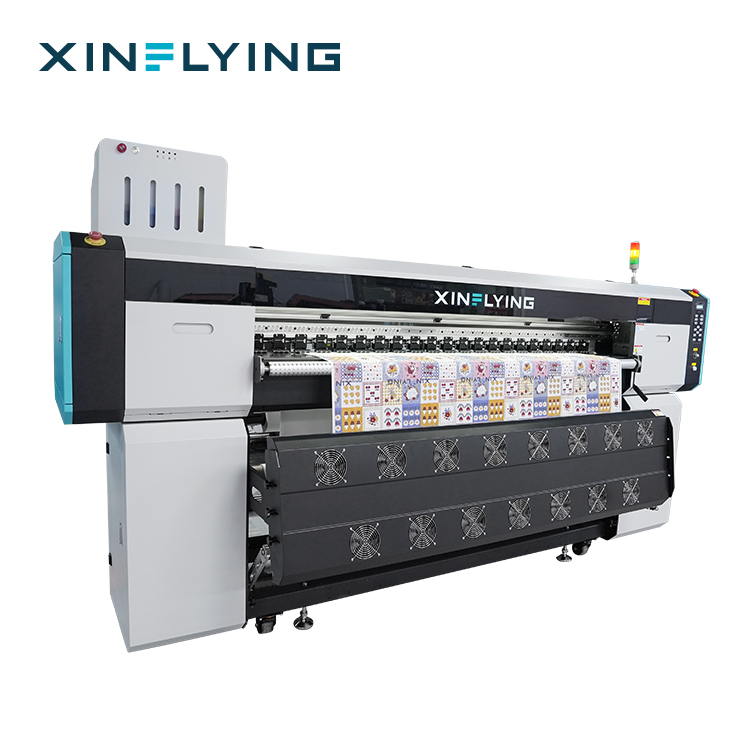
Xinflying XF-O2000-4I32A1 — 195 cm roll-to-roll configuration for growing daily textile production.
Next Step: Sample Prints and a Compliance Document Set
Before a purchase order, request a print sample on your own polyester, the CE document set matching your target model, and the OEKO-TEX ECO PASSPORT SH150194016 record for XF-450PRO inks and pastes.
Email: info@xin-flying.com · Tel / WhatsApp: +86 188-1322-1357 · Website: www.xin-flying.com
Company brochure (PDF): Xinflying corporate introduction
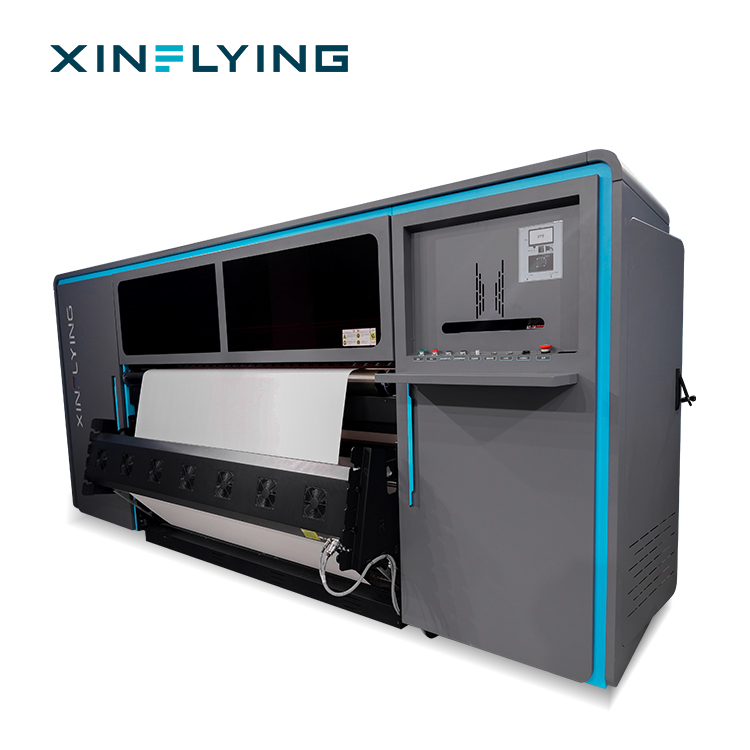
Xinflying XF-19E15-PRO — the 15-head configuration for lines where the printer must not become the production bottleneck.
Have Questions or Need More Details?
Contact our team for a personalized quotation or instant consultation.
Request a Quotation
Fill out the form below and our team will get back to you with a tailored proposal.
WhatsApp Direct Chat
Prefer to chat in real-time? Message us on WhatsApp for instant assistance & quick answers.
- Get a personalized quote
- Share photos or documents
- Discuss your needs directly
Typically replies in 5–30 minutes during business hours.