
Sublimation Printer for Skin-Contact Textiles: Meeting OEKO-TEX and CE Safety Requirements
A sublimation printer producing skin-contact apparel has to pass two separate safety reviews, not one. The first review concerns the chemistry of the ink that ends up inside the fabric. The second concerns the electrical safety and electromagnetic compatibility of the machine itself. Buyers who treat these as a single "certified printer" question usually find the gap during a retail compliance review, after the machine is installed and the first orders are already booked.
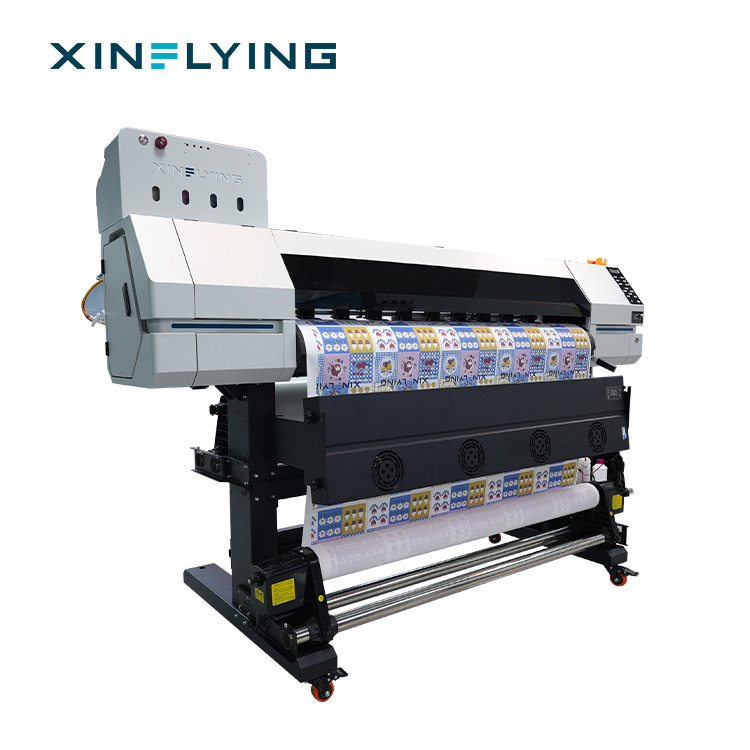
For the Digital Textile Printer XF-450PRO, both reviews are supported by named documents. OEKO-TEX ECO PASSPORT certificate SH150194016, issued by TESTEX AG, covers the textile printing inks and pastes used in the XF-450PRO. CE LVD & EMC certificate no. M.2026.206.C142475 and CE certificate BSTXD211021006201EC both cover the XF-450PRO machine. This article explains what each document proves, what it does not prove, and how a textile producer can assemble the three into a file that holds up when a brand owner, an importer, or a customs officer asks for evidence.
The Problem: One Purchase Order, Two Independent Compliance Gaps
A print shop buys a printer and an ink set together, but the compliance obligation splits along a line that has nothing to do with the invoice. Chemical safety of the printed textile and electrical safety of the equipment are regulated by different bodies, assessed by different laboratories, and documented on different certificates. Neither document substitutes for the other, and a supplier who only holds one of them cannot close both gaps.
The chemical side follows the ink. An ECO PASSPORT certificate names specific ink and paste products and the party responsible for them. If a shop later switches to a lower-cost ink that is not listed on that certificate, the coverage does not travel with the machine. The machine side follows the model. CE documentation names the equipment model it was issued for. If the delivered unit is a different model, a different configuration, or a re-badged variant, the paperwork no longer describes what is standing on the factory floor.
The three scope mismatches that cause most rejections
- Model mismatch. The certificate names one model and the shipment contains another. This is the most common failure in machinery imports and the easiest to prevent: compare the model designation on the certificate with the model designation on the purchase order and on the machine plate.
- Article mismatch. The ink certificate lists product names or article references that do not correspond to the inks actually loaded into the printer.
- Version mismatch. A certificate has been superseded or withdrawn, and an older PDF is still circulating in the sales folder.
Each mismatch produces the same outcome: the compliance file is returned, the order is held, and the print shop pays for testing or documentation work that should have been included at the point of sale. For a producer running skin-contact apparel, the exposure is not only commercial. It also affects the ability to answer a brand owner's supplier questionnaire, which increasingly arrives before the first purchase order rather than after it.
Industry Background: Why Compliance Now Precedes Price Negotiation
Dye sublimation capacity has expanded quickly, and the documentation burden has expanded with it. Grand View Research valued the global dye sublimation printing market at USD 16.4 billion in 2025 and projected USD 39.0 billion by 2033, with a CAGR of 11.5% from 2026 to 2033. The same source recorded Asia Pacific at a 36.5% revenue share in 2025, led by China as the largest country market. Mordor Intelligence sized the dye sublimation printer segment specifically at USD 1.88 billion in 2025, rising to USD 2.53 billion by 2030.
Published figures differ because scopes differ: some estimates cover equipment only, others include consumables, software, and service. What the estimates agree on is direction. Fortune Business Insights valued the large format printer market at USD 10.57 billion in 2025 with a projection of USD 16.52 billion by 2034, and Grand View Research tied demand in digital textile sublimation to personalised apparel and home decor, projecting a 13.1% CAGR through 2030. Grand View Research also recorded inkjet production printers at 87.3% of the production printer market by type in 2024, which is the technical base that roll-to-roll sublimation equipment sits on.
Two consequences follow for anyone printing onto fabric that touches skin. First, capacity is no longer scarce, so buyers differentiate on evidence rather than on speed alone. Second, the buyer of a printed garment is usually not the print shop. A brand owner selling into the European Union carries its own due-diligence obligations and passes the documentation request upstream to the printer. That request arrives as two lists: one for the chemistry of the inks and pastes, one for the machinery. The print shop that already holds both answers in one working day; the print shop that does not spends the season chasing PDFs.
Technical standardisation adds a third layer. ISO 12647-8:2021 defines the validation print process for graphic technology working directly from digital data, which is where colour consistency claims on sublimation output anchor. FESPA industry guidance treats roll-to-roll sublimation printers at 1.9 m (1900 mm) width as the standard for high-volume textile and soft-signage work. Neither standard replaces a product certificate, but both shape the questions a technical buyer will ask alongside it.
The Solution: Three Documents, Two Compliance Tracks
The XF-450PRO file is easiest to work with when it is read as two tracks that meet in one folder. Track one is ecological and follows the ink. Track two is electrical and follows the machine. Each track answers a different question, and together they answer the question a skin-contact textile buyer actually asks: can this production line be documented end to end.
Track 1 — Ink chemistry: OEKO-TEX ECO PASSPORT SH150194016
OEKO-TEX ECO PASSPORT certificate SH150194016 was issued by TESTEX AG and covers the textile printing inks and pastes used in the Digital Textile Printer XF-450PRO. ECO PASSPORT is the OEKO-TEX scheme that addresses chemicals, auxiliaries, and colorants used in textile manufacturing, so the certificate speaks to the chemistry of what is being applied to the fabric rather than to the behaviour of the machine.
What this document supports: a direct, checkable answer when a brand owner asks which inks are used on skin-contact goods and whether those inks have been assessed under a recognised textile chemical scheme. It converts an unverifiable supplier statement into a certificate with an issuing body, a certificate number, and a defined product scope.
What it does not do: it does not certify the printer, it does not extend to inks or pastes outside the listed scope, and it does not by itself certify the finished garment. The certificate is one input into a fabric-level assessment, not a replacement for it. Read the certificate PDF for the exact product list and any stated conditions, and treat that PDF as the authoritative version rather than a catalogue summary or a sales slide.
Track 2 — Machine safety: CE LVD & EMC certificate no. M.2026.206.C142475
CE LVD & EMC certificate no. M.2026.206.C142475 covers the XF-450PRO. The two directives named in the certificate address different risks. The Low Voltage Directive concerns the electrical safety of equipment operating within its voltage scope; electromagnetic compatibility concerns emissions and immunity, meaning the machine should not disturb other equipment and should tolerate the electromagnetic environment it is installed in. For a print shop, the practical value is that the machine's electrical design has been assessed against the requirements an EU importer will ask about, rather than assumed from the fact that the machine runs.
Track 2 continued — CE certificate BSTXD211021006201EC
A second CE certificate, BSTXD211021006201EC, also covers the XF-450PRO. Two CE records for one model is not a contradiction; it usually reflects separate assessment stages or separate directive coverage. Keep both in the file. When an importer's compliance team asks for "the CE certificate", send the set and state which document covers which requirement, rather than choosing one at random and creating a follow-up question later.
Scope rule to apply before every shipment. The three documents described here cover the XF-450PRO and the inks and pastes used in it. They do not transfer to other models in the range. If production is scaled onto a different machine, request that model's own documentation rather than reusing the XF-450PRO file.
Where capacity fits, and why the model number matters
Compliance questions usually arrive after a capacity decision, and capacity decisions usually change the model. Xinflying's roll-to-roll sublimation range illustrates how quickly that happens: the XF-H1301X-1I32A1 has a 130 cm print width and a fastest speed of 28 m²/h at 4PASS; the XF-H1802X-2I32A1 has an 180 cm print width and a fastest speed of 52 m²/h at 4PASS; the XF-O2000-4I32A1 has a 195 cm print width and runs 180 m²/h at 2PASS and 92 m²/h at 4PASS; the XF-19E8-PRO has a 190 cm print width and reaches 306 m²/h at 1PASS; the XF-19E15-PRO, built for high-volume industrial textile sublimation printing, reaches 524 m²/h at 1PASS on the same 190 cm width.
Every step up that ladder is a different model, and a different model means a different certificate file. A print shop that starts on one unit and adds a second for peak season should treat the second unit's documents as a new procurement task, not as an administrative copy.
Who issues and holds the file
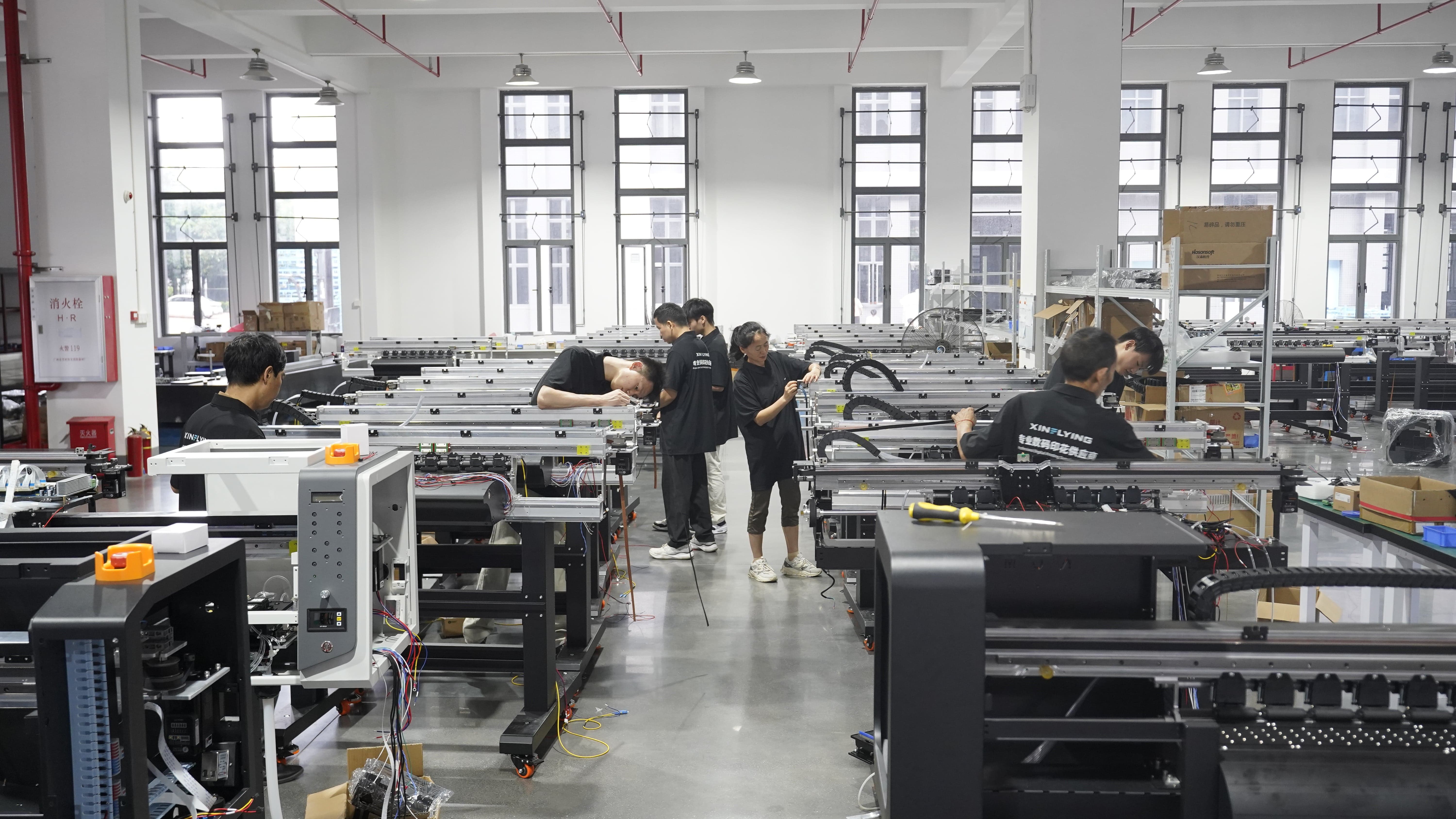
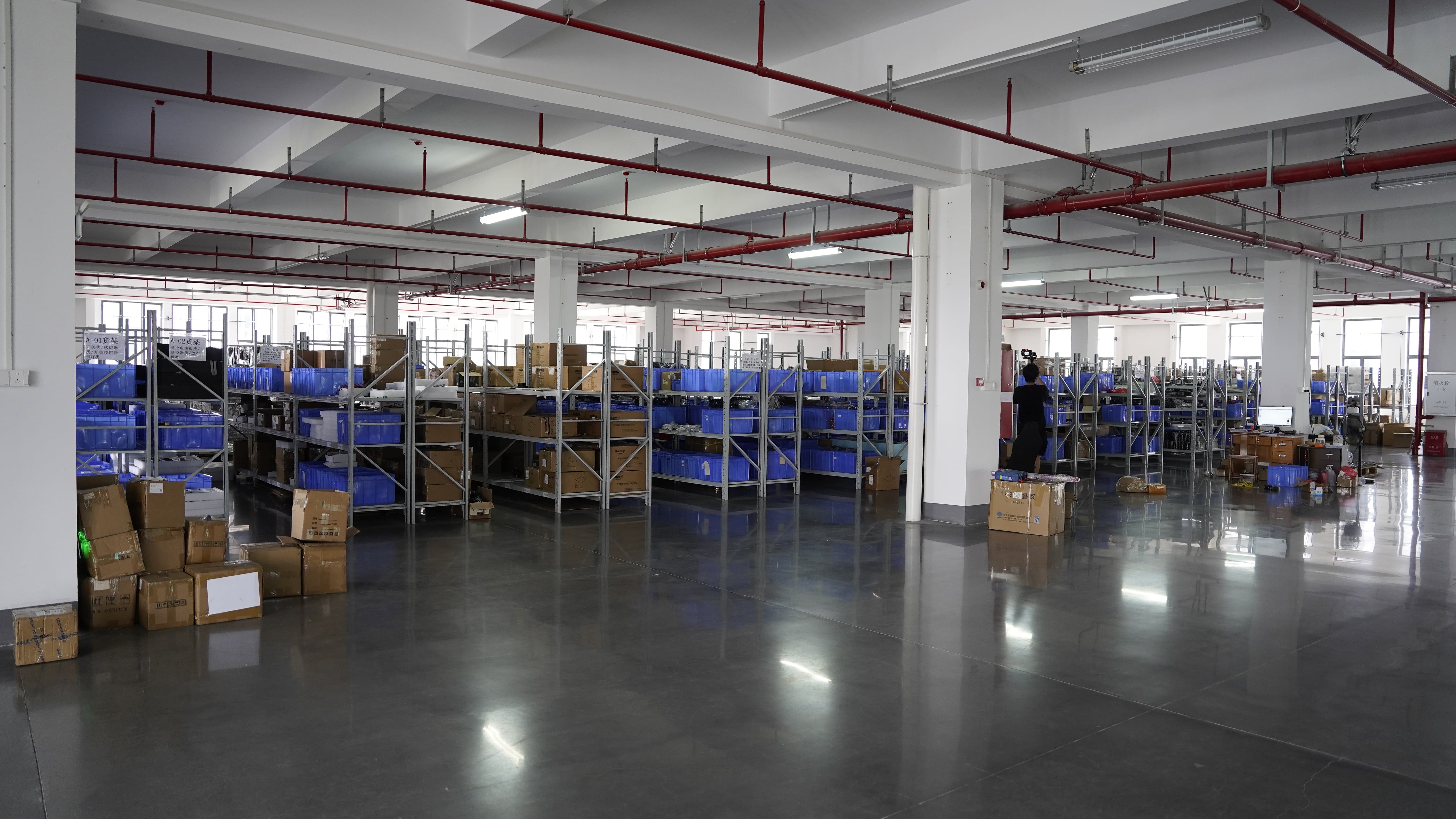
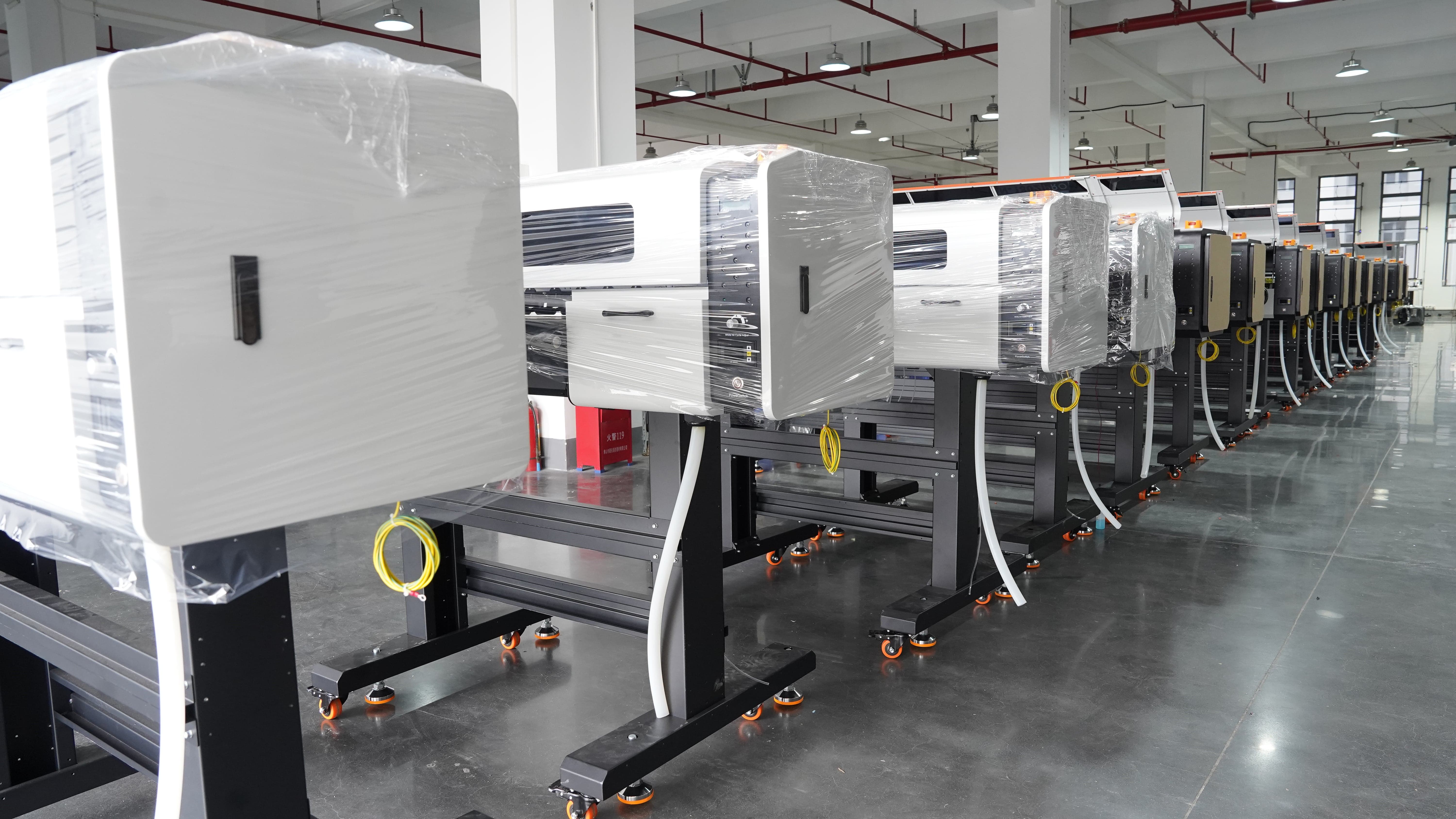
Xinflying is the trading identity of Guangzhou Xin Flying Digital Technology Co., Ltd., a manufacturer of digital printing equipment established in 2010 and based in Panyu, Guangzhou. The company operates a manufacturing facility covering 37,440 m², employs more than 200 staff including an R&D team of 20 engineers, and reports annual production capacity above 20,000 units. Its product range covers DTF printer machines, dye sublimation printers, DTG printers, UV DTF printers, UV flatbed printer machines, printing consumables, and complete digital printing solutions. Exports account for roughly 80% of output, with main markets in North America, South America, Europe, Asia, the Middle East, and Africa. Company information is published at xin-flying.com.
Step-by-Step Breakdown: Building a Skin-Contact Compliance File
The following six steps turn the certificates into a working file. The sequence matters, because each step produces a record that the next step references.
- Fix the model before the order. Write the full model designation — for example XF-450PRO — into the purchase order and confirm it appears identically on the proforma invoice, the packing list, and the machine nameplate. Certificates are issued to models, and a model mismatch invalidates the file regardless of how good the machine is.
- Match the ink and paste articles. Compare the product names and article references on OEKO-TEX ECO PASSPORT certificate SH150194016 with the inks and pastes actually delivered and loaded. If the shop intends to use any additional chemistry, that addition needs its own coverage, because the certificate scope does not expand automatically.
- Collect both CE documents and map them to requirements. File CE LVD & EMC certificate no. M.2026.206.C142475 and CE certificate BSTXD211021006201EC together, with a one-line note stating which requirement each is being used to answer. This prevents the wrong document being sent to an importer who asked a specific question.
- Cover the substrate separately. Sublimation printing bonds dye into polyester fibres under heat, which is why the process works best on polyester and polyester-coated substrates and why cotton behaves differently. The textile itself carries its own documentation obligations, and the ink certificate does not stand in for them. Keep fabric records alongside the ink record rather than inside it.
- Run and record a validation print. Produce a test print on the target fabric, record the RIP colour settings and the heat-press temperature and dwell time, and keep the physical sample with the record. Colour management through RIP software is what makes the result repeatable, and a repeatable record is what a brand owner can audit. ISO 12647-8:2021 provides a reference point for validation printing from digital data where colour claims need to be formalised.
- Archive per order and re-verify each season. Store the model confirmation, both CE documents, the ink certificate, the substrate records, and the validation print as a single pack keyed to the order or batch. Re-check certificate validity before each new buying season rather than assuming last year's PDF is still current.
Use Cases: Where the Document Set Is Actually Requested
Sportswear, teamwear, and jerseys
Polyester sportswear is the core sublimation application, and it is also the category where skin contact is continuous rather than incidental. Club and federation buyers frequently ask for the ink documentation before approving a supplier, because the garment is worn directly against skin for the duration of play.
Children's and baby soft goods
Sensitive-skin categories attract the most documentation scrutiny relative to order size. A small order of printed baby blankets or bodysuits can require a fuller file than a large order of signage, because the downstream brand is managing reputational as well as regulatory exposure.
Home textiles and blankets
Printed blankets, throws, and cushions are skin-contact and often long-contact. These orders combine the ink question with a fabric question, which is why step 4 of the file — separate substrate coverage — matters more here than in apparel.
Promotional and corporate apparel
Branded workwear and event merchandise is usually procured by a marketing department that inherits the compliance requirements of the corporate buyer. The print shop is often asked to supply documentation it has never been asked for before, on a short deadline.
Private-label sampling and pre-production
Sampling is where the file should be assembled, not where it should be discovered. A sample produced on a documented model, with a documented ink set and a recorded validation print, gives the brand owner something to approve. Approving a sample produced on undocumented chemistry creates a problem that only surfaces at bulk stage.
Comparison Table: The Two Compliance Tracks Side by Side
| Dimension | Track 1 — Ink and paste chemistry | Track 2 — Machine safety |
|---|---|---|
| Document used for the XF-450PRO | OEKO-TEX ECO PASSPORT certificate SH150194016 | CE LVD & EMC certificate no. M.2026.206.C142475 and CE certificate BSTXD211021006201EC |
| Issuing body | TESTEX AG | Certification bodies named on each CE certificate |
| What the document covers | The textile printing inks and pastes used in the Digital Textile Printer XF-450PRO | The XF-450PRO machine, assessed against low voltage and electromagnetic compatibility requirements |
| Risk addressed | Chemical content of what is applied to fabric that contacts skin | Electrical safety and electromagnetic behaviour of the equipment |
| What it does not cover | The printer, other inks, or the finished garment as a whole | Ink chemistry, or the finished textile product |
| Who usually asks for it | Brand owner compliance teams, retail supplier questionnaires, textile buyers | EU importers, freight and customs handlers, site risk assessments |
| Transferable to other models | No — scope is tied to the listed products and the named model application | No — scope is tied to the named model |
Model reference (capacity specifications only)
| Model | Print width | Fastest print speed | Typical position in the range |
|---|---|---|---|
| XF-H1301X-1I32A1 | 130 cm | 28 m²/h (4PASS) | Entry / compact polyester printing |
| XF-H1802X-2I32A1 | 180 cm | 52 m²/h (4PASS) | Entry-level wide format |
| XF-O2000-4I32A1 | 195 cm | 180 m²/h (2PASS) | Mid-range continuous production |
| XF-19E8-PRO | 190 cm (75") | 306 m²/h (1PASS) | High-volume industrial |
| XF-19E15-PRO | 190 cm (75") | 524 m²/h (1PASS) | High-volume industrial, maximum output |
The specifications above describe production capacity. They are not a statement of certificate scope: the ECO PASSPORT certificate and the two CE certificates described in this article cover the XF-450PRO, and each other model requires its own documentation.
Frequently Asked Questions
Does a CE certificate on a sublimation printer also cover the ink used on skin-contact fabric?
No. CE documentation and ink certification answer different questions. For the XF-450PRO, the machine is covered by CE LVD & EMC certificate no. M.2026.206.C142475 and CE certificate BSTXD211021006201EC, while the textile printing inks and pastes used in the machine are covered by OEKO-TEX ECO PASSPORT certificate SH150194016 issued by TESTEX AG. A skin-contact compliance file needs both tracks, because a machine certificate says nothing about ink chemistry and an ink certificate says nothing about electrical safety.
What exactly does ECO PASSPORT certificate SH150194016 cover?
It covers the textile printing inks and pastes used in the Digital Textile Printer XF-450PRO, and it was issued by TESTEX AG under the OEKO-TEX ECO PASSPORT scheme. It addresses the chemistry applied to the fabric during printing. It does not certify the printer itself, it does not extend automatically to inks or pastes outside the listed scope, and it does not replace fabric-level assessment of the finished garment. The certificate PDF should be read for the exact product list and any stated conditions.
Does buying a documented machine change the overall cost picture?
Compliance documents are supplied with the equipment rather than purchased afterwards, so the comparison to make is total operating cost, not purchase price alone. Power draw is one visible input and it differs by model: the XF-19E8-PRO is rated at 10.2 kW, the XF-19E15-PRO at 14.5 kW, the XF-O2000-4I32A1 at 8.5 kW, the XF-H1802X-2I32A1 at 3.5 kW, and the XF-H1301X-1I32A1 at 2 kW. Ink, transfer paper, maintenance, and the labour cost of re-testing a rejected order belong in the same calculation. Machines that differ in printheads and print width differ in all of these, which is why the model decision should be made before the documentation request rather than after it.
Can we validate the ink and fabric on a sample before committing to bulk production?
Yes, and sampling is the right place to start. A practical validation uses the target polyester fabric, the documented ink set, a test print through the RIP software with recorded colour settings, and a heat transfer step at recorded temperature and pressure. Keep the physical sample with the parameter record. Sublimation bonding depends on the dye turning to gas and entering the fibre, so results shift with substrate, transfer time, and temperature; a recorded sample is what makes the bulk run reproducible and auditable.
How do we obtain the certificate set and a quotation for the XF-450PRO?
Request the certificate files together with the commercial documents, and state the full model designation, the ink and paste articles you intend to run, and the destination market, so that the documents supplied match the configuration rather than a generic sales file. Certificate copies and pricing are issued per enquiry, and delivery timing depends on the model, configuration, and destination. Xinflying can be reached at xin-flying.com, by email at info@xin-flying.com, or by phone and WhatsApp on +86 188-1322-1357. Buyers who want a full overview of the equipment range before opening a compliance discussion can download the company brochure below.
Conclusion
Skin-contact textile production is documented, not asserted. The XF-450PRO file separates cleanly into an ecological track, where OEKO-TEX ECO PASSPORT certificate SH150194016 issued by TESTEX AG covers the textile printing inks and pastes used in the machine, and a machinery track, where CE LVD & EMC certificate no. M.2026.206.C142475 and CE certificate BSTXD211021006201EC cover the XF-450PRO itself. Three documents, two questions answered, one folder that a brand owner or an importer can actually review.
The work that remains is procedural and cheaper than the alternative: confirm the model on the order matches the model on the certificate, confirm the inks in use match the articles listed, keep the substrate records separate, and archive a validation print with each order. A print shop that does this once per model spends minutes on a compliance request. A print shop that does not spends the season reconstructing evidence it should already hold.
Download the Xinflying company brochure (PDF):Xinflying corporate profile and product range
Have Questions or Need More Details?
Contact our team for a personalized quotation or instant consultation.
Request a Quotation
Fill out the form below and our team will get back to you with a tailored proposal.
WhatsApp Direct Chat
Prefer to chat in real-time? Message us on WhatsApp for instant assistance & quick answers.
- Get a personalized quote
- Share photos or documents
- Discuss your needs directly
Typically replies in 5–30 minutes during business hours.