
DTF Printer Compliance Guide: CE LVD, EMC, MD, RoHS & OEKO-TEX for the EU Market
A DTF printer entering the European Union is assessed on four separate tracks — electrical safety, electromagnetic compatibility, machinery safety and hazardous-substance control — and its printing inks are assessed on a fifth. No single CE sticker answers all five. What answers them is a matched document set: a declaration of conformity naming your exact model, test reports citing harmonised standards, a RoHS position covering the electronics, and ink documentation issued under a recognised textile chemical scheme. This guide explains how the layers fit together, which references belong to the XF-series, and where a buyer still has to verify model by model.
Short answer for buyers under time pressure
The XF-series compliance evidence set is built from CE documentation referencing TQT1550D271EC, M.2026.206.C142365 and M.2026.206.C142366; the standards EN IEC 62368-1:2020/A11:2020 (LVD), EN 55032:2015 and EN 55035:2017 (EMC), and EN ISO 12100:2010, EN 60204-1:2018 and EN ISO 12643-1:2023 (machinery); RoHS conformity for the machine electronics; ISO 9001:2015 certificate NOA2215496 for the quality system; and OEKO-TEX ECO PASSPORT SH150194016 for Textile Printing Inks & Printing Pastes. Machine documents and ink documents are separate proofs, and the declaration of conformity must name the model and configuration you actually receive.
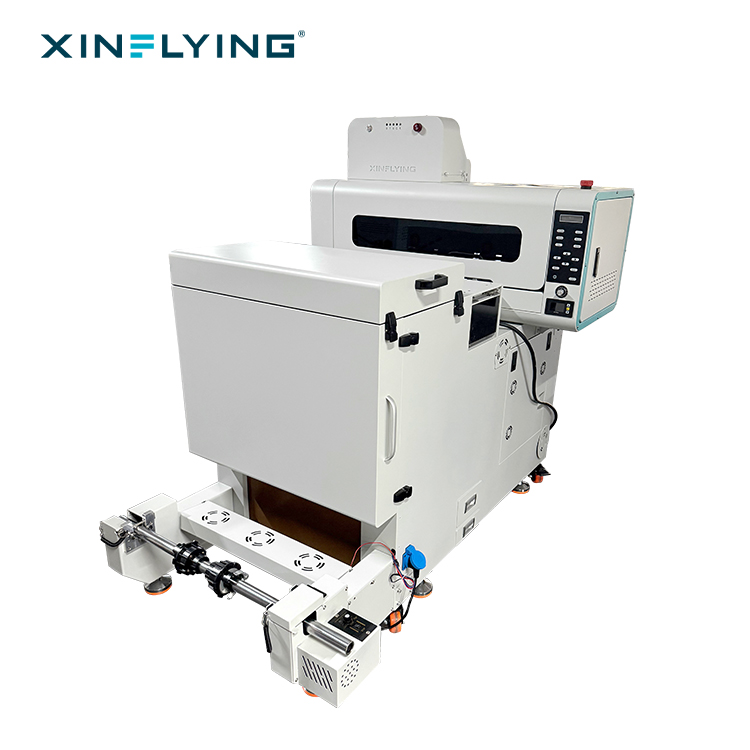 Cover: XINFLYING XF-450PRO DTF printer — one model in the XF-series compliance documentation set.
Why a CE mark is not the end of the compliance question
Most EU buyers receive a PDF with a CE certificate and treat the file as closed. Three gaps usually remain. First, a certificate covers a defined model list and a defined configuration. A 60 cm DTF printer running four Epson i3200-A1 heads at 1.6 kW is a different electrical load from a 60 cm machine running two heads at 0.8 kW, so the test evidence has to match the version on the order. Second, the CE mark on the machine says nothing about what goes into it. DTF inks, powders and films are chemical inputs to a garment that will later be worn, and they follow a different route. Third, the CE mark is a manufacturer's declaration backed by a technical file, not an approval issued by an authority — which is why the supporting documents matter more than the sticker.
For a direct to film printer the practical split looks like this: the machine is electrical equipment, an item of machinery, and an electronic product subject to EMC and RoHS rules; the ink is a textile chemical. A supplier can be complete on one side and incomplete on the other. That asymmetry is what most importers discover after the container has landed, when the declaration cannot be matched to the serial number on the floor.
Who carries the obligation
The manufacturer or its authorised representative issues the declaration of conformity and holds the technical file. The importer, distributor or brand owner placing the machine on the EU market is expected to keep that declaration available for market surveillance and to be able to produce it on request. In practice, the buyer who can hand over a complete, model-matched pack during a customs or surveillance query is the buyer who avoids a shipment being held.
Where the EU sits in the DTF market
Europe was the leading regional market for DTF printing in 2024, holding a 36.0% revenue share, according to Grand View Research, against a global DTF printing market valued at USD 2.7 billion in the same year. T-shirts account for the dominant end-product segment at 41% of DTF printing revenue in 2024, per KBV Research. Two consequences follow. The EU is commercially important enough to justify careful documentation, and it is dense enough that distributors and brand owners routinely ask for paperwork before they ask for a demonstration.
Supply is equally concentrated on the manufacturing side: China accounts for more than 45% of global DTF printer manufacturing capacity, according to Dataintelo. Most European buyers therefore import across a customs boundary and depend on a supplier's documentation package rather than on local certification infrastructure. Note also that published growth forecasts for this category diverge between research houses, so any single CAGR figure should be treated as one estimate among several rather than a settled number.
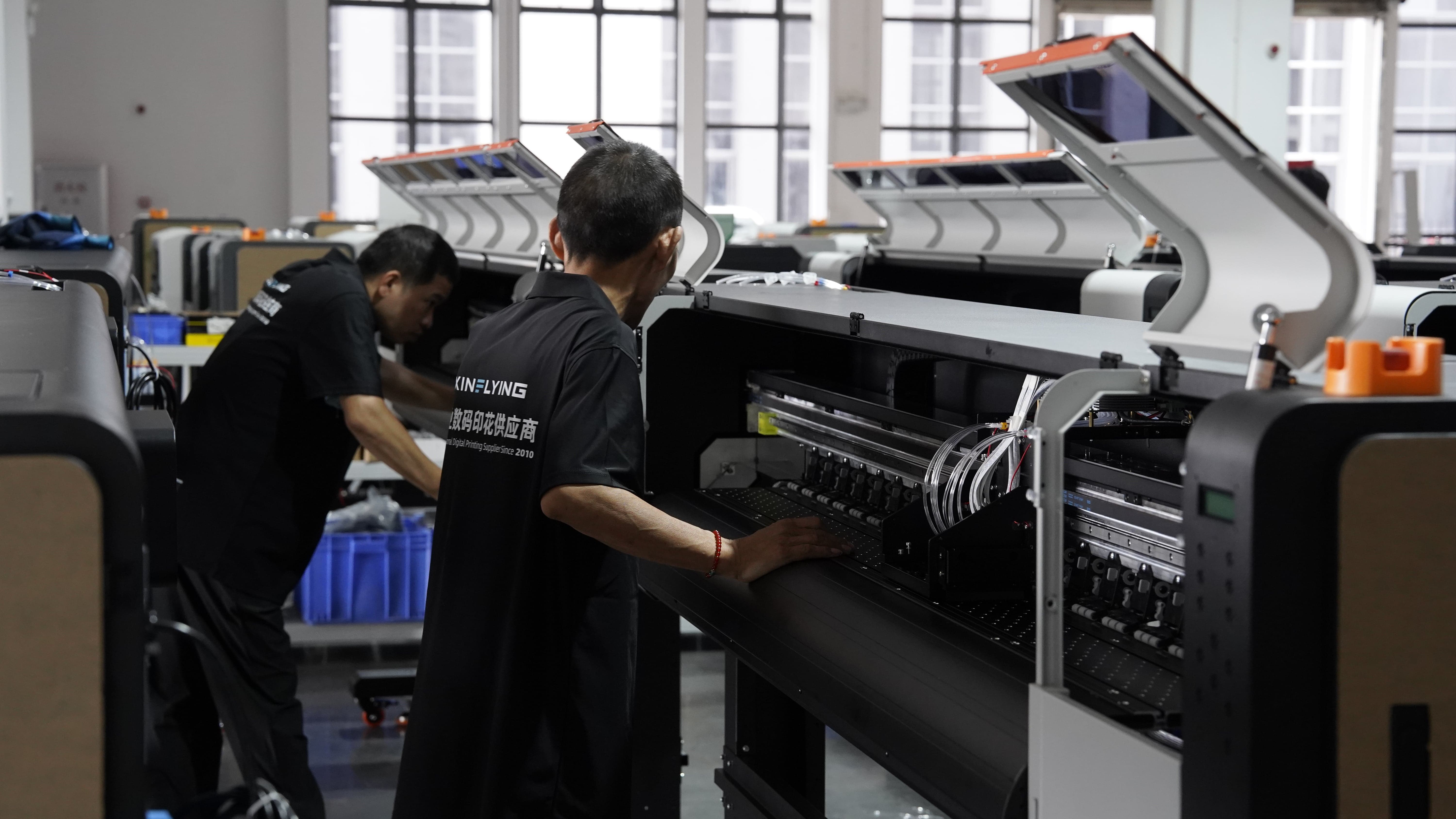 Internal wiring, power supply and control components — the parts an LVD and EMC report actually describes.
The six compliance layers explained
1. CE LVD — electrical safety
The Low Voltage Directive 2014/35/EU applies to equipment operating in the 50–1000 V AC range, which includes every DTF printer in this guide: the XF-450PRO, XF-C602, XF-702E, XF-704E and XF-F808 are all rated 110–220 V, 50/60 Hz. The harmonised standard cited for the series is EN IEC 62368-1:2020/A11:2020, the hazard-based safety standard for audio/video, information and communication technology equipment. It addresses insulation, creepage and clearance distances, protective earthing, temperature rise and protection against energy hazards inside the enclosure — which is why an LVD report lists the internal power supply, the wiring, and the interlocks around the print-head carriage.
2. CE EMC — emissions and immunity
The EMC Directive 2014/30/EU covers two different things. EN 55032:2015 sets emission limits: how much conducted and radiated disturbance the machine may put onto the mains and into the room. EN 55035:2017 sets immunity requirements: how much external disturbance the machine must survive while continuing to print. Immunity is the part buyers underestimate. A DTF printing machine sharing a workshop with heat presses, powder shakers and a large compressor is exposed to exactly the kind of disturbance the immunity test simulates, and a weakness there usually appears as a dropped job or a controller reset rather than a visible defect.
3. CE Machinery Directive — mechanical and machine-electrical safety
The Machinery Directive 2006/42/EC brings in three standards that are often printed on the same certificate. EN ISO 12100:2010 is the risk-assessment methodology: identify hazards, estimate risk, reduce risk by design, then by safeguarding, then by information for use. EN 60204-1:2018 covers the electrical equipment of machines — emergency stop, isolation and switching, protective bonding, and control architecture. EN ISO 12643-1:2023 is the graphic technology safety standard, which applies those general principles to printing and finishing equipment. Together they address the hazards a printing machine actually presents: nip points at the film feed, the heated platen and curing zone, the moving carriage, and the pinch hazards around the take-up roller.
4. RoHS — restricted substances in the electronics
RoHS restricts the use of specific hazardous substances in electrical and electronic equipment. On a DTF printer the relevant scope is the electronics and the wiring — control board, power supply, display, cables, sensors — not the steel frame. RoHS is often bundled into the same declaration as the CE directives, but it is a separate legal obligation and should be stated explicitly rather than assumed from a CE mark.
5. ISO 9001:2015 — the quality system behind the certificate
ISO 9001:2015 is a quality management system standard, and XINFLYING holds certificate NOA2215496. It is worth being precise about what this proves. A QMS certificate shows that design, purchasing, production, inspection and corrective action run under a documented, audited process. It does not certify that a particular printer meets the LVD or EMC standards, and it is not a CE route. Its practical value is consistency: it makes it more likely that the unit delivered in month twelve is built the way the unit that was type-tested was built.
6. OEKO-TEX ECO PASSPORT — the inks, not the machine
OEKO-TEX ECO PASSPORT SH150194016 covers Textile Printing Inks & Printing Pastes. It is a chemical-level certification: the ink formulation is screened against restricted-substance criteria relevant to textiles, which is what a garment brand is asking about when it asks whether a printed shirt is safe for the wearer. It says nothing about the machine, and the machine certificates say nothing about the ink. Read together, the two document families cover the two halves of the DTF process. For the printed article itself, brands typically also look at OEKO-TEX STANDARD 100 as the downstream product-level standard, which is a separate certification from ECO PASSPORT.
Matching the documents to the XF-series models
Model-level accuracy is where most compliance audits succeed or fail. The table below lists the XF-series models in scope with the electrical data that has to match the test evidence.
| Model | Print width | Print heads / ink | Rated power | Power supply |
|---|---|---|---|---|
| XF-450PRO | 42 cm (16.5") | 2× Epson i1600-A1; CMYK+W | 3.5 kW | 110–220 V, 16 A/32 A, 50–60 Hz |
| XF-C602 | 60 cm (24") | 2× Epson i3200-A1; CMYK+W | 1.6 kW | 110–220 V, 7.2 A/14.5 A, 50/60 Hz |
| XF-702E | 60 cm (24") | 2× Epson i3200-A1; CMYK+W | 0.8 kW | 110–220 V, 5 A/10 A, 50/60 Hz |
| XF-704E | 60 cm (24") | 4× Epson i3200-A1; CMYK+CMYK+W+W | 1.6 kW | 110–220 V, 7.2 A/14.5 A, 50/60 Hz |
| XF-F808 | 80 cm (31") | 8× Epson i3200-A1; four-group CMYK + W | 2 kW | 110–220 V, 9 A/18 A, 50/60 Hz |
Two points follow. The 60 cm group — XF-C602, XF-702E and XF-704E — shares a print width but not a power rating or head count, so they cannot be assumed to sit on one identical test record. The 42 cm XF-450PRO at 3.5 kW is a different electrical profile again, and the 80 cm XF-F808 is a different machine class entirely.
The three references stated for the XF-series documentation set are:
- TQT1550D271EC — CE documentation reference for the XF-series DTF printers
- M.2026.206.C142365 — CE documentation reference for the XF-series DTF printers
- M.2026.206.C142366 — CE documentation reference for the XF-series DTF printers
These are the numbers to request — by reference, in writing. What they do not do on their own is tell you which model and build your unit is. For that you need the declaration of conformity issued against the order, naming the exact model designation and, where the supplier provides it, the serial number range. If a supplier cannot connect a certificate number to the specific model you are buying, the certificate is background information rather than evidence.
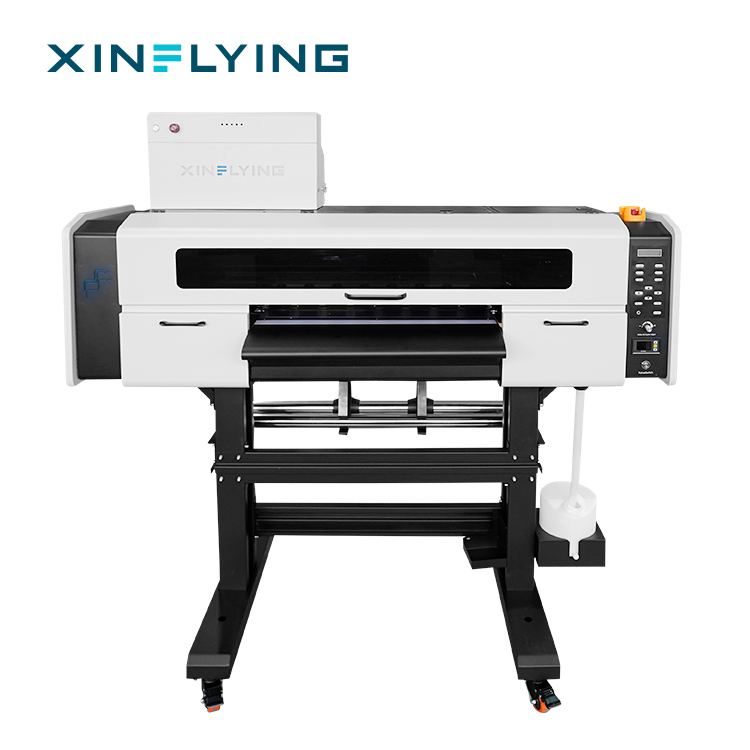 The XF-702E 60 cm model: same print width as the XF-C602 and XF-704E, different head count and rated power.
Step-by-step: how to verify a DTF printer's EU documents
- Ask for the declaration of conformity first, not the certificate. A certificate proves a test happened. The DoC is the legal document naming the directives, standards, model and manufacturer. If the DoC is missing, the certificates do not substitute for it.
- Match the model designation exactly. XF-702E and XF-704E differ by head count and configuration; a declaration naming one does not automatically cover the other.
- Check the standards list against the directive list. LVD, EMC and Machinery should each be represented by at least one cited standard — EN IEC 62368-1:2020/A11:2020 for LVD; EN 55032:2015 and EN 55035:2017 for EMC; EN ISO 12100:2010 with EN 60204-1:2018 and EN ISO 12643-1:2023 for machinery.
- Confirm the nameplate data matches the tested configuration. All XF-series models are rated 110–220 V, 50/60 Hz, but current draw differs by model — 5 A/10 A on the XF-702E against 16 A/32 A on the XF-450PRO and 9 A/18 A on the XF-F808. A machine shipped with a different power configuration than the one declared is a different machine for conformity purposes.
- Ask for the RoHS position separately. Confirm it covers the control board, power supply, display and cable set, not merely the frame.
- Handle consumables as a separate file. Request the OEKO-TEX ECO PASSPORT SH150194016 documentation together with the ink brand and batch information and keep it with the machine file. If you change ink supplier, the ink documentation must be re-established even though the machine documents are unchanged.
- Define the re-verification triggers before you buy. Relocating a machine, changing its power configuration, or integrating third-party equipment such as a powder shaker, air purifier or heat press can change the conformity picture. Ask in writing which additions are already covered by the declaration and which need their own assessment, and confirm which legislative instrument the declaration cites — the EU has been moving from the Machinery Directive to a Machinery Regulation, and the declaration should state which one applies to your delivery.
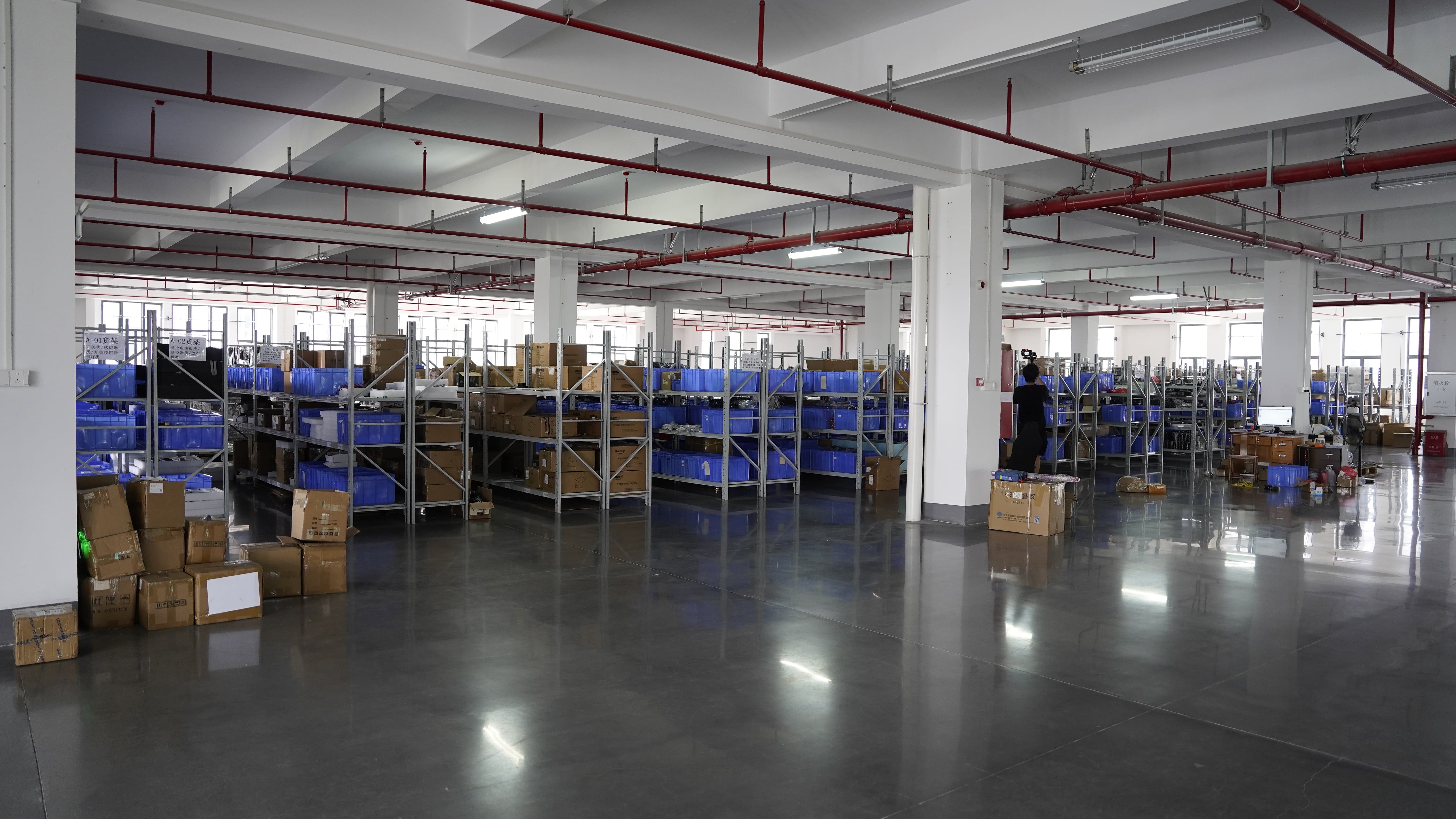 Spare-parts control and traceability sit behind the ISO 9001:2015 process the certificate describes.
Where these documents matter in practice
An EU distributor adding a 60 cm line
A distributor stocking the 60 cm machines — XF-C602, XF-702E, XF-704E — needs one document pack per model, not one per container. The question a reseller's customer will eventually ask is "which certificate covers the machine in my shop", and the answer has to be a model designation, not a brand name.
A print shop moving to higher throughput
A shop scaling from a 42 cm XF-450PRO to an 80 cm XF-F808 changes print width, head count and power draw at the same time. The new machine needs its own declaration and its own nameplate check; the previous documents do not carry over.
A brand owner sourcing private label
When machines are sold under the buyer's brand, the buyer becomes the party responsible for the declaration. The supplier's certificate is an input, not a substitute. This has to be settled contractually before production starts, because the declaration must be reissued under the new responsible party.
An ink or consumable reseller
For anyone selling inks and pastes into the garment supply chain, ECO PASSPORT SH150194016 for Textile Printing Inks & Printing Pastes is the document that answers the brand's chemical-safety question — and it is the document that has no bearing on the printer's CE status.
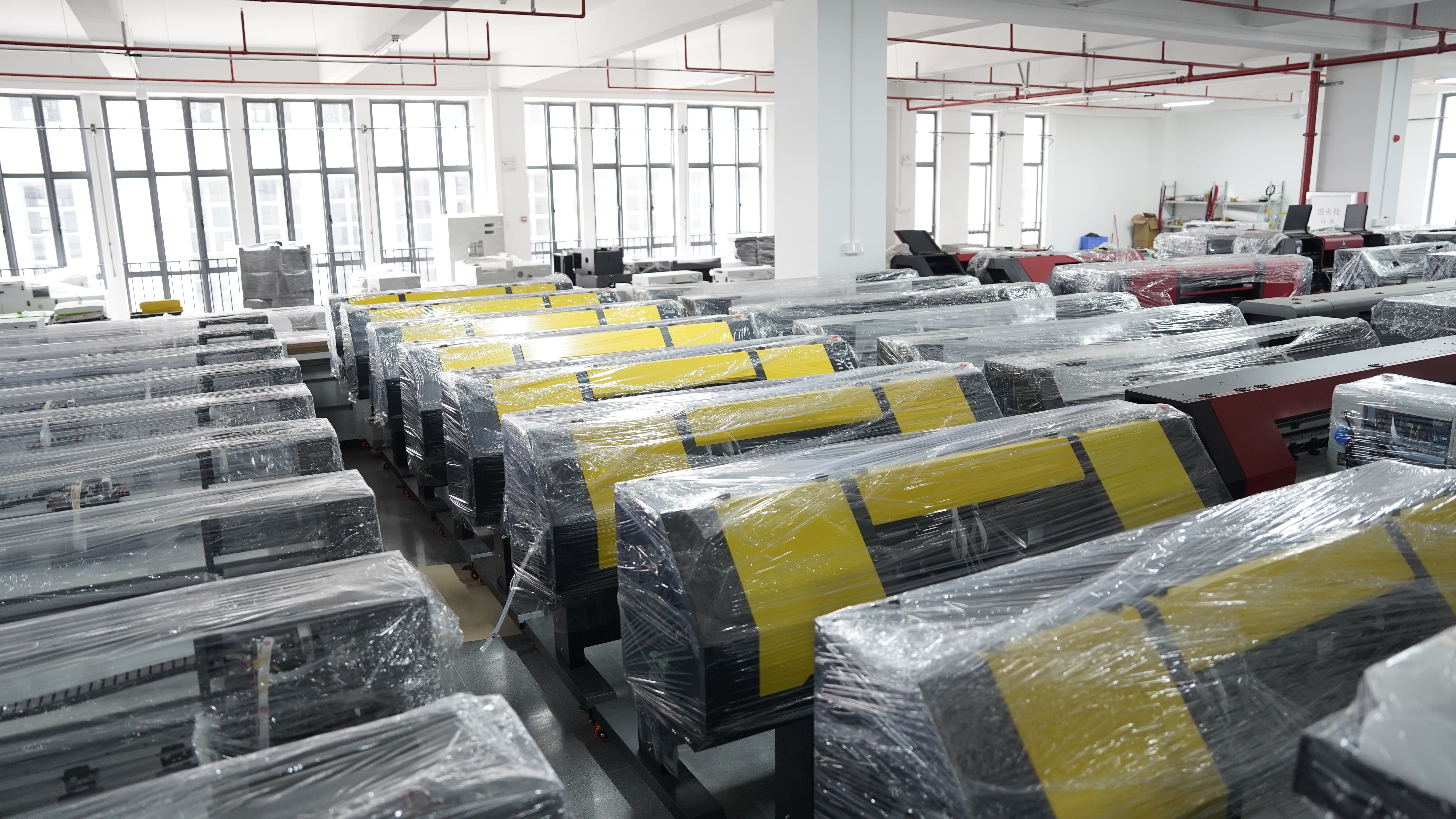 Export preparation: the declaration and certificate copies should travel with the shipment, matched to serial numbers.
Comparison table: what each compliance document actually proves
| Document layer | Legal instrument / reference | What it demonstrates | What it does not cover |
|---|---|---|---|
| Electrical safety | CE LVD 2014/35/EU; EN IEC 62368-1:2020/A11:2020 | Insulation, earthing, temperature rise and internal energy hazards of the machine | EMC performance, mechanical hazards, ink chemistry |
| EMC | CE EMC 2014/30/EU; EN 55032:2015 (emissions); EN 55035:2017 (immunity) | Disturbance the machine emits, and disturbance it tolerates while printing | Electrical shock protection, mechanical safeguarding |
| Machinery safety | CE Machinery Directive 2006/42/EC; EN ISO 12100:2010; EN 60204-1:2018; EN ISO 12643-1:2023 | Risk assessment, safeguarding of nip points and heated zones, machine electrical equipment and emergency stop | Substance restrictions in electronics, consumable chemistry |
| Hazardous substances | RoHS | Restricted-substance control in the electrical and electronic parts | Operator safety, EMC, print quality |
| Quality system | ISO 9001:2015 — NOA2215496 | Documented, audited process control across design, production and inspection | Product conformity; it is not a CE route |
| Ink chemical safety | OEKO-TEX ECO PASSPORT SH150194016 — Textile Printing Inks & Printing Pastes | Chemical screening of the ink formulation against textile restricted-substance criteria | Machine safety, EMC, mechanical compliance |
Read as a set, the table shows why "is it CE certified?" is an incomplete question. The better question is which of these six layers you have received, and whether the model designation on each one matches the unit on the floor.
Frequently asked questions
Does the CE mark on a DTF printer cover the printing inks as well?
No. The CE mark and the LVD, EMC, Machinery Directive and RoHS documentation apply to the machine. Inks and printing pastes are covered separately by OEKO-TEX ECO PASSPORT SH150194016 for Textile Printing Inks & Printing Pastes. A machine declaration and an ink certificate are two different proofs, and a garment programme normally needs both.
How do I confirm that my exact XF model is covered by TQT1550D271EC, M.2026.206.C142365 or M.2026.206.C142366?
Request the declaration of conformity issued against your order and check that it names the exact model designation — XF-450PRO, XF-C602, XF-702E, XF-704E or XF-F808 — and, where available, the serial number. The three references are the CE documentation references stated for the XF series; connecting a reference to your specific machine is a model-level check, not a brand-level one. If the declaration cannot name your model, ask for a corrected version before shipment.
What exactly does OEKO-TEX ECO PASSPORT SH150194016 certify?
It certifies the chemical inputs — Textile Printing Inks & Printing Pastes — against OEKO-TEX restricted-substance criteria. It does not certify the printer and is not a substitute for CE documentation. Brands producing garments usually pair it with OEKO-TEX STANDARD 100, which addresses the finished article rather than the ink.
Are compliance documents an extra cost item, or should they sit inside the quotation?
Treat them as part of the commercial offer. Ask for the pack — declaration of conformity, certificate copies, RoHS position, ISO 9001:2015 NOA2215496 and the ECO PASSPORT SH150194016 file — at the quotation stage so the scope is agreed before the order. Requesting documents after the machine has shipped is where re-testing, re-declaration and avoidable delays tend to appear.
What documents travel with the machine, and can they be issued before shipment?
The machine-side pack is the declaration of conformity, copies of the CE documentation references, the RoHS position and the ISO 9001:2015 certificate; the ECO PASSPORT file belongs with the ink. Ask for them as PDFs before the container is released, store them against the serial number, and re-check whenever the configuration, ink brand or installation changes. Buyers who need the pack matched to a specific model ahead of ordering can request it together with a quotation from XINFLYING.
Conclusion
EU market access for a DTF printer is not a single document but a stack, and the stack has to be read model by model. CE LVD (EN IEC 62368-1:2020/A11:2020), CE EMC (EN 55032:2015 and EN 55035:2017), the Machinery Directive (EN ISO 12100:2010, EN 60204-1:2018, EN ISO 12643-1:2023) and RoHS cover the machine; OEKO-TEX ECO PASSPORT SH150194016 covers the inks; ISO 9001:2015 NOA2215496 tells you how consistently the unit was built. For the XF-series, the references to request by number are TQT1550D271EC, M.2026.206.C142365 and M.2026.206.C142366.
The remaining work is verification, and it is the buyer's work as much as the supplier's: confirm the declaration names your model, confirm the nameplate matches the declared configuration, keep the ink file with the machine file, and agree up front what happens if the machine is reconfigured or rebranded. A supplier who can answer those four points in writing is a materially lower-risk supplier than one who answers with a logo on a PDF.
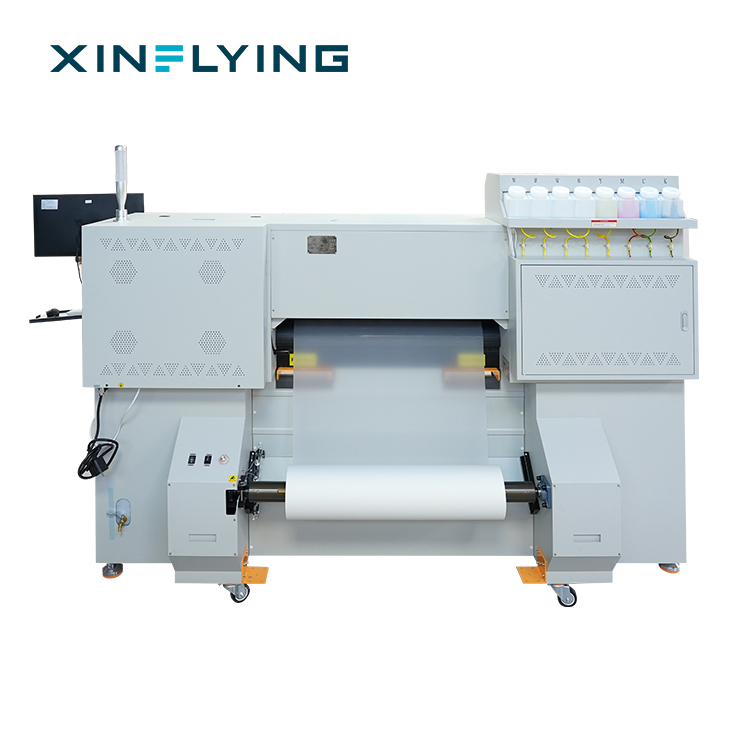
Need the compliance pack for a specific XF model?
XINFLYING (Guangzhou Xin Flying Digital Technology Co., Ltd.) has manufactured digital printing equipment since 2010, with a 37,440 m² facility in Panyu, Guangzhou and around 80% of output exported to markets including Europe. Request the declaration of conformity and certificate references matched to your model, together with a quotation — or download the company catalogue first.
Email: info@xin-flying.com | Tel / WhatsApp: +86 188-1322-1357 | www.xin-flying.com | Download the XINFLYING catalogue (PDF)
Have Questions or Need More Details?
Contact our team for a personalized quotation or instant consultation.
Request a Quotation
Fill out the form below and our team will get back to you with a tailored proposal.
WhatsApp Direct Chat
Prefer to chat in real-time? Message us on WhatsApp for instant assistance & quick answers.
- Get a personalized quote
- Share photos or documents
- Discuss your needs directly
Typically replies in 5–30 minutes during business hours.