
Deciding Between the XF-C604 and XF-C605 for DTF Processes
The XF-C604 and XF-C605 are not rivals in the usual sense — they are sibling models built on the same DTF production line by XINFLYING (Guangzhou Xin Flying Digital Technology Co., Ltd.), a digital printing equipment manufacturer founded in 2010 in Panyu, Guangzhou. For an entry factory working inside a small footprint, the decision is rarely “which model is better.” It is “which model keeps my floor plan, order mix, and compliance file aligned from day one.” Both models are covered by certification documentation that lists EN IEC 61000-3-2 — the harmonic-emission standard that regulator-facing buyers increasingly ask to see before signing off on a DTF installation.
Why a Small-Footprint Entry Factory Faces a Different DTF Decision
A first DTF line is not a scaled-down version of an industrial textile plant. It is a constrained operating system: limited square metres, a small team, one heat press, one curing station, and a cash cycle that cannot absorb weeks of idle equipment. When the floor plan is the binding constraint, every equipment decision is really a layout decision — and layout decisions are where sibling models diverge even when they share an engineering platform.
The XF-C604 and XF-C605 sit in that exact zone. They belong to the same product family inside the XINFLYING DTF line, which the company describes as one of its five core product groups alongside dye sublimation printers, DTG printers, UV DTF printers, and UV flatbed machines. What separates an entry factory that grows smoothly from one that stalls is not raw headline capability. It is the fit between the chosen sibling, the workflow around it, and the paperwork that lets the unit clear customs and pass client audits.
Industry Background: Why DTF Adoption Is Rising Now
DTF sits inside the wider digital textile printing category, and that category is expanding on a scale that changes how small factories plan capital equipment. The global dye sublimation printing market was valued at USD 16.4 billion in 2025 and is projected to reach USD 39.0 billion by 2033, according to Grand View Research. The same source projects an 11.5% CAGR for the category from 2026 to 2033.
Two structural signals matter for an entry DTF buyer. First, Asia Pacific held a 36.5% revenue share of the dye sublimation printing market in 2025, with China as the largest country market — which is why so much DTF hardware engineering, including the XF-C604 and XF-C605, originates from Chinese manufacturing clusters. Second, demand for personalised apparel and home decor is the primary driver behind the 13.1% CAGR projected for the digital textile sublimation market through 2030. Personalisation is exactly the workload an entry DTF factory wins first.
DTF itself earns its place in this landscape because it transfers designs onto a wider range of fabrics than direct sublimation, including cotton and blends. For small factories, that breadth is a business-model advantage: it lets one line serve multiple customer types without committing to several print technologies.
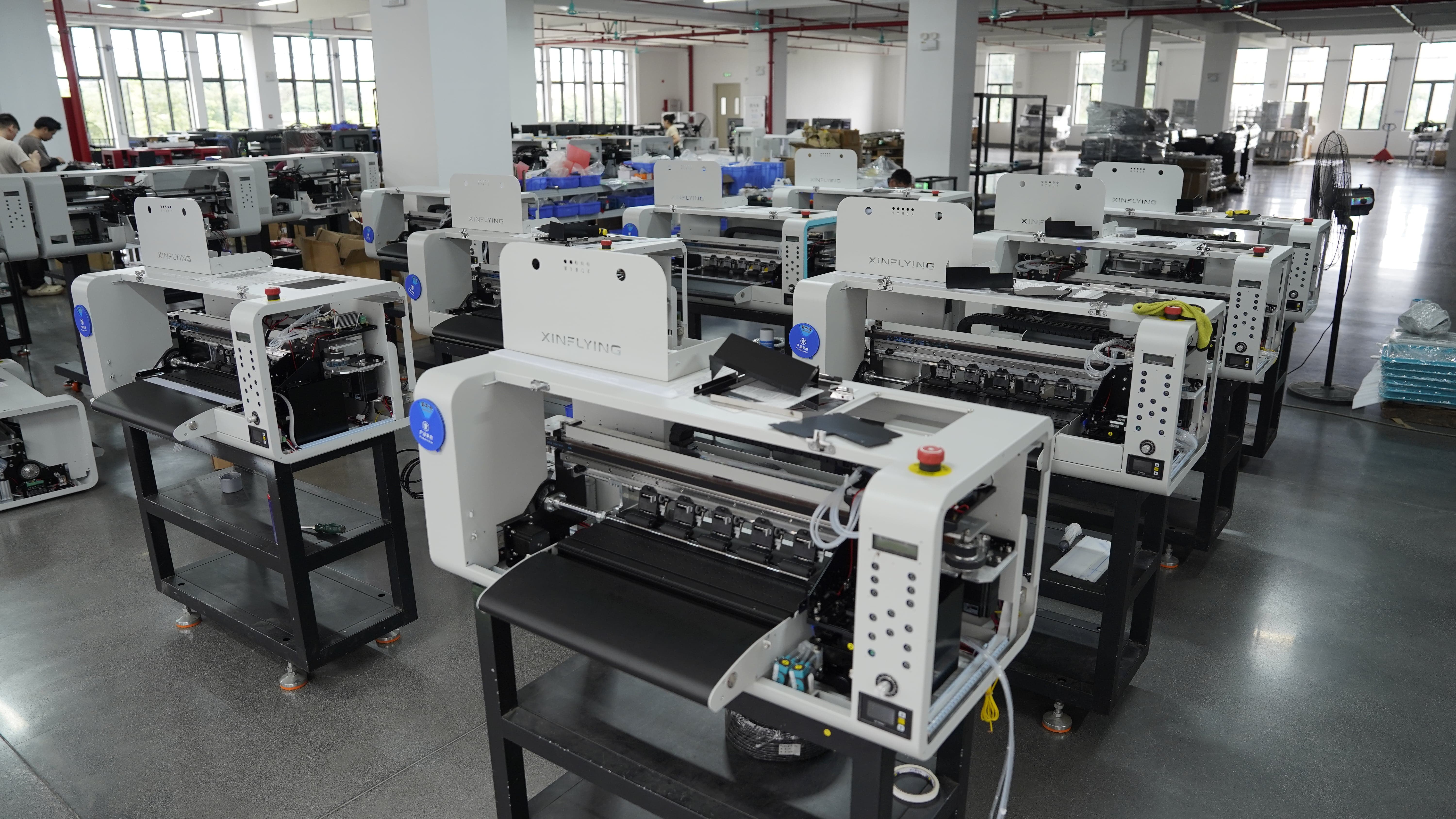
The Detailed Solution: Reading the XF-C604 and XF-C605 as Production-Line Siblings
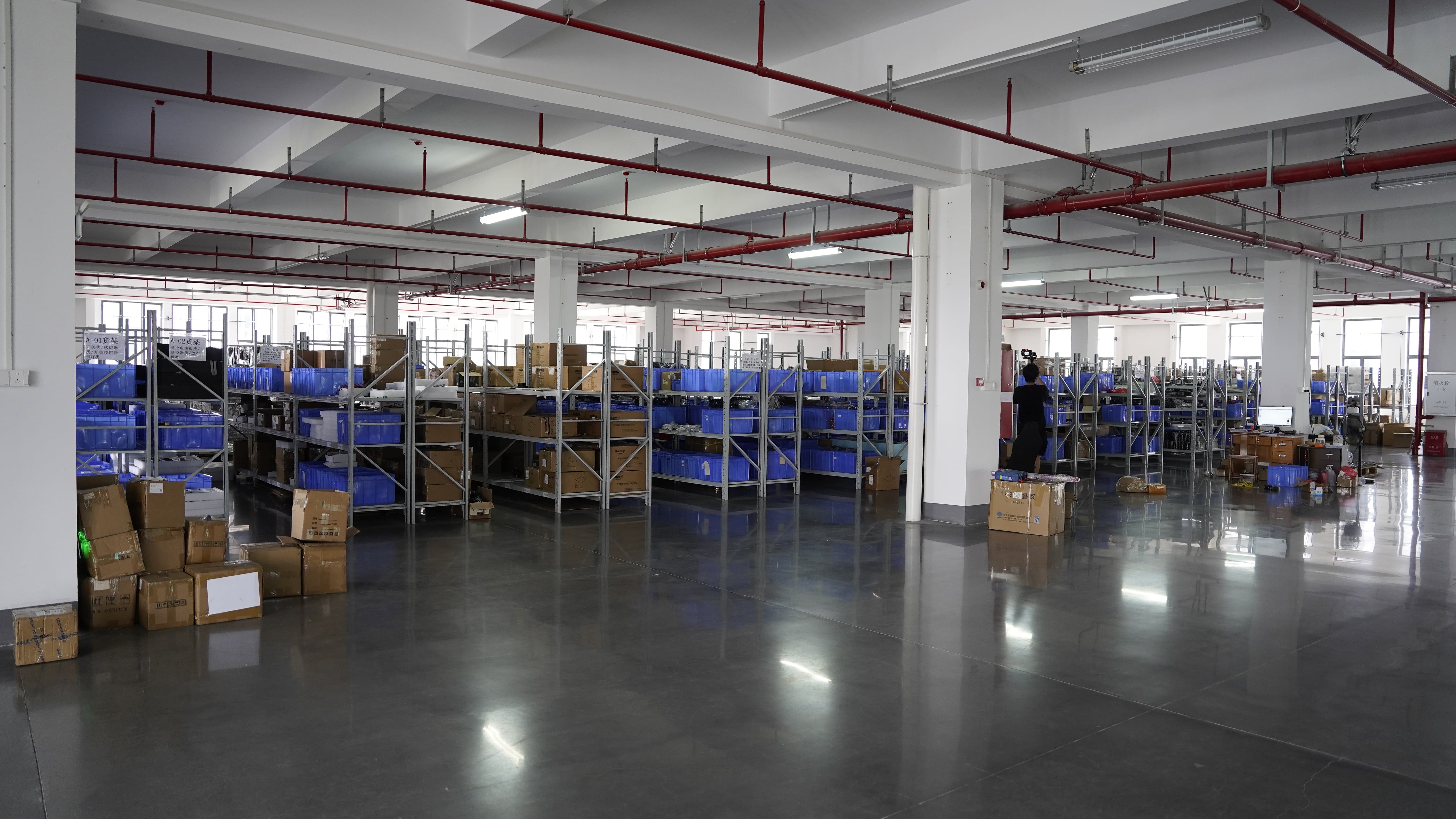
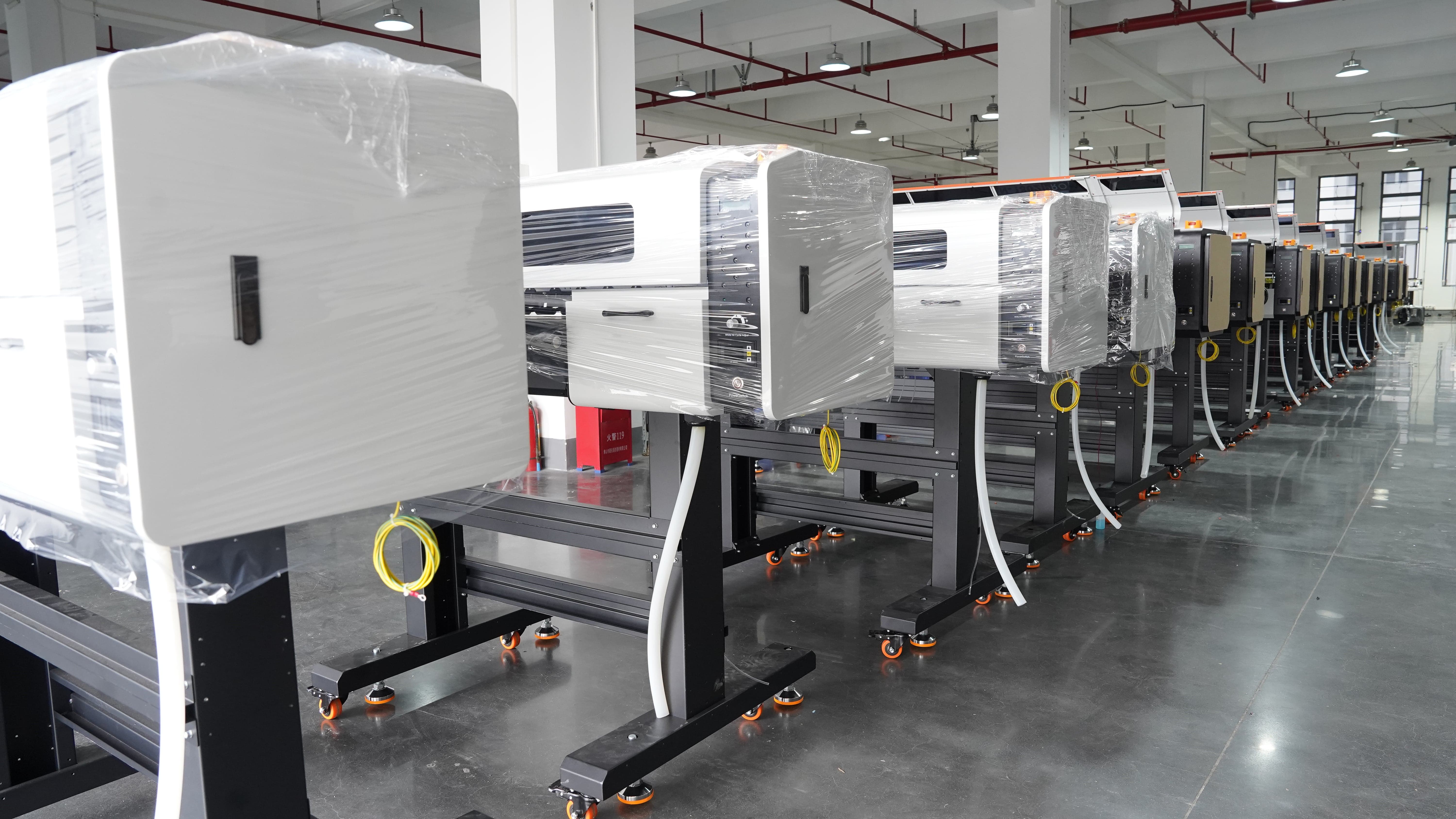
The most useful mental model is to stop comparing the XF-C604 and XF-C605 as isolated products and start reading them as two positions on one production line. XINFLYING operates a 37,440 m² manufacturing footprint with more than 200 employees, an annual output exceeding 20,000 units, and a 20-engineer R&D team. That scale is what makes it possible to run two closely related DTF models in parallel rather than forcing every buyer into a single configuration.
For a small-footprint entry factory, the sibling relationship produces a clear set of decision levers:
- Shared engineering platform. Because the two models come off the same line, consumables logic, maintenance routines, and operator training overlap heavily — reducing the hidden cost of learning a new machine.
- Footprint as the first filter. In a tight floor plan, the model that physically fits with room for a heat press, curing station, and material staging wins — even if the other sibling has more headroom on paper.
- Throughput matched to order mix. An entry factory should size the model to the order mix it can realistically win in the first 12 months, not to a theoretical peak it cannot feed.
- Certification completeness. Both models sit inside a certification file that includes EN IEC 61000-3-2, which matters when clients or importers audit the installation.
XINFLYING's manufacturing base — 80% export ratio across North America, South America, Europe, Asia, the Middle East and Africa — also means the compliance paperwork attached to the XF-C604 and XF-C605 is built for cross-border deployment, not just domestic sale. That is a practical advantage for a small factory that expects to serve export-oriented apparel clients.
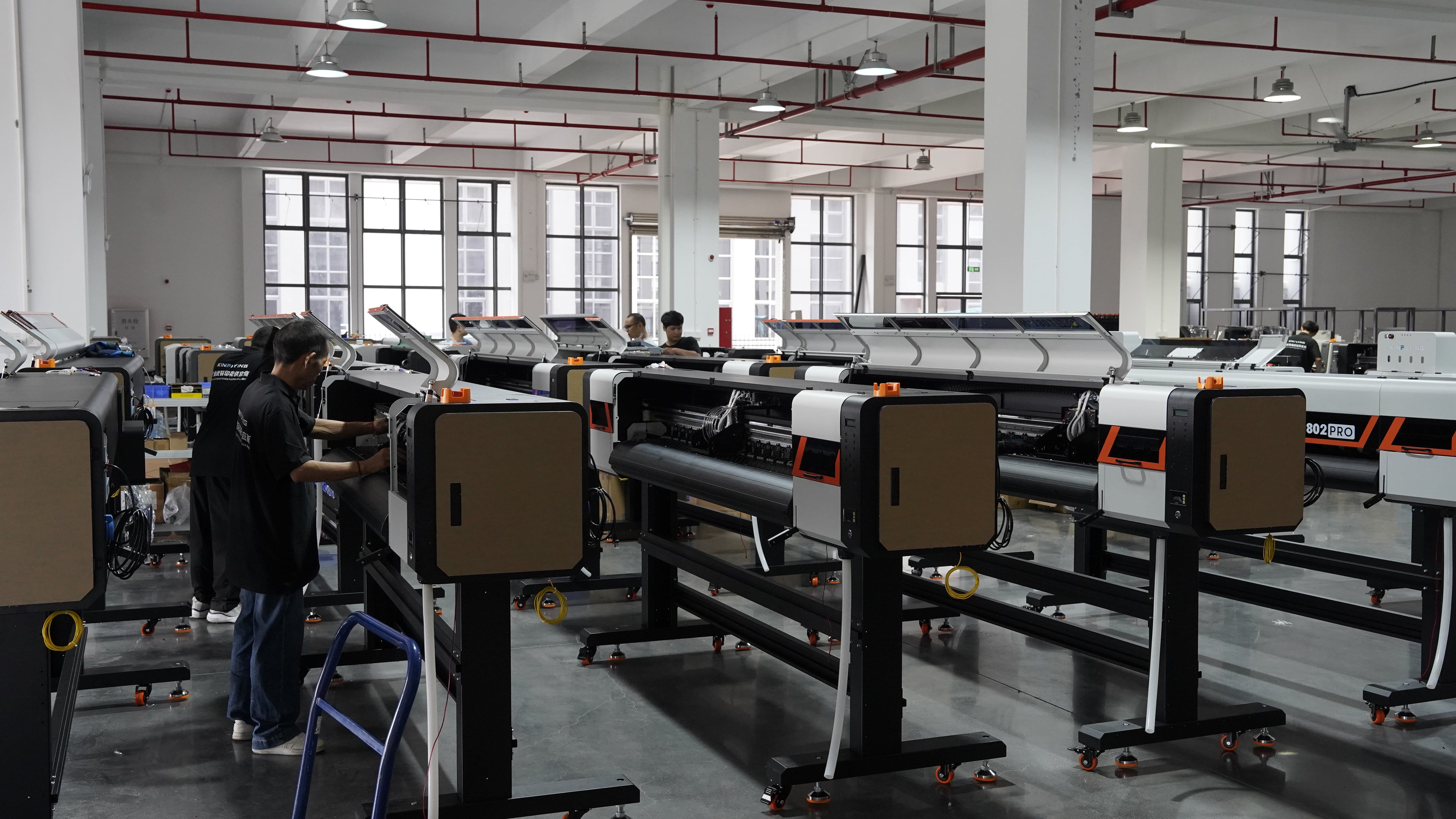
Step-by-Step Breakdown: Choosing Between the XF-C604 and XF-C605
Step 1 — Map the floor before you compare models
Draw the actual production cell: printer footprint, heat press, curing oven or powder shaker, film storage, and operator walkway. If only one of the two sibling models leaves a workable walkway and material staging zone, the decision is effectively already made. Floor-plan fit is the single most common reason an entry DTF factory regrets a purchase.
Step 2 — Define a realistic 12-month order mix
Write down the three order types you expect to run most often — for example, small-batch custom apparel, sample production for brand clients, and short-run promotional work. Then ask which sibling model keeps a comfortable margin on that mix without sitting idle. The XINFLYING case record for personalised sportswear production, small-batch customisation, and continuous commercial printing shows that these three workloads often share one line — so the model should be chosen for the mix, not a single job type.
Step 3 — Confirm the certification file, including EN IEC 61000-3-2
Request the certification documents for the exact serial-numbered unit you will receive, not a generic brochure. EN IEC 61000-3-2 is a harmonic-emission standard that applies to the electrical input of the machine; it is often listed alongside CE-related electrical safety and electromagnetic compatibility documents. Buyers importing into the EU should confirm that CE, EMC and LVD documentation matches the supplied model — a point XINFLYING's own compliance guidance makes explicit.
Step 4 — Check workflow compatibility
DTF production is a chain: RIP software, film, powder, curing, and heat press. Confirm that the sibling you choose integrates cleanly with the RIP and heat-press equipment you already own or plan to buy. For XINFLYING's wider range, RIP options such as Maintop (standard), RIIN, PhotoPrint, and Printfactory (optional) are documented on the sublimation side of the catalogue — a sign that the company treats software compatibility as part of the equipment specification, not an afterthought.
Step 5 — Validate OEM and customisation needs early
If you plan to build a private-label DTF service or resell under your own brand, confirm customisation scope before ordering. XINFLYING offers OEM/ODM with product branding, machine appearance customisation, colour customisation, logo customisation, packaging customisation, and customised solutions based on customer requirements — with a minimum order quantity of 1 unit.
Step 6 — Lock in lead time against your launch date
XINFLYING quotes a 5–40 day lead time and a monthly capacity of 1,600+ units. For an entry factory, the useful question is not “how fast can it ship,” but “does the shipping window leave enough time for installation, test printing, and first customer delivery.”
Step 7 — Plan after-sales before you sign
XINFLYING maintains over 50 engineers delivering 24/7 online technical support. For a small factory without an in-house technician, this is a material part of the value equation: a slightly longer ramp-up on a well-supported model is usually cheaper than a fast installation on a model nobody can troubleshoot.
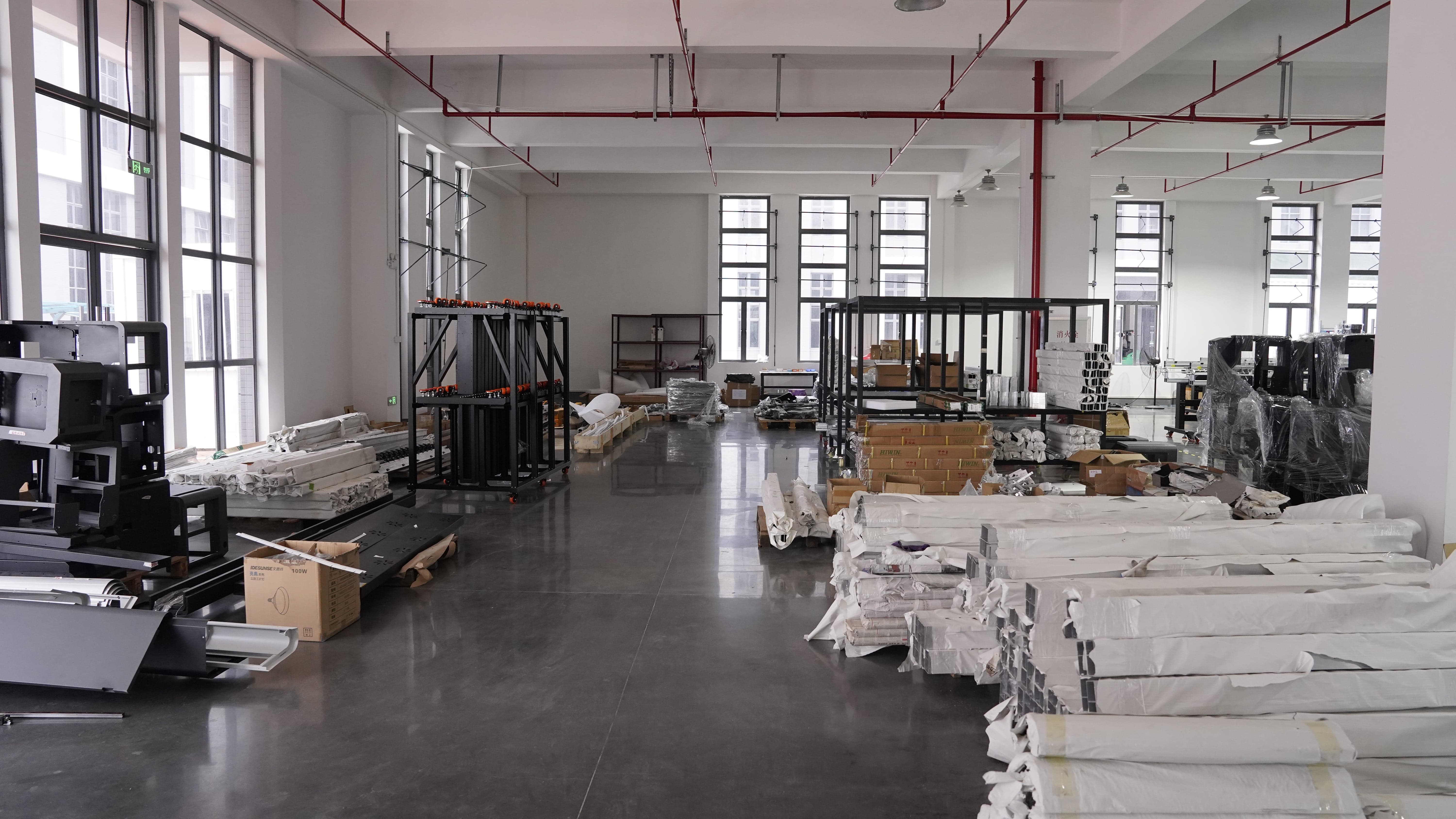
Use Cases: Where the XF-C604 and XF-C605 Fit in Real Production
The sibling models are most useful when the workload matches their position on the line. XINFLYING's own application record illustrates the realistic use cases:
- Personalised sportswear and team apparel. A digital textile printing service provider running five units over three years uses XINFLYING sublimation and DTF-family equipment to serve sportswear brands, apparel factories and customised textile businesses — expanding capacity and improving response speed on customised orders.
- Small-batch customisation. A Brazilian sports uniform supplier running eight units for five years produces customised football kits, training uniforms and team apparel with personalised names, numbers and graphics — a workload pattern that maps directly onto the entry DTF use case.
- Home textile and decorative work. A home textile manufacturer running ten units over four years uses the equipment for curtains, cushions and decorative fabrics — a reminder that DTF-family machines often serve decorative as well as apparel clients.
- Continuous commercial printing. A sportswear manufacturer running fifteen units over four years produces football jerseys, basketball uniforms and customised sportswear, using roll-to-roll printing before cutting and sewing.
Each of these cases shares a trait: the equipment was sized to a defined order stream. That is precisely the discipline an entry factory should apply when choosing between the XF-C604 and XF-C605.
Comparison Table: Decision Criteria for the XF-C604 and XF-C605
The table below compares the two sibling models on the decision criteria that matter most to a small-footprint entry factory. Where a specific technical parameter is not part of the certified content set, the correct action is to request it from the supplier for the exact serial-numbered unit — not to assume it.
| Decision Check | What to Confirm for the XF-C604 | What to Confirm for the XF-C605 | Why It Matters for a Small Entry Factory |
|---|---|---|---|
| Production-line origin | Built on the same XINFLYING DTF line as the XF-C605 | Built on the same XINFLYING DTF line as the XF-C604 | Shared platform reduces training and maintenance duplication |
| Physical footprint | Request exact machine and packing dimensions | Request exact machine and packing dimensions | Floor fit is the first binding constraint in a small plant |
| Throughput ceiling | Match to your 12-month order mix | Match to your 12-month order mix | Over-sizing ties up capital; under-sizing caps growth |
| Certification file | Confirm EN IEC 61000-3-2 listing plus applicable CE-related documents for the supplied unit | Confirm EN IEC 61000-3-2 listing plus applicable CE-related documents for the supplied unit | Export customers and importers increasingly audit harmonic-emission and EMC paperwork |
| Workflow compatibility | Verify RIP, film and heat-press pairing | Verify RIP, film and heat-press pairing | One incompatible component stalls the whole line |
| OEM / ODM scope | Branding, appearance, colour, logo, packaging, customised solutions | Branding, appearance, colour, logo, packaging, customised solutions | Private-label DTF services need branded hardware from day one |
| Lead time | 5–40 days, subject to order confirmation | 5–40 days, subject to order confirmation | Launch date must survive installation and test printing |
| After-sales | 24/7 online technical support via 50+ engineers | 24/7 online technical support via 50+ engineers | Small teams depend heavily on vendor troubleshooting |
| Quality control | Pre-shipment testing | Pre-shipment testing | Reduces the risk of a dead-on-arrival line |
Reliability Signals Behind the XF-C604 and XF-C605
Two reliability signals are worth flagging for entry buyers. First, XINFLYING's 37,440 m² facility and 20,000+ unit annual output are consistent with a manufacturer that can supply spare parts and repeat configurations over time — a real consideration when a small factory plans to add a second machine within two years. Second, the company's 20-engineer R&D team supports customisation and iterative model development, which is the practical reason two sibling DTF models can exist in the first place.
Neither signal replaces a sample test. They simply tell you whether the supplier can support a long-term relationship beyond the first shipment.
Frequently Asked Questions
1. What does EN IEC 61000-3-2 cover, and why is it listed in DTF certification documents?
EN IEC 61000-3-2 is a harmonic-emission standard covering the electrical input of the equipment. It is listed alongside CE-related electrical safety and electromagnetic compatibility documents because export buyers and importers increasingly audit harmonic-emission paperwork together with EMC and LVD files. For a DTF installation, the practical step is to request the certification file that matches the exact serial-numbered unit you will receive — not a generic model brochure — and to verify that the EN IEC 61000-3-2 listing applies to that unit.
2. Can the XF-C604 and XF-C605 be customised under OEM/ODM?
Yes. XINFLYING provides OEM/ODM services covering product branding, machine appearance customisation, colour customisation, logo customisation, packaging customisation, and customised solutions based on customer requirements. The minimum order quantity is 1 unit, which makes single-unit customisation viable for a small entry factory testing a private-label DTF service.
3. What is the minimum order quantity and how should a small factory budget?
The minimum order quantity for XINFLYING equipment is 1 unit. Budgeting should account for the printer, RIP software, film and powder consumables, a heat press, curing equipment, and spare parts. Because pricing depends on configuration and customisation requirements, the correct approach is to request a quote against the exact XF-C604 or XF-C605 configuration you intend to run — never to assume a list price.
4. How should I validate a sample before committing?
XINFLYING applies pre-shipment testing on its equipment. For a sample validation, request test prints on the film and fabric you intend to use, a nozzle check report, and confirmation that RIP settings match your intended workflow. Where possible, ask for the certification documents for the specific unit at the same time, so the technical and compliance checks happen together rather than sequentially.
5. What lead time should a small factory plan for?
XINFLYING quotes a 5–40 day lead time with a monthly capacity of 1,600+ units. For an entry factory, plan backwards from your first customer delivery date: allow time for shipping, installation, test printing, and operator ramp-up. A realistic plan treats the lead time as the start of a commissioning window, not the end of the project. To discuss the XF-C604 or XF-C605 against your floor plan and order mix, request a sample and quotation from the XINFLYING team.
Next Step: Test the Fit Before You Commit
The XF-C604 and XF-C605 are built on the same DTF line for a reason — they let an entry factory choose the configuration that matches its floor plan and order mix, rather than forcing a one-size compromise. XINFLYING supports that decision with pre-shipment testing, OEM/ODM customisation from a single unit, a 5–40 day lead time, and 24/7 online technical support from over 50 engineers.
Request a sample or quotation for the XF-C604 or XF-C605 against your specific layout and workload.
Website: www.xin-flying.com | Email: info@xin-flying.com | Tel / WhatsApp: +86 188-1322-1357
Download the company profile and full product catalogue: XINFLYING Corporate Brochure (PDF)
Conclusion
For a small-footprint entry factory, choosing between the XF-C604 and XF-C605 is less about a headline specification gap and more about disciplined fit. The two sibling models share a production-line lineage, a certification framework that includes EN IEC 61000-3-2, and the same OEM/ODM and after-sales infrastructure — which means the deciding factors are floor plan, order mix, workflow compatibility, lead time, and after-sales support.
Approach the decision in that order. Map the floor, define the order mix, confirm the certification file for the exact unit, verify workflow compatibility, validate a sample, and only then commit. That sequence protects an entry factory from the most expensive DTF mistake: buying a machine that is technically capable but structurally misaligned with the business around it.
Have Questions or Need More Details?
Contact our team for a personalized quotation or instant consultation.
Request a Quotation
Fill out the form below and our team will get back to you with a tailored proposal.
WhatsApp Direct Chat
Prefer to chat in real-time? Message us on WhatsApp for instant assistance & quick answers.
- Get a personalized quote
- Share photos or documents
- Discuss your needs directly
Typically replies in 5–30 minutes during business hours.