
Sublimation Ink Systems: Pump vs Gravity Compared
Ink Systems Compared: Sublimation Printer Pump vs Gravity Inks
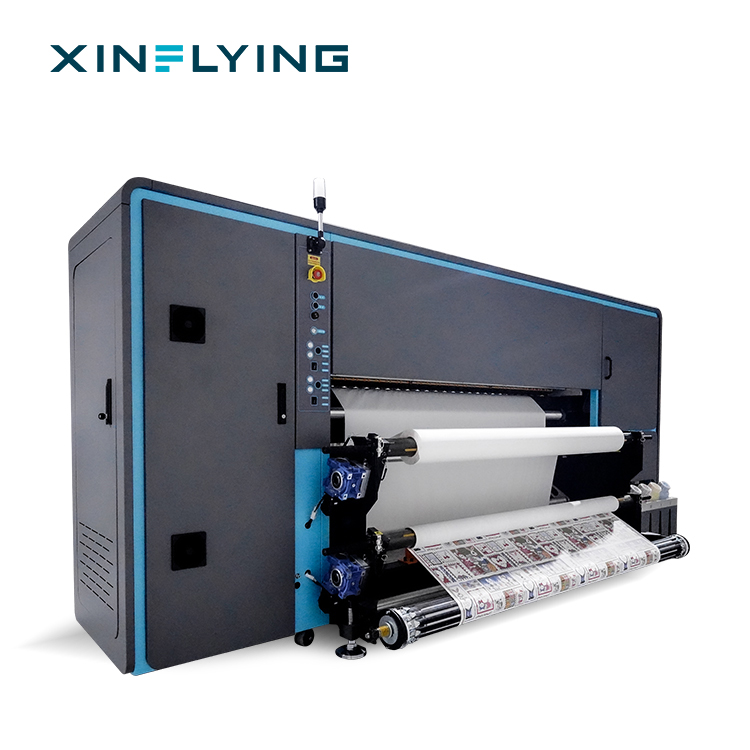
Ink delivery is the hidden decision in a sublimation printer purchase. Pump-assisted ink systems and gravity-fed ink systems both move dye sublimation ink from a reservoir to the printhead, but they create different maintenance routines, different white-ink risks, and different production limits. Neither is universally better. Pump-assisted circulation fits long, high-duty runs where ink must stay conditioned; gravity-fed delivery fits simpler, lower-duty or compact setups where lower component count matters. The right choice starts with the production profile, not the label.
Buyers comparing a sublimation printer often begin with printhead count, print width, and top speed. Those numbers matter, but they are only the visible layer. A wide format sublimation printer can share the same head model and the same quoted speed as another machine and still behave very differently after six months of production. The difference is often the ink path: how ink is stored, filtered, pressurized, degassed, circulated, and cleaned. That path determines whether a 1900mm sublimation printer can run long rolls without operator intervention, and whether a DTF platform can keep white ink moving between jobs.
Problem Definition: Why Ink Architecture Is Hard to Compare
Most specification sheets list printheads, ink colors, print width, speed, power, and machine size. Few list the pump model, filter rating, damper layout, ink-line diameter, or white-ink circulation method. As a result, buyers compare the parts they can see and assume the hidden parts are equivalent. They are not.
Two machines can both be described as a commercial sublimation printer and still use different ink-delivery logic. One may rely on a static head from a cartridge or tank, with ink moving by gravity and capillary action. Another may use a pump or pressure source to push ink through filters, dampers, and manifolds, with circulation to keep pigment suspended. The first is simpler. The second is more controlled. The trade-off is not automatically in favor of the more complex system: every pump, filter, valve, and damper adds a service item.
The practical problem is that ink architecture shows up late. It appears as banding after a long run, as missing nozzles after a weekend shutdown, as white-ink settling in a DTF line, or as color drift between the first and last roll of a 1000 m job. Buyers who evaluate only headline speed may discover the ink system after installation, when the maintenance routine is already set.
Industry Background: Digital Textile Growth Makes Ink Delivery a Production Issue
The dye sublimation printing market was valued at USD 16.4 billion in 2025 and is projected to reach USD 39.0 billion by 2033, according to Grand View Research. The same source projects an 11.5% CAGR from 2026 to 2033. Mordor Intelligence values the dye sublimation printers segment specifically at USD 1.88 billion in 2025, with an expected reach of USD 2.53 billion by 2030. These are different scopes, but they point in the same direction: digital textile printing is no longer a niche sampling tool.
Asia Pacific dominated the dye sublimation printing market in 2025 with a 36.5% revenue share, led by China as the largest country market, according to Grand View Research. China's textile and garment exports reached USD 293.6 billion in 2023, which helps explain why a china sublimation printer supplier can support a wide range of machine configurations and price points. The supply base is broad, but breadth is not the same as fit.
Production technology has also standardized. FESPA Insights notes that roll-to-roll sublimation printers with widths of 1.9 m, or 1900 mm, are standard for high-volume textile and soft signage applications. That width is now common in a large format sublimation printer lineup, and it is one reason buyers search for a best 1.9m sublimation printer or a 1.9m sublimation printer with a specific ink configuration. The width is easy to compare. The ink path is not.
Inkjet production printers accounted for 87.3% of the production printer market share by type in 2024, according to Grand View Research. In practical terms, the industry has converged on inkjet as the production method. The remaining competition is about reliability: how consistently a sublimation printing machine delivers color, how often it stops, and how much operator time it consumes. That is where pump-assisted and gravity-fed ink systems diverge.
Detailed Solution: How Pump and Gravity Ink Systems Differ
Pump-Assisted Ink Delivery: What It Solves and What It Adds
In a pump-assisted system, a pump or pressure source moves ink through tubing, filters, dampers, and manifolds to the printhead. The system may circulate ink continuously or condition it before printing. The goal is to maintain pressure across multiple heads, keep pigment particles suspended, and reduce manual priming. On a high-volume dye sublimation printer with many heads, stable pressure is not a luxury; it is the difference between consistent color across the web and visible variation from head to head.
Pump-assisted delivery is particularly relevant when the ink contains materials that settle. In DTF workflows, white ink is the stress test. White pigment is dense, and if it is not kept moving, it can settle in lines, dampers, or the head. Recirculation or agitation is often used in DTF systems for that reason. The same logic applies to some sublimation ink formulations, especially where long idle periods or high head counts make static ink columns harder to control.
The advantages are practical. A pump-assisted system can support faster recovery after cleaning, more stable meniscus control, and better multi-head consistency on a wide format sublimation printer. It can also reduce the operator's manual priming work. The limits are equally practical. Pumps, filters, dampers, valves, and tubing are service items. The machine needs a maintenance schedule, spare parts, and a technician who understands the ink path. A pump system that is not maintained can fail in ways that are harder to diagnose than a simple gravity feed.
Gravity-Fed Ink Delivery: Simplicity Has a Place
A gravity-fed system uses the static head from a cartridge or tank positioned above the printhead. Ink flows by gravity and capillary action, often regulated by a damper. The architecture has fewer active components. That makes it easier to start up, easier to understand, and often easier to maintain in a small shop. For a sublimation printer for shirts, a compact sublimation machine, or a best sublimation printer for beginners, simplicity can be a real advantage.
Gravity systems also have limits. They are less effective at keeping heavy pigments moving without manual agitation. They can be sensitive to ink level, head height, and tubing layout. They are not the natural first choice for a large sublimation printer running 1000 m rolls unattended, or for a DTF line with white ink that needs recirculation. A gravity system can still produce excellent output; it simply asks more of the operator in monitoring and routine care.
The mistake is to treat gravity as old technology and pump as new technology. Both are engineering choices. A well-designed gravity system on a compact sublimation printer for t-shirts can be more reliable than a poorly maintained pump system on a large machine. The decision should match the duty cycle, the ink set, and the service capability of the buyer.
How the Two Architectures Change Maintenance
Daily maintenance is similar on both systems: nozzle checks, capping, and a visual check of ink levels and lines. The difference appears in weekly and monthly routines. Pump-assisted systems add filter inspection, pump tubing checks, damper pressure checks, and circulation tests. Gravity systems add ink-level checks, manual agitation where required, damper inspection, and head-height verification. In simple terms, the maintenance burden shifts from operator time to component service.
That shift matters for staffing. A shop with one trained operator may prefer a gravity-fed sublimation printing machine because the routine is visible and local. A shop with a maintenance technician and a production schedule may prefer pump-assisted delivery because the machine can run longer between manual interventions. Neither choice is wrong if the service model matches the machine.
Model Examples: XF-19E15-PRO and XF-C604
The XF-19E15-PRO is a 190 cm roll-to-roll sublimation printer with 15 Epson i3200-A1 printheads, CMYK ink, 3200 dpi resolution, and a fastest speed of 1PASS 524 m²/h or 2PASS 254 m²/h. Its standard speed is listed as 1PASS 394 m²/h or 2PASS 188 m²/h. It loads sublimation paper rolls of 1000 m, uses an external intelligent air-heat integrated dryer, and is specified with fully sealed automatic moisturizing and cleaning. Power is 14.5 kW at 210–230 V, 45 A; net weight is 1480 kg. This is an industrial textile sublimation platform, not a compact entry machine.
For ink-system evaluation, the important published fact is the fully sealed automatic moisturizing and cleaning. That is a closed ink-management feature: the ink path is conditioned automatically between jobs. It reduces manual capping and cleaning work, but it does not remove the need to inspect filters, dampers, and ink lines. The specification does not publish the internal pump model or circulation method. A buyer should ask for the ink-path drawing, the filter schedule, and the spare-parts list. On a 1000 m roll, ink continuity and pressure stability matter for the entire run, not just the first meters.
The XF-C604 is a different platform. It is a DTF printer with four Epson i3200-A1 printheads, CMYK+CMYK+W+W ink colors, a 60 cm print width, and a fastest speed of 4PASS 38 m²/h, 6PASS 26 m²/h, or 8PASS 20 m²/h. Its standard speed is 4PASS 27 m²/h, 6PASS 18 m²/h, or 8PASS 13 m²/h. It uses DTF PET film, has a 1.6 kW power rating, and lists automatic moisturizing as an optional function. Net weight is 180 kg.
The XF-C604 is useful for understanding ink architecture because the white channels make maintenance visible. A DTF workflow with CMYK+CMYK+W+W has to manage white ink, which is the part most likely to settle or clog if it is not kept moving. Automatic moisturizing is optional on this model, so the buyer must decide whether to specify it and must confirm the white-ink circulation or agitation method. The maintenance implication is direct: daily white-ink circulation, capping, and filter checks are part of the routine. If optional moisturizing is not selected, the manual routine is heavier.
For a mid-volume roll-to-roll comparison, the XF-O2000-4I32A1 adds another ink configuration: four Epson i3200-A1 heads, CMYK+CMYK+CMYK+CMYK, a 195 cm print width, 2PASS 180 m²/h or 4PASS 92 m²/h, and a sublimation ink system listed as 220 ml cartridge plus 3 L ink tank. It supports heat transfer paper rolls of 1000–1500 m. The tank-based supply is a useful reminder that ink architecture is not only pump versus gravity; it is also cartridge versus bulk tank, and the refill and agitation routine changes accordingly.
Step-by-Step Breakdown: How to Evaluate Ink Delivery Before You Buy
- Map the production mix. List the products you will run: sublimation printer for shirts, sublimation printer for t-shirts, Sublimation Printer for Textiles, Sublimation Printer for blanket, soft signage, or DTF apparel. Note whether white ink is required. A CMYK sublimation workflow and a CMYK+W DTF workflow have different ink-management risks.
- Calculate duty cycle and roll length. A 1900mm sublimation printer running 1000 m rolls has different ink-continuity requirements from a compact machine running short daily jobs. Match the ink system to the longest unattended run you expect, not the shortest demo.
- Ask for the ink-path schematic. Request a drawing that shows tank or cartridge, pump or pressure source, filters, dampers, manifold, and printhead. If the supplier cannot provide it, treat that as a warning sign. The drawing is more useful than a marketing label.
- Confirm white-ink handling if the machine is DTF. Ask whether white ink is circulated, agitated, or manually maintained. On the XF-C604, automatic moisturizing is optional, so confirm what is included and what the daily routine looks like.
- Check automatic moisturizing and cleaning as standard or optional. On the XF-19E15-PRO, fully sealed automatic moisturizing and cleaning is published as a standard specification. On other models, it may be optional. The difference affects operator time and weekend recovery.
- Request service intervals and spare parts. Ask for the filter change interval, pump tubing inspection interval, damper replacement guidance, and spare-parts availability. A pump-assisted system is only an advantage if the parts and know-how are available.
- Validate with your own artwork and substrate. Request a printed sample on your polyester fabric or DTF film. Check color accuracy, gradient smoothness, banding, and white-ink opacity. ISO 12647-8:2021 provides a standard for validation print processes working directly from digital data, and it is a useful reference for color validation discussions.
- Verify compliance and after-sales support. Match CE, RoHS, and OEKO-TEX documents to the exact model and ink set. Confirm technical support, training, and response time. Ink architecture is a long-term service relationship, not a one-time specification.
Use Cases: Where Ink Management Shows Up in Real Production
A sportswear manufacturer in Brazil has used this sublimation printer for football jerseys, basketball uniforms, and customized sportswear on polyester fabrics. The installation includes 15 units, and the customer has been using the sublimation printing solution for 4 years. The project achieved more consistent color quality across different production batches, reduced dependence on outsourced printing services, and improved production flexibility for customized orders. The case highlights industrial roll-to-roll printing capability, stable production performance, and color reproduction. For this profile, ink continuity across long polyester runs is more important than a low component count.
A sports uniform supplier in Brazil has used the product for 5 years, with 8 units, to produce customized football kits, training uniforms, and team apparel. The case highlights suitability for personalized sportswear production, small-batch customization, and continuous commercial printing. The project achieved shorter production cycles while maintaining the colors and detailed patterns required by team uniforms. Here, the ink system must recover quickly between design changes, because the order mix is variable.
A home textile manufacturer in global markets has used 10 units for 4 years for curtains, cushions, decorative fabrics, and customized polyester textile products. The project achieved customized textile collections with patterns, accurate colors, and flexible production capability. The case highlights suitability for large-format textile applications requiring detailed patterns and consistent printing quality. A sublimation printer for blanket and home textile work often runs wide, patterned jobs where color drift across the roll is immediately visible.
A digital textile printing service provider with a global customer base has used 5 units for 3 years for sublimation printing services for sportswear brands, apparel factories, and customized textile businesses. The project expanded production capacity, supported more customer projects, and improved response speed for customized textile orders. The case highlights reliable equipment performance, production flexibility, and compatibility with different polyester textile applications. For a service provider, the ink system must handle a mixed order book without forcing a full maintenance stop between customers.
Comparison Table: Published Configurations Relevant to Ink Architecture
| Model | Platform / type | Printheads | Ink colors | Print width | Published speed | Ink-related configuration | Stated application |
|---|---|---|---|---|---|---|---|
| XF-19E15-PRO | sublimation printer | 15× Epson i3200-A1 | CMYK | 190 cm (75 inch) | 1PASS 524 m²/h; 2PASS 254 m²/h (fastest) | fully sealed automatic moisturizing and cleaning; sublimation paper loads 1000 m rolls | Industrial textile sublimation printing (high-volume) |
| XF-C604 | DTF Printer | 4× Epson i3200-A1 | CMYK+CMYK+W+W | 60 cm (24 inch) | 4PASS 38 m²/h; 6PASS 26 m²/h; 8PASS 20 m²/h (fastest) | automatic moisturizing function (optional); DTF PET film | Textile / garment customization |
| XF-O2000-4I32A1 | sublimation printer | 4× Epson i3200-A1 | CMYK+CMYK+CMYK+CMYK | 195 cm (1.95 m) | 2PASS 180 m²/h; 4PASS 92 m²/h | sublimation ink (220 ml cartridge + 3 L ink tank); heat transfer paper 1000–1500 m rolls | Textile sublimation printing (clothing, home decor, canvas bags, cushions, flags) |
Table notes: the table uses published model specifications only. It does not label a model as pump or gravity where the specification does not state the internal pump or circulation method. Buyers should request the ink-path drawing for the exact configuration.
Shortlist Logic by Production Profile
If the production profile is high-volume industrial sublimation, the XF-19E15-PRO is the relevant model to evaluate. Its 190 cm width, 15 heads, 1000 m roll loading, and fully sealed automatic moisturizing and cleaning make it a high-throughput platform where ink continuity and closed conditioning matter.
If the work is DTF apparel with white ink, the XF-C604 is the relevant platform to evaluate. Its CMYK+CMYK+W+W configuration and optional automatic moisturizing make white-ink management the central question, not a secondary detail.
If the need is mid-volume roll-to-roll sublimation, the XF-O2000-4I32A1 is the relevant model to evaluate. Its 195 cm width, 220 ml cartridge plus 3 L ink tank, and 1000–1500 m roll support make tank refill and ink agitation part of the daily routine.
There is no universal best dye sublimation printer and no universal best sublimation printer for every shop. The best-fit machine is the one whose ink path matches the duty cycle, ink set, maintenance staff, and service support available.
FAQ
What certifications should I verify before importing a pump or gravity ink sublimation printer into the EU?
For EU import, check CE EMC, CE LVD, CE MD, and RoHS. Xinflying's CE EMC certificate TQT1550D270EC covers EN 55032:2015/A11:2020, EN 55035:2017/A11:2020, EN IEC 61000-3-2:2019+A1:2021, and EN 61000-3-3:2013/A2:2021. CE LVD certificate TQT1550D271EC covers EN IEC 62368-1:2020/A11:2020. CE MD certificate M.2026.206.C142365 covers EN ISO 12100:2010, EN 60204-1:2018/A1:2025, and EN ISO 12643-1:2023. RoHS certificate M.2026.206.C142366 covers EN IEC 63000:2018. For textile printing inks, OEKO-TEX ECO PASSPORT SH150194016 is valid to 2026-12-31. Match each certificate to the exact model and ink set.
Can a pump-assisted ink system support 1.9 m roll-to-roll production better than a gravity-fed system?
A pump-assisted or closed ink-conditioning system is generally better suited to long, high-duty runs because it can maintain pressure across multiple heads and keep ink moving between jobs. The XF-19E15-PRO, for example, is a 190 cm roll-to-roll sublimation printer with 15 Epson i3200-A1 heads, 1000 m roll loading, and fully sealed automatic moisturizing and cleaning. That published configuration supports high-volume production, but the specification does not publish the internal pump model. Confirm the pump, filter, and damper layout before assuming a specific architecture. For DTF white ink, the XF-C604's CMYK+CMYK+W+W configuration and optional automatic moisturizing make white-ink circulation a question to confirm separately.
Is a pump-based sublimation printer more expensive to own than a gravity-fed model?
There is no single answer. Gravity-fed machines usually have fewer ink-path components, so the initial component count and maintenance routine can be simpler. Pump-assisted machines add pumps, filters, dampers, and service parts. The correct comparison is total cost of ownership: ink waste, downtime, operator time, printhead life, spare parts, and service response. Ask for a line-item quote and a maintenance schedule. Xinflying accepts MOQ 1 unit and lists a lead time of 5–40 days, so a single-unit evaluation is possible before scaling.
Can I test my own artwork and fabric before choosing an ink system?
Yes. Validate with your own artwork and substrate before committing. Ask for a printed sample on your polyester fabric or DTF film, a nozzle-check report, and a maintenance walkthrough. Xinflying performs pre-shipment testing as part of quality control and supports OEM/ODM customization including product branding, machine appearance, color, logo, and packaging. For a sample or quote, contact info@xin-flying.com or WhatsApp +86 188-1322-1357.
What is the lead time and after-sales support for a Xinflying sublimation printer order?
Xinflying lists a lead time of 5–40 days, a monthly capacity of 1600+ units, and MOQ 1 unit. After-sales support includes over 50 engineers providing 24/7 online technical support. For a faster quote, send the model, ink colors, print width, and application. You can request a quote or sample through the contact details in the CTA below.
Conclusion: Choose the Ink Path That Fits the Production Week
Pump-assisted and gravity-fed ink systems are not status symbols. They are different answers to the same question: how to keep dye sublimation ink in the right condition at the printhead for the length of the job. Pump-assisted circulation adds control and service items. Gravity-fed delivery adds simplicity and operator dependence. The right answer depends on whether the machine runs 1000 m rolls, how often white ink is used, how many heads must stay consistent, and who will maintain the ink path.
Use the checklist in this guide before comparing price. Ask for the ink-path drawing, confirm white-ink handling, check automatic moisturizing and cleaning as standard or optional, review filter and pump service intervals, and validate with your own artwork. For a wide format sublimation printer or a commercial sublimation printer, the ink system is part of the production capability, not an accessory.
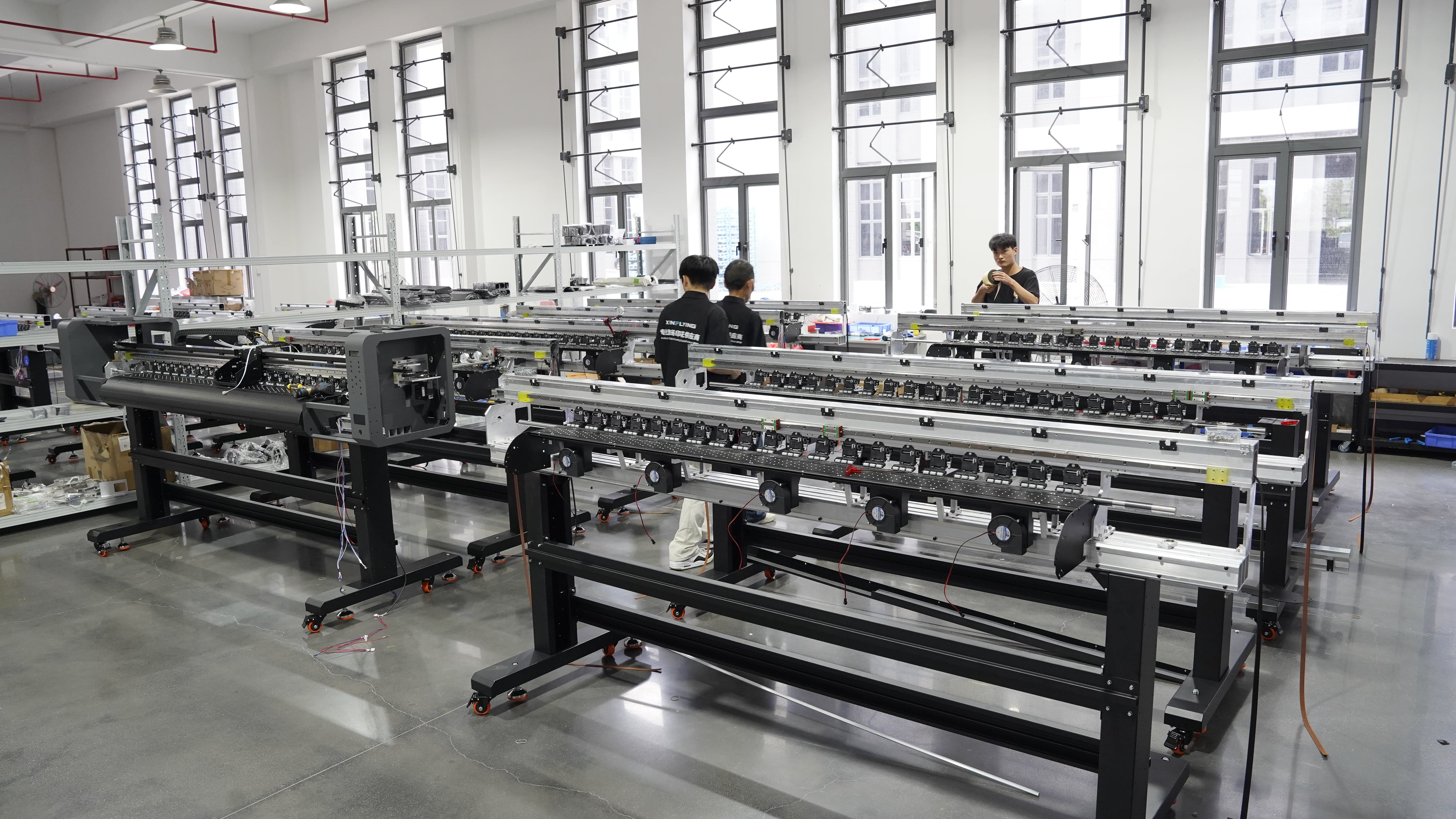
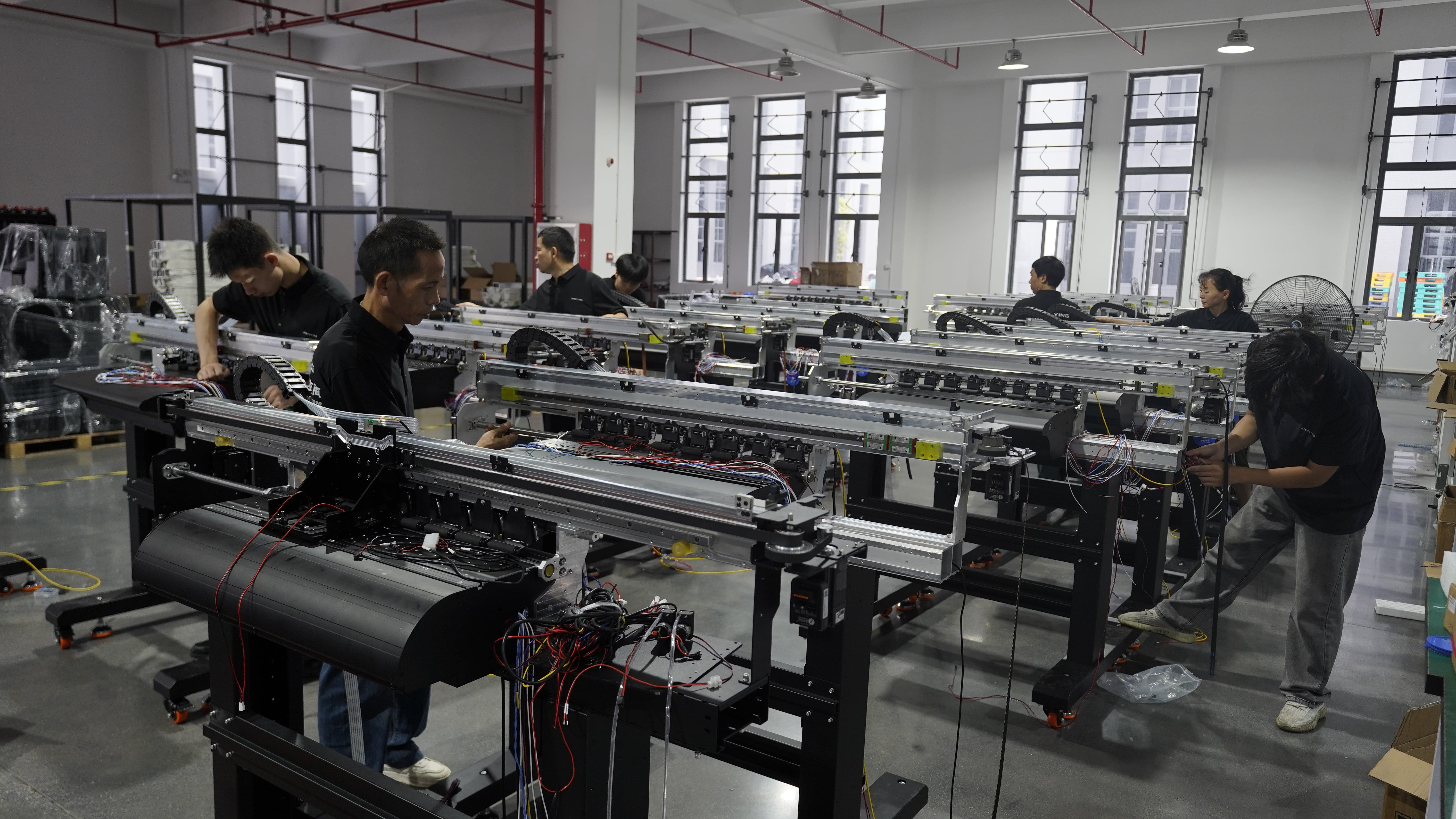
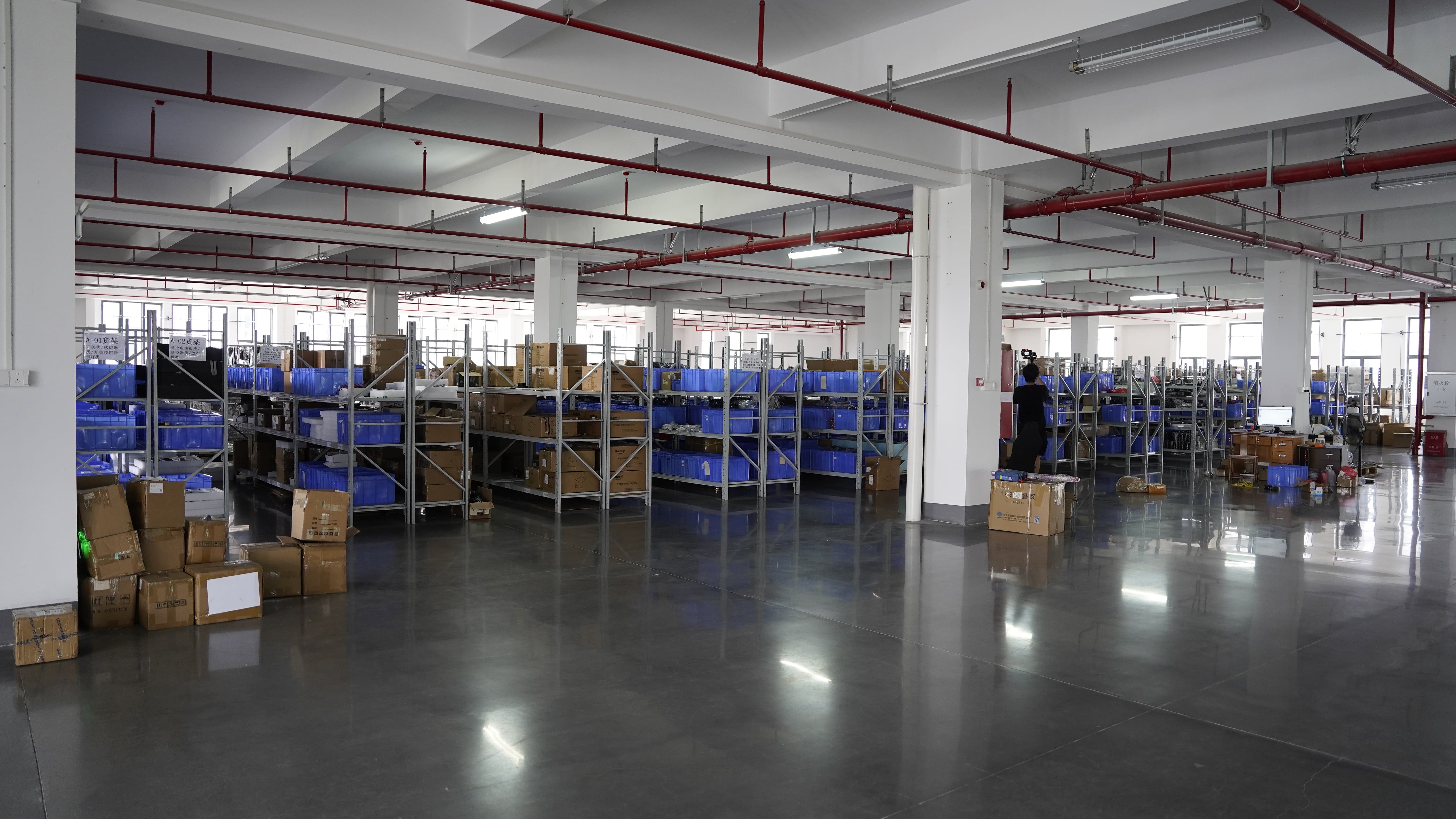
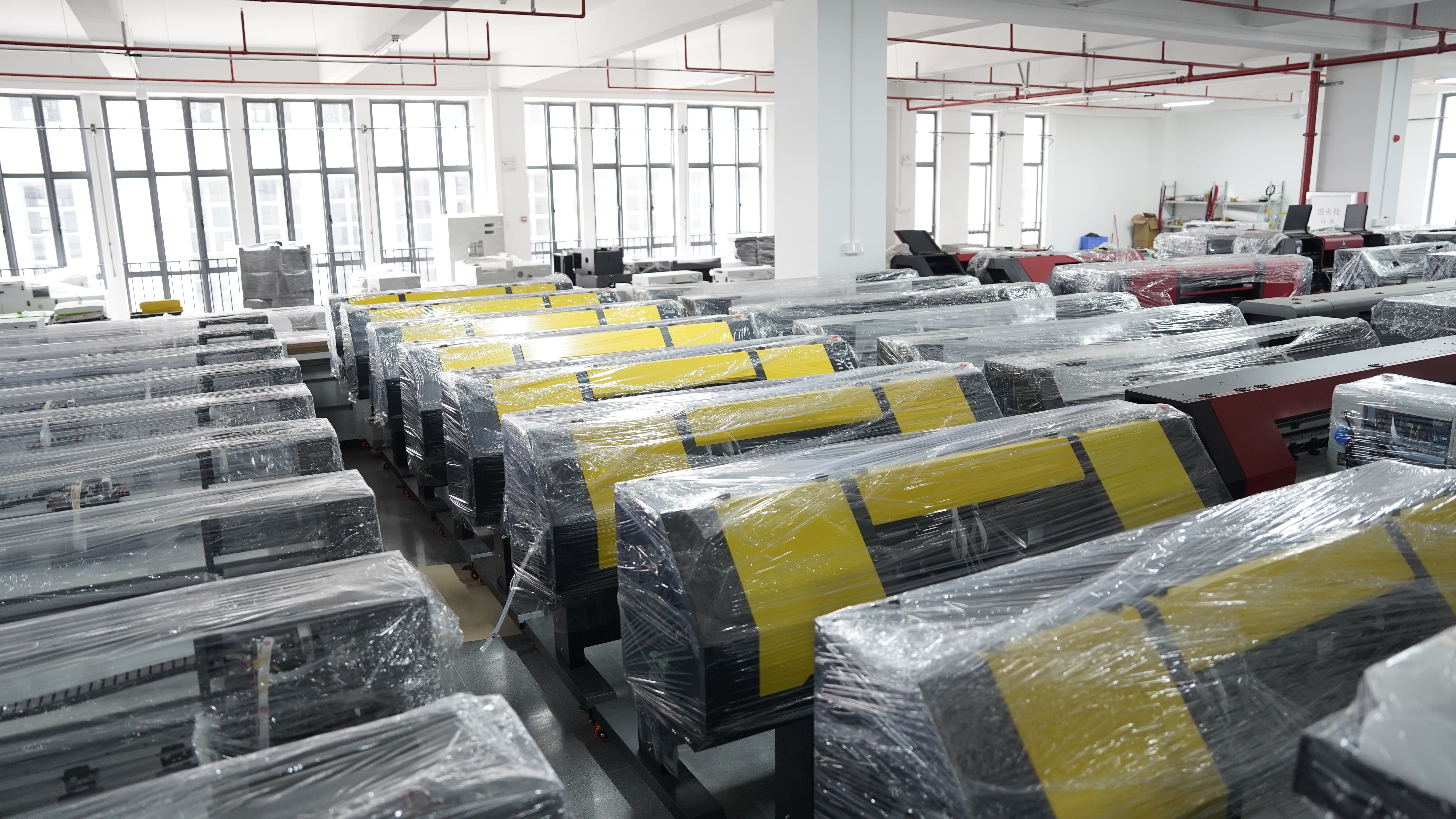
Xinflying, formally Guangzhou Xin Flying Digital Technology Co., Ltd., was founded in 2010 and operates a 37,440 m² factory with 200+ employees, 20 engineers, and annual output of 20,000+ units. The company exports to North America, South America, Europe, Asia, the Middle East, and Africa, with an export ratio of 80%. Its product range includes DTF printers, dye sublimation printers, DTG printers, UV DTF printers, UV flatbed printers, printing consumables, and complete digital printing solutions.
Next step: compare the ink path, not only the headline speed. Request a sample, a quote, or the Xinflying catalog for the model you are evaluating.
Email: info@xin-flying.com | WhatsApp: +86 188-1322-1357 | Website: www.xin-flying.com
Download the company brochure: Xinflying Corporate Brochure PDF
Have Questions or Need More Details?
Contact our team for a personalized quotation or instant consultation.
Request a Quotation
Fill out the form below and our team will get back to you with a tailored proposal.
WhatsApp Direct Chat
Prefer to chat in real-time? Message us on WhatsApp for instant assistance & quick answers.
- Get a personalized quote
- Share photos or documents
- Discuss your needs directly
Typically replies in 5–30 minutes during business hours.