
Sublimation Printer Comparison: CE, RoHS and OEKO-TEX Model Coverage
Most EU buyers open a sublimation printer comparison with printheads and speed. The filter that actually decides whether a machine can be imported, installed and accepted in the target market is documentation, and documentation is model-specific. A declaration of conformity names one machine configuration. A certificate number belongs to one test file. Neither transfers automatically to a different model sitting in the same catalogue.
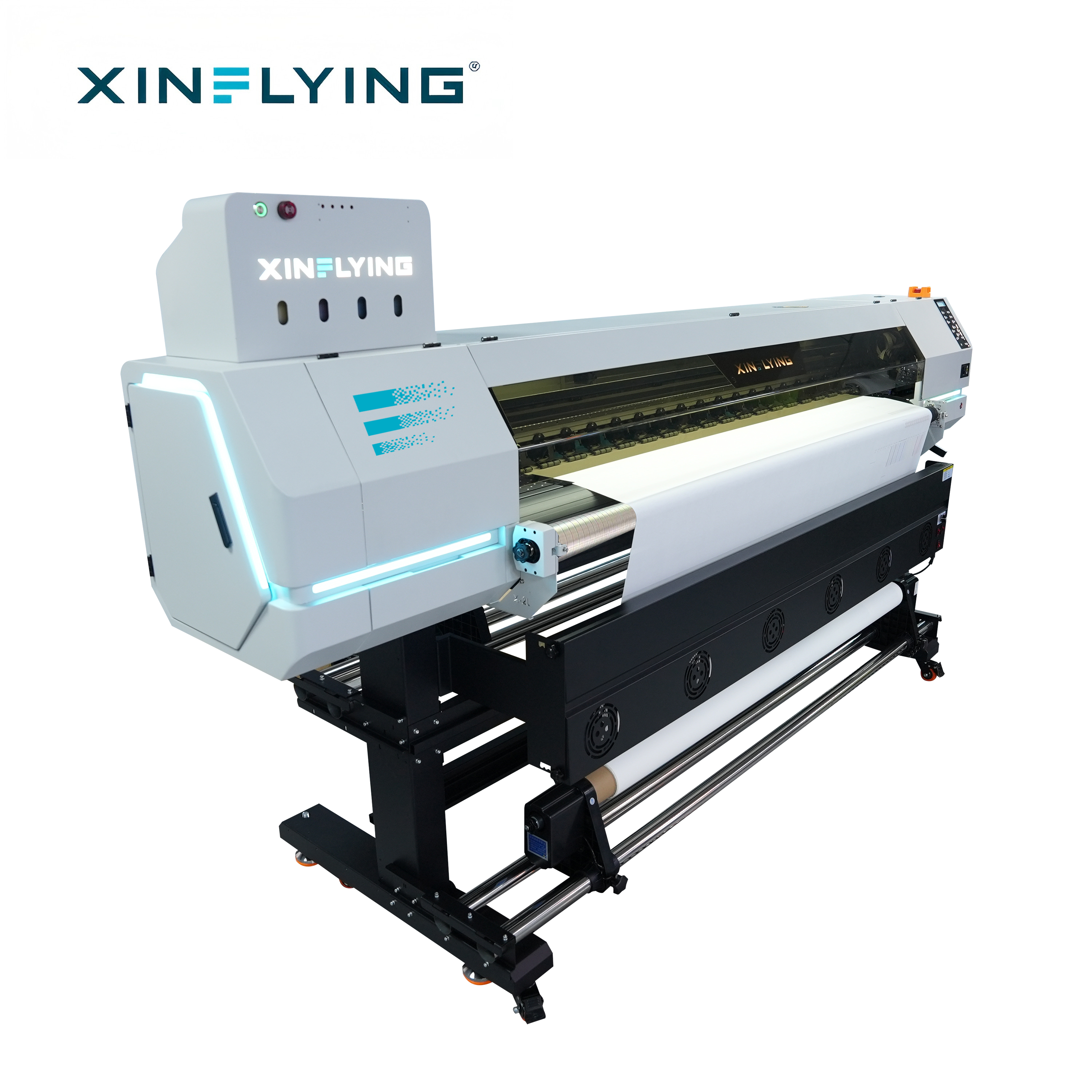
This comparison sets out the compliance position of four XINFLYING roll-to-roll dye sublimation models used in textile production — XF-19E15-PRO, XF-19E8-PRO, XF-H1802X-2I32A1 and XF-O2000-4I32A1 — together with the OEKO-TEX ECO PASSPORT SH150194016 held for XF-450PRO inks. XINFLYING (Guangzhou Xin Flying Digital Technology Co., Ltd.) is a Guangzhou-based digital printing equipment manufacturer founded in 2010, producing DTF, DTG, UV and dye sublimation systems and exporting to North America, South America, Europe, Asia, the Middle East and Africa.
Quick answer. The four models do not carry identical paperwork, and for an EU textile buyer those differences matter more than a shared brand name.
- XF-19E15-PRO — CE documentation covering EMC, LVD, MD and RoHS.
- XF-19E8-PRO — certificate M.2026.206.C142385, referencing EN 55032:2015, EN IEC 61000-3-2:2019+A1:2021, EN 61000-3-3:2013/A2:2021 and EN 55035:2017/A11:2020.
- XF-H1802X-2I32A1 — certificate BSTXD211021006201EC, referencing EN 55032:2015 and EN 55035:2017/A11:2020.
- XF-O2000-4I32A1 — the model-specific declaration and test report should be requested for the exact configuration ordered.
- XF-450PRO inks — OEKO-TEX ECO PASSPORT SH150194016, an ink-level chemical certificate, not a machine certificate.
The Real Problem: A Certificate Covers a Model, Not a Brand
When a supplier states that its sublimation printers are 'CE certified', the statement is usually true and almost always incomplete. CE marking is a declaration that a specific product configuration meets the applicable directives. On a large format sublimation printer, that configuration includes the printhead count, the chassis, the drying module, the power supply and the control electronics. Change the printhead count from two to fifteen and the electrical and electromagnetic profile of the machine changes with it, which is why separate test files exist for separate models.
Four failure patterns appear repeatedly when EU buyers audit textile printing equipment:
- Brand-level substitution. A certificate issued for one model is presented as covering an entire range, with no model number check.
- Layer confusion. An ink certificate is filed as if it certified the machine, or a machine certificate is treated as proof that printed fabric is safe for skin contact.
- Standard list mismatch. The standards named in the quotation do not match the standards named in the certificate, and no one reconciles the two documents.
- Configuration drift. The certificate describes a 220V build while the unit shipped is a 110/220V build, or the drying module differs from the tested configuration.
None of these are printing problems. They are filing problems, and they surface at customs, at the customer audit, or at the first retail compliance questionnaire — usually after the machine is already on the floor.
Where EU Compliance Actually Splits: Machine File and Ink File
A sublimation printing machine for fabric sits inside two separate regulatory conversations that are frequently merged into one.
The machine-level conversation covers the equipment itself. For a mains-powered industrial printer this normally means electromagnetic compatibility, electrical safety, machinery safety and restriction of hazardous substances — the EMC, LVD, MD and RoHS routes. These are what a CE declaration for the printer addresses, and they are what the EN standards referenced in a certificate belong to.
The ink-level conversation covers chemistry. OEKO-TEX ECO PASSPORT is a certification for textile chemicals — dyes and auxiliaries used in textile production — and it is issued to a specific chemical product, not to a machine. OEKO-TEX ECO PASSPORT SH150194016 is held for XF-450PRO inks. That certificate says something about the ink; it says nothing about the printer's electromagnetic emissions, and the printer's CE file says nothing about skin-contact suitability of the printed fabric.
The commercial context explains why this distinction is being tested more often. Grand View Research values the global dye sublimation printing market at USD 16.4 billion in 2025, projected to reach USD 39.0 billion by 2033, with Asia Pacific holding a 36.5% revenue share in 2025 and China the largest country market. Mordor Intelligence sizes the dye sublimation printer segment specifically at USD 1.88 billion in 2025, expected to reach USD 2.53 billion by 2030. More machines entering the EU from more suppliers means more documentation arriving at the importer's desk, and more scrutiny of whether that documentation names the right model.
Format standardisation reinforces the same pattern. FESPA industry insight describes roll-to-roll sublimation printers with 1.9 m (1900 mm) widths as the standard for high-volume textile and soft signage applications — which is why the 1.9m sublimation printer class, and the 1900mm sublimation printer specification in particular, is where most EU compliance questions now concentrate.
XF Model-by-Model Compliance Coverage
XF-19E15-PRO: CE File Covering EMC, LVD, MD and RoHS
The XF-19E15-PRO is the highest-output model in this comparison: 15 × Epson i3200-A1 printheads, CMYK, a 190 cm (75 inch) print width, 3200 dpi, and a fastest-mode output of 1PASS 524 m²/h or 2PASS 254 m²/h, with standard-mode figures of 1PASS 394 m²/h and 2PASS 188 m²/h. It draws 14.5 kW from a 210–230V, 45A supply, weighs 1480 kg, and measures 3840×1570×1800 mm. Media handling is built around sublimation paper with 1000 m roll loading, supported by an external intelligent air-heat integrated dryer and fully sealed automatic moisturizing and cleaning.
Its CE documentation covers the four machine-level routes — EMC, LVD, MD and RoHS. For an EU buyer, the relevant next step is not to re-read the summary but to open the declaration and confirm that the model designation on it reads XF-19E15-PRO, and that the electrical characteristics described match the 210–230V, 45A build being ordered.
XF-19E8-PRO: Certificate M.2026.206.C142385 and Four Referenced Standards
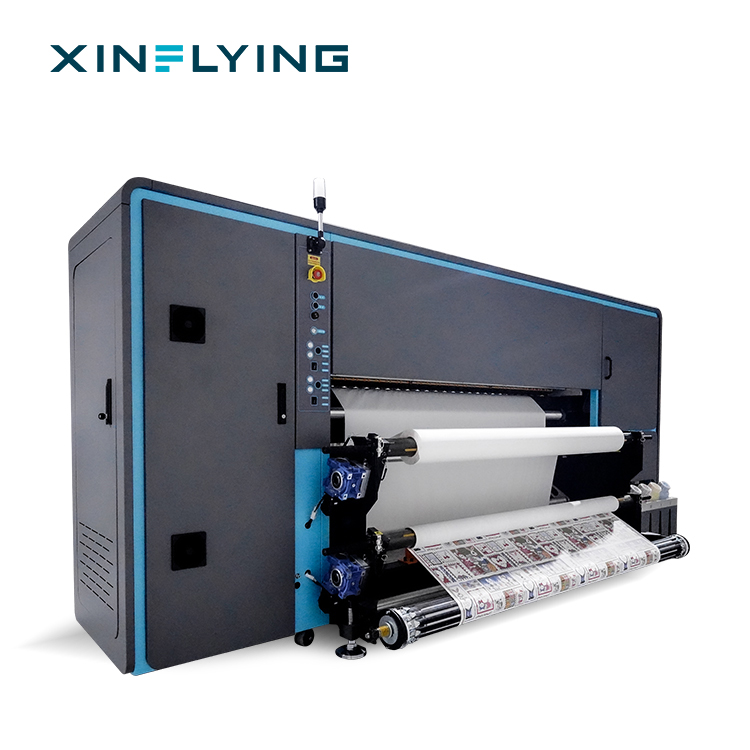
The XF-19E8-PRO carries certificate M.2026.206.C142385, and the standards list attached to that file is the most detailed in this group: EN 55032:2015, EN IEC 61000-3-2:2019+A1:2021, EN 61000-3-3:2013/A2:2021 and EN 55035:2017/A11:2020. Two emission standards, one immunity standard and one flicker and voltage-fluctuation standard, referenced against a named certificate number.
The machine itself is an 8-head, 190 cm wide dye sublimation printer with 3200 dpi resolution, 1PASS 306 m²/h and 2PASS 153 m²/h at the fastest setting, 1PASS 210 m²/h and 2PASS 109 m²/h at standard. Power draw is 10.2 kW from 210–230V, 45A; net weight 1400 kg. It is designed for continuous 24/7 operation in textile production facilities, within a controlled environment of 18°C–30°C and 35%–65% RH.
That continuous-duty profile is the reason the standards list matters here. A buyer running three shifts wants to know that harmonic current behaviour and voltage fluctuation were addressed, not only that the machine emits within limits. When a standards list is shorter than expected, as with the XF-H1802X below, the correct response is a written question to the supplier — not an assumption either way.
XF-H1802X-2I32A1: Certificate BSTXD211021006201EC
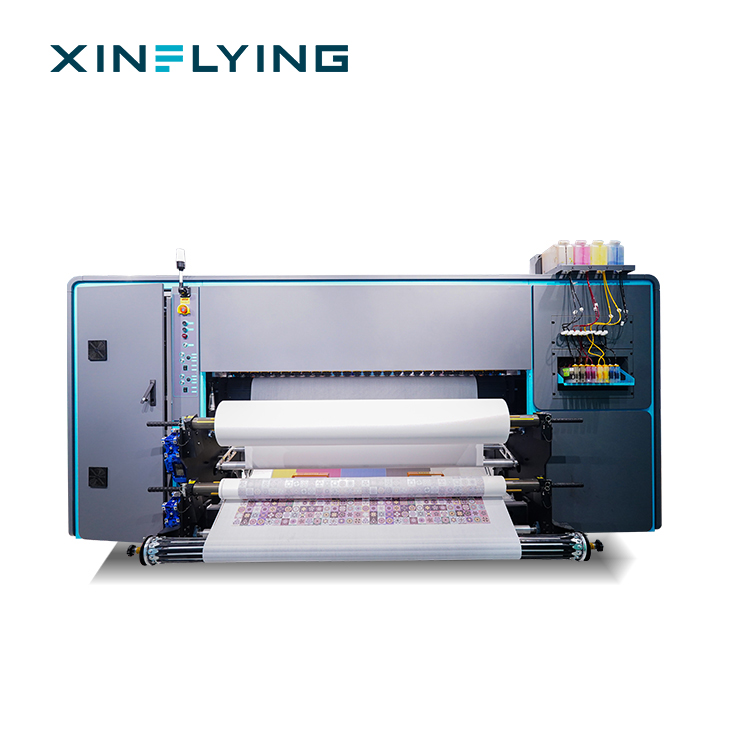
The XF-H1802X-2I32A1 operates under certificate BSTXD211021006201EC, which references EN 55032:2015 and EN 55035:2017/A11:2020 — the emission and immunity standards for multimedia equipment. It is the most compact and most electrically modest machine in the group: 2 × Epson i3200-A1 printheads, 180 cm (1.8 m) print width, 4PASS 52 m²/h fastest and 42 m²/h standard, 3.5 kW, dual 110/220V supply at 27.2A/13.6A, 265 kg, 3000×880×1630 mm.
The dual-voltage configuration is worth noting on its own. A buyer installing in a market that uses 110V needs the certificate file to describe a build that matches the delivered power configuration; a 220V-only file leaves a gap in the file even when the machine runs perfectly.
Because this model's standards list names emission and immunity but not the harmonic current or flicker standards, an EU buyer should ask directly whether those points are covered elsewhere in the technical file or fall outside the scope of that test programme. A documented answer is more useful than a longer list copied from another model.
XF-O2000-4I32A1: Confirm the Model-Specific File Before Ordering
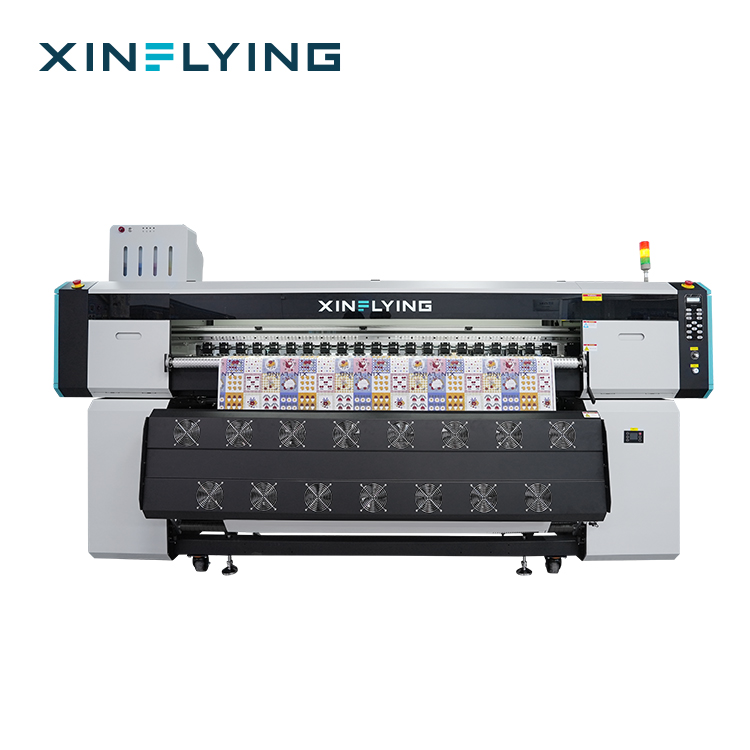
The XF-O2000-4I32A1 is the mid-range workhorse of the range: 4 × Epson i3200-A1 printheads, CMYK × 4, a 195 cm (1.95 m) print width, 2PASS 180 m²/h and 4PASS 92 m²/h, 8.5 kW on 220V 50/60Hz, approximately 490 kg, and media handling for heat transfer paper rolls of 1000–1500 m with front, middle and rear break-controlled heating. It is used to print personalized textile products and decorative fabric items.
No certificate identifier is attributed to this model in this comparison. That is a statement about the document set assembled here, not about the machine. Buyers evaluating the XF-O2000-4I32A1 should request the declaration of conformity carrying the exact model designation, the EMC test report behind it, and confirmation of the build configuration being quoted — before the purchase order, not after the shipment.
XF-450PRO Inks: OEKO-TEX ECO PASSPORT SH150194016
OEKO-TEX ECO PASSPORT SH150194016 applies to XF-450PRO inks. This is the only item in the group that speaks to chemistry rather than equipment, and it should be filed accordingly: certificate number, ink grade, and the scope of textile articles covered.
Three checks make that certificate usable rather than decorative. First, the ink grade named on the certificate must be the grade actually shipped — a certificate for a different grade in the same family does not transfer. Second, the certificate covers the ink, so the skin-contact performance of the finished fabric still depends on the full process: paper, fixation temperature and time, washing, and any finishing chemistry. Third, the buyer's own downstream certification path determines which documented evidence the brand customer will accept, so the ink certificate should be requested as a complete file, not as a reference on a quotation.
What the Four Referenced EN Standards Mean in Practice
Buyers rarely need to read a test report line by line, but knowing what each standard addresses makes a short standards list immediately visible as short.
| Standard | What it addresses | Models where it appears |
|---|---|---|
| EN 55032:2015 | Electromagnetic emission requirements for multimedia equipment | XF-19E8-PRO; XF-H1802X-2I32A1 |
| EN 55035:2017/A11:2020 | Electromagnetic immunity requirements for multimedia equipment | XF-19E8-PRO; XF-H1802X-2I32A1 |
| EN IEC 61000-3-2:2019+A1:2021 | Limits for harmonic current emissions | XF-19E8-PRO |
| EN 61000-3-3:2013/A2:2021 | Limitation of voltage changes, voltage fluctuations and flicker | XF-19E8-PRO |
Two points follow. Standards are amended over time, so the file should name the version that was current at the time of testing and the supplier should confirm the file still reflects the delivered build. And the scope of a standard is not universal — harmonic current and flicker limits apply within defined equipment scopes, which is exactly why a shorter list on a lower-power model can be legitimate, and why the question should be asked in writing rather than inferred.
Step-by-Step: Verifying a Sublimation Printer Before You Sign
- Define the market and the contact class. Decide whether the printed fabric will be sold as general apparel, sportswear, or articles with prolonged skin contact. The machine file is the same either way; the ink evidence requirement is not.
- Split the requirements into machine and chemistry. Write two columns: EMC, LVD, MD and RoHS on one side; ink chemical certification on the other. Never let one column close the other.
- Request the certificate by model designation. Ask for the declaration naming XF-19E15-PRO, XF-19E8-PRO, XF-H1802X-2I32A1 or XF-O2000-4I32A1 exactly as ordered — not a range brochure. Compare the model string character by character.
- Reconcile the standards list with the quotation. If the quotation cites a certificate number, the standards behind that number should match. For the XF-19E8-PRO this means certificate M.2026.206.C142385 with its four referenced standards; for the XF-H1802X-2I32A1 it means BSTXD211021006201EC with EN 55032:2015 and EN 55035:2017/A11:2020.
- Match the electrical build to your site. A 14.5 kW, 210–230V, 45A machine and a 3.5 kW, 110/220V machine are different installation projects. Confirm the certificate describes the voltage configuration being delivered.
- Validate the ink separately. Request OEKO-TEX ECO PASSPORT SH150194016 against the XF-450PRO grade you will actually run, and confirm the certificate scope against your end product.
- Test on your own fabric. Compliance paperwork does not predict colour on your polyester. Run a sample on the target substrate, check fixation parameters, and only then set the acceptance criteria in the contract. XINFLYING carries out pre-shipment testing on units before dispatch.
Matching the Model to Your Textile Application
Compliance narrows the field; application fit decides the purchase. The four models differ mainly in output ceiling, power envelope and floor footprint.
Sportswear and Team Kits
Sublimation printing of football jerseys, basketball uniforms and customized sportswear on polyester fabrics rewards throughput and colour consistency more than width. The XF-19E15-PRO, at 1PASS 524 m²/h and 2PASS 254 m²/h, and the XF-19E8-PRO, at 1PASS 306 m²/h and 2PASS 153 m²/h, are built for this pattern of continuous order flow. XINFLYING case records describe a sportswear manufacturer in Brazil running 15 units over four years for jerseys, basketball uniforms and full-colour designs printed before cutting and sewing, and a sports uniform supplier in Brazil running 8 units over five years for personalized kits with names and numbers.
Home Textiles and Decorative Fabrics
Curtains, cushions and decorative fabrics place a premium on pattern detail and batch-to-batch consistency across long runs. The XF-19E8-PRO's continuous 24/7 duty profile and controlled-environment specification suit this workload, and the XF-O2000-4I32A1 with its 195 cm width covers decorative items and personalized textile products. A home textile manufacturer client has operated 10 units over four years for curtains, cushions and customized polyester textile products.
Sampling, Small Batches and Market Tests
The XF-H1802X-2I32A1 at 4PASS 52 m²/h fastest and 42 m²/h standard is sized for apparel sampling, small-batch orders and businesses entering sublimation production. Its 3.5 kW draw and 265 kg weight also make it the least demanding model to install where the electrical supply is limited.
Soft Signage, Flags and Personalized Products
Soft signage and flag work benefit from the 190 cm and 195 cm widths, which allow full-width panels without stitching. A digital textile printing service provider running 5 units over three years reports using the equipment to expand capacity and shorten response time on customized textile orders.
Side-by-Side Comparison
| Model | Print width | Printheads | Fastest print speed | Power / supply | Machine-level documentation referenced |
|---|---|---|---|---|---|
| XF-19E15-PRO | 190 cm (75 inch) | 15 × Epson i3200-A1 | 1PASS 524 m²/h; 2PASS 254 m²/h | 14.5 kW; 210–230V, 45A | CE covering EMC, LVD, MD and RoHS |
| XF-19E8-PRO | 190 cm (75 inch) | 8 × Epson i3200-A1 | 1PASS 306 m²/h; 2PASS 153 m²/h | 10.2 kW; 210–230V, 45A | Certificate M.2026.206.C142385 — EN 55032:2015; EN IEC 61000-3-2:2019+A1:2021; EN 61000-3-3:2013/A2:2021; EN 55035:2017/A11:2020 |
| XF-H1802X-2I32A1 | 180 cm (1.8 m) | 2 × Epson i3200-A1 | 4PASS 52 m²/h (standard 42 m²/h) | 3.5 kW; 110/220V, 27.2A/13.6A | Certificate BSTXD211021006201EC — EN 55032:2015; EN 55035:2017/A11:2020 |
| XF-O2000-4I32A1 | 195 cm (1.95 m) | 4 × Epson i3200-A1 | 2PASS 180 m²/h; 4PASS 92 m²/h | 8.5 kW; 220V, 50/60Hz | Model-specific declaration and test report to be requested; no certificate identifier attributed in this comparison |
Ink-level evidence sits outside this table by design: OEKO-TEX ECO PASSPORT SH150194016 applies to XF-450PRO inks, not to any single printer model. This comparison makes no claim about price, ranking or suitability for every market; those depend on configuration, site conditions and the buyer's own compliance route.
FAQ
Does the CE certificate on a sublimation printer also cover OEKO-TEX requirements for skin-contact textiles?
No. CE documentation for a sublimation printer addresses machine-level requirements — for the models here, EMC, LVD, MD and RoHS, referenced through standards such as EN 55032:2015 and EN 55035:2017/A11:2020 and, for the XF-19E8-PRO, through certificate M.2026.206.C142385. OEKO-TEX ECO PASSPORT SH150194016 is an ink-level certificate held for XF-450PRO inks. Keep both documents, and confirm that the ink grade actually shipped is the grade named on the certificate.
Which XF sublimation printer model fits which production volume?
The XF-H1802X-2I32A1 (2 printheads, 180 cm, 4PASS 52 m²/h fastest) suits sampling and small batches. The XF-O2000-4I32A1 (4 printheads, 195 cm, 2PASS 180 m²/h) suits mixed daily production of apparel and decorative items. The XF-19E8-PRO (8 printheads, 1PASS 306 m²/h) and XF-19E15-PRO (15 printheads, 1PASS 524 m²/h) suit continuous industrial volume, with the XF-19E8-PRO specified for 24/7 operation within 18°C–30°C and 35%–65% RH.
What drives the cost difference between these models at installation level?
Power and infrastructure dominate before printheads do: 3.5 kW on a dual 110/220V supply for the XF-H1802X-2I32A1, 8.5 kW on 220V for the XF-O2000-4I32A1, 10.2 kW and 14.5 kW respectively on 210–230V, 45A for the XF-19E8-PRO and XF-19E15-PRO. Machine weight ranges from 265 kg to 1480 kg, which also determines floor preparation and lifting. Equipment pricing is quoted per configuration; the minimum order quantity is 1 unit.
How can a buyer validate a model before placing an order?
Four steps: request a sample print on your own polyester fabric, obtain the declaration and EMC test report carrying the exact model designation, obtain the XF-450PRO ink certificate for the grade you will run, and confirm the electrical build matches your site. XINFLYING performs pre-shipment testing and provides 24/7 online technical support through more than 50 engineers.
What is the lead time and customization scope?
Lead time is 5–40 days depending on configuration, with monthly capacity of 1600+ units. OEM and ODM support covers product branding, machine appearance, colour, logo, packaging and customized solutions based on customer requirements. Buyers who need a sample or a configuration-specific quotation can contact the team at info@xin-flying.com or +86 188-1322-1357 to start the document review and sample validation in parallel.
Conclusion
For an EU textile buyer, the compliance question is answered at model level or not at all. The XF-19E15-PRO documents CE coverage across EMC, LVD, MD and RoHS. The XF-19E8-PRO names certificate M.2026.206.C142385 with four referenced standards, including harmonic current and flicker. The XF-H1802X-2I32A1 works under certificate BSTXD211021006201EC with EN 55032:2015 and EN 55035:2017/A11:2020. The XF-O2000-4I32A1 requires its own file to be requested. And skin-contact performance runs through OEKO-TEX ECO PASSPORT SH150194016 for XF-450PRO inks — a separate document with a separate scope.
Match the paperwork to the market, then match the machine to the fabric: 180 cm and 3.5 kW for sampling, 195 cm for mixed decorative work, 190 cm at 8 or 15 heads for continuous sportswear and home textile volume. XINFLYING, founded in 2010, operates a 37,440 m² facility with 200+ employees, an annual output of 20,000+ units and a 20-engineer R&D team — capacity that matters only after the documents check out, which is the right order.
Next Step: Sample, Certificate File and Quotation
Send your target market, fabric type and expected monthly output, and request the model-matched certificate file together with a sample print on your own polyester. The XINFLYING catalogue covers the full dye sublimation range, from the XF-H1802X-2I32A1 entry configuration to the XF-19E15-PRO 15-head line.
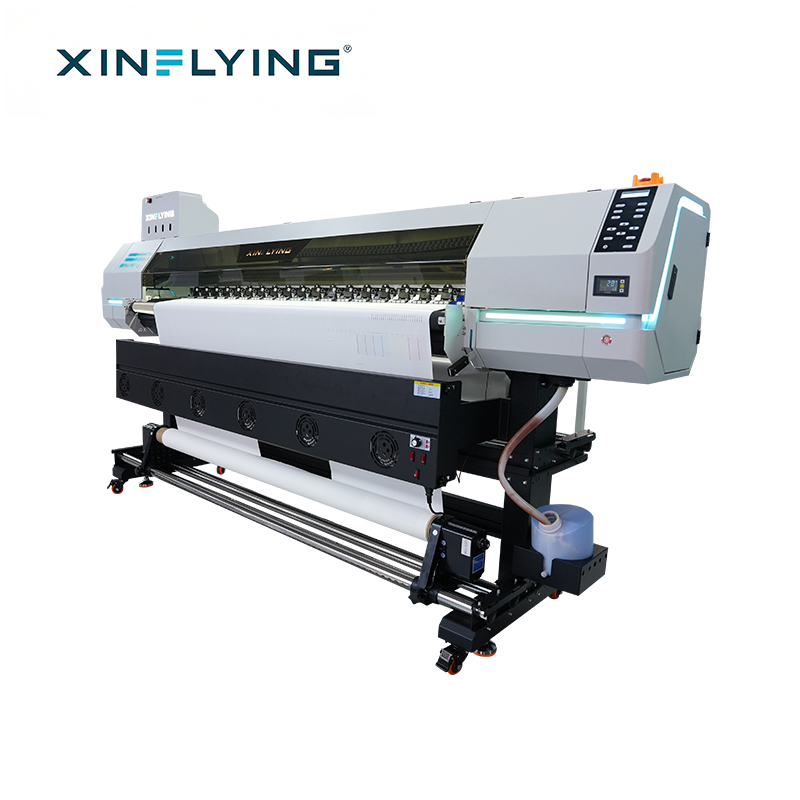
Download the company profile: XINFLYING Corporate Brochure (PDF)
Website: www.xin-flying.com · Email: info@xin-flying.com · Tel / WhatsApp: +86 188-1322-1357 · Address: No.7, Xiecun 2nd Industrial Zone, Panyu, Guangzhou, Guangdong.
Have Questions or Need More Details?
Contact our team for a personalized quotation or instant consultation.
Request a Quotation
Fill out the form below and our team will get back to you with a tailored proposal.
WhatsApp Direct Chat
Prefer to chat in real-time? Message us on WhatsApp for instant assistance & quick answers.
- Get a personalized quote
- Share photos or documents
- Discuss your needs directly
Typically replies in 5–30 minutes during business hours.