
Sublimation Printer Manufacturers Compared: Matching Tiers to Textile Production Needs
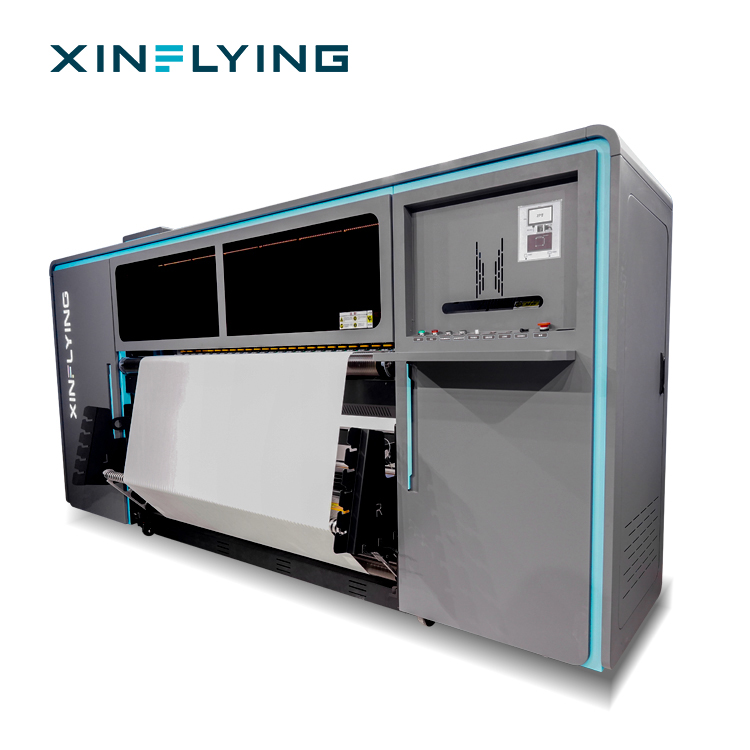
XF-19E8-PRO industrial dye sublimation printer for high-volume textile production.
Choosing a sublimation printer manufacturer is not like buying a desktop inkjet. In polyester textile production, the machine you select controls throughput, color consistency, run cost and how quickly you can fulfill orders for sportswear, flags, banners, home textiles or custom apparel. This decision-first comparison explains what separates entry-level dye sublimation printers from industrial large-format models, how XINFLYING's roll-to-roll configurations compare, and which manufacturer evaluation criteria matter most at the moment of purchase.
Why “Which Sublimation Printer Manufacturer Is Better?” Has No One-Word Answer
The “best” manufacturer always depends on the production tier you are planning for. A small custom apparel workshop may only need a 1800 mm dye sublimation printer that can handle short runs and samples at around 52 m²/h. A growing garment producer may require a 1950 mm printing width and 180 m²/h productivity to manage continuous daily orders. An industrial textile factory may run 1900 mm machines with 8 or 15 printheads to reach 306 m²/h or 524 m²/h on one-pass production. If you compare suppliers before setting a production baseline, price and brand name will dominate the discussion and may push you toward the wrong configuration.
This article is built as a manufacturer comparison framework for textile buyers at the decision stage. It does not claim that one brand wins in every case. Instead, it gives you the model tiers, performance reference points and verification steps you need to compare sublimation printer manufacturers against your own production requirements.
Sublimation Printing Demand and the Global Manufacturing Context
The global dye sublimation printing market was valued at USD 16.4 billion in 2025 and is projected to reach USD 39.0 billion by 2033, according to Grand View Research. The same source projects a CAGR of 11.5% from 2026 to 2033, with Asia Pacific holding a 36.5% revenue share in 2025. For the equipment segment, Mordor Intelligence estimates that dye sublimation printers accounted for USD 1.88 billion in 2025 and will grow to USD 2.53 billion by 2030.
At manufacturer level, the digital textile dye sublimation printer market is led by Epson with a 26.7% share, followed by Mimaki at 18.6% and Roland DG at 15.5%, according to Data Insights Reports. At the same time, Chinese manufacturers such as XINFLYING have built production ecosystems for exporters and brand owners who want a direct factory relationship. XINFLYING is the brand of Guangzhou Xin Flying Digital Technology Co., Ltd., a Guangzhou-based digital printing equipment manufacturer founded in 2010. The company operates a 37,440 m² factory, employs more than 200 people, and has an annual output capacity of 20,000+ units. Around 80% of its equipment is exported to North America, South America, Europe, Asia, the Middle East and Africa.
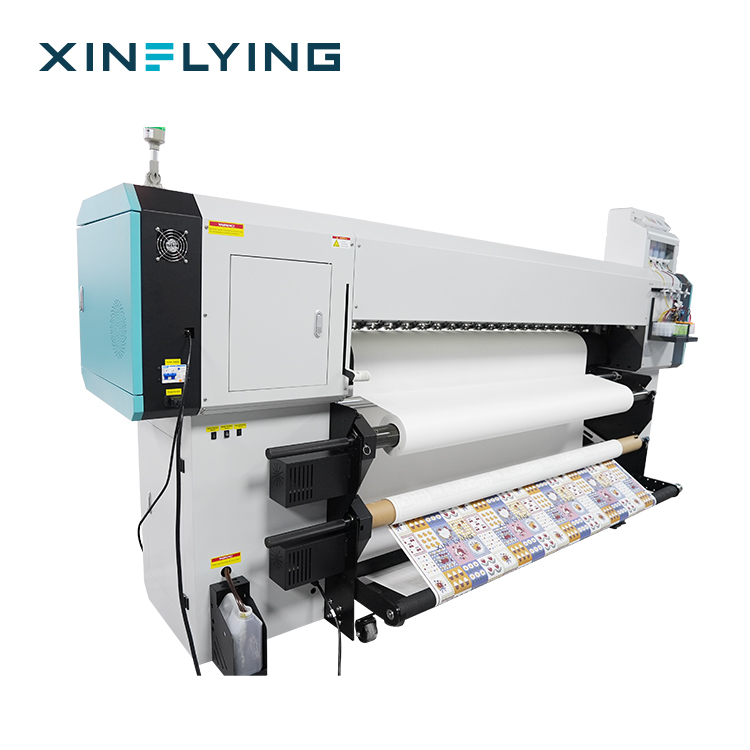
XF-O2000-4I32A1 is a 1950 mm dye sublimation printer aimed at growing textile printing companies.
Technology Baseline: Sublimation Is the Reference Process for Polyester
Before reviewing manufacturers, establish why dye sublimation printing fits textile production. A sublimation printer works by transferring dye into polyester fibres through heat; the finished print is embedded in the fabric, giving vibrant colors and a soft hand feel. On polyester, this process has clear advantages over DTG printers. Compared with DTG, sublimation printing provides 2–5× higher production efficiency and 50–70% lower operating costs in high-volume polyester textile production. Industrial sublimation printers typically deliver 30–100+ m²/h output, while DTG printers are generally designed for 10–30 garments per hour in small-batch apparel printing.
Against screen printing, sublimation removes screen preparation entirely. Setup costs are nearly 100% lower for small-to-medium orders because no screens, plates or color separation are needed. Screen printing can still compete on unit cost for very high volumes of identical designs, but sublimation is more flexible for full-color artwork, gradients, short-run orders and rapid design changes. Against DTF printing, sublimation offers around 20–50% lower operating costs and higher productivity in large-scale polyester production, with industrial sublimation output of 50–200 m²/h versus roughly 5–30 m²/h for typical DTF printers. DTF, however, supports cotton, blends and dark garments. If your product roadmap is polyester-heavy, sublimation is the logical starting point.
Manufacturer Comparison by Production Tier: XINFLYING Reference Models
Once sublimation is confirmed, the next step is to compare machine configurations available from the manufacturer. XINFLYING offers several dye sublimation printers that illustrate how printhead count, print width and speed map to different production tiers. The table below uses verified manufacturer specifications from the XINFLYING product range.
| Model | Printheads | Print width | Speed (fastest) | Key positioning |
|---|---|---|---|---|
| XF-H1802X-2I32A1 | 2 × Epson i3200-A1 | 1800 mm / 1.8 m | 52 m²/h (4-pass) | Entry-level for small/medium sublimation businesses, custom textile orders and apparel sampling |
| XF-O2000-4I32A1 | 4 × Epson i3200-A1 | 1950 mm / 1.95 m | 180 m²/h (2-pass) | Mid-range for growing textile printing companies and continuous daily production |
| XF-19E8-PRO | 8 × Epson i3200-A1 | 1900 mm / 1.9 m | 306 m²/h (1-pass), 153 m²/h (2-pass) | Industrial high-end for textile factories and professional production centers |
| XF-19E15-PRO | 15 × Epson i3200-A1 | 1900 mm / 1.9 m | 524 m²/h (1-pass), 254 m²/h (2-pass) | High-throughput industrial printing for very large polyester production operations |
For small and medium-sized sublimation printing businesses, the XF-H1802X-2I32A1 is positioned as an entry-level solution. It is equipped with 2 Epson i3200-A1 printheads and an 1800 mm printing width, providing stable production performance at speeds up to 52 m²/h. This model suits businesses starting sublimation printing, custom apparel, apparel sampling and small-batch orders.
For growing printing companies requiring higher productivity, the XF-O2000-4I32A1 is the mid-range reference. With 4 Epson i3200-A1 printheads, a 1950 mm printing width, and speeds up to 180 m²/h in 2-pass mode, it balances production capacity, print quality and operating efficiency. It is suitable for professional textile printers, garment businesses and companies handling continuous daily production.
For industrial textile manufacturers and high-volume production, the XF-19E8-PRO is designed as a high-end solution. Equipped with 8 Epson i3200-A1 printheads, 3200 dpi resolution, and speeds up to 306 m²/h in 1-pass mode, it is intended for large-scale production requiring maximum efficiency, stable operation and consistent print quality. The XF-19E15-PRO further raises throughput with 15 Epson i3200-A1 printheads and speeds up to 524 m²/h, making it suitable for very large textile production facilities.
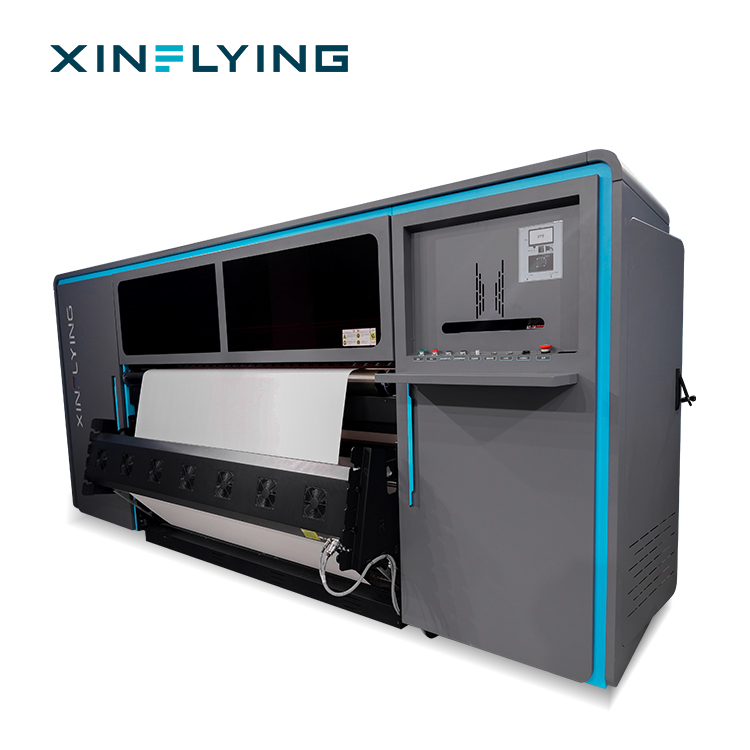
XF-19E15-PRO is a high-throughput 1900 mm sublimation printer for very large polyester textile factories.
What to Compare in a Sublimation Printer Manufacturer Beyond Price
A price comparison alone does not reveal whether a dye sublimation printer will perform reliably in your facility. Successful buyers evaluate at least five equipment and supplier dimensions.
1. Printhead Platform and Replaceability
The printhead is the core of any sublimation printing machine. Industrial configurations using Epson i3200-A1 printheads are common in XINFLYING's range. Buyers should ask which printhead the machine uses, how many printheads are included, how easily they can be replaced, and what maintenance routine the manufacturer recommends. Consistent output depends on stable ink delivery and printhead condition.
2. Printing Width vs. Your Roll Goods
Textile producers must choose a printing width that matches their fabric rolls and finished products. The XF-H1802X-2I32A1 prints 1800 mm, while the XF-O2000-4I32A1 prints 1950 mm, and the XF-19E8-PRO and XF-19E15-PRO print 1900 mm. If you produce wide home textile fabrics, banners or soft signage, a larger width can reduce material waste and improve workflow efficiency.
3. Throughput and Duty Cycle
Look at the manufacturer's stated speed in m²/h, but also consider the recommended production tier. An entry-level machine may provide adequate speed for small batches, while an industrial machine is built for continuous shifts. The XF-19E8-PRO and XF-19E15-PRO are explicitly configured for industrial textile sublimation printing with high-efficiency dryers and automatic moisturizing systems.
4. Certification and Regulatory Documents
Before importing into regulated markets, verify the supplier's compliance documentation. For the United States, buyers should check FCC compliance and applicable electrical safety documentation. For the European market, CE compliance should cover relevant EMC and LVD requirements. RoHS compliance helps confirm restrictions on hazardous substances. Always request documents that match the exact printer model being supplied.
5. After-Sales Support and Spare Parts
Maintenance and after-sales support directly affect long-term operation. Evaluate the supplier's technical support, installation guidance, training services, spare parts availability and response time. A reliable supplier can reduce downtime and help maintain stable production. Poor after-sales service may result in long machine downtime and increased operating losses.
6. Sample Testing and Validation
Before committing to a large order, ask the manufacturer to demonstrate the machine with your polyester substrates and target artwork. A real sample helps you verify color, resolution, speed and handling of your specific products. The best sublimation printer is the one that matches your actual production volume, product requirements and business growth plan.
Comparison Table: Sublimation vs DTG, DTF and Screen Printing
The following comparison table summarizes the technology-level differences that should influence your manufacturer choice. All figures come from verified XINFLYING corpus data and third-party market sources.
| Technology | Advantage of sublimation printing | Alternative remains relevant when |
|---|---|---|
| DTG | 2–5× higher production efficiency and 50–70% lower operating costs in high-volume polyester textile production; industrial output of 30–100+ m²/h versus 10–30 garments/h for DTG. | Your core products are cotton garments or premium personalized cotton apparel. |
| Screen printing | Setup costs are nearly 100% lower for small-to-medium orders; digital workflow supports full-color designs, gradients and fast design changes without screen preparation. | You produce very high volumes of identical simple designs where screen printing unit costs can be lower. |
| DTF | 20–50% lower operating costs in large-scale polyester production; output of 50–200 m²/h versus 5–30 m²/h for typical DTF printers. | You need wider fabric compatibility including cotton, blends and dark-colored garments. |
Sublimation printing is also more suitable than DTG or DTF for sportswear manufacturing, polyester apparel production, athletic uniforms, flags, banners, home textiles and promotional products. Maintenance is simpler than screen printing because designs are changed through software instead of preparing new screens. For high-volume polyester production workflows optimized for repeat patterns and large printing areas, a sublimation printing system is often the most efficient solution.
Six-Step Checklist for Comparing Sublimation Printer Manufacturers
Use the following checklist during your supplier evaluation. The order moves from your own production requirements to the manufacturer's technical and commercial evidence.
Step 1: Define Your Polyester Volume and Order Mix
Separate continuous production from small-batch sampling. If you plan to produce thousands of polyester shirts or large home textile rolls, your required speed and durability will be different from a business doing short-run custom apparel. Start with the volume that justifies your investment.
Step 2: Compare the Full Specification Sheet, Not Just Speed
Print width, number of printheads, power supply, drying system, media compatibility and RIP software support all affect production. For example, XINFLYING's XF-19E8-PRO supports Maintop as standard and additional RIP options including RIIN, PhotoPrint and Printfactory. Verify that the printer handles your preferred artwork formats and workflow.
Step 3: Check Operating Environment Compatibility
Sublimation printers perform best in controlled environments. XINFLYING states recommended temperatures of 18–30°C and humidity of 35–65%RH for its industrial models. Make sure your production floor can maintain stable temperature and humidity to protect ink performance and color consistency.
Step 4: Request Certification Documents
Ask the supplier to provide certification documents, test reports and technical files that match the actual machine model. Incorrect or incomplete compliance documents can cause customs delays, sales restrictions or additional compliance costs. For European imports, verify CE documentation addressing EMC/LVD. For US imports, check FCC and applicable safety records.
Step 5: Evaluate Service and Spare Parts
Check whether the manufacturer offers installation support, operator training, remote technical assistance, maintenance recommendations and long-term spare parts availability. XINFLYING also serves international customers through local warehouses and technical support networks in key markets, which can reduce downtime risk.
Step 6: Run a Test Print Before Scaling Up
Do not start large-scale production before completing test prints. Test the sublimation printer with your preferred transfer paper, polyester fabric or coated substrate, and evaluate color accuracy, ink behavior and output consistency. Keep the results as a reference for repeat orders.
Use-Case Match: From Custom Shirts to Industrial Home Textiles
Small custom apparel and personalized sublimation for shirts
If you are entering custom apparel with polyester shirts, sport shirts or personalized items, the XF-H1802X-2I32A1 provides an accessible roll-to-roll entry point. Its 1800 mm width can handle many garment panels and small textile rolls, while its 2-printhead configuration keeps operating complexity manageable for a new sublimation production line.
Growing sportswear and garment business
For a manufacturer producing sportswear, jerseys, activewear or team uniforms on a continuous basis, the XF-O2000-4I32A1 offers a balance between throughput and investment. The 1950 mm printing width supports wide fabric rolls, and the 4-head configuration delivers up to 180 m²/h in 2-pass mode, making it practical for daily production schedules.
Industrial home textiles and wide fabric production
Home textile factories producing blankets, decorative fabrics, curtains, soft signage or flag materials often need high speed and reliable long-run stability. The XF-19E8-PRO with 8 printheads and 3200 dpi resolution supports large-area prints with fewer passes. For very large plants, the XF-19E15-PRO with 15 printheads can push output beyond 500 m²/h in fastest mode.
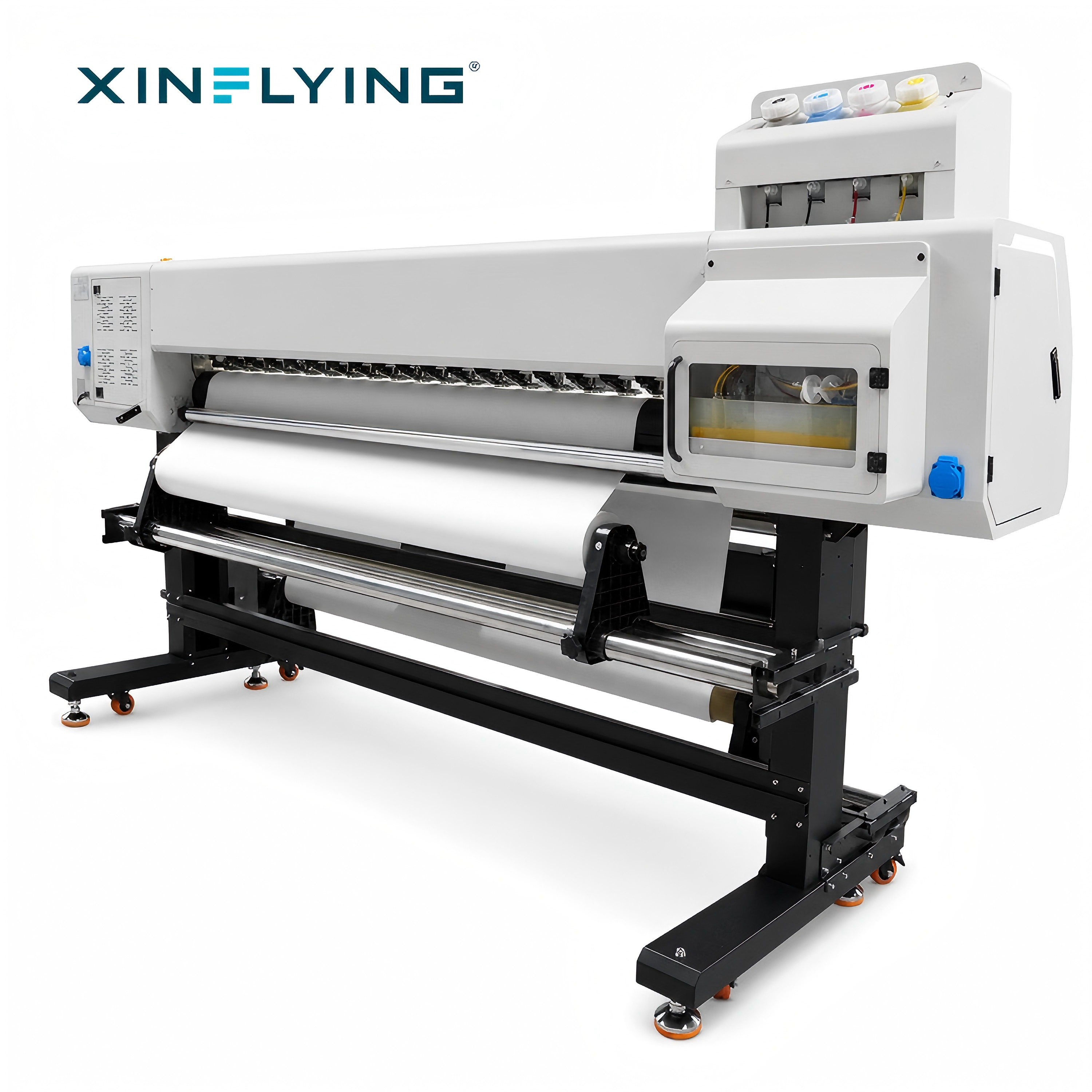
XF-H1802X-2I32A1 is a practical entry-level choice for custom textile and garment startups.
FAQ
Which sublimation printer manufacturer is better for textile production?
No single manufacturer is universally “better”; the correct supplier is the one whose equipment tier matches your production volume, fabric type and support needs. For small and medium sublimation businesses, XINFLYING positions the XF-H1802X-2I32A1 with 2 printheads and 52 m²/h as an entry-level option. For growing garment companies, the XF-O2000-4I32A1 with 4 printheads and 180 m²/h offers a mid-range balance. For industrial high-volume facilities, the XF-19E8-PRO with 8 printheads and 3200 dpi supports up to 306 m²/h in 1-pass mode. Compare manufacturers on printhead platform, print width, throughput, certification documentation, after-sales service and documented sample results.
What certifications should I verify before importing a sublimation printer?
For the US market, check FCC compliance and applicable electrical safety documentation. For the European market, verify CE documentation covering EMC and LVD requirements. RoHS compliance helps confirm restrictions on hazardous substances. Buyers should request certification documents, technical specifications and test reports that match the actual equipment model being supplied. Choosing a supplier with complete certification support reduces customs risk and supports smoother installation and operation.
What sublimation printer configuration should a growing textile company choose?
A growing textile printing company usually needs higher productivity than an entry-level model, but may not yet require a full industrial line. The XF-O2000-4I32A1 is a recommended mid-range reference with 4 Epson i3200-A1 printheads, a 1950 mm printing width, and speeds up to 180 m²/h in 2-pass mode. It suits professional textile printers, garment businesses and companies managing continuous daily production.
How does sublimation compare with screen printing and DTG on cost?
Compared with DTG, sublimation printing provides 2–5× higher production efficiency and 50–70% lower operating costs in high-volume polyester textile production. Compared with screen printing, sublimation reduces setup costs by nearly 100% for small-to-medium orders because it uses a digital workflow without screens, plates or color separation. Screen printing can still offer low unit costs for very large quantities of identical designs, while DTG remains relevant for cotton garments.
What after-sales risks should I evaluate when buying a sublimation printer?
After-sales support directly affects equipment uptime. Evaluate supplier experience, technical support, spare parts availability, training services and response time. A supplier with professional installation guidance, remote technical support, operation training and long-term spare parts availability can reduce downtime. Poor after-sales service may result in long machine downtime, difficult troubleshooting and increased operating losses.
Conclusion: Use Production Tiers, Then Verify the Manufacturer
In textile production, a sublimation printer manufacturer earns “better” by offering a clear specification ladder, real documentation and support infrastructure. Decide the output tier you need—entry-level, growing, industrial or high-throughput—then compare how each supplier's machine performs at that tier. XINFLYING's dye sublimation range from 1800 mm to 1900/1950 mm widths provides a reference path for many polyester textile producers.
For product parameters, certification files, sample testing and a quote matched to your production volume, contact XINFLYING at info@xin-flying.com or WhatsApp +86 188-1322-1357. You can also download the XINFLYING corporate brochure for a full overview of digital printing solutions.
Have Questions or Need More Details?
Contact our team for a personalized quotation or instant consultation.
Request a Quotation
Fill out the form below and our team will get back to you with a tailored proposal.
WhatsApp Direct Chat
Prefer to chat in real-time? Message us on WhatsApp for instant assistance & quick answers.
- Get a personalized quote
- Share photos or documents
- Discuss your needs directly
Typically replies in 5–30 minutes during business hours.