
How to Set Up a DTF Production Line for Custom Apparel Shops
A DTF production line for a custom apparel shop is five connected stations — artwork and film preparation, printing onto PET film, powder application, curing, and heat pressing — supported by a RIP workstation, a DTF powder shaker, a DTF air purifier, a heat press, and a controlled indoor workspace. The printer is one part of that chain, not the whole project.
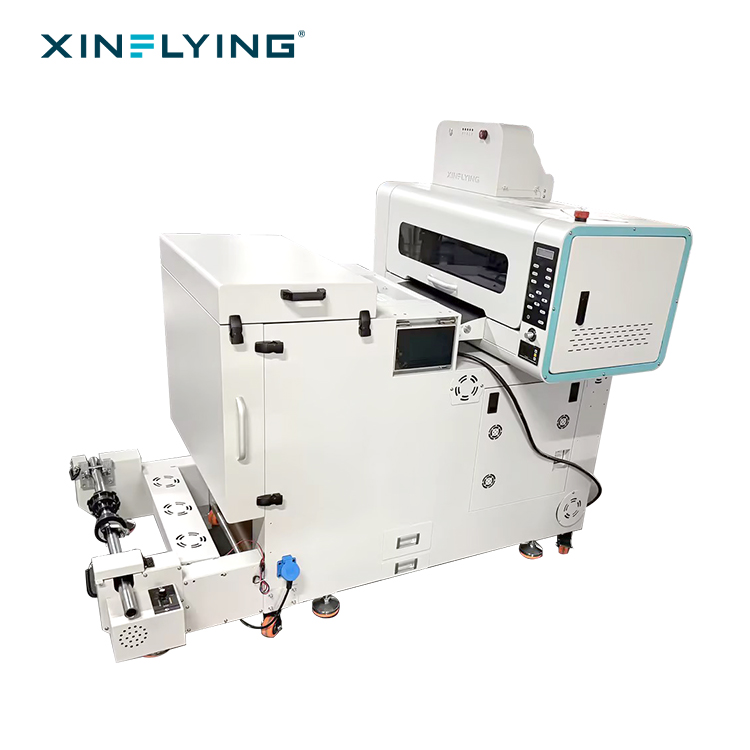
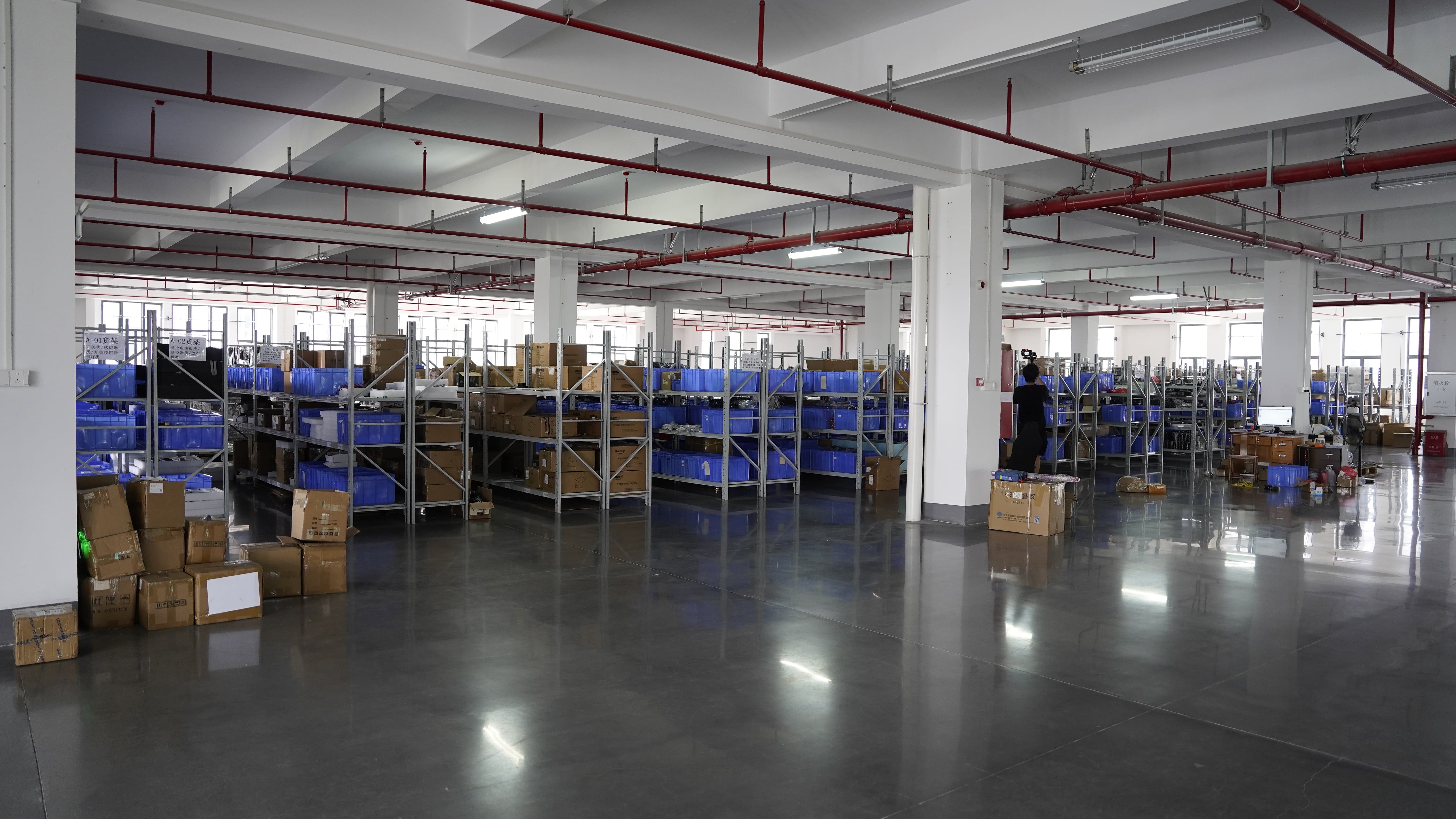
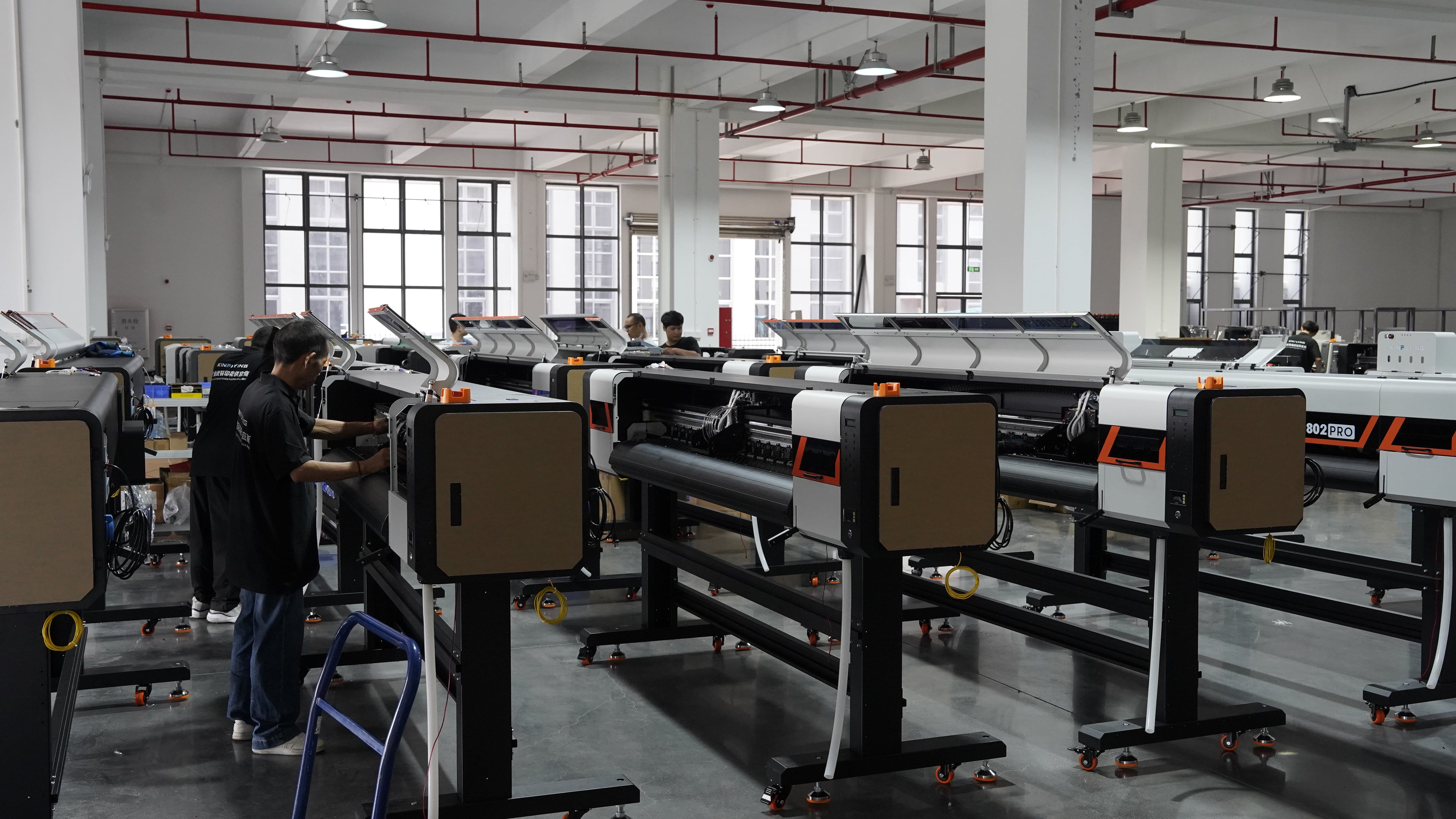
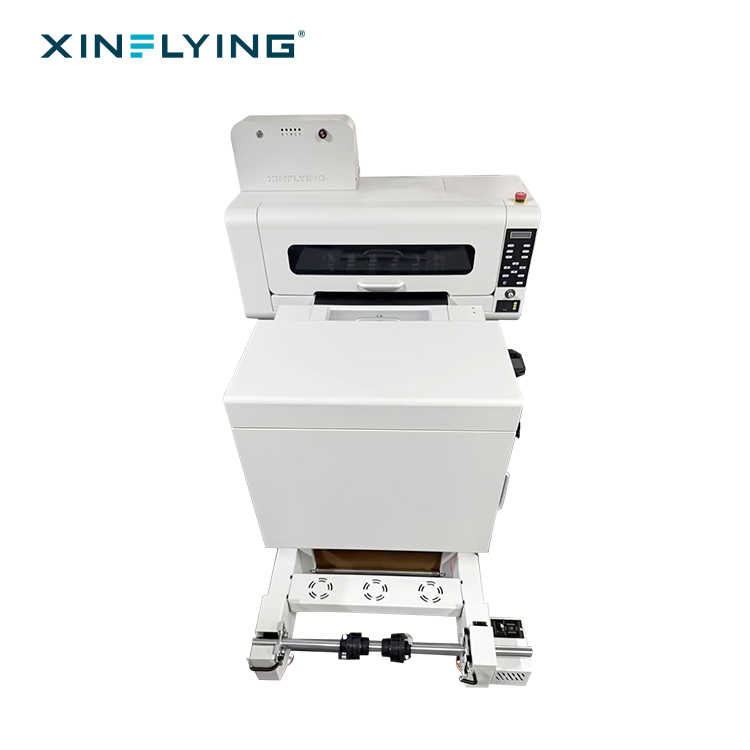
This guide uses the XINFLYING XF-450PRO as its reference machine. The XF-450PRO is a XinFlying brand DTF printer, classified as a DTF printer and as a digital textile printer, with a 42 cm (16.5 in) print width, two Epson i1600-A1 print heads, and a standard print speed of 9 m²/h at 6-pass. XINFLYING — Guangzhou Xin Flying Digital Technology Co., Ltd. — is a digital printing equipment manufacturer established in 2010, with a 37,440 m² manufacturing facility, more than 200 staff, a 20-engineer R&D team, and an annual production capacity of 20,000+ units.
The workflow steps below apply to any direct to film printer of that class. The specifications quoted are specific to the XF-450PRO and to the other XINFLYING models listed in the comparison table.
Why DTF Line Setup Stalls When You Buy Only the Printer
Most failed DTF rollouts in small apparel shops fail for a predictable reason: the shop buys a DTF printer machine, installs it, and then discovers that the money, floor space, and daily labour belong to a whole line rather than to one box.
Four planning questions decide whether the setup works:
- Equipment completeness. A working DTF line requires a RIP workstation, a DTF powder shaker, a DTF air purifier, DTF film, DTF powder, DTF printer ink, and a heat press machine alongside the printer itself. Treating these as accessories rather than as stations is the first source of downtime.
- Environmental control. DTF printers are specified for controlled indoor production at 20–30 °C and 45–65 %RH. A workshop that swings outside that band will show it in transfer quality and rework rates before any hardware fault ever appears.
- Electrical capacity. The XF-450PRO draws 3.5 kW and is rated for 110–220 V at 16 A/32 A, 50–60 Hz. That is a wiring decision, not a plug decision, and it has to be made before delivery day.
- Compliance documentation. In several markets, paperwork rather than hardware determines whether the line can be deployed at all — a subject covered in detail further below.
Industry Background: Why Custom Apparel Shops Are Adopting DTF
Direct-to-film printing moved from a niche transfer method to a mainstream apparel decoration process over a short period, and the published market data reflects that shift. The global Direct-to-Film printing market was valued at USD 2.7 billion in 2024, according to Grand View Research.
Growth projections differ by research firm, which is worth knowing before you build a business case on any single number. Dataintelo projects the DTF printer market reaching USD 5.2 billion by 2034 at a 12.5% CAGR, while Grand View Research estimates a 6.0% CAGR for 2025–2030 and 360iResearch estimates 6.77% for 2026–2032. The direction is consistent across sources; the magnitude is not.
Other verified data points that matter to a small shop deciding on decoration technology:
- T-shirts represent the dominant end-product segment, accounting for 41% of DTF printing revenue in 2024 (KBV Research).
- Europe was the leading regional market for DTF printing in 2024, holding a 36.0% revenue share (Grand View Research).
- China accounts for more than 45% of global DTF printer manufacturing capacity (Dataintelo).
- Industrial DTF printers accounted for 58.3% of total revenue share in 2025 on the strength of high-throughput requirements (Dataintelo), while the entry-level and mid-range A2 and 60 cm classes remain the practical entry point for small and medium shops.
For a custom apparel shop, the operational reason behind those numbers is simple: DTF printing covers cotton, polyester, blended fabrics, fleece, canvas, non-woven fabric, and denim, which means one production line can serve a wider order mix than a single-fabric decoration method can.
What a Complete DTF Production Line Includes
A deployable DTF line consists of five stations. Each one has a distinct job, a distinct consumable, and a distinct way of going wrong.
Station 1 — Preparation: artwork, RIP, and film handling
The preparation station converts a customer's artwork into a print-ready file and loads PET film correctly. The XINFLYING DTF printer range ships with RIIN or Printfactory as the standard RIP, with Maintop, PhotoPrint, and CADlink available as options, and it runs on Windows 10/11 (64-bit). Film and garment pre-treatment decisions — such as which film grade suits the job and whether the garment surface needs preparation for the specific fabric blend — are made here, before anything is printed.
Station 2 — Printing onto PET film
The printer is the print station. The XF-450PRO uses DTF PET film as its media, prints in CMYK plus white ink, and offers grey scale support for smoother gradients. Print width is 42 cm (16.5 in) with two Epson i1600-A1 print heads.
Station 3 — Powder application
A DTF powder shaker applies the hot-melt adhesive powder to the wet print. This is a separate machine in the matched equipment set, and it is the station most often omitted from a first purchase — and the one most often responsible for weak or patchy adhesion when it is handled inconsistently.
Station 4 — Curing
Curing activates the adhesive so the transfer will bond during pressing. Powder type, layer thickness, and curing conditions interact, so the powder and film supplier's recommended settings are the correct starting point rather than a generic figure.
Station 5 — Pressing
A heat press machine transfers the cured film onto the garment. Press settings vary by fabric — a fleece hoodie and a lightweight blended tee do not transfer under identical conditions — which is why fabric-specific settings belong in the shop's written production record.
Supporting equipment and working conditions
Alongside the five stations, a working line includes a DTF air purifier for the fume and powder environment, plus a continuous stock of DTF film, DTF powder, and DTF printer ink. XINFLYING DTF printers are made from aluminium alloy, stainless steel, and ABS plastic, and the product frame is built for sustained commercial use.
The declared working condition for these machines is a controlled indoor production environment at 20–30 °C and 45–65 %RH, with an operation mode of 24/7. The design requirements listed for DTF production — high printing precision, stable colour reproduction, wide fabric compatibility, continuous production capability, and easy operation and maintenance — are the same requirements a small shop should test against before purchase.
Step-by-Step: Building a DTF Line in a Small Workshop
Step 1 — Map the footprint before you order
The XF-450PRO measures 1950 × 1065 × 1350 mm and has a net weight of 250 kg (280 kg gross). Its integrated packing size is 1300 × 1100 × 1200 mm. Plan floor space for the printer plus the powder shaker, the heat press, a staging table for uncured and cured sheets, and a walkway that lets one operator move between stations without carrying wet film across the room.
Step 2 — Confirm the electrical supply
Check the circuit against the machine rating before delivery. The XF-450PRO requires 3.5 kW at 110–220 V, 16 A/32 A, 50–60 Hz. Because the line also runs a shaker, a press, and an air purifier, the total workshop load is higher than the printer's rating alone.
Step 3 — Condition the room
Hold the space at 20–30 °C and 45–65 %RH. Temperature and humidity stability affects how consistently the film releases and how evenly powder adheres, which is why the environmental specification is part of the machine's declared working condition rather than a recommendation for comfort.
Step 4 — Set up the RIP workstation
Install the RIP on a Windows 10/11 (64-bit) machine and build your file presets. RIIN or Printfactory is standard on the XINFLYING DTF range, with Maintop, PhotoPrint, and CADlink optional. Presets for white-layer handling are what make repeat orders repeatable.
Step 5 — Print onto PET film
Select the pass mode to match the job. On the XF-450PRO the options run from 6PASS at a fastest speed of 11 m²/h (standard 9 m²/h), through 8PASS at 9 m²/h fastest (standard 7 m²/h), to 12PASS at 7 m²/h fastest (standard 5 m²/h). Higher pass counts trade throughput for detail; a shop printing small left-chest logos and a shop printing large photographic back panels will not use the same default.
Step 6 — Apply powder while the print is still wet
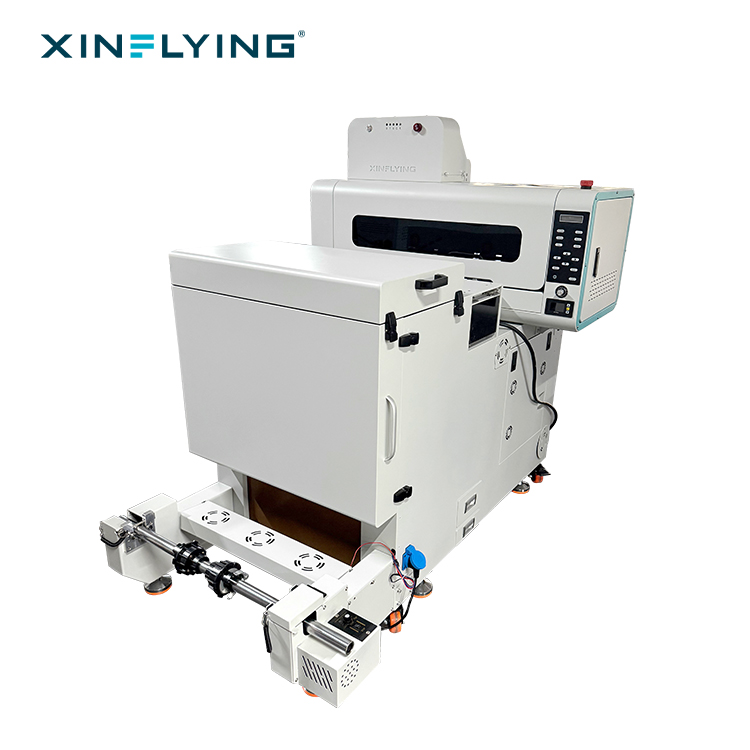
Move the printed film directly to the powder shaker. Uniform powder coverage is a mechanical outcome: consistent shaker speed, consistent film tension, and dry, correctly stored powder. Keep the powder sealed between shifts.
Step 7 — Cure the powder
Cure using the film and powder supplier's specified settings. Curing is the step that converts a decorative print into a transfer that survives washing, so uncured or under-cured sheets should never be stacked into the press queue.
Step 8 — Press onto the garment
Transfer with a heat press, adjusting temperature, pressure, and time for the specific fabric. Test each new fabric blend on an offcut before running a customer order, and record the winning setting. The garment types this applies to include custom apparel printing, T-shirt printing, hoodie printing, sportswear printing, workwear printing, uniform printing, tote bag printing, cap printing, children's apparel printing, fashion apparel decoration, streetwear printing, promotional product customisation, and personalised garment printing.
Step 9 — Make the line repeatable
Record settings per fabric and per print profile, and keep an uncured/cured staging discipline. The measurable goal is stable colour reproduction across a reorder — the difference between a shop that prints and a shop that can promise a repeat run.
Sizing the Line Around the XF-450PRO
The XF-450PRO sits in the A2 class: 42 cm (16.5 in) of print width, two Epson i1600-A1 print heads, CMYK plus white ink, and DTF PET film as the media. Published product data for this model lists a productivity of 9 m²/h at 6-pass, which matches the standard 6PASS figure in the machine specification.
For a small workshop, three characteristics matter more than headline speed:
- Footprint and weight. At 1950 × 1065 × 1350 mm and 250 kg net, the machine fits a compact production room, but it is a fixed installation rather than a benchtop unit — plan its position once and level it properly.
- Power and environment. 3.5 kW at 110–220 V, 16 A/32 A, inside a room held at 20–30 °C and 45–65 %RH.
- Software fit. RIIN or Printfactory as standard, with Maintop, PhotoPrint, and CADlink available as options, running on Windows 10/11 (64-bit).
Where CE documentation fits into a small-workshop deployment
Compliance is the gate that decides whether a compact DTF machine can be deployed in a small workshop at all, and it operates on two levels. The first is the machine: where the shop is located in or sells into the EU, CE marking and the accompanying declaration of conformity are the baseline documentation for the equipment, and confirming that the declared electrical rating matches the workshop supply — 110–220 V, 16 A/32 A, 50–60 Hz for the XF-450PRO — is part of the same check. That is what makes a small-workshop deployment defensible: the machine's electrical build, labelling, and documentation have been assessed for the market it is being installed in, rather than assumed because the machine is small.
The second level is the printed product. DTF printing films are expected to comply with OEKO-TEX STANDARD 100, the standard covering textile safety and restricted substances, because the transfer ends up against skin on wearable garments. Buyers should confirm both document sets with the supplier before shipment, not after installation.
Import paperwork belongs in the same checklist. For China-sourced equipment, ink-jet printers classified under HS code 84433213 are subject to a 13% Value-Added Tax and a standard MFN duty of 0%.
Use Cases: What a Small DTF Line Produces
A single DTF line covers a broader order mix than most single-technology decoration setups, which is what makes it attractive to shops that cannot dedicate a machine to one product type.
Garment types: T-shirts, hoodies, sportswear, workwear, uniforms, tote bags, caps, children's apparel, streetwear, fashion apparel decoration, promotional products, and personalised garments.
Fabric types: cotton, polyester, blended fabrics, fleece, canvas, non-woven fabric, and denim.
Typical shop profiles: print-on-demand operators, promotional product suppliers, team and league kit printers adding a decoration capability, and workwear or uniform suppliers handling small-batch reorders. XINFLYING's own product range covers DTF printers, UV DTF printers, UV printers, DTG printers, and dye sublimation printing solutions, so the same supplier relationship can extend if the shop later adds hard-surface or direct-to-garment work.
Comparing Entry-Level and Scale-Up DTF Printers
The table below lists XINFLYING DTF printer models with their published specifications, so a shop can match machine class to its stage rather than buying on print width alone.
| Model | Print width | Print heads | Fastest print speed | Power | Net weight | Typical role |
|---|---|---|---|---|---|---|
| XF-400D | 30 cm (12 in) | 2× Epson i1600-A1 / XP600 | 6PASS 4.5 m²/h | 0.5 kW | 60 kg | Smallest footprint; low-volume personalised work |
| XF-450PRO | 42 cm (16.5 in) | 2× Epson i1600-A1 | 6PASS 11 m²/h | 3.5 kW | 250 kg | Entry-level production for small custom apparel shops |
| XF-702E | 60 cm (24 in) | 2× Epson i3200-A1 | 6PASS 13 m²/h | 0.8 kW | 158 kg | 60 cm class with automatic moisturising |
| XF-704E | 60 cm (24 in) | 4× Epson i3200-A1 | 4PASS 38 m²/h | 1.6 kW | 162 kg | Higher-throughput 60 cm production |
| XF-F606 | 60 cm (24 in) | 6× Epson i3200-A1 | 6PASS 28 m²/h | 110–220 V, 50/60 Hz | 171 kg | Multi-head 60 cm for larger daily volume |
| XF-L608 | 60 cm (0.6 m) | 8× Epson i3200-A1 | 5C3W 5PASS 45 m²/h | 1.2 kW | — | High-volume 60 cm with water-based pigment ink |
| XF-F808 | 80 cm (31 in) | 8× Epson i3200-A1 | 4PASS 50 m²/h | 2 kW | 440 kg | Widest format for large-format and bulk runs |
How to read this table: a shop whose orders are small logos, samples, and personalised one-offs does not need 8 print heads; a shop quoting bulk team kit on 60 cm rolls will outgrow a 42 cm machine. Match the width and head count to the largest repeatable order you actually win, not to the largest order you hope to win.
Frequently Asked Questions
What compliance documentation should a shop verify before installing a DTF line?
Verify three document sets. First, equipment compliance: where the shop operates in or sells into the EU, CE marking and the declaration of conformity are the baseline, together with confirmation that the machine's electrical rating matches the workshop supply — the XF-450PRO is rated 110–220 V, 16 A/32 A, 50–60 Hz at 3.5 kW. Second, product chemistry: DTF printing films are expected to comply with OEKO-TEX STANDARD 100, which covers textile safety and restricted substances for wearable textiles. Third, import paperwork: China-sourced ink-jet printers under HS code 84433213 carry a 13% Value-Added Tax and a 0% standard MFN duty.
Can a small apparel shop run a DTF line with limited space and one or two operators?
Yes, if the line is planned as a line rather than as a machine. The XF-450PRO occupies 1950 × 1065 × 1350 mm at 250 kg net (280 kg gross) and packs at 1300 × 1100 × 1200 mm integrated. It includes a touchscreen, an automatic moisturising function, an ink shortage alarm system, and grey scale support, which reduces the attention a small crew has to spend on the printer itself. The remaining constraints are the room — held at 20–30 °C and 45–65 %RH — and the layout of the powder, curing, and pressing stations around it.
What has to be bought beyond the DTF printer itself?
A complete line includes the printer plus a RIP workstation, a DTF powder shaker, a DTF air purifier, DTF film, DTF powder, DTF printer ink, and a heat press machine. Software is part of the scope: RIIN or Printfactory is standard on the XINFLYING DTF range, with Maintop, PhotoPrint, and CADlink optional, on Windows 10/11 (64-bit). Cost is driven mainly by print width, print head count, shaker and curing capacity, press size, and the consumable stock you hold. Because the XF-450PRO alone draws 3.5 kW, electrical work should be quoted alongside the equipment.
Can a shop validate a DTF line with samples before committing?
Sample validation is the sensible step before a full line purchase, and it should test the whole chain rather than the printer alone: printed and cured film, then pressed onto the exact fabric blend the shop sells. Evaluate adhesion after washing, colour accuracy on the whites, and edge definition on small text — the three failure points that only appear after pressing. Ask the supplier which sample and configuration options are available for the machine class you are considering.
What about lead time, spare parts, and after-sales support?
XINFLYING exports approximately 80% of its production, with major markets including North America, South America, Europe, Asia, the Middle East, and Africa, and supports key markets through local warehouses and technical support. Local warehouses in the USA, Mexico, and Brazil support 2–5 day delivery in those regions. For other destinations, lead time depends on configuration, packing, and shipping route, so confirm the schedule with the supplier before committing to a customer delivery date. To discuss configuration, samples, or a quotation for an entry-level DTF line, contact XINFLYING at info@xin-flying.com or via WhatsApp.
Conclusion: From Setup to a Running Production Line
Setting up a DTF production line for a custom apparel shop is a sequencing exercise. Map the five stations — preparation, PET film printing, powder application, curing, and pressing — then lock the room conditions at 20–30 °C and 45–65 %RH, confirm the electrical supply against the machine rating, and only then choose the printer that fits the volume you actually sell.
For small and medium shops, the XINFLYING XF-450PRO is the entry point in that logic: a 42 cm dual-printhead DTF printer with 9 m²/h standard output at 6-pass, supporting functions aimed at small crews, and a documented specification that can be checked line by line against the workshop it will live in. Shops that outgrow it can move within the same range to a 60 cm model such as the XF-702E, XF-704E, XF-F606, or XF-L608, or to the 80 cm XF-F808.
Planning your first DTF line? Send us your garment mix, fabric types, and expected daily output, and we will recommend the print width, head configuration, and matched equipment set for your workshop. Request a configuration quote or a sample discussion via info@xin-flying.com or WhatsApp. You can also download the full XINFLYING company and product brochure.
Guangzhou Xin Flying Digital Technology Co., Ltd. (XINFLYING)
Website: www.xin-flying.com
Email: info@xin-flying.com
Tel / WhatsApp: +86 188-1322-1357
Address: No.7, Xiecun 2nd Industrial Zone, Panyu, Guangzhou, Guangdong
Founded in 2010, XINFLYING manufactures DTF printers, UV DTF printers, UV printers, DTG printers, and dye sublimation printing solutions, with DTF Printer Machines, Dye Sublimation Printers, DTG Printers, UV DTF Printers, UV Flatbed Printer Machine, Printing Consumables, and Complete Digital Printing Solutions in its product line. Approximately 80% of products are exported to North America, South America, Europe, Asia, the Middle East, and Africa.
Have Questions or Need More Details?
Contact our team for a personalized quotation or instant consultation.
Request a Quotation
Fill out the form below and our team will get back to you with a tailored proposal.
WhatsApp Direct Chat
Prefer to chat in real-time? Message us on WhatsApp for instant assistance & quick answers.
- Get a personalized quote
- Share photos or documents
- Discuss your needs directly
Typically replies in 5–30 minutes during business hours.