
Case Study: Using a 1900mm Sublimation Printer for Home Textile Growth
Home textile producers that print curtains, cushions and decorative polyester panels eventually meet the same ceiling: the widest panel the machine can produce in a single pass. Moving from a 1.3–1.8 m roll-to-roll dye sublimation printer to a 1900mm-class platform such as the Xinflying XF-19E8-PRO changes which orders a factory can accept, how quickly it ships them, and which markets it can legally sell into. This case study follows that transition — the problem it solves, the specification behind the XF-19E8-PRO, the production workflow, and the CE and RoHS documentation that supports multi-region sales.
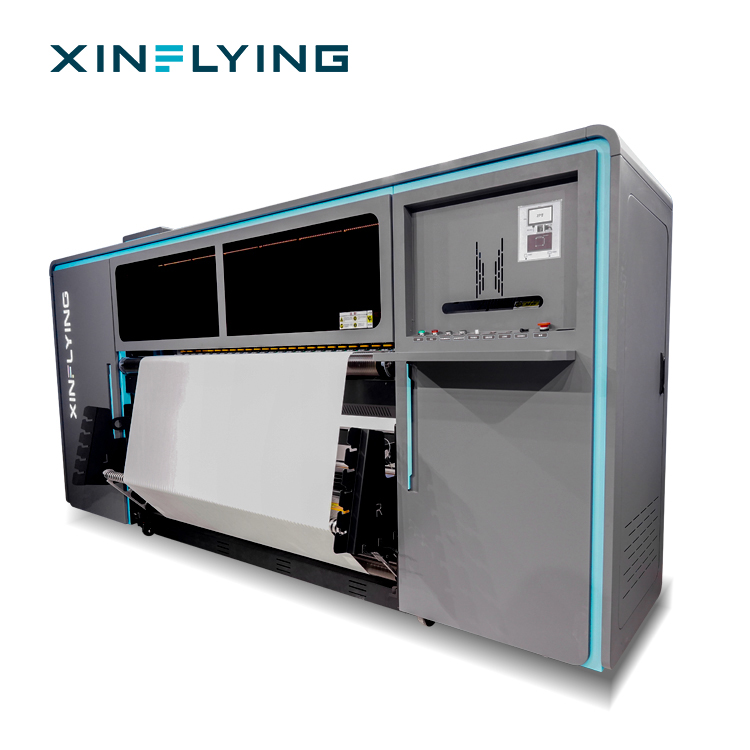
Problem Definition: The Format Wall in Home Textile Printing
Home textile work is width-driven. A curtain drop, a wide cushion panel or a decorative fabric run is normally printed as one continuous piece, because seams interrupt the pattern, add sewing labour and create visible colour steps. When the available print width is 130 cm or 180 cm, designs that exceed that width must be split and matched by hand, subcontracted to a wider machine, or declined outright.
Three practical symptoms show that print width has become the constraint rather than the machine’s reliability:
- Order rejection and overtime. Large-panel enquiries are quoted slowly or turned down because the print must be joined; matching seams and reprinting mismatched panels consumes operator hours.
- Cost per square metre stays high. Producing a wide panel as two narrow passes doubles handling, transfer paper waste and heat-press cycles relative to a single wide pass.
- Batch-to-batch colour drift. When one design is printed across several narrow runs, colour consistency between batches becomes harder to hold, which becomes visible in repeat orders.
A fourth constraint is documentary rather than mechanical. European importers typically ask for CE documentation and RoHS attestations before goods are accepted. If the file set cannot be matched to the exact model on the order, deliveries stall at the buyer’s quality gate even when the machine itself performs well.
For a small manufacturer moving from sampling to commercial home textile production, these constraints usually arrive together: the order book grows faster than the printing width, and the compliance file is assembled after the first export enquiry rather than before it.
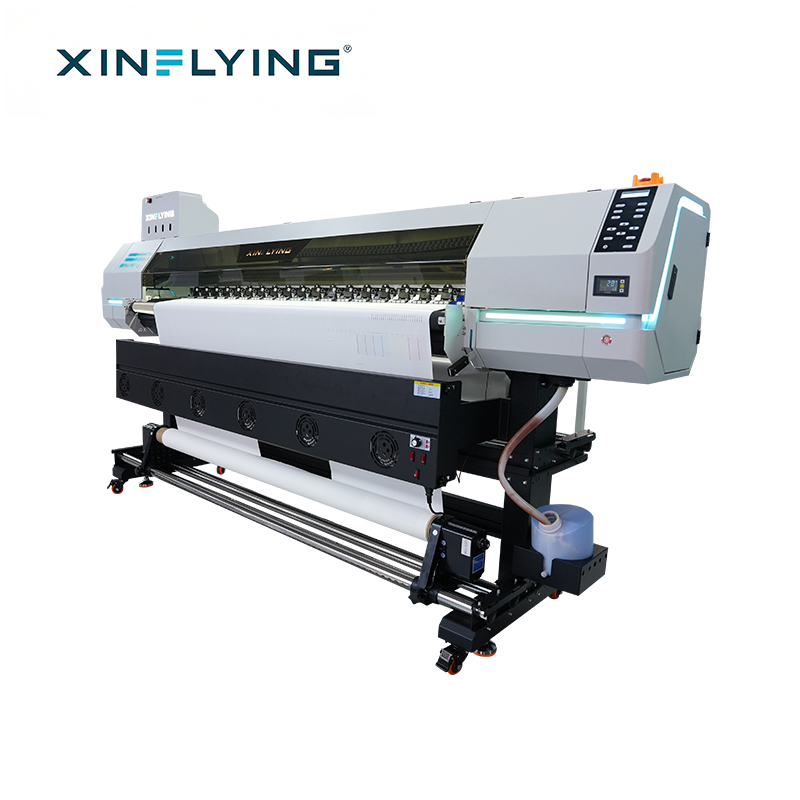
Industry Background: Why Wide Roll-to-Roll Capacity Is in Demand
Wide-format roll-to-roll sublimation sits inside a market that is expanding on both the supply and the demand side. Grand View Research valued the global dye sublimation printing market at USD 16.4 billion in 2025 and projects USD 39.0 billion by 2033, with a CAGR of 11.5% from 2026 to 2033. Asia Pacific dominated that market in 2025 with a 36.5% revenue share, led by China as the largest single country market.
The equipment segment behaves similarly. Mordor Intelligence values dye sublimation printers specifically at USD 1.88 billion in 2025, rising to USD 2.53 billion by 2030. On the demand side, China’s textile and garment exports reached USD 293.6 billion in 2023, and Grand View Research identifies personalized apparel and home decor as a primary driver of a 13.1% CAGR in digital textile sublimation through 2030.
Market estimates differ by scope — some research houses measure equipment only, others include consumables and services — so figures should be read together with their definitions. The directional signal is consistent across sources: more textile production is moving to digital roll-to-roll printing.
Width itself is a settled industry convention. FESPA market commentary describes roll-to-roll sublimation printers with 1.9 m (1900mm) widths as standard for high-volume textile and soft signage applications. In the broader production printer market, inkjet production printers accounted for 87.3% of share by type in 2024 (Grand View Research), and among printer brands Epson led the digital textile dye sublimation printer market with 26.7% share in 2024, followed by Mimaki at 18.6% and Roland DG at 15.5% (Data Insights Reports). For a fabric manufacturer, the practical reading is straightforward: 1900mm is the mainstream working width for commercial textile output, and the market around it is not contracting.
The Solution: XF-19E8-PRO as the 1900mm Production Platform
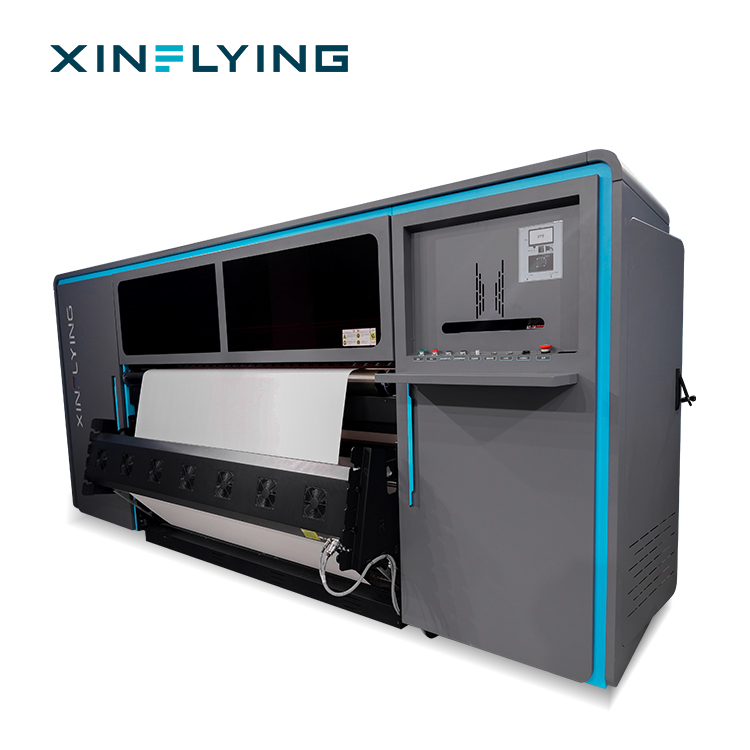
The XF-19E8-PRO is a roll-to-roll dye sublimation printer manufactured by Xinflying (Guangzhou Xin Flying Digital Technology Co., Ltd.), a digital printing equipment manufacturer established in 2010 that produces DTF printer machines, dye sublimation printers, DTG printers, UV DTF printers and UV flatbed printer machines, alongside printing consumables and complete digital printing solutions. Xinflying operates a 37,440 m² facility with 200+ employees, a 20-engineer R&D team and annual output above 20,000 units, exporting approximately 80% of production to North America, South America, Europe, Asia, the Middle East and Africa.
For a home textile producer stepping up from a 1.3–1.8 m machine, the model’s specification addresses the format problem directly:
- Printheads: 8 × Epson i3200-A1
- Print width: 190 cm (75 in) — a 1900mm-class working width
- Resolution: 3200 dpi
- Speed: 1PASS up to 306 m²/h (fastest mode) and 210 m²/h (standard mode); 2PASS 153 m²/h (fastest) and 109 m²/h (standard)
- Ink and media: CMYK sublimation ink on sublimation paper
- RIP: Maintop as standard, with RIIN (Hoson only), PhotoPrint and Printfactory available as options
- Drying: external intelligent air-heat integrated dryer
- Maintenance: fully sealed automatic moisturizing and cleaning
- Power: 10.2 kW, 210–230 V, 45 A
- Control environment: Windows 11/10 (32/64-bit), Intel i7, 4 GB RAM, 500 GB HD, discrete ATI graphics, gigabit LAN; JPG, TIFF and PDF document formats
- Operating conditions: 18–30 °C and 35–65% RH
- Footprint: 3840 × 1300 × 1800 mm machine size, 1400 kg net weight (1500 kg gross)
Read against the home textile bottleneck, three specification choices matter most. The 190 cm width removes the need to split most curtain, cushion and decorative panels. The 3200 dpi output protects fine pattern detail on decorative fabrics. The speed bands — 306 m²/h at 1PASS versus 210 m²/h in standard mode — give a factory a way to trade throughput against detail without changing machines.
Compliance That Supports Multi-Region Sales
Documentation is treated as part of the specification, not an afterthought. The XF-19E8-PRO is listed among the applicable products for the following certificates:
| Certificate | Number | Issued by | Scope | Validity |
|---|---|---|---|---|
| CE EMC Certificate of Compliance | TQT1550D270EC | TQT | EMC Directive 2014/30/EU — EN 55032:2015/A11:2020; EN 55035:2017/A11:2020; EN IEC 61000-3-2:2019+A1:2021; EN 61000-3-3:2013/A2:2021 | Issued 2026-05-19 |
| CE LVD Certificate of Compliance | TQT1550D271EC | TQT (Shenzhen Tianqi Testing Technology Service Co., Ltd.) | LVD 2014/35/EU — EN IEC 62368-1:2020/A11:2020 | Issued 2026-05-19 |
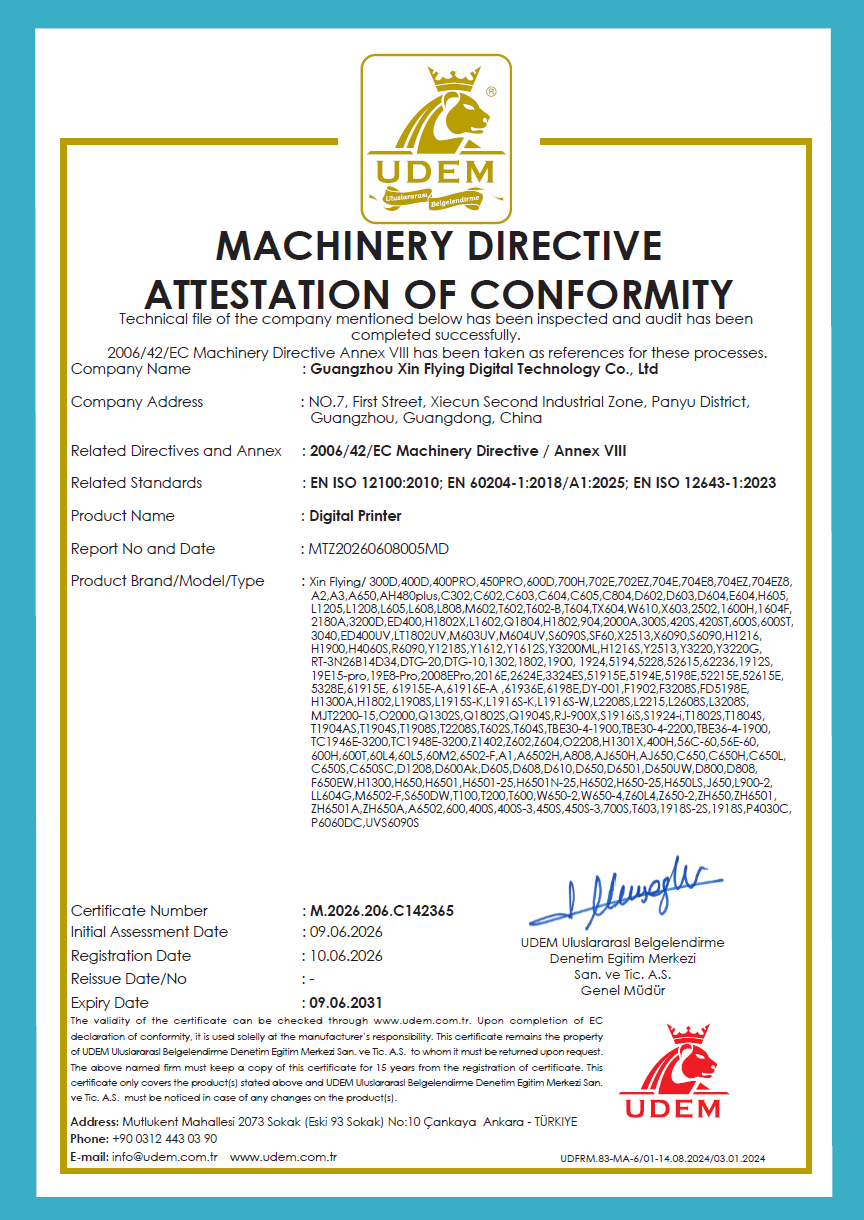
| CE MD Certificate of Conformity | M.2026.206.C142365 | UDEM | Machinery Directive 2006/42/EC — EN ISO 12100:2010; EN 60204-1:2018/A1:2025; EN ISO 12643-1:2023 | To 2031-06-09 |
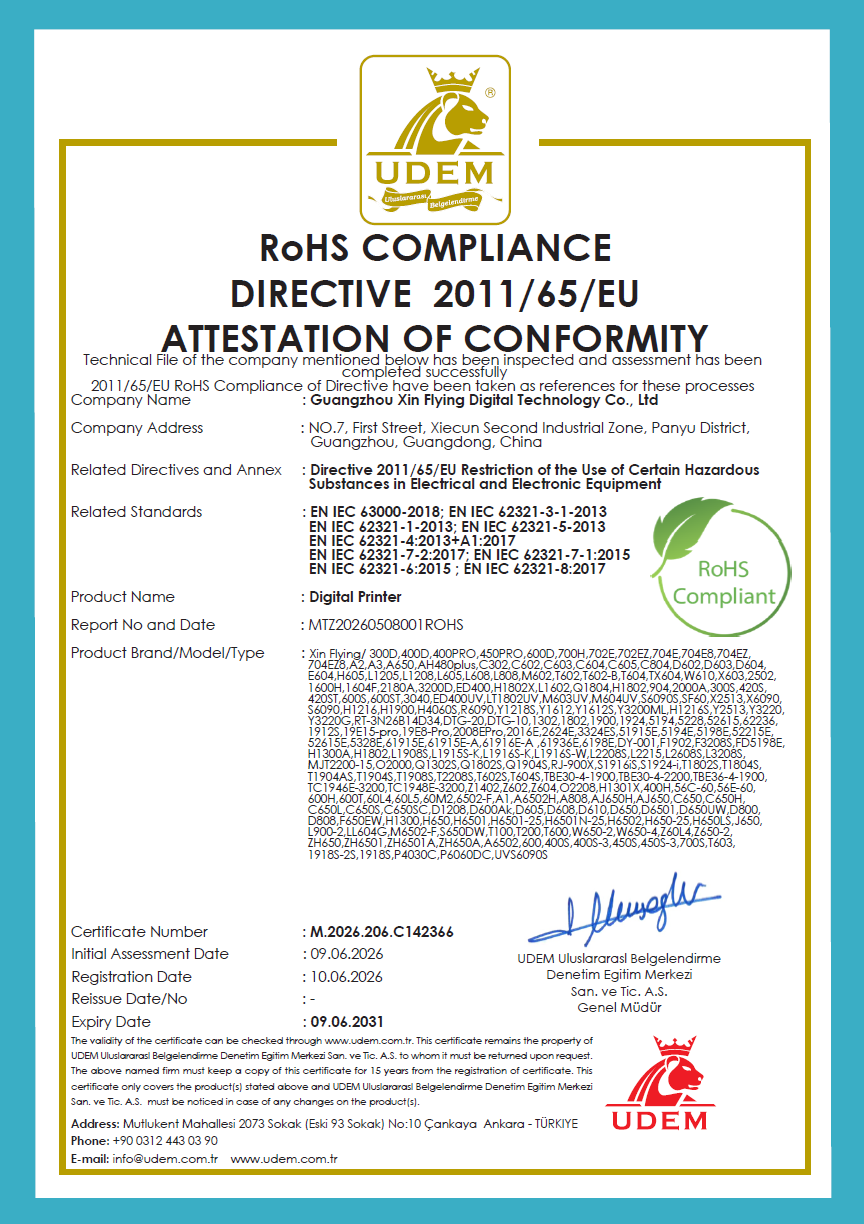
| RoHS Compliance Certificate | M.2026.206.C142366 | UDEM | Directive 2011/65/EU — EN IEC 63000:2018 and the EN IEC 62321 series | To 2031-06-09 |
| OEKO-TEX® ECO PASSPORT | SH150194016 | TESTEX AG | Textile printing inks and printing pastes | To 2026-12-31 |
Two points are worth noting for buyers. First, the CE set is split across safety and electromagnetic compatibility: the EMC and LVD files were issued by TQT, while the machinery safety and RoHS attestations were issued by UDEM. A complete European file therefore means at least four documents, not one. Second, the ECO PASSPORT certificate covers ink chemistry rather than the machine, and becomes relevant when printed fabric touches skin or when a buyer asks about printing pastes. For colour validation from digital data, ISO 12647-8:2021 defines the validation print process and is a useful reference when discussing colour accuracy with a technical buyer.
The practical verification step is unglamorous but decisive: compare the certificate number, the model designation on the certificate’s applicable product list, and the model number on the purchase invoice or packing list. When these three align, the compliance conversation with an EU importer is short.
Customization and OEM Support
Scale-up projects rarely use a stock configuration without adjustment. Xinflying provides OEM and ODM production services, with customization covering product branding, machine appearance customization, colour customization, logo customization and packaging customization, plus customized solutions developed from customer requirements. Production capacity is stated at 1,600+ units per month, with a minimum order quantity of one unit and a lead time of 5–40 days depending on configuration. Quality control is applied as pre-shipment testing. Delivery uses the standard Incoterms EXW, FOB, CIF and DDP, and export sales are supported globally, with more than 50 engineers providing 24/7 online technical support.
For a fabric manufacturer, that combination matters at the point of execution: a one-unit minimum order allows a pilot machine to be validated before a fleet is committed, customization allows the machine to carry the factory’s own brand if it is resold or shown to clients, and DDP simplifies the landed-cost calculation for a first equipment import.
Step-by-Step: Scaling a Home Textile Line to 1900mm Production
The sequence below reflects how a small manufacturer typically moves from evaluation to execution with a wide-format sublimation platform.
Step 1 — Audit your widest sellable panel
Start from the product, not the machine. Identify the maximum panel width you quote today and the width your buyers request. If the gap sits above 180 cm, a 1900mm-class machine closes it in a single pass rather than two.
Step 2 — Verify compliance against the exact model
Collect the CE EMC, CE LVD, CE MD and RoHS documents and confirm that each one lists the model you intend to buy. Confirm validity dates and the issuing body. This is the step that prevents customs and buyer-gate delays later.
Step 3 — Prepare power, floor and environment
The XF-19E8-PRO draws 10.2 kW on a 210–230 V, 45 A supply, occupies a 3840 × 1300 × 1800 mm footprint and weighs 1400 kg net. Plan for stable power, adequate floor loading, and a controlled room at 18–30 °C and 35–65% RH — the environment the machine is specified for.
Step 4 — Configure RIP and colour workflow
Set up Maintop as the standard RIP, or select RIIN (Hoson only), PhotoPrint or Printfactory as options, and lock one ICC profile per fabric family. Consistency across repeat orders depends more on this step than on printhead count.
Step 5 — Establish media handling and drying
Roll-to-roll production with an external intelligent air-heat integrated dryer requires a clean path for sublimation paper, correct tension, and sufficient downstream space for printed rolls to cool and stabilise before transfer.
Step 6 — Run test panels and calibrate
Print the widest and the finest designs in your catalogue, then transfer them onto production fabric. Check pattern continuity across the full 190 cm width, colour accuracy, and edge-to-edge consistency.
Step 7 — Standardise maintenance
The machine uses fully sealed automatic moisturizing and cleaning. Build nozzle checks and cleaning cycles into the daily routine so that print quality does not drift between production batches.
Step 8 — Document the shipment
Attach the matching certificate set, test records and model documentation to each export shipment. Pre-shipment testing is the stated acceptance criterion, so the same evidence supports the buyer’s incoming inspection.
Use Cases: Where the 1900mm Platform Earns Its Place
Home textile production. A home textile manufacturer applying sublimation printing to curtains, cushions, decorative fabrics and customized polyester textile products reported using 10 units over a four-year period, with the result that it could develop customized textile collections with rich patterns, accurate colours and flexible production capability. The reported highlight was suitability for large-format textile applications requiring detailed patterns and consistent printing quality — precisely the workload that a 190 cm width addresses.
Sportswear and team uniforms. A sportswear manufacturer producing football jerseys, basketball uniforms and customized sportswear used 15 units over four years and reported improved production flexibility for customized orders, reduced dependence on outsourced printing services and more consistent colour quality across batches. A sports uniform supplier using 8 units over five years reported shorter production cycles for personalized names, numbers and graphics. Sublimation equipment is shared across these categories, so a home textile factory buying a wide machine can also quote teamwear and promotional textile work.
Print service providers. A digital textile printing service provider supplying sportswear brands, apparel factories and customized textile businesses used 5 units over three years and reported expanded production capacity, support for more customer projects and faster response on customized textile orders.
These are customer-reported outcomes rather than guaranteed results; actual output depends on fabric, design complexity, workflow discipline and operating conditions.
Comparison: Matching a Sublimation Printer to Your Production Stage
The table compares four Xinflying roll-to-roll sublimation models by published specification, so that a buyer can see where a 1900mm-class machine sits relative to narrower and faster alternatives.
| Model | Printheads | Print width | Fastest print speed | Power | Typical production profile |
|---|---|---|---|---|---|
| XF-H1802X-2I32A1 | 2 × Epson i3200-A1 | 180 cm (1.8 m) | 4PASS 52 m²/h (standard 4PASS 42 m²/h) | 3.5 kW | Small and medium printing businesses, custom textile production, apparel sampling, small-batch orders |
| XF-O2000-4I32A1 | 4 × Epson i3200-A1 | 195 cm (1.95 m) | 2PASS 180 m²/h (4PASS 92 m²/h) | 8.5 kW | Growing printing companies, professional textile printers, continuous daily production |
| XF-19E8-PRO | 8 × Epson i3200-A1 | 190 cm (75 in) | 1PASS 306 m²/h (standard 1PASS 210 m²/h) | 10.2 kW | Textile factories, large garment manufacturers, professional sublimation production centres |
| XF-19E15-PRO | 15 × Epson i3200-A1 | 190 cm (75 in) | 1PASS 524 m²/h (standard 1PASS 394 m²/h) | 14.5 kW | High-volume industrial textile sublimation printing |
For the scenario in this case study — a small fabric manufacturer scaling into 1900mm home textile production — the XF-19E8-PRO sits at the industrial entry point: a 190 cm width, 3200 dpi output and up to 306 m²/h at maximum throughput. A producer still validating the category may prefer the XF-O2000-4I32A1 or the 1.8 m XF-H1802X-2I32A1, while a factory already running multi-shift home textile output should compare against the 15-head XF-19E15-PRO.
FAQ
What CE and RoHS documentation should a 1900mm sublimation printer carry for multi-region sales?
A European file normally consists of several separate documents. For the XF-19E8-PRO these include the CE EMC Certificate of Compliance TQT1550D270EC (EMC Directive 2014/30/EU), the CE LVD Certificate of Compliance TQT1550D271EC (LVD 2014/35/EU, EN IEC 62368-1:2020/A11:2020), the CE Machinery Directive Certificate of Conformity M.2026.206.C142365 issued by UDEM (EN ISO 12100:2010; EN 60204-1:2018/A1:2025; EN ISO 12643-1:2023) and the RoHS Compliance Certificate M.2026.206.C142366 (Directive 2011/65/EU, EN IEC 63000:2018). Buyers should confirm that each document lists the exact model being purchased and is still within its validity period; the RoHS and machinery certificates run to 2031-06-09.
Is a 190cm wide sublimation printer capable of home textile production, not only apparel?
The XF-19E8-PRO is specified for industrial textile sublimation printing using sublimation ink on sublimation paper. Its 190 cm (75 in) print width, 3200 dpi resolution and 1PASS speed of up to 306 m²/h match wide-panel decorative work, and home textile applications such as curtains, cushions and decorative fabrics are among the use cases reported by users of wide-format sublimation equipment. Because sublimation dye bonds with polyester, material selection — not machine class alone — determines whether a specific fabric is suitable.
What should I check in an OEM dye sublimation printer manufacturer?
Check four things. First, whether OEM and ODM production services are actually offered and how far customization extends: for Xinflying this covers product branding, machine appearance, colour, logo, packaging and customized solutions built from customer requirements. Second, production capacity and lead time: 1,600+ units per month and 5–40 days respectively, with a minimum order quantity of one unit. Third, quality control and support: pre-shipment testing, an in-house R&D team of 20 engineers and more than 50 engineers providing 24/7 online technical support. Fourth, verifiable identity: a legal company name (Guangzhou Xin Flying Digital Technology Co., Ltd.), a 37,440 m² facility, 200+ employees, 20,000+ units of annual output and approximately 80% export share.
Can a 1900mm sublimation printer be validated on samples before full production?
Yes — validation is normally staged. Because the minimum order quantity is one unit, a producer can purchase and test a single machine against its own fabrics and designs before committing to additional capacity. Confirmation continues through pre-shipment testing, which is the stated acceptance criterion, so the machine is checked before it leaves the factory. On the buyer’s side, the same test panels confirm pattern continuity across the full 190 cm width, colour accuracy per fabric family and stability across repeated runs.
What lead time and delivery terms apply when ordering a wide-format sublimation printer?
Stated lead time is 5–40 days depending on the configuration and customization requested. Delivery uses the standard Incoterms EXW, FOB, CIF and DDP, with T/T, Western Union and PayPal listed as payment terms, and export coverage spanning North America, South America, Europe, Asia, the Middle East and Africa. DDP is often the simplest option for a first machine import because it fixes the landed cost in advance. To move from evaluation to execution, you can request a quotation and the current Xinflying product brochure, or send your panel width and monthly square-metre target to www.xin-flying.com for a configuration recommendation.
Conclusion
For a small fabric manufacturer, upgrading to a 1900mm sublimation printer is primarily a decision about which orders become printable. The XF-19E8-PRO delivers that width with 8 Epson i3200-A1 printheads, 3200 dpi resolution and speeds up to 306 m²/h, on a platform supported by an OEM/ODM customization programme, a 5–40 day lead time and a one-unit minimum order. The compliance file — CE EMC TQT1550D270EC, CE LVD TQT1550D271EC, CE MD M.2026.206.C142365, RoHS M.2026.206.C142366 and OEKO-TEX ECO PASSPORT SH150194016 — is what allows the same machine to be sold into multiple regions without renegotiating documentation at every port.
The practical next step is small: define your widest panel, collect the certificate set, and run test prints against your own fabrics. If the numbers hold, the format wall is gone.
Request a Sample, Quote or the Full Catalogue
Tell us your widest panel, your target monthly square metres and your destination market, and we will confirm the model, the matching certificate set and the delivery terms. Lead time is 5–40 days; MOQ is one unit.
Download the Xinflying company and product brochure (PDF)
Website: www.xin-flying.com · Email: info@xin-flying.com · Tel / WhatsApp: +86 188-1322-1357
Address: No.7, Xiecun 2nd Industrial Zone, Panyu, Guangzhou, Guangdong
Have Questions or Need More Details?
Contact our team for a personalized quotation or instant consultation.
Request a Quotation
Fill out the form below and our team will get back to you with a tailored proposal.
WhatsApp Direct Chat
Prefer to chat in real-time? Message us on WhatsApp for instant assistance & quick answers.
- Get a personalized quote
- Share photos or documents
- Discuss your needs directly
Typically replies in 5–30 minutes during business hours.