
Industrial vs Desktop Sublimation Printers: Best Ratings for Volume
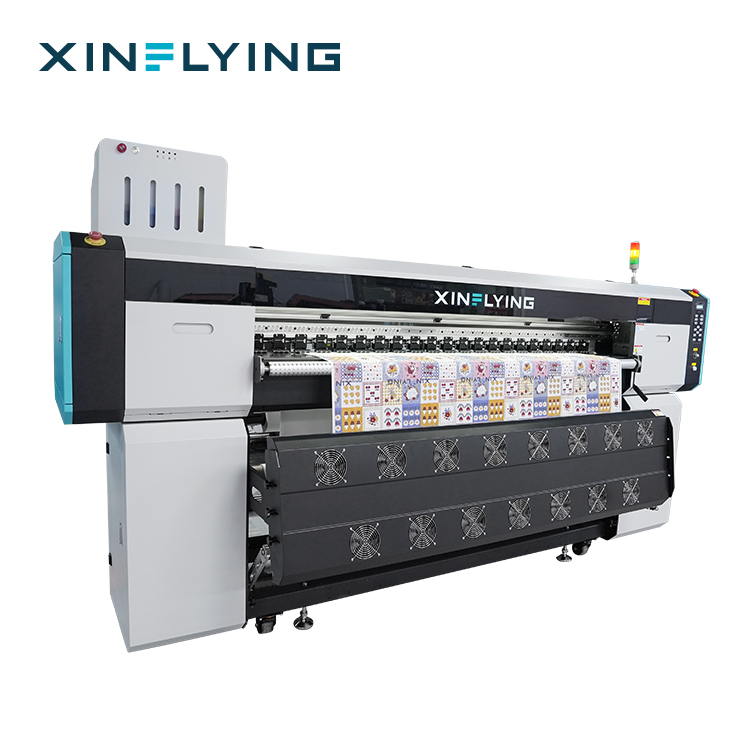
Short answer: for volume production, industrial roll-to-roll sublimation printers out-perform desktop-class units because they combine a wider print width, more printheads, a higher sustained square-metre output and continuous-operation hardware such as external dryers, sealed moisturising systems and long-roll media handling. In the XINFLYING dye sublimation range, the XF-19E15-PRO (15 printheads, up to 524 m²/h in 1-pass) and the XF-O2000-4I32A1 (4 printheads, up to 180 m²/h in 2-pass, 195 cm width) are the two industrial benchmarks used to rate volume capacity.
This guide is written for buyers at the evaluation and execution stage — the point where a business has proven the process and now needs to decide how much machine it actually has to buy. It rates the XINFLYING sublimation printer line by production volume, explains what separates an industrial platform from a desktop-class one, and sets out the selection rules that matter when throughput, uptime and certification have to survive a real production calendar.
Problem Definition: The Volume Ceiling Between Desktop and Industrial Classes
A desktop-class or compact sublimation printer is a sensible first machine and a costly long-term home. These units are designed around narrow print widths, a small number of printheads and short production windows. They are excellent for sampling, personalised products and small custom runs, but their design ceiling appears quickly once orders become repeatable and scheduled.
Industrial roll-to-roll sublimation printers are designed around the opposite assumption: the machine will run for long blocks of time, on wide media, at a pass mode the operator can actually sell to a customer. That design assumption changes the hardware — printhead count, media loading, drying, colour stability and service access all shift to support uptime rather than occasional output.
In practice, the volume ceiling shows up in four places, and only the first one is usually discussed in a sales conversation:
- Throughput. The number that decides a schedule is sustained output in square metres per hour at the pass mode used for saleable quality — not the fastest figure printed on a specification sheet.
- Media logistics. If a machine can only take short rolls, the operator spends the shift reloading instead of printing. Long-roll support is a production feature, not a convenience.
- Colour and nozzle stability over a long run. A machine that prints beautifully for twenty minutes and drifts over three hours is not a volume machine. Drying and moisturising architecture decides this.
- Uptime conditions. Power supply, floor space, machine mass, ambient temperature and humidity all have to be satisfied before high output is repeatable.
Industry Background: Why Volume Capacity Is Now the Buying Question
The demand side of dye sublimation printing has grown into a volume business rather than a niche craft. Independent market research puts the global dye sublimation printing market at USD 16.4 billion in 2025, projected to reach USD 39.0 billion by 2033 (Grand View Research). The same source projects an 11.5% CAGR for the market from 2026 to 2033, while the dye sublimation printer equipment segment alone was valued at USD 1.88 billion in 2025 and is expected to reach USD 2.53 billion by 2030 (Mordor Intelligence). Estimates differ between research houses depending on whether consumables and services are included, so treating these figures as a range rather than a single number is the honest reading.
Two structural facts explain why the buying conversation has shifted toward output rather than features:
- The supply base is concentrated in Asia. Asia Pacific held a 36.5% revenue share of the dye sublimation printing market in 2025, led by China as the largest country market (Grand View Research). China's textile and garment exports reached USD 293.6 billion in 2023, which is the demand engine behind industrial-scale sublimation capacity.
- Personalisation is the growth driver. Demand for personalised apparel and home decor is the primary driver behind a projected 13.1% CAGR in the digital textile sublimation market through 2030 (Grand View Research). Personalised work is short-run but constant — which rewards machines that can switch designs without losing throughput.
On the equipment side, the 1.9 m (1900 mm) roll-to-roll class is widely treated as the standard configuration for high-volume textile and soft-signage work (FESPA industry insights), and inkjet production printers accounted for 87.3% of the production printer market by type in 2024 (Grand View Research). The market structure is also concentrated among established brands: Epson held a 26.7% share of the digital textile dye sublimation printer market in 2024, followed by Mimaki at 18.6% and Roland DG at 15.5% (Data Insights Reports). For a buyer, that concentration means the practical differentiation between suppliers sits in configuration, certification coverage and manufacturing support — not in the basic technology.
Volume Ratings: The XINFLYING Sublimation Line Ranked by Output
XINFLYING (Guangzhou Xin Flying Digital Technology Co., Ltd.) is a digital printing equipment manufacturer founded in 2010 that builds DTF, UV DTF, UV, DTG and dye sublimation printing systems. The sublimation range below is rated strictly by published volume capability: printhead count, maximum print speed, the print width available to the operator, and installed power. The ranking deliberately uses published speeds at the fastest published pass mode, because that is the only figure that is comparable across models — the pass mode you can sell at is a separate decision, covered in the next section.
| Rank | Model | Printheads | Fastest speed | Standard speed | Print width | Power |
|---|---|---|---|---|---|---|
| 1 | XF-19E15-PRO | 15× Epson i3200-A1 | 1PASS 524 m²/h; 2PASS 254 m²/h | 1PASS 394 m²/h; 2PASS 188 m²/h | 190 cm (75") | 14.5 kW |
| 2 | XF-19E8-PRO | 8× Epson i3200-A1 | 1PASS 306 m²/h; 2PASS 153 m²/h | 1PASS 210 m²/h; 2PASS 109 m²/h | 190 cm (75") | 10.2 kW |
| 3 | XF-O2000-4I32A1 | 4× Epson i3200-A1 | 2PASS 180 m²/h; 4PASS 92 m²/h | — | 195 cm (1.95 m) | 8.5 kW |
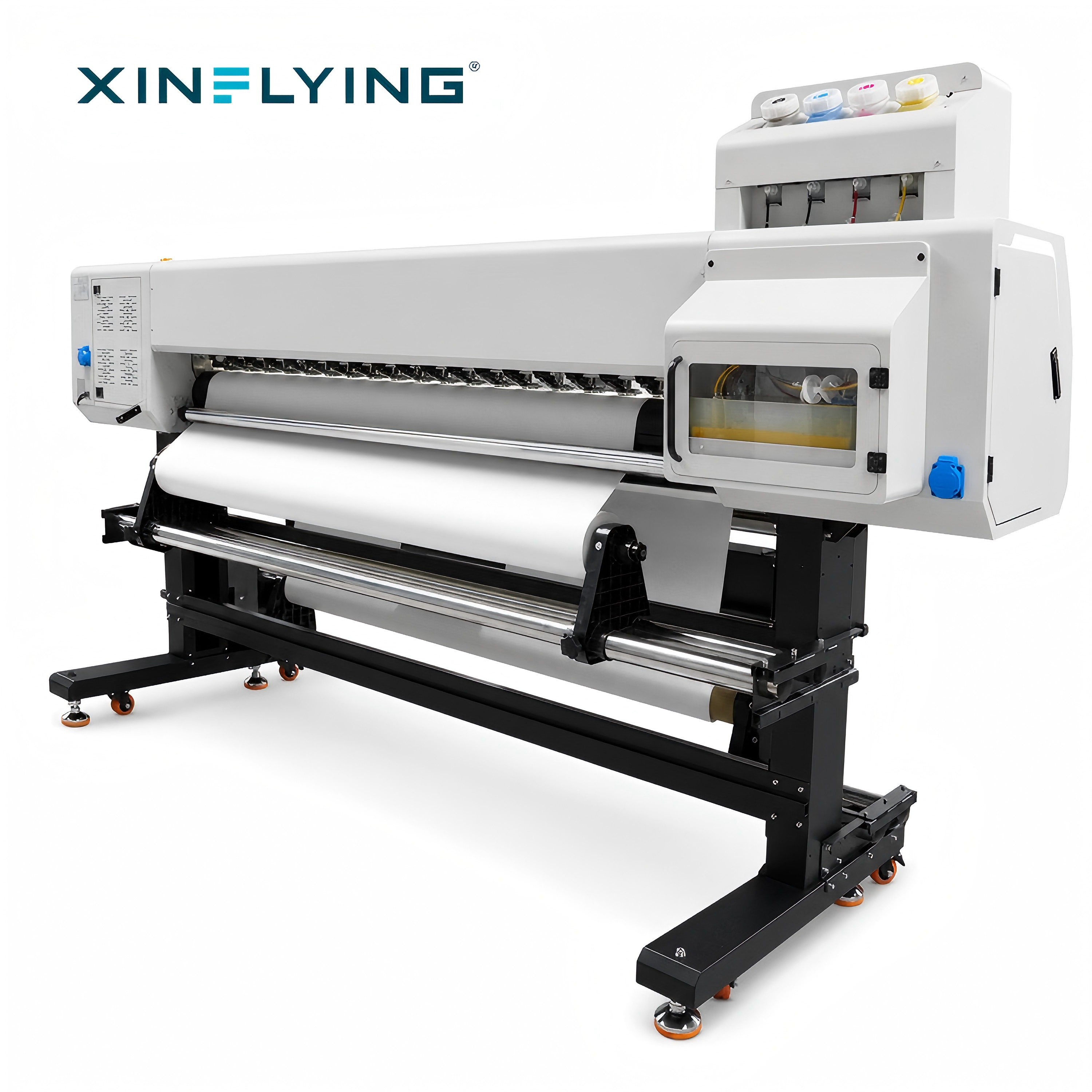
| 4 | XF-H1802X-2I32A1 | 2× Epson i3200-A1 | 4PASS 52 m²/h | 4PASS 42 m²/h | 180 cm (1.8 m) | 3.5 kW |
| 5 | XF-H1301X-1I32A1 | 1× Epson i3200-A1 | 4PASS 28 m²/h | — | 130 cm (1.3 m) | 2 kW |
Two readings of this table matter more than the numbers themselves. First, output does not scale linearly with printhead count alone — it scales with printheads multiplied by the widest pass mode the machine can hold in stable production. A 15-head platform running 1-pass sits in a different category from a 4-head platform running 2-pass, even before media handling is considered. Second, the compact end of the line is not a lesser version of the same machine; it is a different production tier. The XF-H1301X-1I32A1 prints on a 130 cm width at up to 28 m²/h in 4-pass mode with an external constant-temperature automatic drying system — appropriate for sampling rooms, small custom runs and narrow-format work, and structurally unsuited to a factory schedule built around wide panels.
The Two Industrial Benchmarks: XF-19E15-PRO and XF-O2000-4I32A1
These two models are the reference points for this article because they represent the two different ways a business arrives at industrial volume: maximum throughput per hour, and maximum width per shift.
XF-19E15-PRO — the throughput benchmark
The XF-19E15-PRO is the highest-output model in the range. It carries 15 Epson i3200-A1 printheads, prints in CMYK sublimation ink at 3200 dpi, and delivers up to 524 m²/h in 1-pass mode, 254 m²/h in 2-pass mode, 394 m²/h in standard 1-pass and 188 m²/h in standard 2-pass, across a 190 cm (75") width. It loads sublimation paper rolls of up to 1000 m, which is the specification that converts a high hourly rate into a high shift rate — fewer reloads means more printed metres per operator hour.
Continuous operation is designed in rather than added on. Drying is handled by an external intelligent air-heat integrated dryer, and the machine uses fully sealed automatic moisturising and cleaning. It is powered at 210–230V, 45A and rated at 14.5 kW, with a net weight of 1480 kg and a machine footprint of 3840 × 1570 × 1800 mm. Recommended operating conditions are 18–30°C and 35–65% RH. The published applicable industry is industrial textile sublimation printing for high-volume work, and the standard RIP is Maintop, with RIIN (Hoson only), PhotoPrint and Printfactory available as options.
XF-O2000-4I32A1 — the width and duty-cycle benchmark
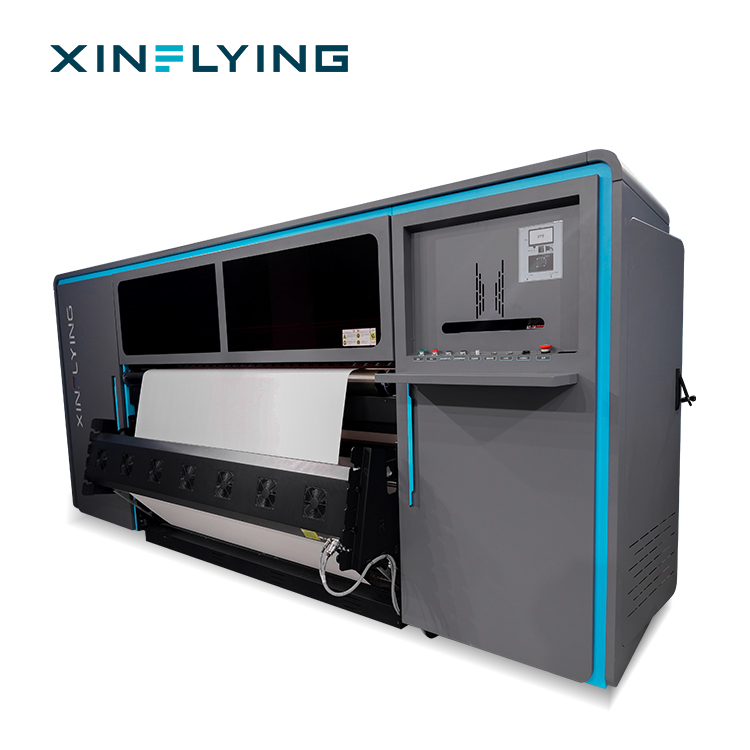
The XF-O2000-4I32A1 takes a different route to volume. It runs 4 Epson i3200-A1 printheads in CMYK×4 on a 195 cm (1.95 m) print width — the widest in the range — and prints up to 180 m²/h in 2-pass mode and 92 m²/h in 4-pass mode using piezoelectric inkjet technology. Its media specification is the strongest indicator of its intended duty cycle: it accepts heat transfer paper rolls of 1000–1500 m, and the media path handles material up to 1 mm thick and 200 kg in weight. Ink is delivered through a 220 ml cartridge combined with a 3 L ink tank, which supports long unattended runs rather than bench testing.
Colour stability across a long roll is managed by front, middle and rear break-controlled heating. Power is 8.5 kW on a 220V, 50/60 Hz supply, with a net weight of approximately 490 kg and a machine size of 3311 × 1278 × 1670 mm. Recommended conditions are 20–25°C and 45–65% RH, and the supported RIP options are RIIN Print and Maintop. Its published applications cover clothing, home decor, canvas bags, cushions and flags — the product mix that most commonly drives a first industrial purchase.
Continuous Operation Standards That Decide Real Output
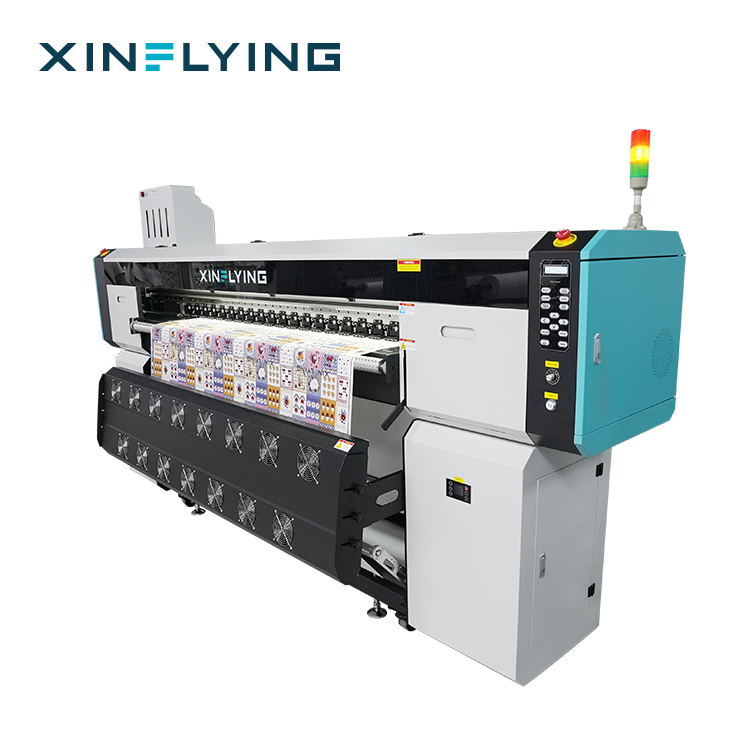
Continuous operation is the standard that separates a machine that can print fast from a machine that can print fast all week. When comparing industrial units, these are the specifications to check, because each one removes a different reason for the operator to stop the machine:
- Drying architecture. The XF-19E15-PRO and XF-19E8-PRO use an external intelligent air-heat integrated dryer; the XF-H1301X-1I32A1 uses an external constant-temperature automatic drying system. In-line drying keeps the printed roll from blocking and lets the operator stack output without waiting.
- Moisturising and cleaning. The two industrial PRO models use fully sealed automatic moisturising and cleaning, which protects nozzle health during breaks and between shifts.
- Roll length. The XF-19E15-PRO loads 1000 m rolls and the XF-O2000-4I32A1 supports 1000–1500 m rolls. Media reload frequency sets the practical upper bound on shift output.
- Heating control. Front, middle and rear break-controlled heating on the XF-O2000-4I32A1 and XF-H1802X-2I32A1 helps hold colour consistency as the roll diameter changes.
- Environment and power. Industrial models have narrower environmental windows than entry machines — 18–30°C and 35–65% RH for the PRO models, 20–25°C and 45–65% RH for the XF-O2000-4I32A1 — and demand 210–230V/45A or 220V supplies. Production floors should be prepared for these conditions before delivery, not after.
- Duty cycle. The published operational scenario for this class of machine is a controlled indoor production environment running 24/7, supported by a RIP workflow, a heat press calender, dye sublimation paper, dye sublimation ink and a cutting solution.
How to Choose by Volume: A Step-by-Step Breakdown
The selection process below converts an order book into a machine specification. It is written for buyers who have already validated the process and are now sizing equipment.
- Convert your order book into square metres. Multiply average panel area by the number of pieces per month, add a waste allowance for test prints and roll ends, and add headroom for growth. This single number eliminates most of the range immediately.
- Choose the pass mode you can sell, then read the speed at that pass. Every model in the range publishes speeds by pass. If your customers accept 2-pass quality, the XF-19E15-PRO is a 254 m²/h machine; if they require 4-pass, the comparison changes completely. Never size a machine on its 1-pass figure unless your market accepts 1-pass output.
- Match print width to your widest repeat panel. The range spans 130 cm, 180 cm, 190 cm and 195 cm. Buying width you cannot fill wastes ink and speed; buying width you will need next year means replacing the machine next year. The 190 cm and 195 cm platforms cover the standard 1.9 m roll-to-roll class used for high-volume textile and soft signage.
- Count printheads against your required linear speed. Printhead count determines how fast the carriage can cover the width at a given pass. The XF-19E15-PRO reaches 524 m²/h in 1-pass with 15 heads; the XF-O2000-4I32A1 reaches 180 m²/h in 2-pass with 4 heads on a wider format.
- Audit the continuous-operation hardware. Confirm the dryer type, moisturising system, roll capacity and heating control before comparing prices. Two machines with similar hourly ratings can differ by hours of usable production per shift.
- Confirm electrical and environmental readiness. The XF-19E15-PRO requires 210–230V at 45A and 14.5 kW, and the XF-O2000-4I32A1 requires 220V at 8.5 kW. Check supply capacity, floor loading for a machine of up to 1480 kg net, and ambient control before order confirmation.
- Verify certification scope against the exact model. Compliance documents are only useful if the model you are buying is listed in scope.
- Lock commercial terms last. MOQ, lead time, Incoterms, payment method and acceptance testing should be confirmed once the technical specification is final — not used to compensate for an undersized machine.
Where Volume Capacity Matters: Application Scenarios
The value of an industrial platform shows up in the segments where volume is continuous rather than seasonal.
- Sportswear and team apparel. A sportswear manufacturer in Brazil running 15 units over four years produces football jerseys, basketball uniforms and customised sportswear, printing high-resolution patterns, team logos and full-colour designs on polyester before cutting and sewing. The reported result was improved production flexibility for customised orders, reduced dependence on outsourced printing, and more consistent colour quality across batches. A separate sports uniform supplier in Brazil, running 8 units over five years, produces customised football kits, training uniforms and team apparel with personalised names, numbers and graphics, handling customised orders with shorter production cycles.
- Commercial sublimation service bureaus. A digital textile printing service provider running 5 units over three years serves sportswear brands, apparel factories and customised textile businesses. The reported outcome was expanded production capacity, support for more customer projects and faster response on customised textile orders.
- Home textiles and decorative fabrics. A home textile manufacturer running 10 units over four years applies sublimation printing to curtains, cushions and decorative fabrics, developing customised collections with rich patterns, accurate colours and flexible production capability — work that depends on wide-format output and consistent colour through long runs.
The common thread across these scenarios is that the machine is measured by how many customer projects it can hold at the same time, not by the quality of a single test print.
Industrial vs Desktop Sublimation Printers: Comparison Table
The table below compares the two tiers using published specifications from the XINFLYING sublimation range, so that the class difference is expressed in measurable terms rather than marketing language.
| Criterion | Compact / entry tier (XF-H1301X-1I32A1, XF-H1802X-2I32A1) | Industrial tier (XF-O2000-4I32A1, XF-19E8-PRO, XF-19E15-PRO) |
|---|---|---|
| Print width | 130 cm – 180 cm | 190 cm – 195 cm (1.9 m class) |
| Printheads | 1× – 2× Epson i3200-A1 | 4× – 15× Epson i3200-A1 |
| Fastest published speed | 28 m²/h – 52 m²/h (4PASS) | 92 m²/h (4PASS) – 524 m²/h (1PASS) |
| Media roll capacity | Not specified for continuous long-roll runs | 1000 m (XF-19E15-PRO); 1000–1500 m (XF-O2000-4I32A1) |
| Drying | External constant-temperature automatic drying (XF-H1301X-1I32A1) | External intelligent air-heat integrated dryer (PRO models) |
| Moisturising / cleaning | — | Fully sealed automatic moisturising and cleaning (PRO models) |
| Heating control | — | Front / middle / rear break-controlled heating |
| Installed power | 2 kW – 3.5 kW | 8.5 kW – 14.5 kW |
| Net machine weight | 140 kg – 265 kg | ≈490 kg – 1480 kg |
| Best fit | Sampling, personalised products, narrow-format and small-batch custom work | Scheduled textile production, sportswear, home textiles, soft signage, continuous daily output |
Read as a decision rule: if your monthly volume fits inside a narrow-format machine and your products are short-run, the entry tier is the correct purchase. Once the order book contains wide panels, repeated designs and delivery dates that cannot move, the compact tier becomes the constraint rather than the solution — and the industrial tier is the only configuration that restores scheduling control.
Capability Check: Compliance, Customisation and Delivery Terms
For volume buyers, machine capability has to be matched by supplier capability. Three areas decide whether an industrial order runs smoothly.
Certification and compliance scope
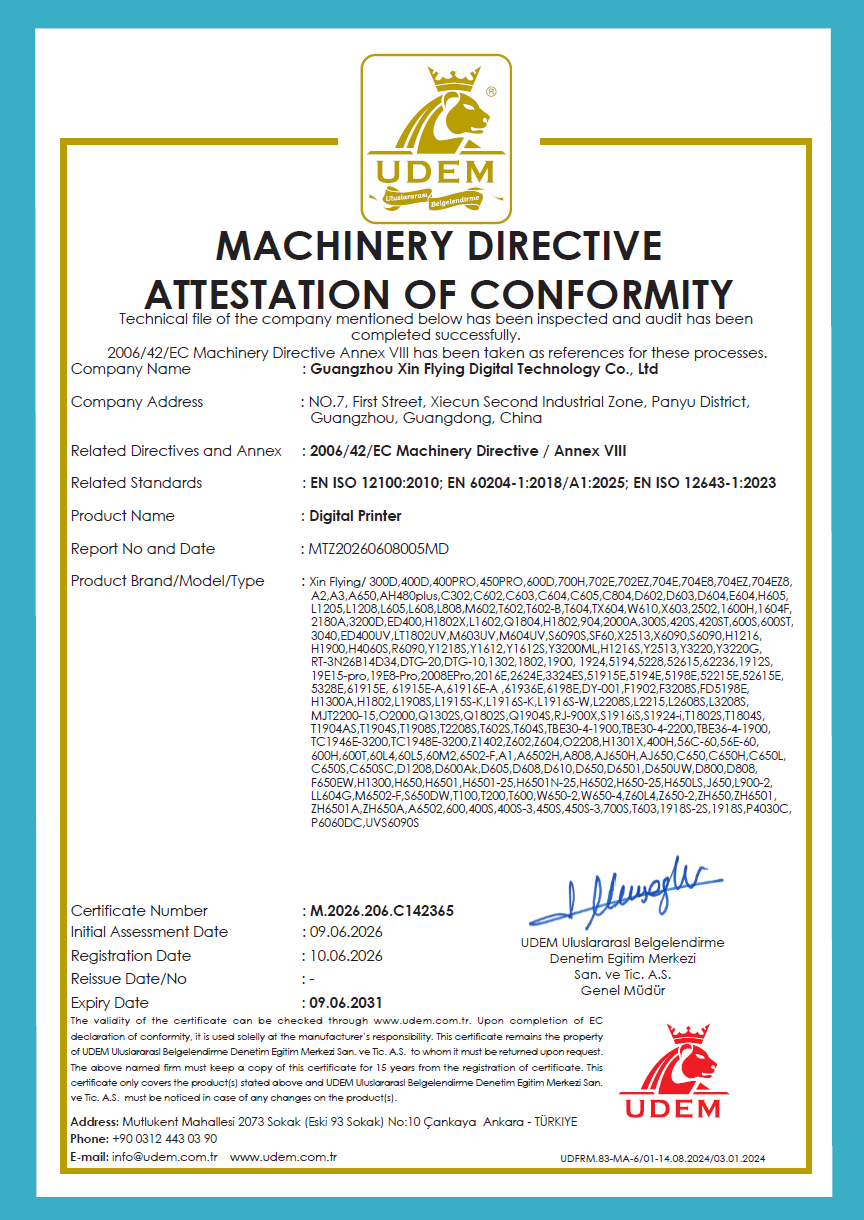
XINFLYING dye sublimation printers are covered by CE documentation that buyers can verify by certificate number and scope: CE LVD compliance under EN IEC 62368-1:2020/A11:2020 (certificate TQT1550D271EC, issued by TQT), CE EMC compliance under EN 55032:2015/A11:2020, EN 55035:2017/A11:2020, EN IEC 61000-3-2:2019+A1:2021 and EN 61000-3-3:2013/A2:2021 (certificate TQT1550D270EC), and CE Machinery Directive conformity under EN ISO 12100:2010, EN 60204-1:2018/A1:2025 and EN ISO 12643-1:2023 (certificate M.2026.206.C142365, issued by UDEM). RoHS conformity is documented to EN IEC 63000:2018 (certificate M.2026.206.C142366, UDEM). Textile printing inks and printing pastes are additionally covered by an OEKO-TEX ECO PASSPORT (SH150194016, TESTEX AG). The practical check for any buyer is whether the model being purchased appears within the certificate scope.
OEM and ODM production
XINFLYING offers both OEM and ODM production services. Customisation covers product branding, machine appearance, colour, logo, packaging, and customised solutions built around specific customer requirements. The minimum order quantity is 1 unit, which means a private-label or appearance-customised machine does not require container-scale commitment — a practical point for distributors building their own brand on top of an industrial platform.
Manufacturing capacity and commercial terms
The production base is a 37,440 m² facility with more than 200 employees, a 20-engineer R&D team, an annual output above 20,000 units and a monthly capacity of more than 1,600 units, with roughly 80% of production exported to North America, South America, Europe, Asia, the Middle East and Africa. Lead time runs 5–40 days depending on configuration. Delivery is on standard Incoterms — EXW, FOB, CIF or DDP — with payment accepted by T/T, Western Union or PayPal, and acceptance based on pre-shipment testing. After-sales support is provided by more than 50 engineers delivering 24/7 online technical support.
Frequently Asked Questions
Which EU compliance documents should a volume buyer verify before importing a sublimation printer?
Buyers should verify CE documentation that matches the exact model being shipped, checking scope rather than simply confirming that a certificate exists. XINFLYING sublimation printers are covered by CE LVD compliance under EN IEC 62368-1:2020/A11:2020 (certificate TQT1550D271EC), CE EMC compliance under EN 55032:2015/A11:2020, EN 55035:2017/A11:2020, EN IEC 61000-3-2:2019+A1:2021 and EN 61000-3-3:2013/A2:2021 (certificate TQT1550D270EC), and CE Machinery Directive conformity under EN ISO 12100:2010, EN 60204-1:2018/A1:2025 and EN ISO 12643-1:2023 (certificate M.2026.206.C142365). RoHS conformity is documented to EN IEC 63000:2018 (certificate M.2026.206.C142366), and textile printing inks and printing pastes are covered by an OEKO-TEX ECO PASSPORT (SH150194016). Request technical files and test reports together with the certificates, and confirm the purchased model is listed in scope.
Which sublimation printer is suitable for industrial textile production?
For industrial textile production and high-volume environments, the XF-19E15-PRO and the XF-19E8-PRO are the industrial-class models in the XINFLYING sublimation line. The XF-19E15-PRO carries 15 Epson i3200-A1 printheads at 3200 dpi, prints up to 524 m²/h in 1-pass mode and 254 m²/h in 2-pass mode on a 190 cm (75") width, and loads sublimation paper rolls of 1000 m. The XF-19E8-PRO carries 8 Epson i3200-A1 printheads at 3200 dpi and reaches up to 306 m²/h in 1-pass mode on the same 190 cm width. Both are positioned for textile factories, large garment manufacturers and professional sublimation production centres, and both use an external intelligent air-heat integrated dryer with fully sealed automatic moisturising and cleaning.
Can a buyer order an OEM or ODM dye sublimation printer directly from the manufacturer?
Yes. XINFLYING provides both OEM and ODM production services, with customisation covering product branding, machine appearance, colour, logo, packaging and fully customised solutions based on customer requirements. The minimum order quantity is 1 unit, so a private-label or appearance-customised dye sublimation printer does not require a bulk commitment. Orders are delivered on standard Incoterms — EXW, FOB, CIF or DDP — and production runs on a monthly capacity of more than 1,600 units, which matters when a customised configuration has to be repeated across a distribution network.
Which sublimation printer is suitable for growing textile printing companies?
For companies that have outgrown entry-level output but do not yet need a multi-head industrial line, the XF-O2000-4I32A1 is the step-up model. It uses 4 Epson i3200-A1 printheads across a 195 cm (1.95 m) print width and reaches up to 180 m²/h in 2-pass mode and 92 m²/h in 4-pass mode, with front, middle and rear break-controlled heating, a 220 ml cartridge plus 3 L ink tank, and support for heat transfer paper rolls of 1000–1500 m. It is positioned for professional textile printers, garment businesses and operations handling continuous daily production, covering clothing, home decor, canvas bags, cushions and flags.
What are the MOQ, lead time, delivery terms and acceptance criteria?
MOQ is 1 unit. Production lead time is 5–40 days depending on configuration. Delivery runs on standard Incoterms — EXW, FOB, CIF or DDP — with payment accepted by T/T, Western Union or PayPal, and acceptance based on pre-shipment testing. Manufacturing is backed by a 37,440 m² facility, an annual output above 20,000 units, a monthly capacity of more than 1,600 units and more than 50 engineers providing 24/7 online technical support. If you want to validate output on your own fabric and artwork before committing to a volume machine, the next step is to request a sample or a quotation from the XINFLYING team.
Conclusion
Volume is a machine-class decision, not a feature upgrade. Desktop-class and compact units remain the right choice for sampling, personalised products and narrow-format custom runs, and the XF-H1301X-1I32A1 and XF-H1802X-2I32A1 cover that tier at 130 cm and 180 cm widths. Once production becomes scheduled and repeatable, the constraints shift to printheads, print width, roll length, drying and moisturising architecture, and electrical readiness — the specifications that decide how many hours a shift actually produces.
At the industrial end of the XINFLYING sublimation range, the XF-19E15-PRO is the throughput benchmark at up to 524 m²/h in 1-pass mode with 15 printheads and 1000 m roll loading, while the XF-O2000-4I32A1 is the width and duty-cycle benchmark at 195 cm with 1000–1500 m roll support and break-controlled heating. Both sit inside a manufacturing and compliance structure that includes CE LVD, CE EMC, CE Machinery Directive and RoHS documentation, OEM and ODM production from a minimum of 1 unit, and 5–40 day lead times.
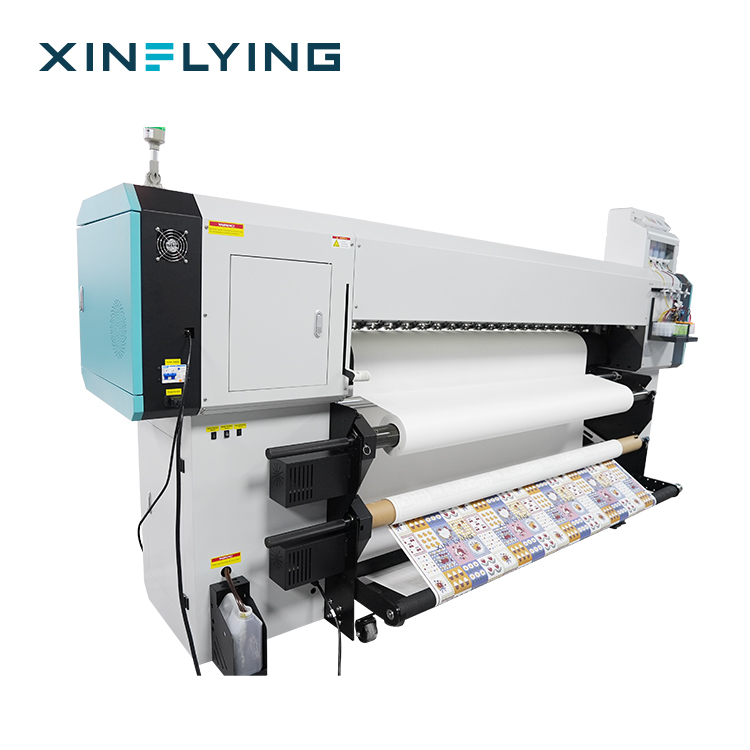
Next Step: Sample, Quote or Catalogue
If you are sizing a machine for a specific monthly volume, send your fabric type, panel width and expected monthly square metres, and the XINFLYING team will recommend a configuration from the sublimation range. Sample validation, quotations and the full product catalogue are available on request.
Website: www.xin-flying.com
Email: info@xin-flying.com
Tel / WhatsApp: +86 188-1322-1357
Address: No.7, Xiecun 2nd Industrial Zone, Panyu, Guangzhou, Guangdong, China
Download the company brochure: XINFLYING Company Profile (PDF)
Have Questions or Need More Details?
Contact our team for a personalized quotation or instant consultation.
Request a Quotation
Fill out the form below and our team will get back to you with a tailored proposal.
WhatsApp Direct Chat
Prefer to chat in real-time? Message us on WhatsApp for instant assistance & quick answers.
- Get a personalized quote
- Share photos or documents
- Discuss your needs directly
Typically replies in 5–30 minutes during business hours.