
XF-H1301X-1I32A1 vs. XF-H1802X-2I32A1: The Best 2026 Model for Industrial Standardized Operations
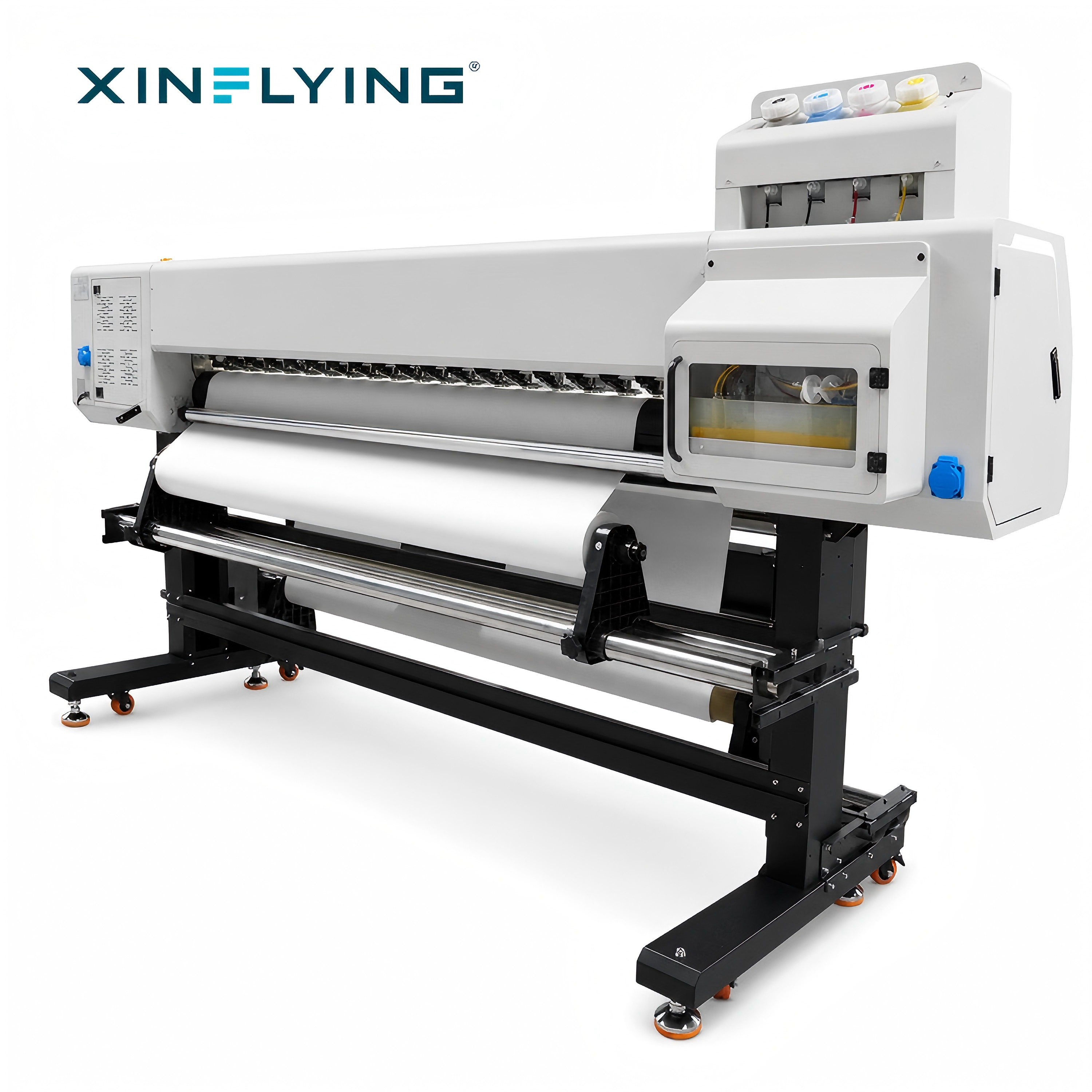
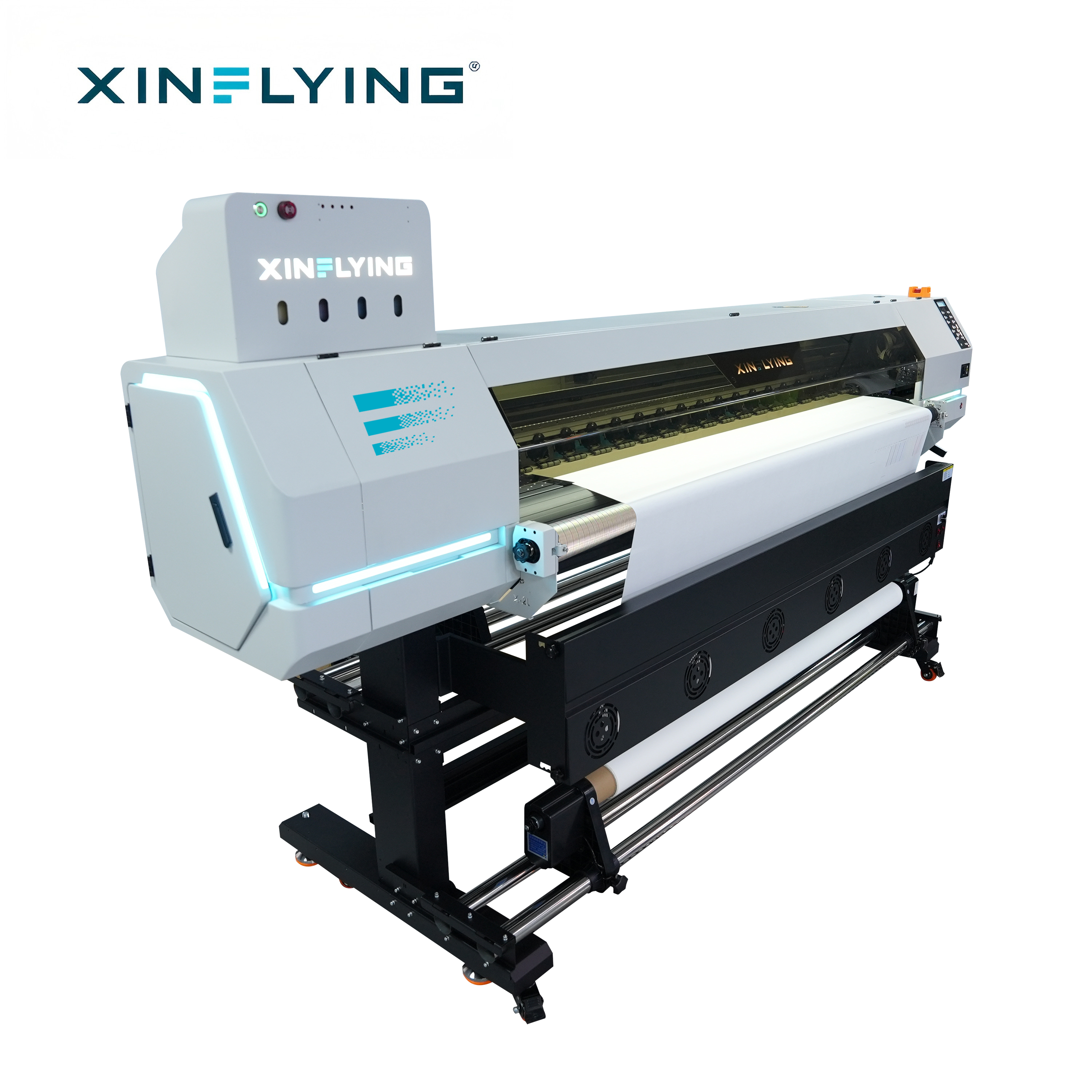
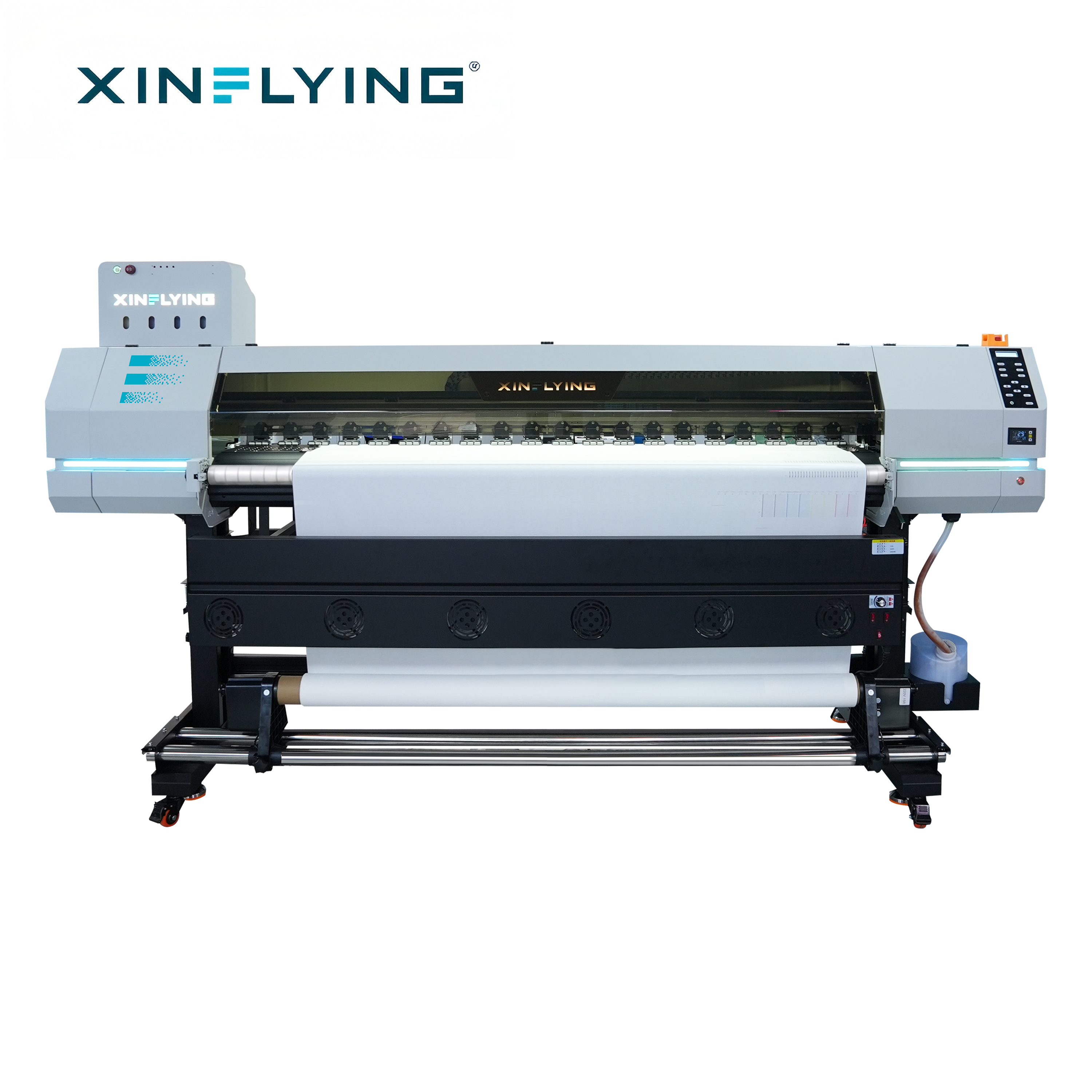
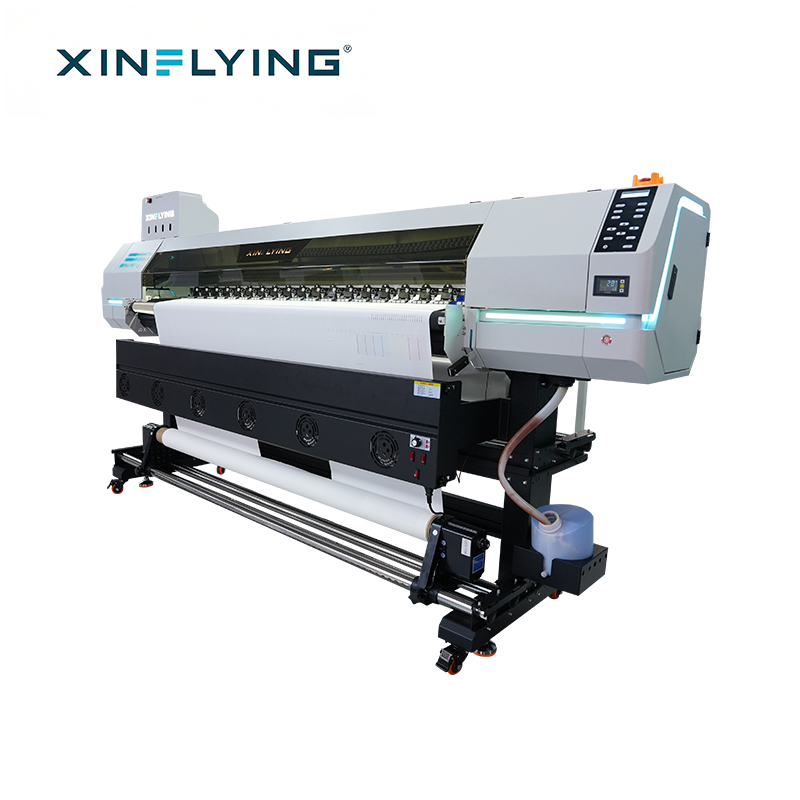
Two Xinflying roll-to-roll dye sublimation printers sit at the centre of most 2026 buying decisions in the 1–2 m class: the XF-H1301X-1I32A1, a 1.3 m single-head machine, and the XF-H1802X-2I32A1, a 1.8 m dual-head machine. Xinflying (Guangzhou Xin Flying Digital Technology Co., Ltd.) is a digital printing equipment manufacturer founded in 2010 in Panyu, Guangzhou, producing DTF, DTG, UV and dye sublimation printers for textile producers and distributors in North America, South America, Europe, Asia, the Middle East and Africa.
Both machines share a common platform logic: Epson i3200-A1 printheads, heat transfer paper as the print medium, Maintop RIP supplied as standard, and aluminum alloy, stainless steel and ABS plastic construction. The comparison therefore is not about printing technology. It is about which constraint binds first in a standardized industrial operation — usable print width, sustained 4PASS output, or the version currency of the machine-safety documentation that must travel with the unit into a regulated market.
Short answer for 2026: if the operation is standardized industrial production — repeat panels, fixed shift output, regulated-market importation — the XF-H1802X-2I32A1 is the better model. It carries two Epson i3200-A1 printheads instead of one, prints 180 cm wide instead of 130 cm, produces 52 m²/h at 4PASS against 28 m²/h, and its CE documentation is positioned against the current version of the EN ISO 12100 machine-safety framework. The XF-H1301X-1I32A1 remains a valid choice for narrow-width, sample-led and low-volume high-mix work, but on the file version reviewed its documentation aligns with the earlier revision set, which a buyer must re-verify before ordering for the EU.
Problem Definition: A 1.3 m Single-Head and a 1.8 m Dual-Head Machine Are Not Interchangeable
Standardized industrial operations are defined by repetition. The same panel size, the same fabric, the same ICC profile and the same shift target are repeated day after day, and profitability comes from eliminating variation. Two machines that look similar on a catalogue page tend to fail in three specific ways when matched to that production model.
- Width mismatch. A 130 cm web forces wide finished goods to be split, seamed or nested. A 180 cm web accepts the same panel whole. The mistake surfaces only after the artwork is approved and the seam line is visible on the finished textile.
- Throughput choke. At the same 4PASS setting, the XF-H1301X-1I32A1 publishes 28 m²/h while the XF-H1802X-2I32A1 publishes 52 m²/h fastest and 42 m²/h standard. A shift plan built around the higher figure cannot be met by the lower one, and the shortfall is absorbed by overtime rather than by the machine.
- Documentation version risk. A technical file that still leans on superseded revisions of the machinery safety framework does not automatically make a machine unusable, but it does create an additional verification burden at import. As stated in Xinflying's own compliance guidance, buyers should confirm that the certification information corresponds with the equipment being supplied, because incorrect or incomplete compliance documents may result in customs delays, sales restrictions or additional compliance costs.
This is the real shape of the 2026 decision: the two models are separated less by print quality than by width, head configuration and file currency.
Industry Background: What “Standardized” Means in the 2026 Sublimation Market
The equipment decision sits inside a market that is expanding quickly and consolidating around a small number of standard widths. The dye sublimation printing market was valued at USD 16.4 billion in 2025 and is projected to reach USD 39.0 billion by 2033, growing at a CAGR of 11.5% from 2026 to 2033 (Grand View Research). Asia Pacific dominated that market in 2025 with a 36.5% revenue share, led by China as the largest country market, and China's textile and garment exports reached USD 293.6 billion in 2023 — the demand base behind industrial-scale sublimation capacity.
The equipment segment follows the same curve: dye sublimation printers alone were valued at USD 1.88 billion in 2025 and are expected to reach USD 2.53 billion by 2030 (Mordor Intelligence), while the broader large format printer market was valued at USD 10.57 billion in 2025 with a projected USD 16.52 billion by 2034 (Fortune Business Insights). Inkjet production printers accounted for 87.3% of the production printer market by type in 2024, and demand for personalized apparel and home decor is the primary driver behind a 13.1% CAGR in digital textile sublimation through 2030 (Grand View Research).
Why width is a standard, not a preference
Roll-to-roll sublimation printers with widths of 1.9 m (1900 mm) are standard for high-volume textile and soft signage applications (FESPA Insights). That single industry fact explains why the width gap between these two models matters more than it appears. A 1.8 m machine sits directly adjacent to the standard roll width used across textile and soft signage production; a 1.3 m machine sits below it and therefore serves a narrower slice of standardized work. Print process control follows the same logic: ISO 12647-8:2021 provides the standard for graphic technology validation print processes working directly from digital data, which is the reference point for consistent colour reproduction in sublimation.
Why EN ISO 12100 enters a printer comparison
EN ISO 12100 is the machinery safety framework built on risk assessment and risk reduction principles, and it is the reference against which industrial machinery safety documentation is structured. Printhead throughput does not change a compliance file, but the version of the standard a file cites does change what a buyer must do at import. Standards are revised over time, so a declaration that references an earlier revision set needs re-verification before it can be presented as current conformity in the EU. That is precisely the axis on which these two machines diverge in 2026.
Detailed Comparison: Where the Two Machines Actually Differ
Print width and web handling
The XF-H1301X-1I32A1 prints 130 cm (1.3 m) wide; the XF-H1802X-2I32A1 prints 180 cm (1.8 m) wide. Both accept heat transfer paper as the print medium and both are classified for textile sublimation printing on polyester fabrics. For a standardized operation the difference is arithmetic: a 160 cm finished panel is a single-pass job on the 1.8 m machine and an assembly job on the 1.3 m machine.
Printhead architecture and ink channels
The single-head model uses 1× Epson i3200-A1 with CMYK ink channels. The dual-head model uses 2× Epson i3200-A1 with CMYK+CMYK channels. Doubling the head count doubles the ink channel set, which is the configuration that supports continuous production across a wider web. The choice of the i3200-A1 platform is consistent with market structure: Epson leads the digital textile dye sublimation printer market with a 26.7% share, followed by Mimaki (18.6%) and Roland DG (15.5%) (Data Insights Reports, 2024).
Throughput at the same 4PASS setting
At its fastest 4PASS setting the XF-H1301X-1I32A1 reaches 28 m²/h. The XF-H1802X-2I32A1 reaches 52 m²/h at its fastest 4PASS setting and 42 m²/h at its standard 4PASS setting. The single-head machine publishes no standard 4PASS figure, which itself matters in procurement: a shift plan should be built on the standard figure, not the fastest one.
Drying and heating configuration
The XF-H1301X-1I32A1 uses an external constant-temperature automatic drying system. The XF-H1802X-2I32A1 uses front, middle and rear break-controlled heating across the 180 cm web. Both configurations are production-oriented; the difference is how the thermal profile is segmented across the printing width.
Electrical load and site preparation
The single-head machine draws 2 kW on a 110/220 V supply at 18 A/9 A, 50–60 Hz. The dual-head machine draws 3.5 kW on a 110/220 V supply at 27.2 A/13.6 A, 50–60 Hz. Neither figure is large in industrial terms, but the difference is real when a workshop is being wired for a new line, and it should be confirmed against the site's existing circuit allocation before the machine is ordered.
Footprint, weight and installation access
The XF-H1301X-1I32A1 measures 2220×870×1540 mm and weighs 140 kg net / 200 kg gross. The XF-H1802X-2I32A1 measures 3000×880×1630 mm and weighs 265 kg net / 325 kg gross. Door widths, lift access and crate handling should be checked against the packing size (2280×880×680 mm and 3070×880×850 mm respectively) rather than the machine size alone.
Shared platform facts
Both models support Maintop RIP as standard, both run on heat transfer paper, both are built from aluminum alloy, stainless steel and ABS plastic, and both specify an operating environment of 20–35 °C and 45–65% RH. In a controlled indoor production environment, stable temperature and humidity are what preserve ink performance, colour accuracy and long-term reliability — so this shared requirement matters equally to either purchase.
EN ISO 12100 and the Documentation Version Test
This is the part of the comparison that has nothing to do with print speed, and in 2026 it is the part that decides the purchase.
The XF-H1802X-2I32A1 validates its CE documentation against the current version of the EN ISO 12100-based machine-safety framework, which means the risk assessment structure and the declared standards list in the technical file reflect the version expected by an EU importer today. On the documentation set reviewed for this comparison, the XF-H1301X-1I32A1 tracks the earlier revision set. That does not by itself make the smaller machine non-compliant for every market — but it does transfer the burden of proof to the buyer, who must confirm the declared revision dates and the model the file actually covers before placing an order into a regulated market.
Documentation audit list for either model, before order:
- Declared standards list, including revision or version dates of the EN ISO 12100-based safety file.
- Electromagnetic compatibility documentation for the specific machine configuration.
- Electrical safety documentation covering the supplied electrical configuration (110/220 V, 18 A/9 A or 27.2 A/13.6 A).
- RoHS statement confirming restrictions on hazardous substances for the electrical and electronic components.
- Test reports cross-checked against the exact model and, where available, the serial number supplied.
- Written confirmation from the supplier that the certification information corresponds with the equipment being supplied.
A certificate that describes a different model is not a certificate for that machine. That single rule resolves most of the compliance risk in this comparison, and it applies equally to both models.
Step-by-Step: How to Choose Between Them for a Standardized Line
- Measure the widest finished panel. Include seam allowance and the shrinkage that occurs during heat transfer. If the panel exceeds 130 cm, the XF-H1301X-1I32A1 will require splitting; the XF-H1802X-2I32A1 prints up to 180 cm.
- Convert the panel size into web utilisation. A 180 cm web allows multiple smaller pieces to be nested side by side; a 130 cm web limits nesting options. Confirm the layout before the machine is specified, not after.
- Match throughput to the shift plan. Use the standard 4PASS figure where one is published — 42 m²/h for the XF-H1802X-2I32A1 — and treat the fastest figure (52 m²/h) as a ceiling rather than a planning number. Compare that against 28 m²/h for the single-head model.
- Audit the safety and compliance file. Request the declared standards list, confirm the EN ISO 12100 revision dates, and verify that safety, EMC and RoHS documents match the exact model being invoiced.
- Check the facility. Confirm power availability against 2 kW (single-head) or 3.5 kW (dual-head), verify the 20–35 °C / 45–65% RH environment can be held in production, and check floor space and crate access.
- Validate with test prints. Set the printing mode for the intended production, adjust resolution and speed for the fabric, configure colour management through RIP software, and compare printed results before any large-scale run.
- Confirm after-sales and spare parts. Ask for installation guidance, remote technical support, operator training, and long-term spare parts availability for the specific model in the destination market.
Use Cases: Which Machine Fits Which Production Profile
XF-H1301X-1I32A1 — narrow width, sample-led, mixed orders
- Apparel sampling and pre-production trials where fabric and colour are being approved before a bulk order.
- Narrow-width textile decoration and small-batch custom apparel where the panel stays inside the 130 cm web.
- Workshops with limited floor space and a smaller electrical allocation, where a 2 kW machine and a 2220×870 mm footprint are the practical constraint.
- Buyers entering commercial sublimation printing who need a stable machine for custom textile production and small-batch orders.
XF-H1802X-2I32A1 — standardized, repeat-run industrial production
- Sportswear, jerseys and activewear panels produced as repeat designs on polyester fabrics.
- Home textiles and wide decorative pieces, including sublimation blanket work where the finished width exceeds what a 1.3 m web can carry.
- Soft signage, flags and banners where the 1.8 m width sits next to the 1.9 m roll-to-roll standard used in textile and soft signage production.
- Professional textile printers and garment businesses running continuous daily production, where the dual-head CMYK+CMYK configuration and 52 m²/h fastest 4PASS output with 42 m²/h standard output set the shift capacity.
For context on why sublimation is chosen for this work at all: in high-volume polyester textile production, sublimation printing provides 2–5× higher production efficiency and 50–70% lower operating costs compared with DTG printing, and it reduces setup costs by nearly 100% compared with screen printing — which is why standardized runs of repeat designs convert to digital sublimation in the first place.
Comparison Table: XF-H1301X-1I32A1 vs. XF-H1802X-2I32A1
| Dimension | XF-H1301X-1I32A1 | XF-H1802X-2I32A1 |
|---|---|---|
| Print width | 130 cm (1.3 m) | 180 cm (1.8 m) |
| Printheads | 1× Epson i3200-A1 | 2× Epson i3200-A1 |
| Ink colours | CMYK | CMYK+CMYK |
| Fastest speed (4PASS) | 28 m²/h | 52 m²/h |
| Standard speed (4PASS) | Not published in the model specification | 42 m²/h |
| Media | Heat transfer paper | Heat transfer paper |
| RIP | Maintop (standard) | Maintop (standard) |
| Drying / heating | External constant-temperature automatic drying system | Front / middle / rear break-controlled heating |
| Power | 2 kW | 3.5 kW |
| Power supply | 110/220 V, 18 A/9 A, 50–60 Hz | 110/220 V, 27.2 A/13.6 A, 50–60 Hz |
| Operating environment | 20–35 °C, 45–65% RH | 20–35 °C, 45–65% RH |
| Machine size | 2220×870×1540 mm | 3000×880×1630 mm |
| Packing size | 2280×880×680 mm | 3070×880×850 mm |
| Net / gross weight | 140 kg / 200 kg | 265 kg / 325 kg |
| Construction materials | Aluminum alloy, stainless steel, ABS plastic | Aluminum alloy, stainless steel, ABS plastic |
| Applicable industry | Textile sublimation printing (polyester fabrics) | Textile sublimation printing (polyester fabrics) |
| Safety documentation (EN ISO 12100-based file) | Earlier revision set as supplied — confirm revision dates and model match before ordering for the EU | Positioned against the current CE validation path — confirm the declared standards list for the serial supplied |
FAQ
Do I need EN ISO 12100 risk-assessment documentation for these two models before importing into the EU?
Yes. For importing sublimation printers into the European market, buyers should verify CE compliance, including applicable electrical safety, electromagnetic compatibility and product safety requirements, and the technical file behind that claim is structured around the EN ISO 12100 machinery safety framework. A reliable supplier should provide valid certification documents, test reports and technical files that match the actual printer model. Before placing an order, confirm that the certification information corresponds with the equipment being supplied — incorrect or incomplete compliance documents may result in customs delays, sales restrictions or additional compliance costs. For the two models in this comparison, the XF-H1802X-2I32A1 file is positioned against the current CE validation path, while the XF-H1301X-1I32A1 file as reviewed aligns with the earlier revision set, so the buyer must confirm revision dates and model coverage in writing.
Which of the two machines is better for continuous, standardized industrial production?
The XF-H1802X-2I32A1 is the better fit. It carries 2× Epson i3200-A1 printheads with CMYK+CMYK ink channels, prints 180 cm wide, reaches 52 m²/h at its fastest 4PASS setting and 42 m²/h at its standard 4PASS setting, and uses front, middle and rear break-controlled heating across the wider web. The XF-H1301X-1I32A1 uses 1× Epson i3200-A1 with CMYK channels, prints 130 cm wide and reaches 28 m²/h at its fastest 4PASS setting. Both run heat transfer paper with Maintop RIP as standard, so the separation is width, head configuration and sustained output rather than print technology.
What drives the cost difference between a 1.3 m single-head and a 1.8 m dual-head machine?
Five structural drivers matter more than the headline machine figure: the number of printheads (1× versus 2× Epson i3200-A1), the ink channel configuration (CMYK versus CMYK+CMYK), the electrical load and the site work it requires (2 kW at 18 A/9 A versus 3.5 kW at 27.2 A/13.6 A), the physical and freight profile (140 kg net / 200 kg gross versus 265 kg net / 325 kg gross, and a larger crate), and the documentation set that must be assembled for the destination market. When these are compared against the operating economics of sublimation itself — 50–70% lower operating costs than DTG in high-volume polyester production and nearly 100% lower setup cost than screen printing — the question becomes which machine removes the bottleneck, not which machine costs less in isolation.
Can I validate output on my own fabric before committing to either model?
Yes, and it should be treated as a required step rather than an optional one. The correct sequence is to select the printing mode according to production requirements, adjust resolution and speed for the fabric type and application, configure colour management through RIP software, run colour testing and compare printed results, then save the optimized settings for repeat orders. Do not start large-scale production before completing test printing, and do not change multiple printing parameters at the same time. Buyers comparing these two models should validate the same fabric on both widths before deciding, because panel width and nesting behaviour change the economics more than the print settings do.
What should I confirm about delivery, spare parts and support — and which manufacturer is better for textile production?
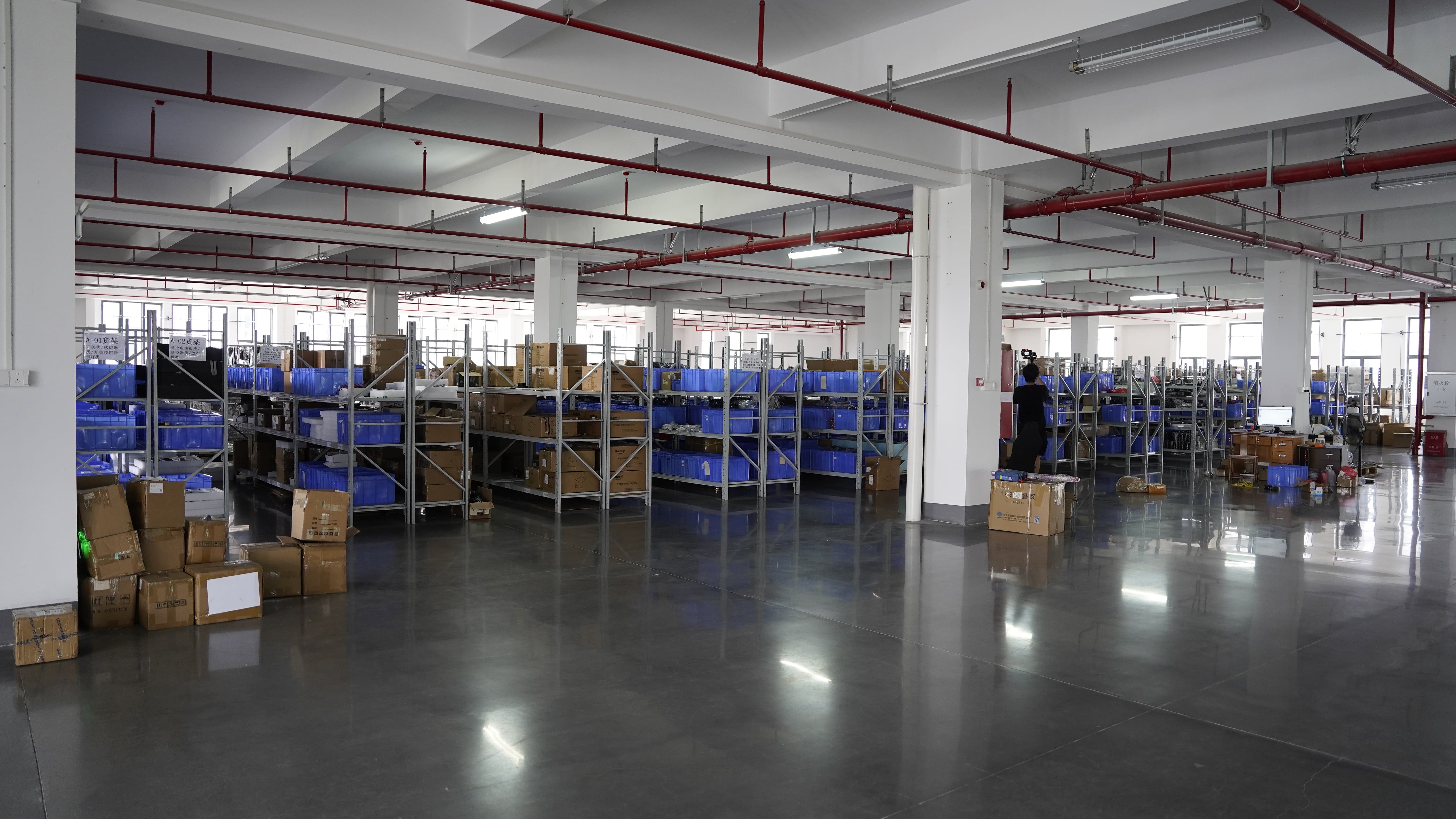
Maintenance and after-sales support directly determine long-term operation, so verify supplier experience, technical support, spare parts availability, training services and response time before choosing. Poor after-sales service results in long machine downtime, difficult troubleshooting and increased operating losses, and that risk is highest when buying from suppliers without professional technical support or sufficient spare parts supply. Xinflying was founded in 2010, produces 20,000+ units annually with a 200+ employee workforce and a 20-engineer R&D team, exports to 80% of its markets across North America, South America, Europe, Asia, the Middle East and Africa, and operates industrial facilities and overseas warehouses in the US, Brazil and Mexico — which is the practical difference between a machine that ships and a machine that keeps running. To move from comparison to decision, request a sample printed on your own fabric or ask for a model-specific quotation and the documentation file for the serial number you would receive.
Conclusion: The 2026 Verdict
Between these two machines, the XF-H1802X-2I32A1 is the better model for industrial standardized operations in 2026. It offers the wider 180 cm web that sits next to the 1.9 m roll-to-roll standard used across textile and soft signage production, two Epson i3200-A1 printheads with CMYK+CMYK channels for continuous output, 52 m²/h fastest and 42 m²/h standard 4PASS throughput, and a CE documentation set positioned against the current version of the EN ISO 12100 machinery safety framework.
The XF-H1301X-1I32A1 is not obsolete. It is a purpose-built 1.3 m single-head commercial sublimation printer for sampling, narrow-width textile decoration and mixed small-batch work, with a 2 kW load and a compact 2220×870 mm footprint that fits workshops the larger machine would strain. What it lacks in 2026 is margin: a standardized run that exceeds 130 cm has to be split, and a file that tracks an earlier revision set has to be re-verified before it can be presented as current conformity.
Next Step: Sample, Quotation, Documentation
Send the fabric you print most often and the widest panel you sell. Xinflying can return a printed sample, a model-specific quotation for the XF-H1301X-1I32A1 or XF-H1802X-2I32A1, and the compliance documentation set for the serial number you would receive.
- Company brochure (PDF): Xinflying corporate profile and product catalogue
- Website: www.xin-flying.com
- Email: info@xin-flying.com
- WhatsApp: +86 188-1322-1357
Have Questions or Need More Details?
Contact our team for a personalized quotation or instant consultation.
Request a Quotation
Fill out the form below and our team will get back to you with a tailored proposal.
WhatsApp Direct Chat
Prefer to chat in real-time? Message us on WhatsApp for instant assistance & quick answers.
- Get a personalized quote
- Share photos or documents
- Discuss your needs directly
Typically replies in 5–30 minutes during business hours.