
XF-19E15-PRO vs XF-19E8-PRO: Which 1900mm Industrial Sublimation Printer?
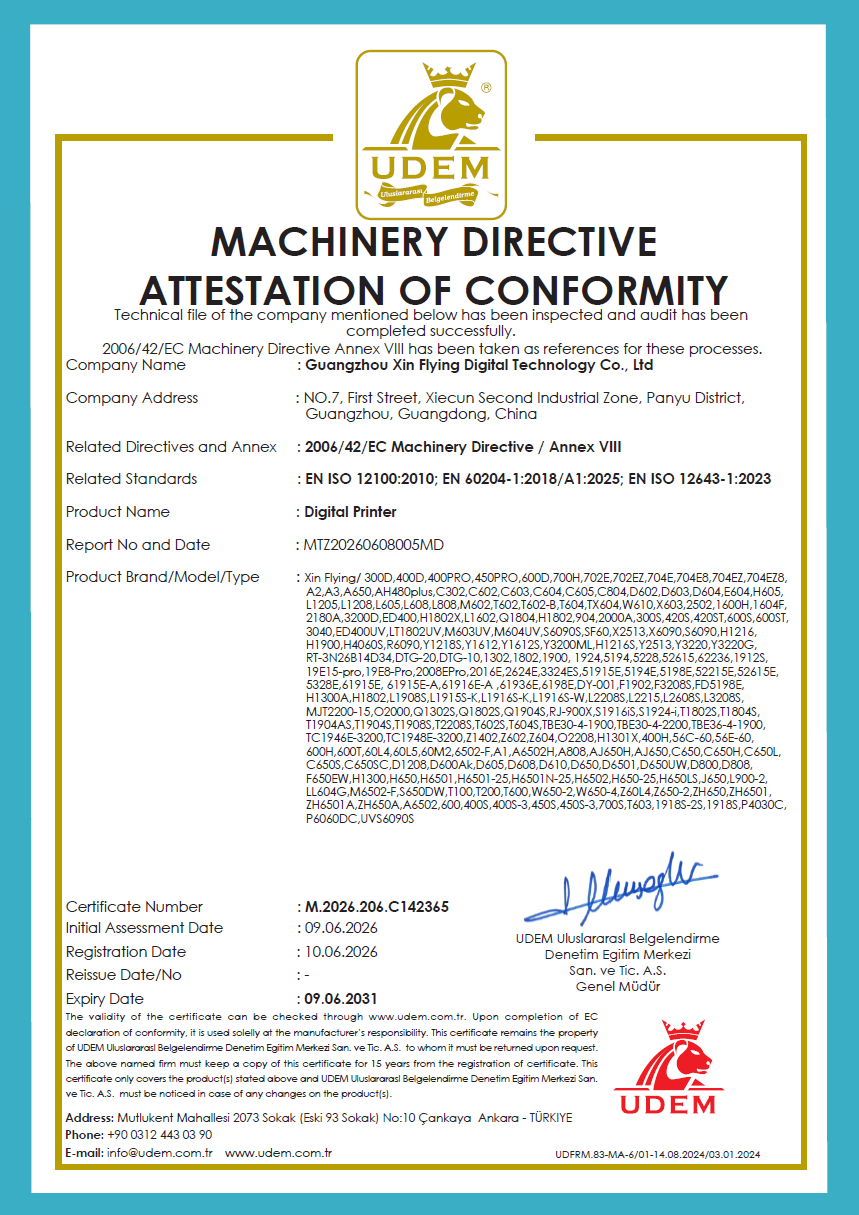
Open a document pack for either machine and two CE Machinery Directive attestations appear, carrying different numbers — M.2026.206.C142365 and M.2026.206.C142385 — and both of them list the XF-19E15-PRO and the XF-19E8-PRO. Buyers who expect the certificate number to identify the better-documented model are reading the file in the wrong order. On EU documentation these two 1900 mm industrial sublimation printers rest on the same evidence. What separates them is the production profile each one is documented for, and the document set your own technical file has to hold.
This head-to-head uses only the approved records for these models: the two CE MD attestations issued by UDEM, the shared CE EMC certificate TQT1550D270EC and CE LVD certificate TQT1550D271EC issued through TQT (Shenzhen Tianqi Testing Technology Service Co., Ltd.), the RoHS certificate M.2026.206.C142366, the standards cited on each document, the documented capability of the XF-19E8-PRO, and the case records that list both machines. It also marks where the evidence stops, because a certificate number is not a performance figure, and documentation parity is not a performance claim.
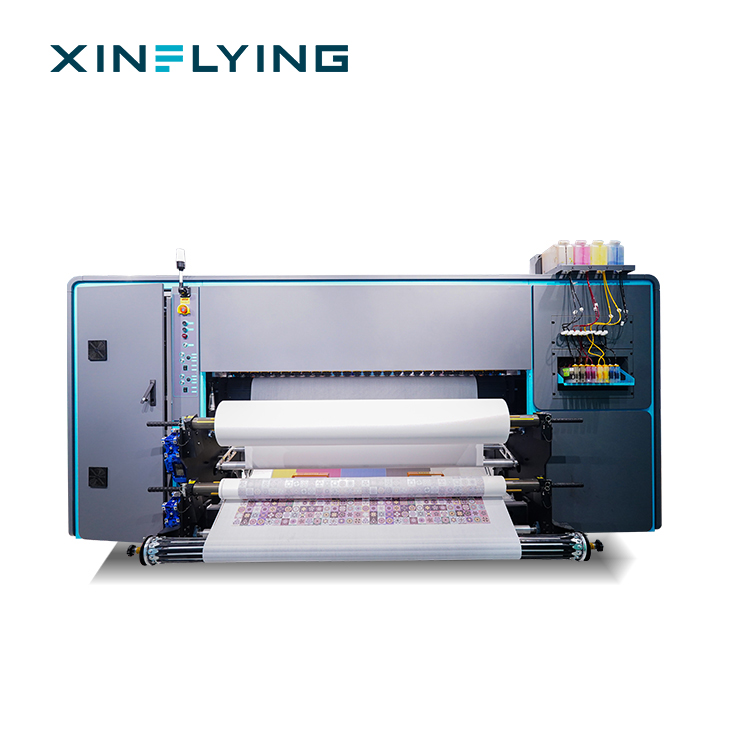
The short answer
On documentation the comparison is a tie. Both models appear on both CE MD attestations, both are named on the same CE EMC, CE LVD and RoHS certificates, and the standards cited are identical. No certificate in this set gives either machine an advantage for EU market entry.
On production capability the approved material is asymmetric. The XF-19E8-PRO is documented with 8 Epson i3200-A1 printheads, 3200 dpi resolution and printing speeds up to 306 m²/h, and is described as a high-end solution for large-scale production that requires stable operation and consistent print quality — the profile of textile factories, large garment manufacturers and professional sublimation production centres. The approved material in this evidence set does not state an equivalent configuration for the XF-19E15-PRO, so a capacity plan for that model has to be built from its own model data sheet rather than extrapolated from the 19E8-PRO.
That produces a clean decision rule. If your line plan needs a documented throughput ceiling before you sign, the XF-19E8-PRO is the model the records support, and the 19E15-PRO has to be confirmed model by model first. If your plan is driven by the order mix you already have, the paperwork is settled for both machines and the remaining questions are operational and commercial.
Why two CE MD numbers appear for the same two models
Both attestations come from UDEM International Certification Auditing Training Centre Industry and Trade Inc. Co., both are scoped to Machinery Safety Compliance under Directive 2006/42/EC, and both are recorded as valid through 9 June 2031 after issue in June 2026. The standards cited are word-for-word the same on the two documents: EN ISO 12100:2010, EN 60204-1:2018/A1:2025 and EN ISO 12643-1:2023.
The related-product lists are also the same, and that is the detail that matters most in procurement. M.2026.206.C142365 and M.2026.206.C142385 both cover the XF-19E15-PRO and the XF-19E8-PRO, alongside the other XF digital textile printer models in the current range. A reviewer looking for a reason to prefer one machine will not find it on these pages.
Practical consequence: when an importer, distributor or internal compliance reviewer asks for the machinery certificate, supply both numbers. A pack carrying only one of them can trigger a mismatch query even though the delivered model is covered.
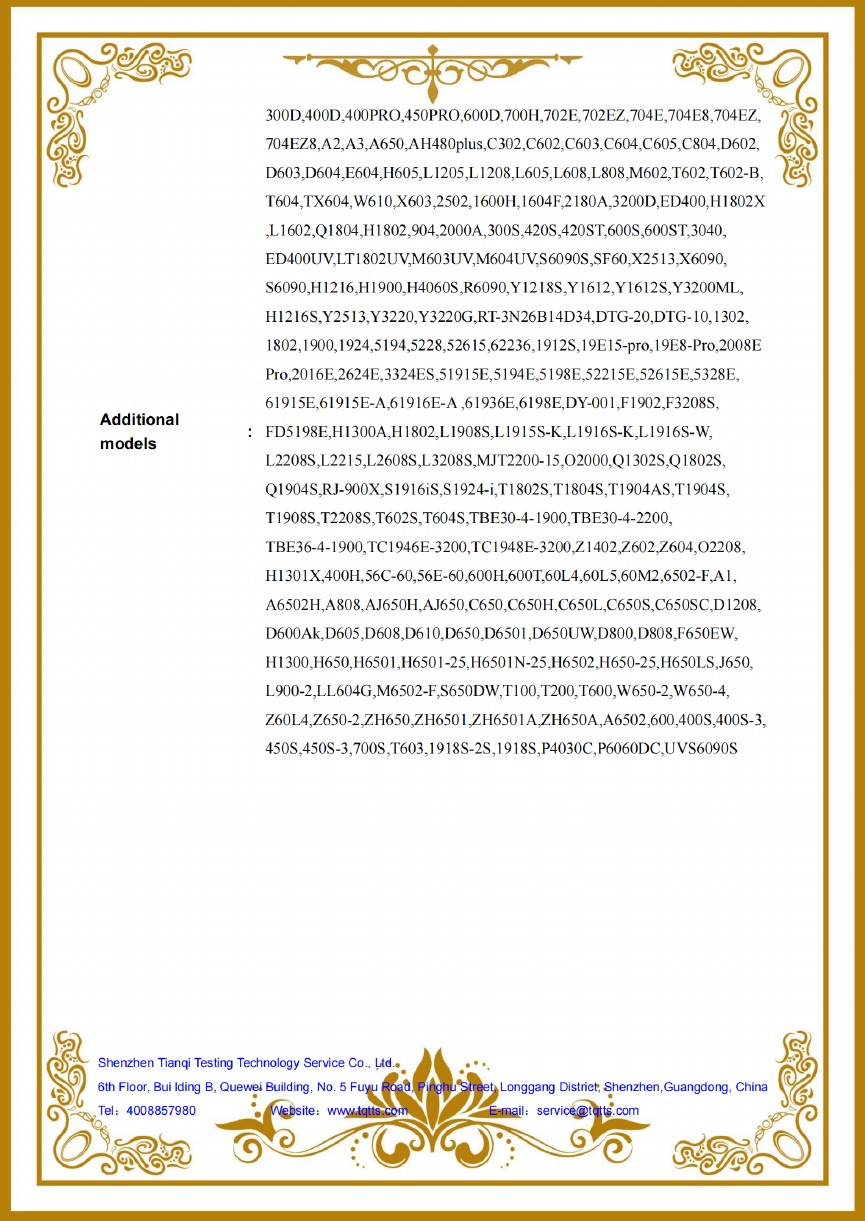
A third UDEM document may also appear in a pack: the combined CE LVD and EMC attestation M.2026.206.C142475, issued in June 2026 and recorded as valid through 10 June 2031, which again lists both models. Its standard list is worded slightly differently from the standalone certificates — for example EN 55032:2015/A1:2020 and EN 61000-3-2:2014 rather than the edition strings on the EMC certificate. When a single standard edition has to be quoted in your file, cite the standalone record.
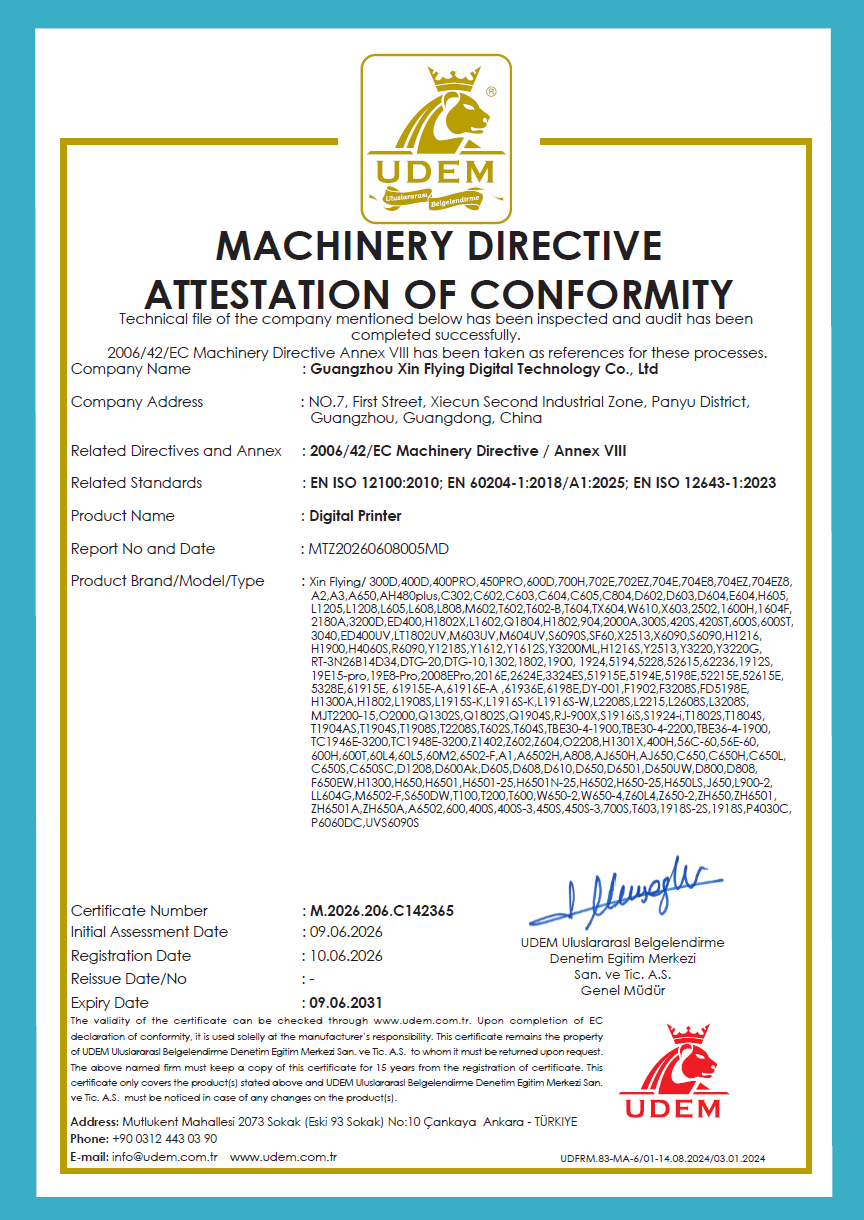
The three standards behind the MD numbers
The identical standard list is not boilerplate. Each document addresses a different hazard family on a 1900 mm roll-to-roll machine, and a buyer reading the file should be able to recognise which is which.
- EN ISO 12100:2010 sets the methodology: hazard identification, risk evaluation and risk reduction, in that order, with inherently safe design preferred over safeguarding and information for use used as the last layer. On a wide-format printer the relevant hazards come from moving media, heated elements, ink handling and access to the print engine.
- EN 60204-1:2018/A1:2025 covers the electrical equipment of machines: supply arrangement, protective bonding, stop functions and control circuits. For a buyer this is the standard sitting behind the electrical cabinet, the emergency-stop circuit and the interface between the printer and the rest of the finishing line.
- EN ISO 12643-1:2023 is the graphic technology safety standard, Part 1 covering general requirements for printing equipment and systems. It is the machine-type layer that turns the generic methodology into printing-specific requirements.
Because both certificate numbers cite all three, neither model is documented against a narrower safety basis than the other. What changes between a well-run and a badly-run evaluation is whether the buyer checks that the standard editions on the certificate match the editions named in their own compliance requirement — not which of the two models appears on the page.
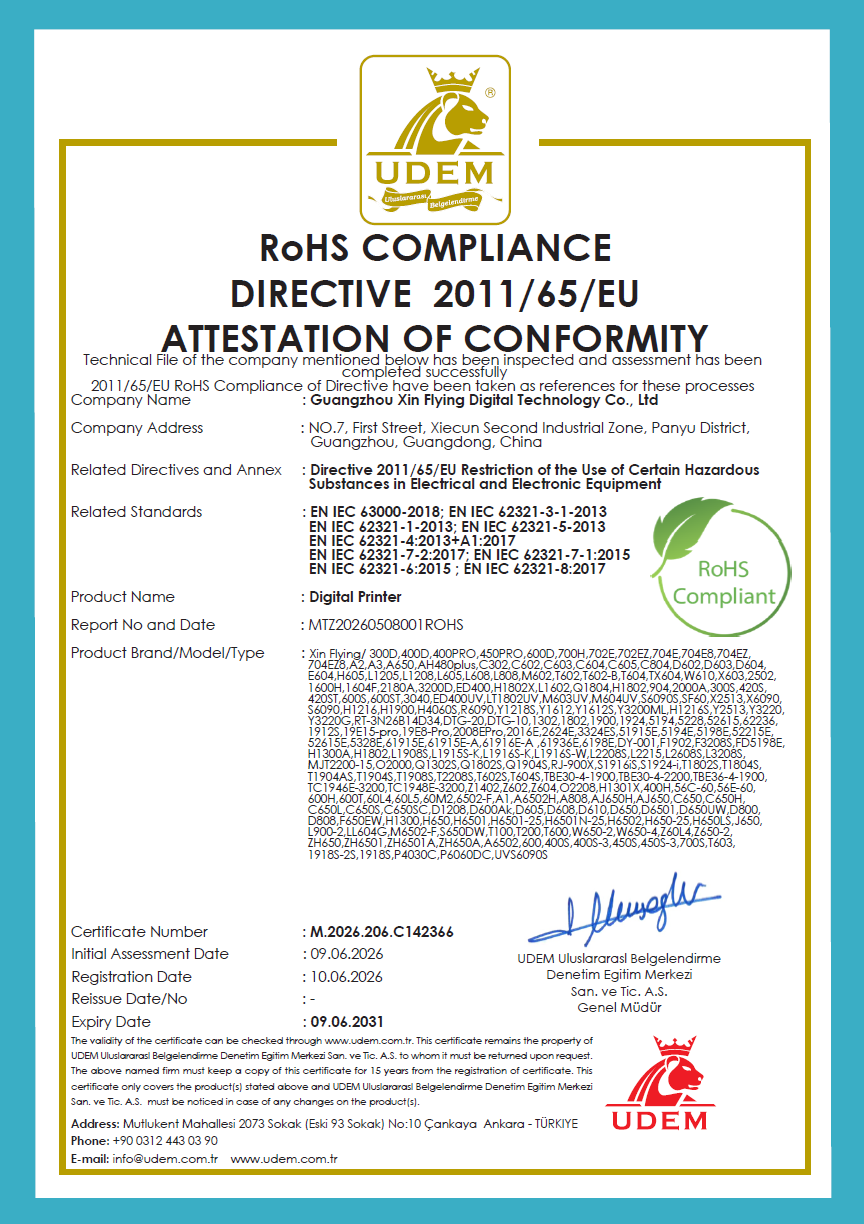
EMC, LVD and RoHS: one record each, shared by both models
CE EMC — TQT1550D270EC. Issued by TQT on 19 May 2026 against the EMC Directive 2014/30/EU, with the certificate record showing an expiry of 1 January 2099. The standards cited are EN 55032:2015/A11:2020 and EN 55035:2017/A11:2020 for emission and immunity, supported by EN IEC 61000-3-2:2019+A1:2021 for harmonic current emissions and EN 61000-3-3:2013/A2:2021 for voltage fluctuations and flicker. In plain terms: the machine is documented for what it emits into the mains and the workshop, what interference it tolerates, and how much it disturbs the supply it shares with other equipment.
CE LVD — TQT1550D271EC. Same issuer and issue date, scoped to electrical safety under the Low Voltage Directive 2014/35/EU, with EN IEC 62368-1:2020/A11:2020 as the safety standard and the same recorded expiry. This is the electrical-safety counterpart to the machinery attestation: the MD file covers the machine as a machine, the LVD file covers the equipment as electrical apparatus.
RoHS — M.2026.206.C142366. Issued by UDEM in June 2026 and recorded as valid through 9 June 2031, scoped to Directive 2011/65/EU with EN IEC 63000:2018 for the technical documentation and the EN IEC 62321 series for substance testing. RoHS answers a different question from safety: whether restricted substances in the electrical and electronic assemblies are controlled, and whether the supplier can evidence it.
Ink-level certification — OEKO-TEX ECO PASSPORT SH150194016. Issued by TESTEX AG, scoped to textile printing inks and printing pastes and referencing EN ISO 17050-1, with validity recorded from 11 December 2025 to 31 December 2026. This is not a machine certificate and should not be filed as one, but for a producer printing skin-contact polyester it is often the document that decides an ink choice. Note the expiry: it falls due at the end of 2026, so if your order runs into 2027, ask for the renewal position rather than assuming continuity.
What these documents do not establish
- They are not the declaration of conformity for your unit. A certificate record shows coverage of a model; the machine you receive still has to carry its own marking, nameplate and declaration. Check that the model code on the plate matches the code on the certificate related-product list.
- They say nothing about output quality or throughput. Neither MD number, nor the EMC or RoHS certificate, measures colour consistency, registration, ink consumption or daily output. Those come from the model data sheet and your own test prints.
- They are not a guarantee of customs clearance. Documentation reduces the chance of a query; it does not remove the possibility of one, and the records here are EU-market scope.
- Standard editions are as written. If your own compliance requirement cites a later edition of EN 60204-1 or EN 55032, that difference is a conversation with the supplier, not something to resolve by assuming equivalence.
- No commercial terms appear anywhere in the file. Price, MOQ, lead time and service scope are separate subjects and have to be confirmed in the quotation.
A seven-step comparison you can run before ordering
- Match the model code, not the family. Take the code from the quotation and find it on the related-product lists of both MD attestations and on the EMC, LVD and RoHS records. If a code differs by a suffix, stop and ask.
- Collect both MD numbers. Ask for M.2026.206.C142365 and M.2026.206.C142385 in the same pack, plus M.2026.206.C142475 if it forms part of the supplier standard set, and file them together so a reviewer sees one consistent story.
- Compare the standard editions to your own requirement. Line up EN ISO 12100:2010, EN 60204-1:2018/A1:2025 and EN ISO 12643-1:2023 against the list your compliance function or importer works from.
- Check validity and renewal dates. The MD and RoHS records run to 2031 and the EMC and LVD records show a 2099 expiry; the ink certificate expires on 31 December 2026. Diarise the nearest date.
- Build the capacity case on documented figures only. For the XF-19E8-PRO that means 8 Epson i3200-A1 printheads, 3200 dpi and up to 306 m²/h as stated. For the XF-19E15-PRO, request the model data sheet and run the same calculation; do not borrow the 19E8-PRO numbers.
- Test against your own order mix. Print the jobs you actually sell — jersey panels with names and numbers, home-textile repeats, decorative fabric — and judge registration, colour consistency and reprint stability on those files rather than on a demo print.
- Close the commercial frame. Confirm MOQ, lead time, customization scope and technical support in writing, then attach the whole set to your technical file so the next audit does not restart the exercise.
The two models, as documented
XF-19E8-PRO
The XF-19E8-PRO is the model in this pair with a published configuration: 8 Epson i3200-A1 printheads, 3200 dpi resolution and printing speeds up to 306 m²/h, described in approved material as designed for large-scale production requiring maximum efficiency, stable operation and consistent print quality. Its documented application profile is textile factories, large garment manufacturers and professional sublimation production centres — operations where the machine is scheduled continuously and output per shift is the deciding number.
For an EU-bound project that capability sits on top of the same certificate set as its stablemate: both MD numbers, TQT1550D270EC, TQT1550D271EC and M.2026.206.C142366. In practice the 19E8-PRO is the model whose throughput figure can be quoted in a line plan or a tender without further confirmation.
XF-19E15-PRO
The XF-19E15-PRO is documented on exactly the same compliance basis: both CE MD attestations list it, and it appears on the shared EMC, LVD and RoHS certificates. Nothing in the certificate set distinguishes it from the 19E8-PRO, and nothing in the certificate set ranks one above the other.
Its configuration is the part that has to be established from the model-specific data sheet before a capacity plan is written. That is not a technicality: a 1900 mm roll-to-roll machine is bought against a daily square-metre target, and the target has to be built on the printhead count, resolution and speed of the model actually being quoted. Where the 19E15-PRO fits best depends on those figures plus the order mix — information a supplier should be able to put in writing before an order.
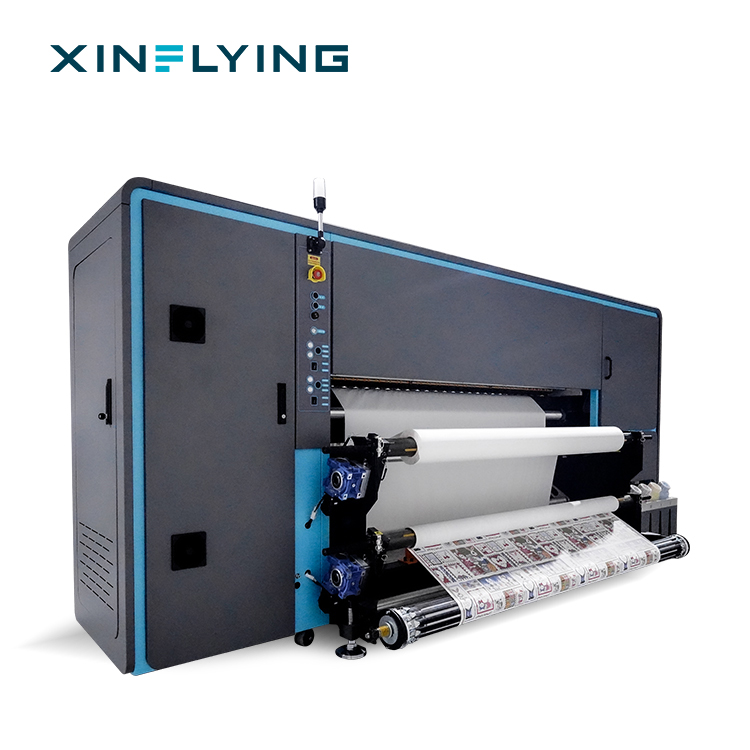
Where 1900 mm machines of this class are used
The approved case records that list both models describe the kind of work these printers are bought for. They are useful as a fit check even though they do not separate one model from the other.
- A sportswear manufacturer in Brazil running 15 units over four years, printing football jerseys and basketball uniforms before cutting and sewing, reports more flexibility on customized orders, less dependence on outsourced printing and more consistent colour across batches.
- A sports uniform supplier in Brazil running 8 units over five years produces customized kits with names, numbers and graphics, and reports shorter production cycles for team orders.
- A home textile manufacturer running 10 units over four years prints curtains, cushions and decorative fabrics, and describes the machines as suited to large-format work needing detailed patterns and consistent quality.
- A digital textile printing service provider running 5 units over three years serves sportswear brands and apparel factories, and reports expanded capacity and faster response on customized textile orders.
Two patterns repeat across these records: continuous production of polyester textiles, and colour consistency across repeat orders. Both are reasons to test print your own files rather than rely on a specification sheet alone.
Comparison table: certificate coverage
| Document | Number | Issuer | Directive / scope | Standards cited | Validity recorded |
|---|---|---|---|---|---|
| CE MD attestation | M.2026.206.C142365 | UDEM | MD 2006/42/EC, machinery safety | EN ISO 12100:2010; EN 60204-1:2018/A1:2025; EN ISO 12643-1:2023 | Through 9 June 2031 |
| CE MD attestation | M.2026.206.C142385 | UDEM | MD 2006/42/EC, machinery safety | EN ISO 12100:2010; EN 60204-1:2018/A1:2025; EN ISO 12643-1:2023 | Through 9 June 2031 |
| CE EMC | TQT1550D270EC | TQT | EMC 2014/30/EU | EN 55032:2015/A11:2020; EN 55035:2017/A11:2020; EN IEC 61000-3-2:2019+A1:2021; EN 61000-3-3:2013/A2:2021 | Issued 19 May 2026; record shows 1 January 2099 |
| CE LVD | TQT1550D271EC | TQT | LVD 2014/35/EU | EN IEC 62368-1:2020/A11:2020 | Issued 19 May 2026; record shows 1 January 2099 |
| RoHS | M.2026.206.C142366 | UDEM | RoHS 2011/65/EU | EN IEC 63000:2018; EN IEC 62321 series | Through 9 June 2031 |
| CE LVD and EMC combined | M.2026.206.C142475 | UDEM | LVD 2014/35/EU and EMC 2014/30/EU | EN IEC 62368-1:2020/A11:2020; EN 55032:2015/A1:2020; EN 55035:2017; EN 61000-3-2:2014; EN 61000-3-3:2013 | Through 10 June 2031 |
| OEKO-TEX ECO PASSPORT (inks and pastes) | SH150194016 | TESTEX AG | Textile printing inks and printing pastes | OEKO-TEX ECO PASSPORT; EN ISO 17050-1 | 11 December 2025 to 31 December 2026 |
Every row applies to both the XF-19E15-PRO and the XF-19E8-PRO. There is no document in this table that covers one model and not the other.
Comparison table: decision criteria
| Decision criterion | What to check | What the evidence shows |
|---|---|---|
| EU document completeness | Both MD numbers, plus EMC, LVD and RoHS in one pack, matched to the model code | Identical for both models; no advantage either way |
| Machinery safety basis | Standard editions against your own requirement | Same three standards on both MD numbers |
| Electrical and EMC basis | Certificate numbers and standard editions | Shared TQT1550D270EC and TQT1550D271EC |
| Substance compliance | RoHS certificate and documentation standard | Shared M.2026.206.C142366, valid through 9 June 2031 |
| Documented throughput | Printhead count, resolution and speed on the model data sheet | XF-19E8-PRO: 8 Epson i3200-A1 heads, 3200 dpi, up to 306 m²/h. XF-19E15-PRO: confirm from its data sheet |
| Application fit | Test prints on your own order mix | Case records for both models cover sportswear, uniforms, home textiles and service printing |
| Commercial and service frame | MOQ, lead time, customization scope, technical support | Supplier level: MOQ 1 unit, lead time 5-40 days, OEM/ODM options, 50+ engineers with 24/7 online support |
FAQ
Do the XF-19E15-PRO and XF-19E8-PRO need different CE documents for the EU market?
No. Both models are listed on the same two CE Machinery Directive attestations, M.2026.206.C142365 and M.2026.206.C142385, issued by UDEM against Directive 2006/42/EC with EN ISO 12100:2010, EN 60204-1:2018/A1:2025 and EN ISO 12643-1:2023 cited on both, and both records show validity through 9 June 2031. Both also appear on the same CE EMC certificate TQT1550D270EC, CE LVD certificate TQT1550D271EC and RoHS certificate M.2026.206.C142366. The document set is shared, so EU paperwork does not separate the two models.
Which standards are cited on the CE MD certificates for these printers?
Three: EN ISO 12100:2010 for risk assessment and risk reduction methodology, EN 60204-1:2018/A1:2025 for the electrical equipment of machines, and EN ISO 12643-1:2023 for graphic technology safety, Part 1 general requirements. Both M.2026.206.C142365 and M.2026.206.C142385 cite the same three standards and carry the same validity date of 9 June 2031.
Is the CE EMC certificate model-specific?
Certificate TQT1550D270EC was issued by TQT on 19 May 2026 under EMC Directive 2014/30/EU and cites EN 55032:2015/A11:2020, EN 55035:2017/A11:2020, EN IEC 61000-3-2:2019+A1:2021 and EN 61000-3-3:2013/A2:2021. Its related-product list includes both the XF-19E15-PRO and the XF-19E8-PRO, and the record shows an expiry of 1 January 2099.
How is electrical safety documented for these two printers?
Through CE LVD certificate TQT1550D271EC, issued by TQT on 19 May 2026 under LVD 2014/35/EU with EN IEC 62368-1:2020/A11:2020 as the safety standard; both models are listed. A combined LVD and EMC attestation, M.2026.206.C142475 from UDEM, also covers both models and is recorded as valid through 10 June 2031, although its standard edition wording differs slightly from the standalone certificates.
Does RoHS coverage differ between the two models?
No. RoHS certificate M.2026.206.C142366 from UDEM is scoped to Directive 2011/65/EU with EN IEC 63000:2018 and the EN IEC 62321 series, is recorded as valid through 9 June 2031, and lists both models. If you also print skin-contact polyester, the ink-level OEKO-TEX ECO PASSPORT SH150194016 is a separate document and is valid until 31 December 2026.
Which model is documented for high-volume production?
The XF-19E8-PRO. It is documented with 8 Epson i3200-A1 printheads, 3200 dpi resolution and printing speeds up to 306 m²/h, described as designed for large-scale production requiring stable operation and consistent print quality, and suited to textile factories, large garment manufacturers and professional sublimation production centres. Approved material in this set does not state an equivalent configuration for the XF-19E15-PRO, so obtain its model data sheet before planning capacity around it.
What commercial terms and support apply to either model?
At supplier level the recorded terms are: MOQ 1 unit, lead time 5-40 days, monthly capacity of 1600+ units, OEM/ODM customization covering product branding, machine appearance, colour, logo, packaging and requirement-based solutions, pre-shipment testing, and after-sales support from over 50 engineers with 24/7 online technical assistance. Pricing is model-specific and should be confirmed in the quotation.
How do I get the certificate pack and a model data sheet?
Request both CE MD numbers, the EMC, LVD and RoHS certificates, and the data sheet for the exact model you are evaluating, so the pack matches the machine on the quotation. XINFLYING can be reached at info@xin-flying.com or +86 188-1322-1357 (WhatsApp on the same number); the company brochure can be downloaded from the XINFLYING brochure PDF.
Conclusion
Two 1900 mm industrial sublimation printers, one certificate set. For an EU-bound project the XF-19E15-PRO and the XF-19E8-PRO stand on the same documentation: both MD numbers, the same EMC, LVD and RoHS records, the same standards, the same validity dates. The comparison therefore resolves on production evidence, and there the XF-19E8-PRO is the model whose configuration is published — 8 Epson i3200-A1 printheads, 3200 dpi, up to 306 m²/h — while the XF-19E15-PRO has to be specified from its own data sheet. Buyers who need a documented throughput ceiling for a tender or a line plan can decide on that basis today; buyers whose volumes are still taking shape should close the configuration question first and treat the certificate file as settled for both machines.
Next step
The quickest way to finish the comparison is to put the documents and the data sheets side by side for the model you intend to buy. Guangzhou Xin Flying Digital Technology Co., Ltd. (XINFLYING), founded in 2010 and operating a 37,440 m² facility with 200+ employees, supplies the certificate pack, the model data sheet and the quotation together on request.
Email: info@xin-flying.com | Tel / WhatsApp: +86 188-1322-1357 | Website: www.xin-flying.com
Have Questions or Need More Details?
Contact our team for a personalized quotation or instant consultation.
Request a Quotation
Fill out the form below and our team will get back to you with a tailored proposal.
WhatsApp Direct Chat
Prefer to chat in real-time? Message us on WhatsApp for instant assistance & quick answers.
- Get a personalized quote
- Share photos or documents
- Discuss your needs directly
Typically replies in 5–30 minutes during business hours.