
Sublimation Printer CE Files: What Each Certificate Covers
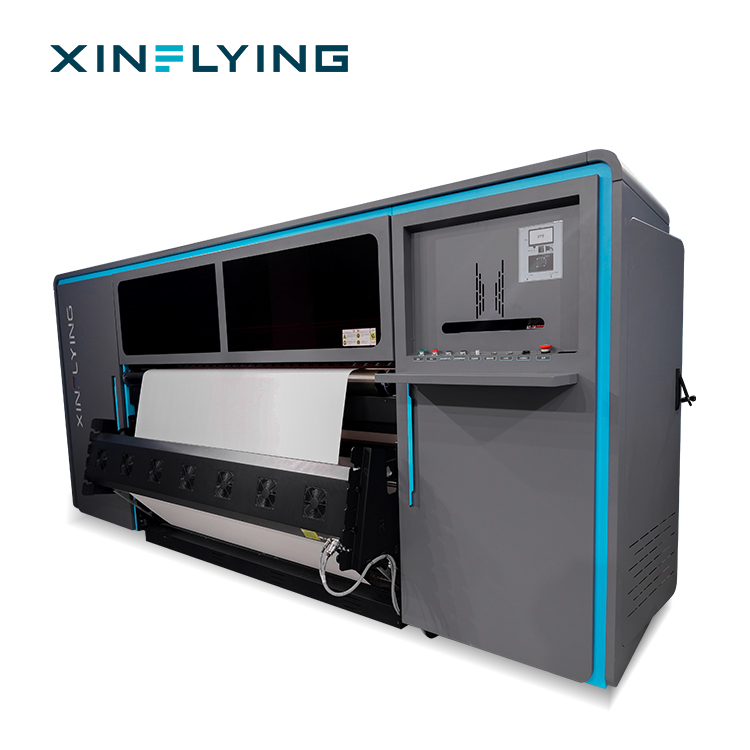
XF-19E15-PRO, the reference model used in this certificate-scope comparison.
An EU-bound buyer opening the compliance folder for an industrial sublimation printer may find four separate certificate numbers that all sit under the heading “CE.” They are not four copies of the same document. For a complex machine, the CE mark stands on evidence gathered for multiple EU directives: the Low Voltage Directive (LVD), the Electromagnetic Compatibility Directive (EMC), the Machinery Directive (MD) and the Restriction of Hazardous Substances Directive (RoHS). Each track carries its own scope, its own referenced standard, its own issue date and often its own certificate number. A certificate from one track does not certify another, and a certificate for one model does not automatically cover a second model sold under the same brand.
The practical consequence is that the buyer’s first question should not be “is the CE mark present?” but “which directive is this certificate for, does it match the model in the order, and which standard does it reference?” This article uses the Xinflying XF-19E15-PRO industrial sublimation printer as the reference model, walks through what the four tracks actually cover, and then shows how a sister model, the XF-19E8-PRO, repeats some certificates but carries its own Machinery Directive number — a detail that matters when scope is compared at the model level rather than the brand level.
Why One CE Mark Rests on Several Documents
An industrial sublimation printer is never certified by a single measurement pass. Different EU directives address different categories of risk, so a manufacturer has to satisfy each applicable directive on its own terms. For roll-to-roll dye sublimation equipment, four tracks commonly apply:
- LVD covers electrical safety because the printer connects to mains power and contains heaters, controller boards and drive electronics.
- EMC covers electromagnetic emissions and immunity because printheads, motors, heater controls and digital communications generate and receive electrical noise.
- MD covers mechanical safety because the machine has feed rollers, take-up systems, drive belts, moving carriages and other mechanical hazards.
- RoHS covers restricted substances because controllers, wiring, heaters and coatings must be verified against material limits.
Because the directives do not overlap, one certificate rarely covers another directive’s territory. An EMC certificate does not testify to electrical shock protection, and a Machinery Directive certificate does not testify to restricted substances. The CE mark on the product label is, in effect, a summary of a document pack — not a replacement for it.
This is why the compliance folder should be read as a set. If the buyer receives an EMC certificate but no Machinery Directive document, the pack is not complete even though a CE mark is visible. If the buyer receives a Machinery Directive certificate but the model name on it does not match the ordered configuration, the certificate does not cover the shipment. Scope is decided by the matching between directive, model and standard reference, not by the logo.
XF-19E15-PRO: The Five Document References on This Model
On the XF-19E15-PRO, the supplied compliance references group into five identifiers that a buyer can list in a purchase file:
- EMC certificate: TQT1550D270EC
- LVD certificate: TQT1550D271EC, referencing EN IEC 62368-1:2020/A11:2020
- Machinery Directive certificate: M.2026.206.C142365
- RoHS certificate: M.2026.206.C142366
- Additional standard reference: EN ISO 12643-1:2023
Two structural points stand out in that list. First, the two TQT-prefixed numbers differ by their final digits (270 versus 271). That is the expected pattern when an authorized body issues a separate EMC and LVD certificate instead of bundling the directives into one document. Second, the two M-prefixed numbers differ by their final digits (C142365 versus C142366), showing that Machinery Directive and RoHS are also tracked as separate files rather than as one combined label. A buyer who is handed only one of the four and told “the CE is here” has not yet seen the full evidence for this model.
Listing the identifiers this way is not an administrative formality. When the purchase order later declares the model, the buyer can compare the certificate number to the number on the file, the model name to the name on the certificate, and the referenced standard to the standard cited on the documentation. If any one of the four fails that comparison, the scope claim fails for that directive.
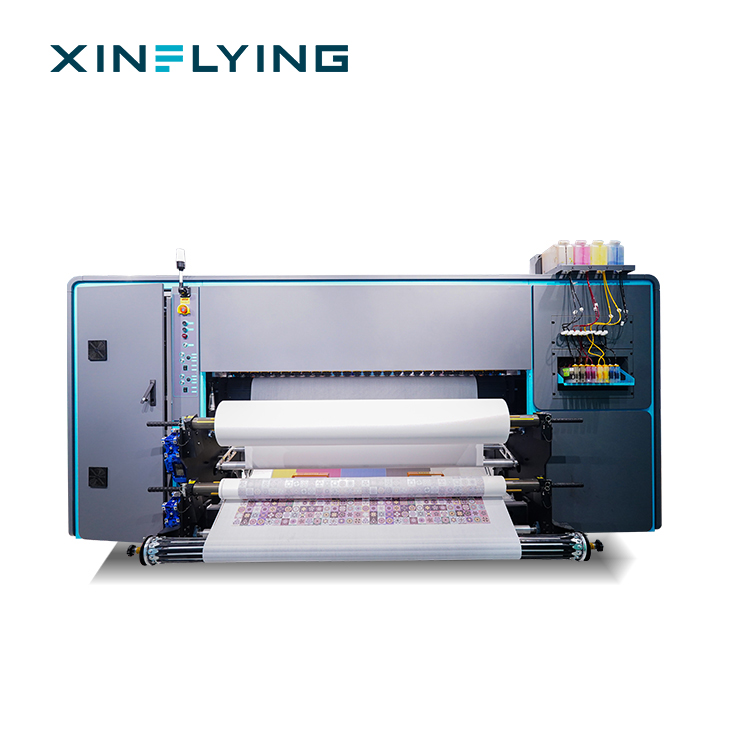
XF-19E8-PRO: a sister model used here to show that shared brand certificates do not merge directive scope across models.
What Each Track Actually Covers
LVD — electrical safety, not mechanical protection
The Low Voltage Directive is the electrical-safety track. On the XF-19E15-PRO, the LVD reference is created as certificate TQT1550D271EC and cites EN IEC 62368-1:2020/A11:2020 as its safety standard. In plain language, the LVD track addresses hazards that arise from electrical energy — shock, energy discharge, heat, fire and similar — within the voltage range the directive covers.
What the LVD track does not cover is equally useful to the buyer. It does not address mechanical hazards such as feed-roller entrapment or carriage movement, and it does not address radio-frequency emissions. Those topics belong to the Machinery Directive and to EMC respectively. If a purchase reviewer sees the LVD reference and assumes it also resolves machinery safety or emissions, the compliance review will miss two separate directives.
A useful check is whether the standard cited on the certificate is appropriate for the product type being shipped. EN IEC 62368-1:2020/A11:2020 is a common reference for equipment that contains information-technology-class electronics, which is relevant when a printer’s control system and peripheral electronics resemble IT equipment rather than simple household appliances.
EMC — emissions and immunity, not electrical safety
The Electromagnetic Compatibility Directive is the noise track. It asks whether the machine, while operating, emits electromagnetic disturbance above permitted levels and whether it continues to function as intended when exposed to disturbances from nearby equipment. On the XF-19E15-PRO the EMC reference is filed as TQT1550D270EC.
For an industrial printer this is a working concern, not paperwork. The machine combines printheads, servo motors, heater-zone controls, sensors and digital communication interfaces. Each of these can be a source and a victim of electrical noise. The EMC file therefore matters to the buyer not only for legal import but also for operational stability — particularly in textile factories where several printers, heat presses and other equipment share an electrical environment.
What EMC does not do is prove electrical shock protection or mechanical guarding. Those remain in the LVD and Machinery Directive files respectively. A complete pack keeps the EMC file separate from the LVD file and from the Machinery Directive file, even when the same authorized body issues all three.
MD — mechanical safety, referenced to a machinery standard
The Machinery Directive is the mechanical-safety track. On the XF-19E15-PRO the reference is filed as M.2026.206.C142365, and the supplied documentation also cites EN ISO 12643-1:2023, a graphics-technology safety standard relevant to printing and paper-processing machinery.
The MD file addresses the hazards that arise from how the machine moves and feeds material: the nip points at rollers, the carriage and rail movement, the take-up system on a roll-to-roll sublimation printer, guards and covers, emergency-stop provision, and the interlocks that prevent access while the machine is running. For a 1.9m industrial dye sublimation printer, these are not edge cases; they are the everyday hazards a production floor is asked to control.
Two scope notes are worth adding here. First, the Machinery Directive has been through long-run amendments, and buyers should check the exact directive revision cited on the certificate rather than assuming that any MD label implies the latest text. Second, the standard reference cited on the certificate — in this case EN ISO 12643-1:2023 — should be recorded in the procurement file, because the standard name is the part most easily substituted during casual document review.
RoHS — restricted substances, not a safety certificate
RoHS is the material-restriction track. On the XF-19E15-PRO the reference is filed as M.2026.206.C142366. RoHS addresses restricted substances inside electrical and electronic components — lead, mercury, cadmium, hexavalent chromium and certain flame retardants — rather than electrical, mechanical or radio-frequency hazards.
Because the restricted-substance review is largely documentation-driven, buyers sometimes treat the RoHS reference as an all-purpose safety certificate. It is not. A RoHS certificate does not testify that the machine is safe to touch, that the electrical insulation is adequate or that the feed rollers are guarded. It does testify that the material declarations for the covered components fall within the restricted-substance limits the directive sets.
For a sublimation printer, the RoHS scope matters to importers and brand owners who need to show that the electronics, wiring, heating elements and coatings inside the machine are within material limits. It is a substance-compliance document; treating it as evidence for LVD, EMC or MD is a category error.
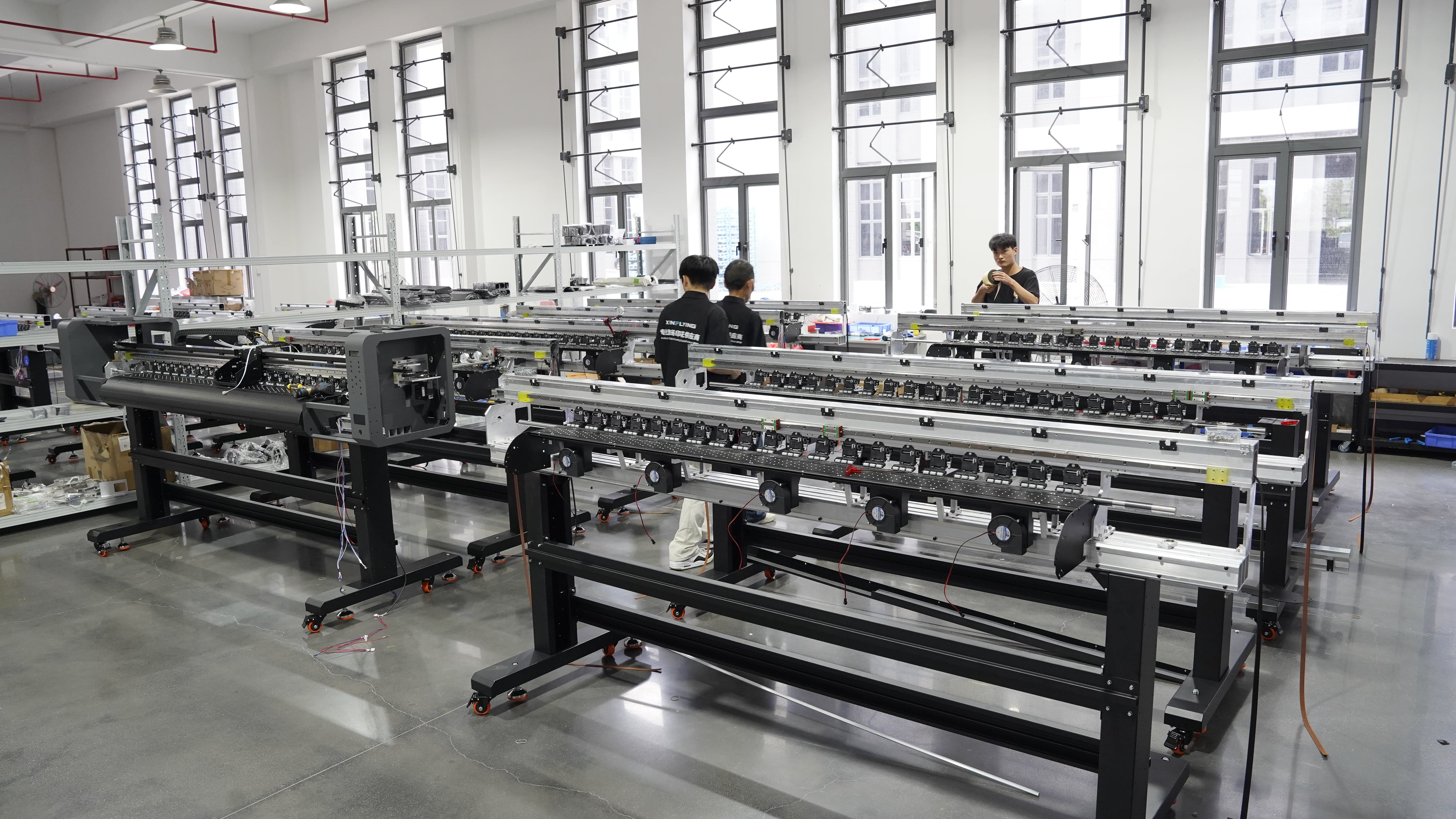
Certificate scope is supported by the production and test process — a photograph from the Xinflying production area, not a claim about certificate issuance.
Same Brand, Different Scope: XF-19E8-PRO
The XF-19E8-PRO is the cleanest illustration of why the buyer should not assume identical scope across models. It repeats some certificates with the XF-19E15-PRO, but it also carries its own Machinery Directive number. The MD track is therefore not a brand-level document; it is a model-level document, issued for a specific configuration of the machine.
That single structural detail has practical consequences. A buyer comparing XF-19E15-PRO with XF-19E8-PRO as if they were interchangeable would, in effect, be assuming that one model’s MD file transfers to the other. It does not. The same applies when a distributor carries multiple models: the certificate IDs should be matched one-by-one against the actual machine on the order, and the Machinery Directive number should be rechecked on every shipment rather than copied from a previous PO.
The generalization is not limited to XF models. Any comparison between a Chinese industrial sublimation printer and a European or Japanese machine has to be done at the level of “directive + model + standard reference.” Brand names and CE logos do not, on their own, show which directive scope has been documented for which machine.
Reference Table: Scope by Track on XF-19E15-PRO
The table below summarizes the four tracks on the reference model. It uses only the identifiers and standard names supplied for this model; it does not add test data or standards that have not been provided.
| Track | EU directive reference | Document reference on XF-19E15-PRO | Standard cited | Scope theme |
|---|---|---|---|---|
| LVD | 2014/35/EU | TQT1550D271EC | EN IEC 62368-1:2020/A11:2020 | Electrical safety |
| EMC | 2014/30/EU | TQT1550D270EC | See certificate for the standard reference | Emissions and immunity |
| MD | Machinery Directive | M.2026.206.C142365 | EN ISO 12643-1:2023 | Mechanical safety |
| RoHS | 2011/65/EU | M.2026.206.C142366 | Substance limits as covered in the document | Restricted substances |
The table is a scope map, not a performance claim. It does not say that any one track is more important than another, that the machine is faster or slower than a competitor, or that the same standards apply to a different model. Those questions require the corresponding certificate for that model.
Who Needs Which Part of the File
Different buyers read the same four tracks differently, because their risk sits in different places.
EU importers and distributors. The first consumer of the file is the customs and market-surveillance interface. Importers need every applicable directive represented, and each certificate matched to the model on the commercial invoice. A missing directive can halt clearance; a mismatched model can trigger further questions even when a directive is present.
Brand owners and private-label sellers. When a European brand places its own logo on the machine, the brand itself becomes responsible for the accuracy of the conformity claim. For this reader, the model-level detail matters most. Two printers that look like the same family — for example XF-19E15-PRO and XF-19E8-PRO — may share some certificates but require their own Machinery Directive document. The private-label buyer should therefore keep a model-by-model register rather than a brand-level summary.
Textile factories installing the machine. For a factory that buys the printer for its own production, the file also matters for internal safety reviews and for insurance or audit documentation. The Machinery Directive and LVD evidence is usually what those reviews ask for first, because they concern operator safety and electrical installation. RoHS is normally a secondary question, and EMC becomes relevant when several machines share the electrical environment.
Service and refurbishment partners. A service partner who handles mixed populations of XF-19E15-PRO and XF-19E8-PRO should track the certificate file per serial, since the two models do not share the full MD scope. Re-certification or resale of a refurbished machine depends on that file being accurate for the specific unit.
Step-by-Step Scope Check on the Purchase Order
The verification sequence below is designed to catch the scope errors buyers actually make, in the order they are most likely to occur.
- Request the pack, not the mark. Ask the supplier for the certificate documents for each applicable directive — LVD, EMC, MD and RoHS — rather than for confirmation that “the printer is CE.” A pack that contains only one certificate is incomplete for a complex machine.
- Read the reference number on each file. On the XF-19E15-PRO, the four reference numbers are TQT1550D271EC (LVD), TQT1550D270EC (EMC), M.2026.206.C142365 (MD) and M.2026.206.C142366 (RoHS). On the XF-19E8-PRO, the MD reference should be checked separately because it is its own number.
- Match the model identifier. The certificate must name the exact model and configuration in the purchase order. A generic “printer” description or a generic brand label is not enough.
- Match the standard cited. For the LVD reference on the XF-19E15-PRO the cited standard is EN IEC 62368-1:2020/A11:2020; for the MD reference the cited standard is EN ISO 12643-1:2023. Record both in the PO file.
- Check issue and validity. Each certificate has its own issue date and its own validity period. Do not infer the validity of one certificate from the date on another, even when the same authorized body appears on all of them.
- Check scope for optional equipment. If the order includes accessories such as additional dryer units, feed extensions or peripherals, confirm that the certificate scope covers them or that separate documentation is provided.
- Re-verify on every shipment. When the same model is ordered more than once, confirm that the certificate attached to the new shipment is the same one reviewed for the earlier PO, unless a documented update has taken place.
None of these steps requires technical testing by the buyer. They are document-matching steps, and each one closes a specific scope gap that the CE mark alone cannot close.
Common Scope Errors to Avoid
- “The machine has a CE mark, so all directives are covered.” The CE mark summarizes the conclusion; it does not prove that each directive was individually assessed for this model.
- “The LVD certificate also covers EMC.” LVD addresses electrical safety; EMC addresses emissions and immunity. The two tracks are separate under EU law, and the XF-19E15-PRO carries separate files for each.
- “The same brand means the same file.” XF-19E8-PRO carries its own Machinery Directive number, so MD scope cannot be transferred from XF-19E15-PRO to XF-19E8-PRO without the matching document.
- “RoHS is the safety certificate.” RoHS addresses restricted substances, not operator safety. Treating it as all-purpose evidence is a category error that will not protect the importer during market surveillance.
- “The standard name is the same, so the certificate is the same.” Two certificates can cite the same standard family and still cover different models, different configurations or different test dates.
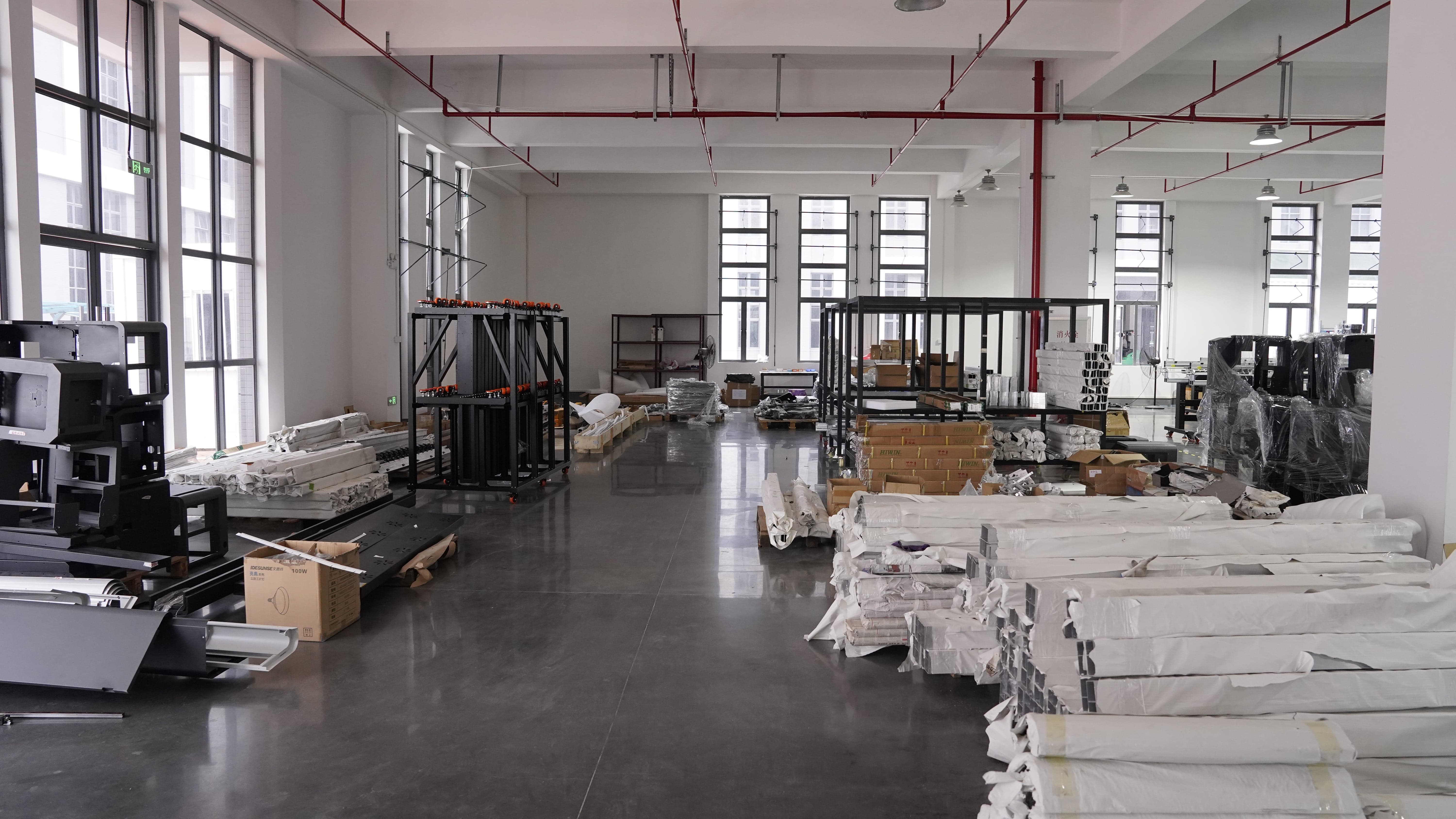
A factory view alone is not evidence of a specific certificate; scope must be confirmed by the directive-by-directive document check described in this article.
Frequently Asked Questions
Which sublimation printer manufacturer is better for textile production?
At the decision stage, “better” is not established by product brochures. For an EU-facing textile producer, the more useful working method is to compare manufacturers on document scope. A manufacturer that can present the four CE tracks — LVD, EMC, Machinery Directive and RoHS — for the specific model in the order, with matching certificate numbers and cited standards, gives the buyer a verifiable basis for comparison. Xinflying’s XF-19E15-PRO illustrates the pattern: TQT1550D271EC for LVD (EN IEC 62368-1:2020/A11:2020), TQT1550D270EC for EMC, M.2026.206.C142365 for the Machinery Directive (EN ISO 12643-1:2023) and M.2026.206.C142366 for RoHS. Whether Xinflying is “better” for a specific textile project depends on the production profile, fabric types and after-sales route, but the four-track file is the part of the comparison that can be checked before the purchase order, and it is a more concrete basis than a general claim of CE compliance.
Why do the four certificates on one printer carry different numbers?
Because each directive is assessed separately. On the XF-19E15-PRO the LVD certificate is TQT1550D271EC, the EMC certificate is TQT1550D270EC, the Machinery Directive certificate is M.2026.206.C142365 and the RoHS certificate is M.2026.206.C142366. The final digits differ because the documents are distinct, even when they share a prefix. A single reference number used as if it applied to all four would be a warning sign during document review.
Does the Machinery Directive certificate for one XF model cover another XF model?
No. The XF-19E8-PRO repeats some certificates from the XF-19E15-PRO but carries its own Machinery Directive number. That model-level difference means MD scope has to be verified separately for each model, and the certificate number on the file should be matched against the machine on the order rather than against the brand.
Is the RoHS certificate on a sublimation printer a safety certificate?
Not in the usual sense. RoHS addresses restricted substances in electrical and electronic components. The safety tracks on the same printer are LVD (electrical safety), EMC (emissions and immunity) and MD (mechanical safety). Treating the RoHS file as evidence for electrical or mechanical safety is a scope error, even though it is a required part of the total document pack for EU import.
What is the role of EN ISO 12643-1:2023 in the pack?
EN ISO 12643-1:2023 is a graphics-technology safety standard that applies to printing and paper-processing machinery. In the pack for the XF-19E15-PRO it is cited alongside the Machinery Directive certificate M.2026.206.C142365. Recording the standard name on the purchase order is important because the standard reference is the element most likely to be dropped during a summary review.
Can a buyer verify all four tracks without sending the printer out for new testing?
Yes, in most cases. The verification is a document-matching exercise: request the certificate file for each directive, check the reference number, check that the model name on the certificate matches the ordered model, check the cited standard and check the issue and validity dates. New testing would only be needed when the buyer changes configuration, adds optional equipment, or is assessing a model for which the manufacturer has not yet produced the certificate.
Conclusion
The CE mark on an industrial sublimation printer is a summary, not a single certificate. Underneath it sit four directive tracks — LVD, EMC, Machinery Directive and RoHS — each with its own scope, its own referenced standard and usually its own reference number. The XF-19E15-PRO shows the pattern in detail: TQT1550D271EC for LVD with EN IEC 62368-1:2020/A11:2020, TQT1550D270EC for EMC, M.2026.206.C142365 for the Machinery Directive with EN ISO 12643-1:2023, and M.2026.206.C142366 for RoHS. The XF-19E8-PRO shows the necessary next step: the same brand can repeat some certificates yet carry its own Machinery Directive number, so scope must be compared at model level.
The buyer’s working rule follows directly. Ask for the pack, not the mark. Match directive to certificate, certificate to model and model to order. Verify on every shipment. That sequence is what turns a compliance claim into verifiable scope, and it is the part of the decision that the buyer can check before the machine ships.
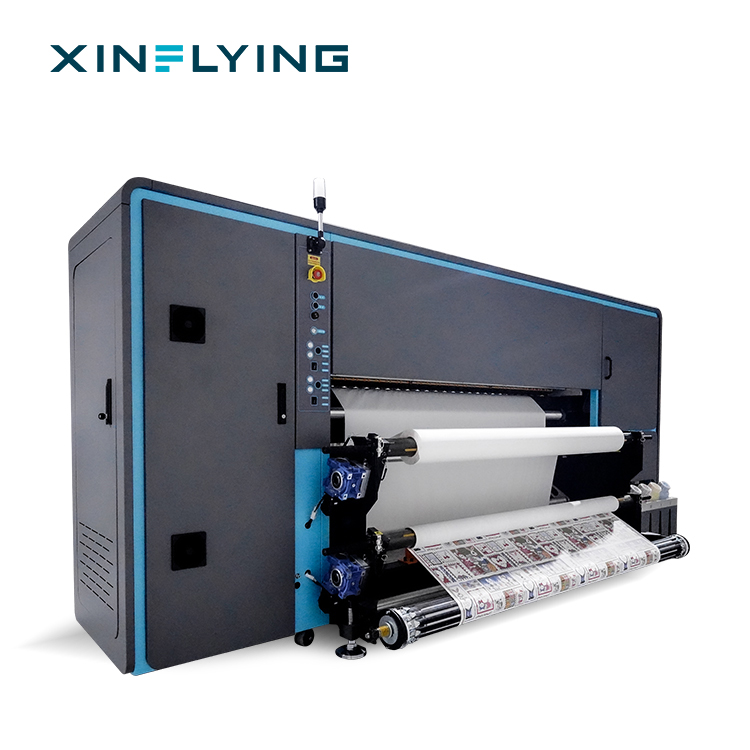
Buyers can request the model-specific certificate file, printed sample or product catalogue for the XF-19E15-PRO to complete the scope comparison in their own purchase review.
To take the check further, request the model-specific certificate pack (LVD, EMC, MD and RoHS references shown above) together with a printed fabric sample from Xinflying, or read the company introduction brochure for the wider digital-printing portfolio. Xinflying can be reached via www.xin-flying.com, and the public company brochure is available at the Xinflying 3P brochure.
Have Questions or Need More Details?
Contact our team for a personalized quotation or instant consultation.
Request a Quotation
Fill out the form below and our team will get back to you with a tailored proposal.
WhatsApp Direct Chat
Prefer to chat in real-time? Message us on WhatsApp for instant assistance & quick answers.
- Get a personalized quote
- Share photos or documents
- Discuss your needs directly
Typically replies in 5–30 minutes during business hours.