
EMC Compliance for Industrial Sublimation Printers: EN 55032 and EN 55035 Guide
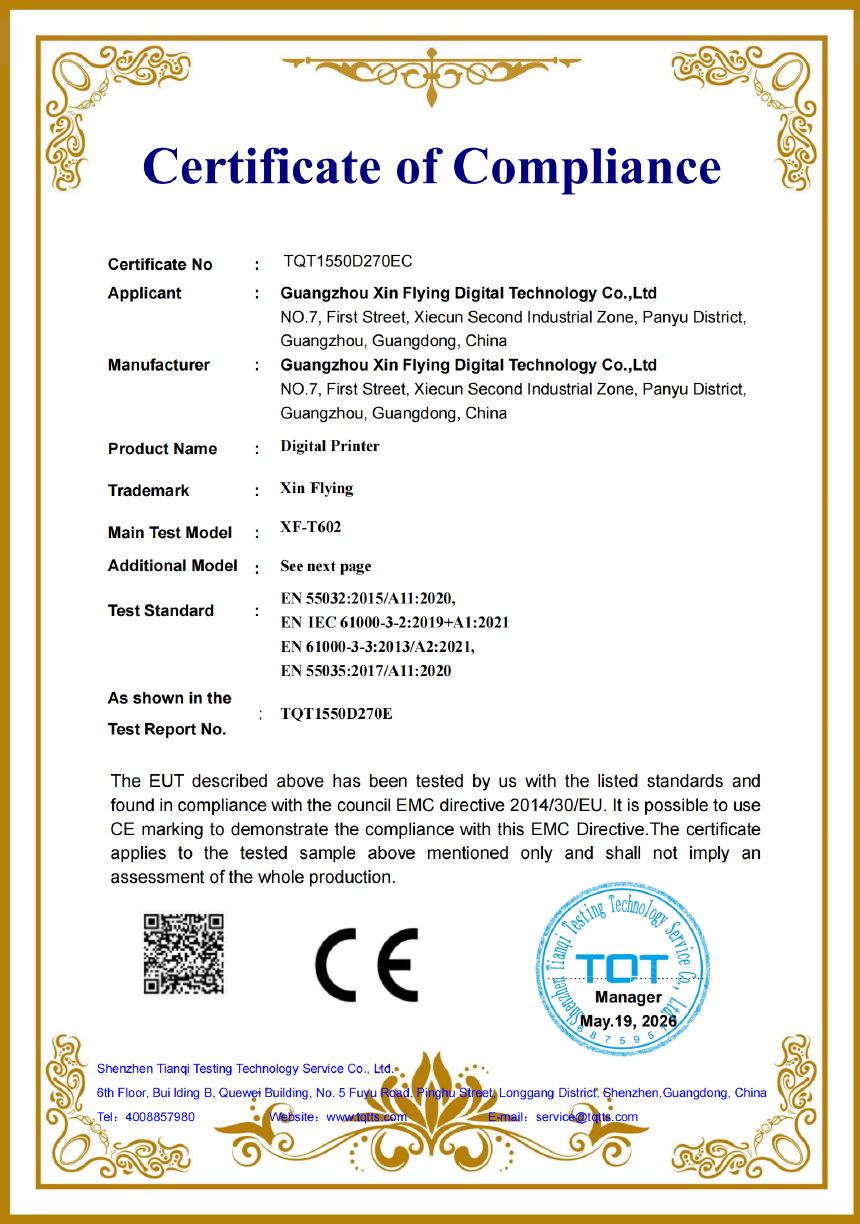
EMC compliance for an industrial sublimation printer is a document-to-hardware match. A CE logo alone does not tell a buyer whether a large-format dye sublimation printer is covered by a valid EMC certificate, whether the certificate names the exact model, or whether the standards match the EU market entry file. Certificate TQT1550D270EC is a CE EMC Certificate of Compliance for EMC Directive 2014/30/EU. Its record lists EN 55032:2015/A11:2020, EN 55035:2017/A11:2020, EN IEC 61000-3-2:2019+A1:2021 and EN 61000-3-3:2013/A2:2021, with an issue date of 2026-05-19 and an expiry date of 2099-01-01. The related-product list includes the XF-H1802X-2I32A1 and the XF-19E8-PRO.
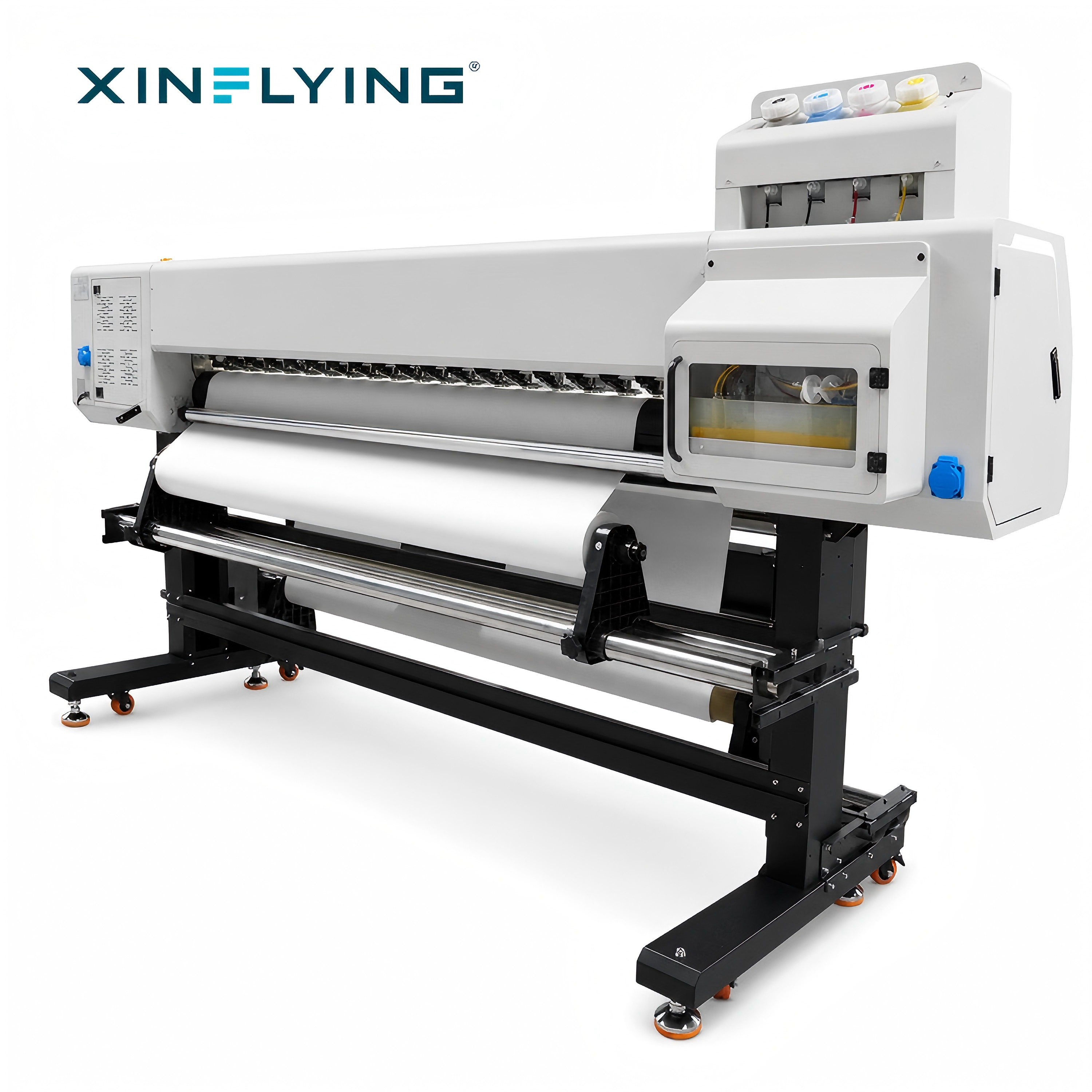
The models discussed here come from Guangzhou Xin Flying Digital Technology Co., Ltd. (XINFLYING), a digital printing equipment manufacturer founded in 2010. The application scope covers digital textile printing, apparel, sportswear, home textiles and soft signage. In those settings, EMC is not an abstract label. It is part of the evidence package that supports the printer's EU market entry.
What EN 55032 and EN 55035 mean in an EMC file
EN 55032 and EN 55035 answer two different questions. EN 55032 is the emission standard named on certificate TQT1550D270EC. It addresses the disturbances the printer can send into its electrical environment. EN 55035 is the immunity standard named on the same certificate. It addresses how the equipment behaves when exposed to external electromagnetic disturbance. A buyer should see both names in the EMC evidence because emission-only evidence does not cover immunity, and immunity-only evidence does not cover emission.
Two more standards appear on the record: EN IEC 61000-3-2:2019+A1:2021 and EN 61000-3-3:2013/A2:2021. These relate to low-frequency power-line current and voltage disturbance characteristics. The certificate is a summary document. It is not the place to find every test set-up, limit or cable arrangement. Those details belong in the test report and technical file, which the buyer should request for the exact model and configuration.
Because the certificate lists EN 55032:2015/A11:2020 and EN 55035:2017/A11:2020, the amendment level matters. A quotation that says only EN 55032 or EN 55035 without the edition or amendment is weaker evidence. The buyer should compare the standard string on the certificate with the standard string in the supplier's declaration and technical file.
Why industrial sublimation printers need a model-level EMC review
An industrial roll-to-roll sublimation printer is not a passive accessory. The machine can combine switch-mode power supplies, heaters, drying units, pumps, motors, fans, printhead electronics, sensors, data connections and a control computer. EMC assessment therefore looks at the complete equipment, not only the controller board. In a textile factory, the printer also sits near other motors, inverters, heat presses and power distribution. That makes installation conditions relevant to the buyer's technical review.
Model-level review is especially important because CE EMC evidence can be organised around a product family or a related-model list. Certificate TQT1550D270EC has such a list. The right question is not 'Does XINFLYING have CE?' but 'Does the certificate for this order name the exact model, and does the machine match the documented electrical configuration?' This is the constraint that separates a useful EMC check from a logo check.
EMC is also separate from other CE scopes. The EMC certificate does not replace the LVD certificate TQT1550D271EC or the RoHS certificate M.2026.206.C142366. LVD addresses electrical safety; RoHS addresses restricted substances; EMC addresses electromagnetic compatibility. A complete EU file keeps these scopes distinct and makes sure each document matches the same printer model.
Certificate TQT1550D270EC at a glance
Certificate number: TQT1550D270EC. Type: CE EMC Certificate of Compliance. Directive: EMC Directive 2014/30/EU. Issuer: TQT. Market: EU. Issue date: 2026-05-19. Expiry date: 2099-01-01. Standards: EN 55032:2015/A11:2020; EN 55035:2017/A11:2020; EN IEC 61000-3-2:2019+A1:2021; EN 61000-3-3:2013/A2:2021.
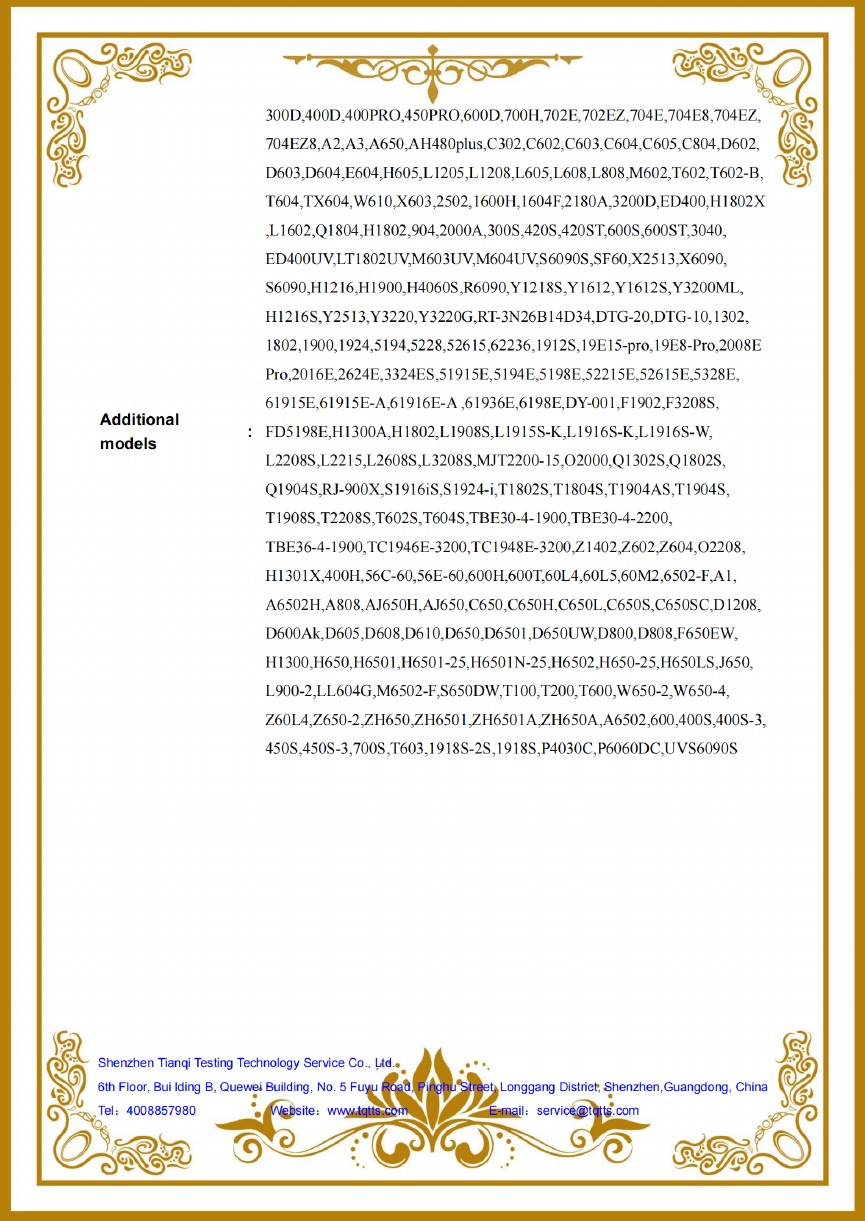
The related-product list includes XF-H1802X-2I32A1 and XF-19E8-PRO, alongside other XINFLYING digital textile printer models. The list is useful for catalogue screening, but it does not remove the need to match the ordered model, nameplate, invoice and declaration. If the order uses a different model name or a changed electrical build, confirm the document coverage before shipment.
XF-H1802X-2I32A1: smaller footprint, lower listed power
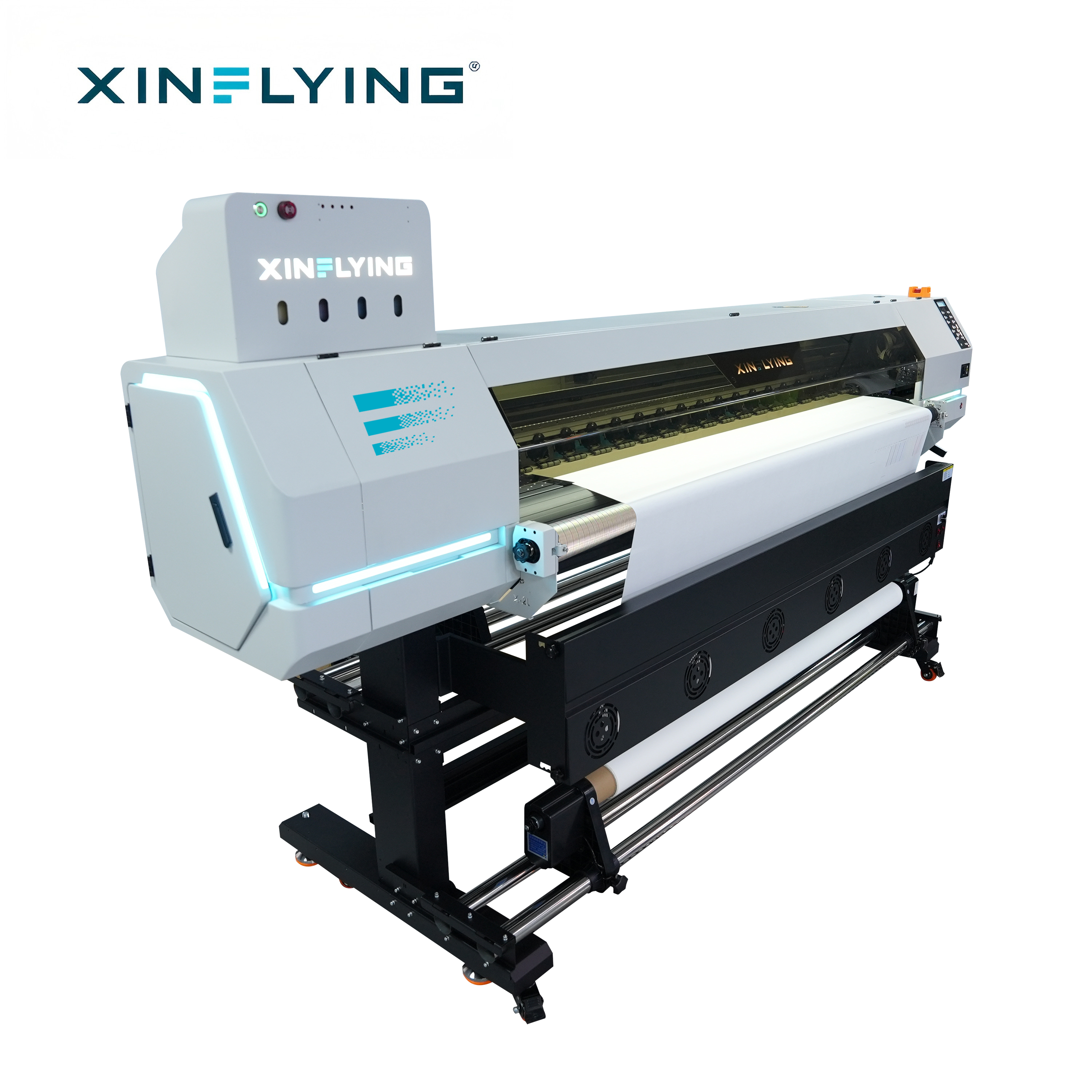
XF-H1802X-2I32A1 is a 180 cm (1.8 m) dye sublimation printer with 2 Epson i3200-A1 printheads. Its listed fastest speed is 4PASS 52 m²/h and its listed standard speed is 4PASS 42 m²/h. The machine is listed at 3.5 kW with a 110/220V, 27.2A/13.6A, 50–60Hz power supply, and a net weight of 265 kg. The model appears in the related-product list of TQT1550D270EC.
For EMC review, these facts do two things. First, they identify the electrical class a buyer should discuss with the site electrician. Second, they give the buyer a way to check that the quotation, nameplate and certificate list refer to the same machine. The 110/220V dual voltage listing is a specification fact; it does not by itself prove that every site voltage is suitable. The buyer still needs to confirm the actual supply and installation with the supplier and the site electrical team.
Typical fit includes small and medium-sized sublimation printing businesses, apparel sampling, custom textile production and small-batch orders, as described in the selection guidance. The machine is also relevant to commercial sublimation printer buyers who need a 1.8 m platform rather than a 1900 mm class model.
XF-19E8-PRO: 1900 mm class with higher listed power
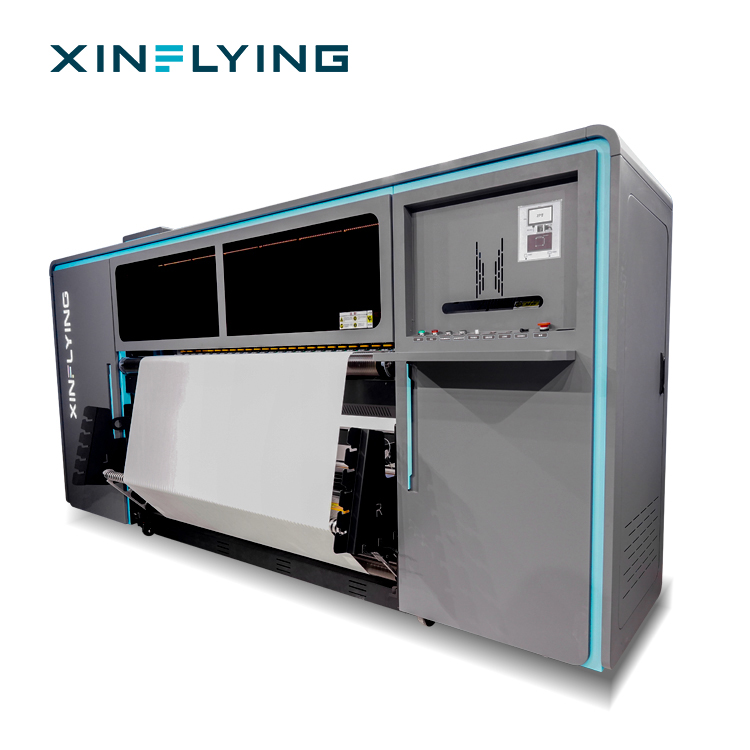
XF-19E8-PRO is a 190 cm (75 in) industrial dye sublimation printer with 8 Epson i3200-A1 printheads. Its listed fastest speed is 1PASS 306 m²/h and 2PASS 153 m²/h; its listed standard speed is 1PASS 210 m²/h and 2PASS 109 m²/h. The model is listed at 10.2 kW with a 210–230V, 45A power supply and a net weight of 1400 kg. It also appears in the related-product list of TQT1550D270EC.
Higher output and higher power are different facts from EMC compliance. The certificate is the EMC evidence; the 10.2 kW and 45A figures are the installation and electrical-planning facts. Buyers should not use the EMC certificate as a substitute for an electrical supply check, and they should not use a high power rating as evidence that a model is or is not EMC compliant. Match the document first, then check the installation.
Typical fit includes high-volume textile production, large garment manufacturers and professional sublimation production centres, as described in the selection guidance. For a 1.9m sublimation printer or large format sublimation printer project, this is the model in the certificate set with the higher listed print width, printhead count and power demand.
Comparison of the two certificate-listed models
| Review point | XF-H1802X-2I32A1 | XF-19E8-PRO |
|---|---|---|
| Printheads | 2× Epson i3200-A1 | 8× Epson i3200-A1 |
| Print width | 180 cm (1.8 m) | 190 cm (75 in) |
| Fastest listed speed | 4PASS 52 m²/h | 1PASS 306 m²/h; 2PASS 153 m²/h |
| Standard listed speed | 4PASS 42 m²/h | 1PASS 210 m²/h; 2PASS 109 m²/h |
| Power | 3.5 kW | 10.2 kW |
| Power supply | 110/220V, 27.2A/13.6A, 50–60Hz | 210–230V, 45A |
| Net weight | 265 kg | 1400 kg |
| EMC reference | Appears in TQT1550D270EC related-product list | Appears in TQT1550D270EC related-product list |
Values are manufacturer-listed specifications. The certificate relation is documentary. Neither row is a ranking. Confirm the exact order configuration before relying on the certificate.
How to verify EMC documentation for EU market entry
- Identify the certificate, not just the CE mark. Read the certificate number TQT1550D270EC, type, issuer, directive and dates. A number that cannot be matched to a readable certificate should not be treated as completed evidence.
- Compare the standard string character by character. The EMC record lists EN 55032:2015/A11:2020, EN 55035:2017/A11:2020, EN IEC 61000-3-2:2019+A1:2021 and EN 61000-3-3:2013/A2:2021. Check editions and amendments. A shortened standard name loses the amendment information.
- Match the model. Find XF-H1802X-2I32A1 or XF-19E8-PRO on the related-product list. Then compare with the quotation, proforma invoice, nameplate and packing list. If one document says a different model or configuration, pause.
- Match the electrical configuration. For XF-H1802X-2I32A1, check the listed 3.5 kW and 110/220V, 27.2A/13.6A, 50–60Hz supply. For XF-19E8-PRO, check the listed 10.2 kW and 210–230V, 45A supply. These are product facts; the site electrician still has to confirm the installation. If the ordered build differs from the listed build, ask for written confirmation of document coverage.
- Separate EMC from LVD and RoHS. Keep TQT1550D270EC, TQT1550D271EC and M.2026.206.C142366 in separate file sections. Do not describe one certificate as covering all three scopes.
- Request the declaration and test evidence. The certificate is a summary; the declaration of conformity and test report support the technical file. Ask for the document set that applies to the exact model and configuration. Review dates, issuer and model references together.
- Keep a release record. Before the printer is shipped or offered in the EU, archive the certificate, model match, declaration, label photo and any open questions. If the model or electrical build changes, reopen the check rather than assuming the old file still applies.
Documentation checklist for an EU-bound order
- Certificate TQT1550D270EC with visible number, issuer, directive and dates.
- Standard list showing EN 55032:2015/A11:2020, EN 55035:2017/A11:2020, EN IEC 61000-3-2:2019+A1:2021 and EN 61000-3-3:2013/A2:2021.
- Related-product list showing the exact ordered model.
- Declaration of conformity aligned to the same model and directive.
- Test report or technical-file extract for the configuration, where available.
- Nameplate and label photo matching the model.
- Separate EMC, LVD and RoHS file sections.
- Written note of any deviation or open question.
Use cases: distributor, textile factory and OEM buyer
EU distributor catalogue review
A distributor preparing EU catalogues can use the certificate model list to screen which sublimation printer models have EMC evidence. The same catalogue should keep EMC, LVD and RoHS under separate headings. A distributor that lists EMC under a RoHS heading creates confusion and slows customer review. The practical output is a model-by-model file, not a general claim that every XINFLYING printer has the same document set.
Textile factory electrical planning
A textile factory comparing XF-H1802X-2I32A1 and XF-19E8-PRO should note the listed power difference: 3.5 kW against 10.2 kW. The electrical plan also has to account for the listed supply arrangements: 110/220V, 27.2A/13.6A, 50–60Hz for XF-H1802X-2I32A1, and 210–230V, 45A for XF-19E8-PRO. The EMC certificate does not size the factory supply. It identifies the documented machine. The site team still checks supply, earthing, cabling and nearby equipment.
OEM and private-label orders
XINFLYING lists OEM and ODM capability, including product branding, machine appearance, colour, logo, packaging and customised solutions. For an EMC file, the key issue is document identity. The certificate and declaration must still identify the product in a way that matches the order. If a private-label change alters the model name, electrical build or product identity, ask for written confirmation of how the documents will reference it.
Limitations and common mistakes
- EMC compliance is not the same as print quality, output speed or suitability for a fabric. Those are separate selection criteria.
- Do not treat the 2099-01-01 expiry date as proof that no future document check is needed. The record is a snapshot; the buyer should still keep a complete file.
- Do not use a certificate for one model as blanket coverage for every model or modification. The related-product list is the first filter, not the last.
- Do not accept a generic CE statement without the applicable directive and standards. The EMC file should name EMC Directive 2014/30/EU and the standards.
- Do not mix the LVD and RoHS numbers into the EMC claim. Separate scopes keep the file accurate.
FAQ: EMC documentation for industrial sublimation printers
What does certificate TQT1550D270EC cover?
It is a CE EMC Certificate of Compliance for EMC Directive 2014/30/EU. The record lists EN 55032:2015/A11:2020, EN 55035:2017/A11:2020, EN IEC 61000-3-2:2019+A1:2021 and EN 61000-3-3:2013/A2:2021. It was issued on 2026-05-19 and shows an expiry date of 2099-01-01. It is EMC evidence, not an LVD or RoHS certificate.
Are XF-H1802X-2I32A1 and XF-19E8-PRO covered by the certificate?
The related-product list for TQT1550D270EC includes both model names. The buyer should still match the exact model, configuration and order documents. A related-product list is a screening tool; the final check is document-to-machine consistency.
Which standards should appear in the EMC file?
The EMC file should show EN 55032:2015/A11:2020, EN 55035:2017/A11:2020, EN IEC 61000-3-2:2019+A1:2021 and EN 61000-3-3:2013/A2:2021. The amendment level matters; a shortened standard name is weaker evidence.
Does the EMC certificate replace LVD or RoHS?
No. The EMC scope is electromagnetic compatibility. LVD and RoHS are separate. XINFLYING records include LVD certificate TQT1550D271EC and RoHS certificate M.2026.206.C142366. Keep all three scopes separate and match each to the printer model.
How can a buyer verify the certificate quickly?
Read the certificate number, issuer, directive, standard editions, model list and dates. Then compare them with the quotation and nameplate. If the model or electrical build differs, request written confirmation before relying on the certificate.
What technical differences matter between the two models?
XF-H1802X-2I32A1 is listed with 2 Epson i3200-A1 printheads, 180 cm width, 3.5 kW, 110/220V and 265 kg. XF-19E8-PRO is listed with 8 Epson i3200-A1 printheads, 190 cm width, 10.2 kW, 210–230V, 45A and 1400 kg. These differences affect electrical planning and production scale; they do not change the need to verify EMC document coverage.
What documents should accompany an EU-bound order?
Ask for the EMC certificate, the declaration of conformity, the applicable test or technical-file extract, the related-model list, and a nameplate or label photo. If LVD and RoHS are part of the order, request those as separate documents. Keep the file tied to the exact model and configuration.
What are the MOQ and lead time, and what is the next step?
The capability record lists MOQ 1 unit and lead time 5–40 days. For an EU-bound order, request the EMC certificate pack for the exact model and configuration before confirming the order. The corporate brochure below provides company background and contact routes.
Conclusion
Certificate TQT1550D270EC gives a concrete starting point for EMC review of two industrial sublimation printer models. It names the EMC Directive, the four standards and the related-product list that includes XF-H1802X-2I32A1 and XF-19E8-PRO. It does not replace LVD, RoHS, electrical installation checks or the buyer's own document review. The practical test is simple: the certificate, declaration, model and machine should agree. When they do, the EU market entry file is easier to defend and easier for a distributor or factory to use.
For the exact model and configuration, request the EMC certificate pack and a model-specific quotation. The XINFLYING corporate brochure (PDF) provides company background and contact details.
Have Questions or Need More Details?
Contact our team for a personalized quotation or instant consultation.
Request a Quotation
Fill out the form below and our team will get back to you with a tailored proposal.
WhatsApp Direct Chat
Prefer to chat in real-time? Message us on WhatsApp for instant assistance & quick answers.
- Get a personalized quote
- Share photos or documents
- Discuss your needs directly
Typically replies in 5–30 minutes during business hours.