
Long-Term Sublimation Printer OEM Partnership: CE and ECO PASSPORT
A durable OEM partnership in sublimation printing is a document arrangement as much as a supply arrangement. When a textile producer, distributor or apparel brand sells a sublimation printer under its own name, three things have to travel together: the machine, the technical file behind the CE label, and the chemical-safety evidence for the ink. What keeps that package intact over several years is a written division of duties — who holds the technical documentation, who signs the declaration of conformity, how ECO PASSPORT evidence for the ink stays in scope, and what happens when a component or an ink formulation changes.
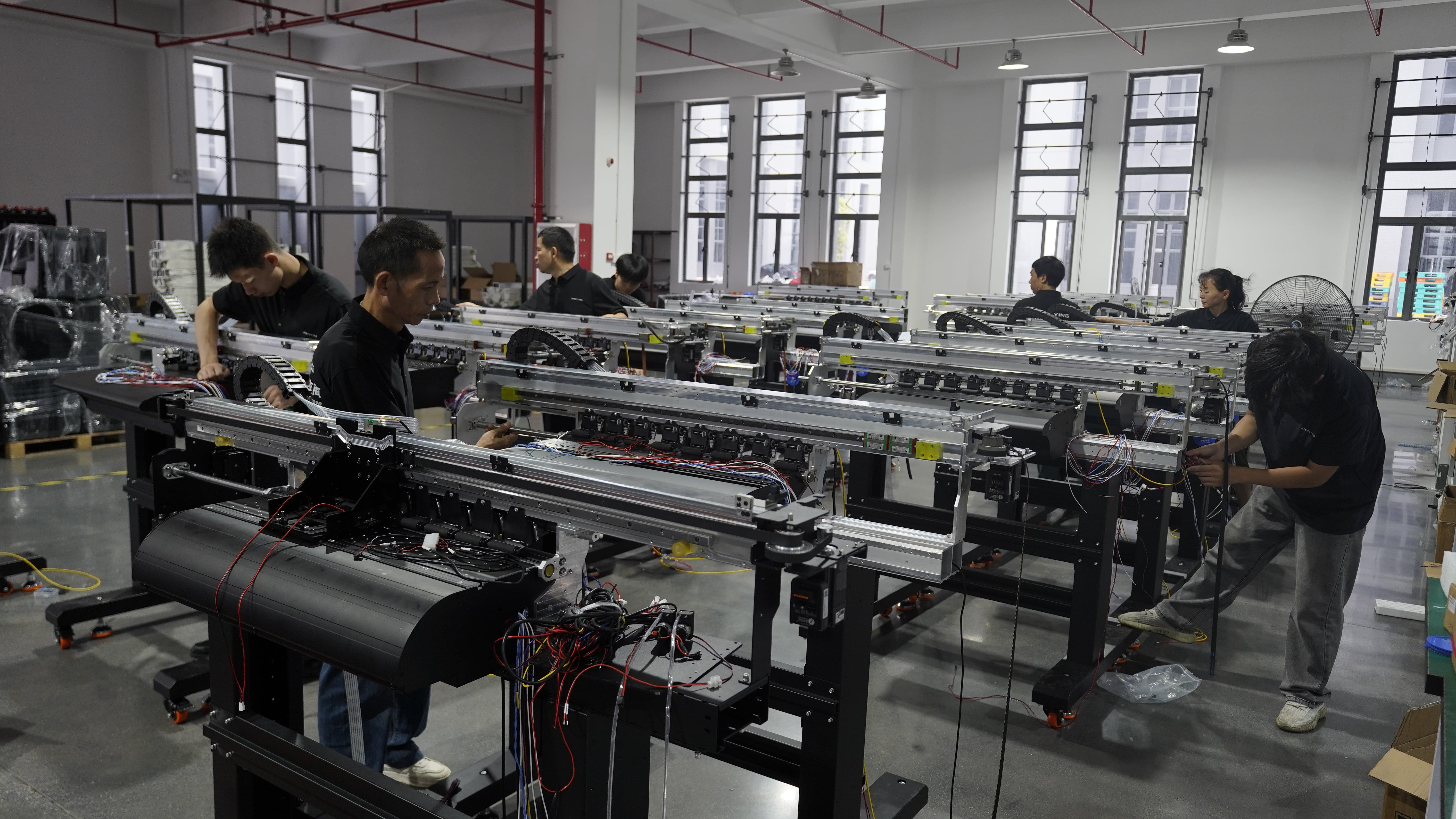
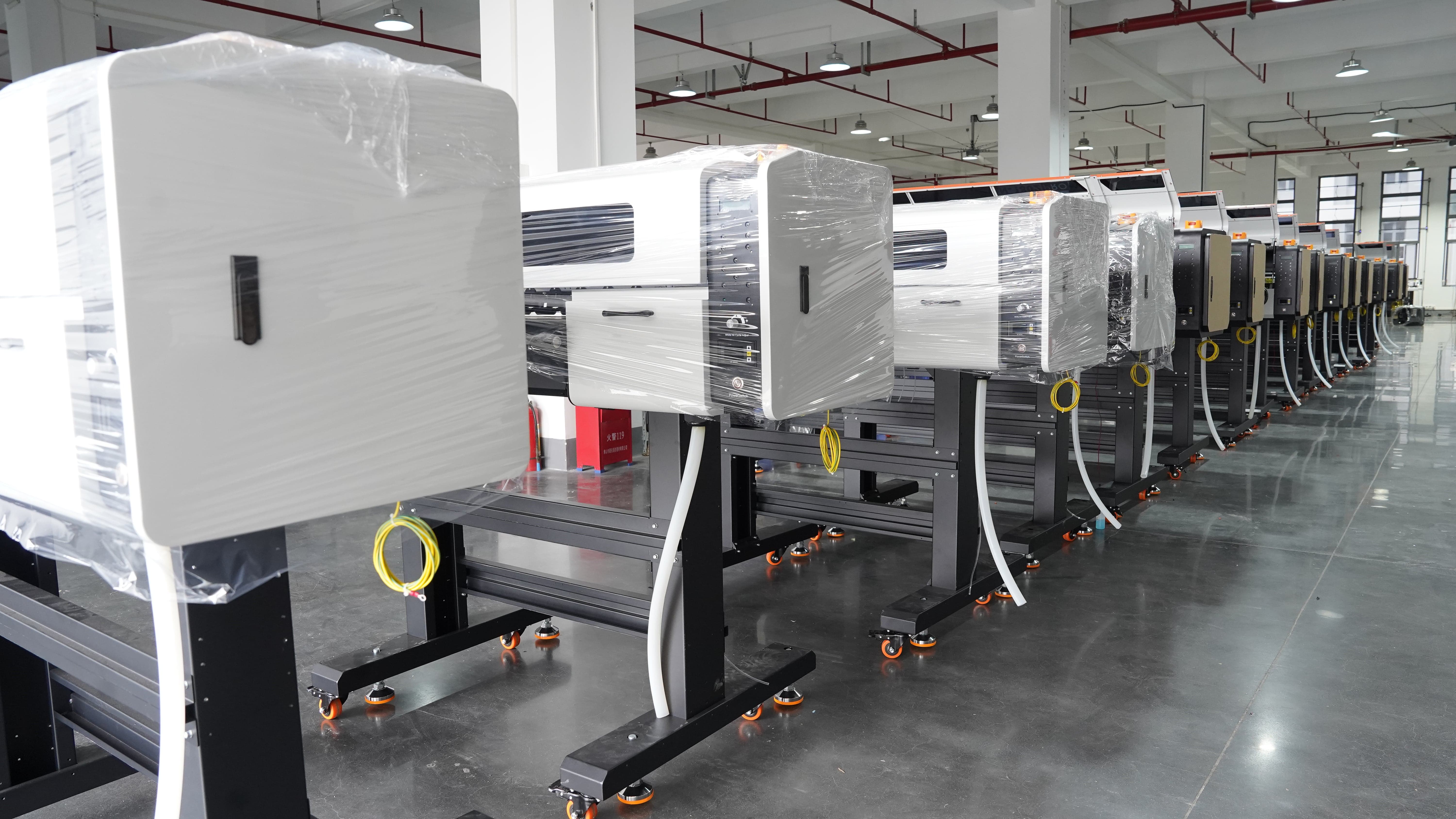
XINFLYING (Guangzhou Xin Flying Digital Technology Co., Ltd.) has manufactured digital printing equipment since 2010, including dye sublimation printers, DTF printers, DTG printers and UV equipment, at a 37,440 m² facility in Panyu, Guangzhou, and reports that roughly 80% of its output is exported. In OEM discussions with European and North American clients, the conversation usually moves quickly past speed and print width to a harder question: who is responsible for what once the client's name is on the label. This guide answers that question for buyers at the decision and execution stage — the duty split under the CE label, the checks that make ECO PASSPORT evidence usable for a compact model such as the XF-450PRO, the six stages of a partnership ramp, and the terms worth writing down before the first production batch.
What "long-term" adds compared with repeat purchasing
Long-term capability in a sublimation printer supplier is not the same thing as a long relationship. It is the ability to keep three variables stable at once while output grows. First, configuration stability: the platform, printhead set and ink system stay fixed long enough for the client's own technical file, declarations and marketing claims to remain accurate. Second, documentation continuity: certificates, test reports and manuals are re-issued when something changes, not only at the first order. Third, service continuity: spare parts, remote diagnostics and operator training remain available across the life of the installed base, not just inside the warranty window.
Most failures of an OEM relationship are documentation failures rather than mechanical ones. A platform is upgraded, the declaration is not refreshed, and a container is held at customs while the paperwork is reconstructed. Supplier-side procurement guidance in this category is explicit about the outcome: certification information that does not correspond to the equipment actually supplied can cause customs delays, sales restrictions and additional compliance costs. For a sublimation printer sold under a client label, that cost lands on the brand, not on the factory.
Why OEM programs cluster around apparel and home textiles
OEM activity in this category follows where the volume is. Smithers' dye-sublimation market work places the garments segment at 71.9% of total dye sublimation printing volume, which makes apparel and team sportswear the default target application for a badge-engineered machine. Grand View Research values the dye sublimation printing market at USD 16.4 billion in 2025 across printers, inks and consumables. Published estimates for the same category differ substantially because their scopes differ — some include downstream printed-fabric sales rather than the hardware and ink ecosystem — so pick one definition and use it consistently in any business case built on those numbers.
For an OEM program the practical consequence is narrow and useful: the platform mix that matters is 1.8 m to 2 m roll-to-roll, the duty cycle assumptions are production-line rather than studio, and the documentation that matters most is the set tied to apparel supply chains. A program built around home textiles, blankets, flags or soft signage uses the same machines but weights width, continuous duty and colour repeatability differently.
The CE label is a shared file, not a sticker
CE marking on a sublimation printing machine is the visible end of a chain of documents. The chain normally covers electrical safety, electromagnetic compatibility (EMC) and, where it applies to the equipment type, machinery safety, together with RoHS documentation for electrical and electronic components. Two failures recur in OEM supply. The first is a certificate that exists but does not name the model actually shipped. The second is a declaration that has not been updated after a component change. Both are avoidable with a duty table agreed before the first order.
| Item | Manufacturing partner (XINFLYING) | OEM brand / importer | Check before first shipment |
|---|---|---|---|
| Technical file | Compiles and maintains model-level technical documentation and test reports | Holds a copy that applies to the model it places on the market | File references the exact model code and configuration |
| Declaration of conformity | Supplies the declaration issued for the equipment | Issues its own declaration when the unit is placed on the market under its own name | The party named on the declaration is the party actually placing the unit on the market |
| CE marking and label | Applies marking and the machine label | Reviews model designation, label content and manual language | Label model code = invoice model code = certificate model code |
| RoHS | Provides component-level RoHS documentation | Files it with the technical documentation and passes it to distributors | Document applies to the electrical and electronic parts actually supplied |
| Ink chemical safety (ECO PASSPORT) | Provides the ink certificate whose scope covers the ink shipped | Confirms scope, product name and validity; never reuses a certificate for a different ink | Certificate product name = ink product code on the packing list |
| Change control | Notifies relevant component or ink changes | Re-reviews claims, artwork and documentation | Written notification clause with a defined notice period |
| Spare parts and service documents | Supplies parts list, maintenance schedule and service bulletins | Holds them for its own service network | Parts list covers the exact configuration ordered |
| After-sales route | Provides remote technical support and operator training | Handles first-line support or routes it to a distributor | Named escalation contact and defined response path |
This split is a planning tool, not a legal opinion. The binding allocation follows the rules applicable to the product and to the role each company actually plays, and a brand that places a machine on the market under its own name takes on obligations that a pure distributor does not. Confirm the final allocation with the client's compliance advisor before artwork, manuals or labels are printed.
The same logic applies to other destinations with a different document set. For US-bound shipments, FCC compliance is commonly required for electronic equipment to control electromagnetic interference, and additional safety certification may apply depending on the product specification and the sales channel. For a client selling into several regions from one production run, the practical answer is a single master document index with per-market columns, updated at each change — not a folder of PDFs assembled per order.
ECO PASSPORT and the XF-450PRO ink question
The CE file answers a machine-safety question. It does not answer a chemical question. That is the gap ECO PASSPORT fills: it is a third-party certification issued for textile chemicals, colorants and auxiliaries — that is, for the ink, not for the printer. Because the certificate attaches to a chemical product, an OEM partnership has to manage it as an ink document with an ink-level scope, and a printer-level claim is not a substitute for it.
For a compact machine such as the XF-450PRO, the review is the same as for a wide-format unit and takes four checks.
- Holder. The company named on the certificate should be the entity that actually produces or supplies the ink, not an intermediary whose name appears nowhere else in the technical file.
- Product identity. The certificate names a chemical product. Match that name to the ink product code on the packing list and to the ink set installed in the machine, not to the printer model name.
- Validity and status. Confirm the certificate is current and has not been superseded after a reformulation.
- Scope and criteria. Read the criteria from the issuer's own documentation rather than from a sales sheet. A scope that does not cover the dyes actually used does not transfer to the shipment.
Where the arrangement earns its keep is at the change boundary. If the ink supplier reformulates, the ECO PASSPORT scope changes, and any claim that rested on the earlier certificate has to be rewritten in the same cycle — product page, packaging copy, distributor deck and tender documentation alike. A partnership that schedules marketing and artwork updates around document renewals avoids the common situation where the machine is compliant but the published product page is not.
One caution applies to every model, including the XF-450PRO: the certificate and the machine label answer different questions, and neither one establishes that a printed article meets a specific customer's restricted-substance list or a specific fabric specification. Ask for the certificate, the test reports behind it and the ink code, and treat any chemical-safety claim you cannot trace to those three items as unverified until it is documented.
The partnership journey in six stages
Stage 1 — Define the production envelope. Agree the substrate and product family (polyester apparel, home textiles, blankets, soft signage), the expected duty cycle and the site conditions before discussing hardware. XINFLYING's documented operating envelope for these machines is a controlled indoor environment at 18–30°C and 35–65% RH, with continuous 24/7 operation contemplated for production lines, supported by RIP software, a heat-press calender, sublimation paper and sublimation ink. A machine specified for continuous duty but installed in an uncontrolled unit becomes a service dispute, whatever the certificate says.
Stage 2 — Choose the platform against volume, not the brochure. The three platforms most often discussed in OEM programs differ mainly in printhead count, width and stated throughput.
| Model | Printheads | Width / resolution | Stated maximum speed | Program fit |
|---|---|---|---|---|
| XF-H1802X-2I32A1 | 2 × Epson i3200-A1 | 1800 mm | up to 52 ㎡/h | Sampling, small-batch and entry programs |
| XF-O2000-4I32A1 | 4 × Epson i3200-A1 | 1950 mm | up to 180 ㎡/h | Continuous daily production |
| XF-19E8-PRO | 8 × Epson i3200-A1 | 3200 dpi | up to 306 ㎡/h | High-volume industrial lines |
These are manufacturer-stated figures. Before a speed figure enters a tender document or a distributor price book, ask for the pass mode and test conditions behind it, and write the agreed reference mode into the OEM specification. A throughput number without a mode is a marketing number.
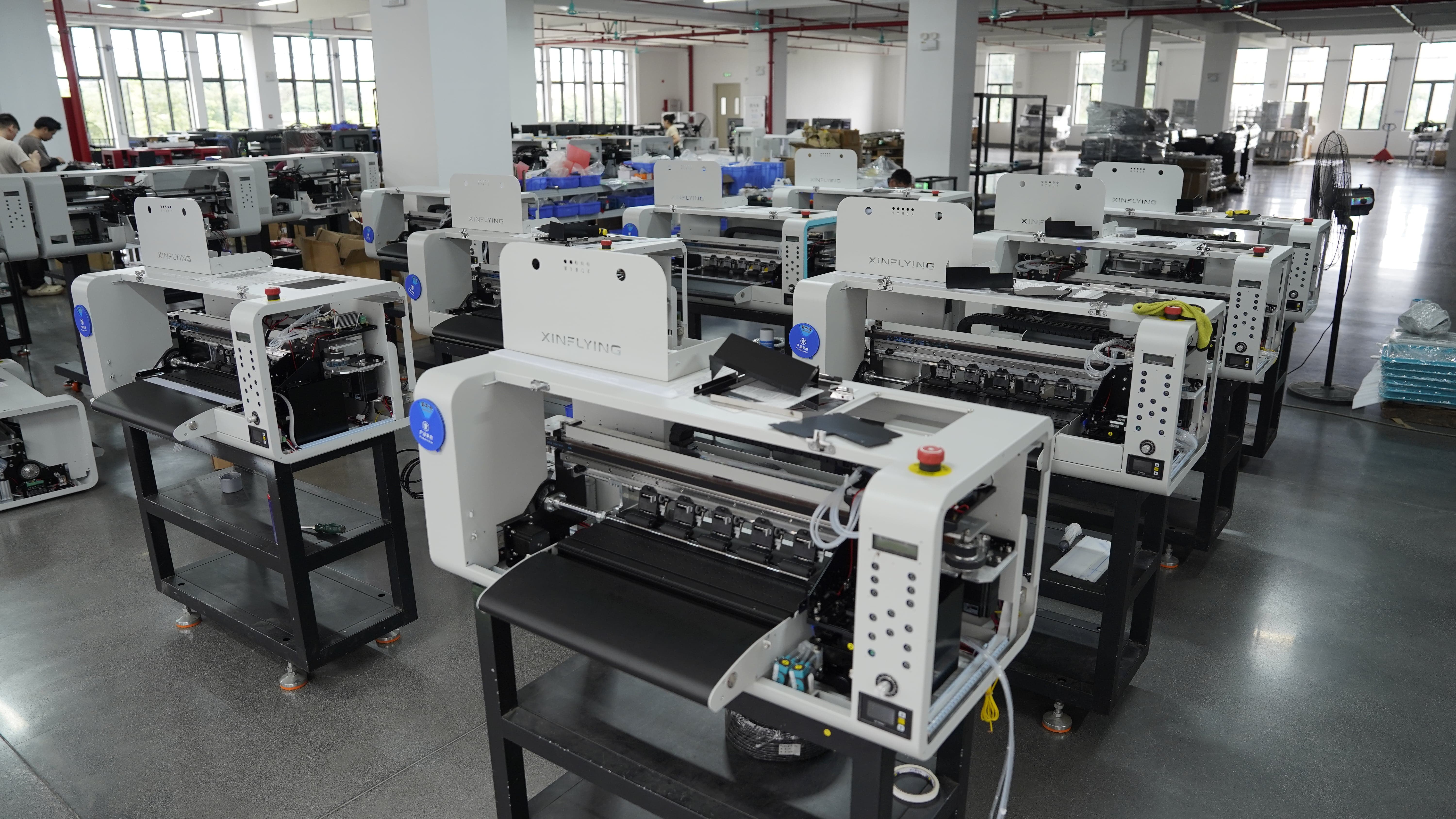
Stage 3 — Sample and pre-shipment test. The stated acceptance criterion in XINFLYING's purchasing terms is pre-shipment test. Define what is tested rather than accepting a pass stamp: nozzle check, colour target against the client's ICC profile, alignment, and a transfer run on the client's own fabric. Sampling is the inexpensive stage; a mis-specified platform discovered at installation is the expensive one.
Stage 4 — Documentation handover. At handover the OEM client should hold: model-level technical documentation and test reports for electrical safety and EMC; RoHS documentation for the electrical and electronic components; the ECO PASSPORT certificate whose scope matches the ink code; the operation manual and maintenance schedule; the RIP and colour-profile set; the spare parts list; and the declaration of conformity for the exact configuration shipped. If the twenty-engineer R&D and quality organisation behind the platform cannot produce that set for one unit, it will not improve at fifty.
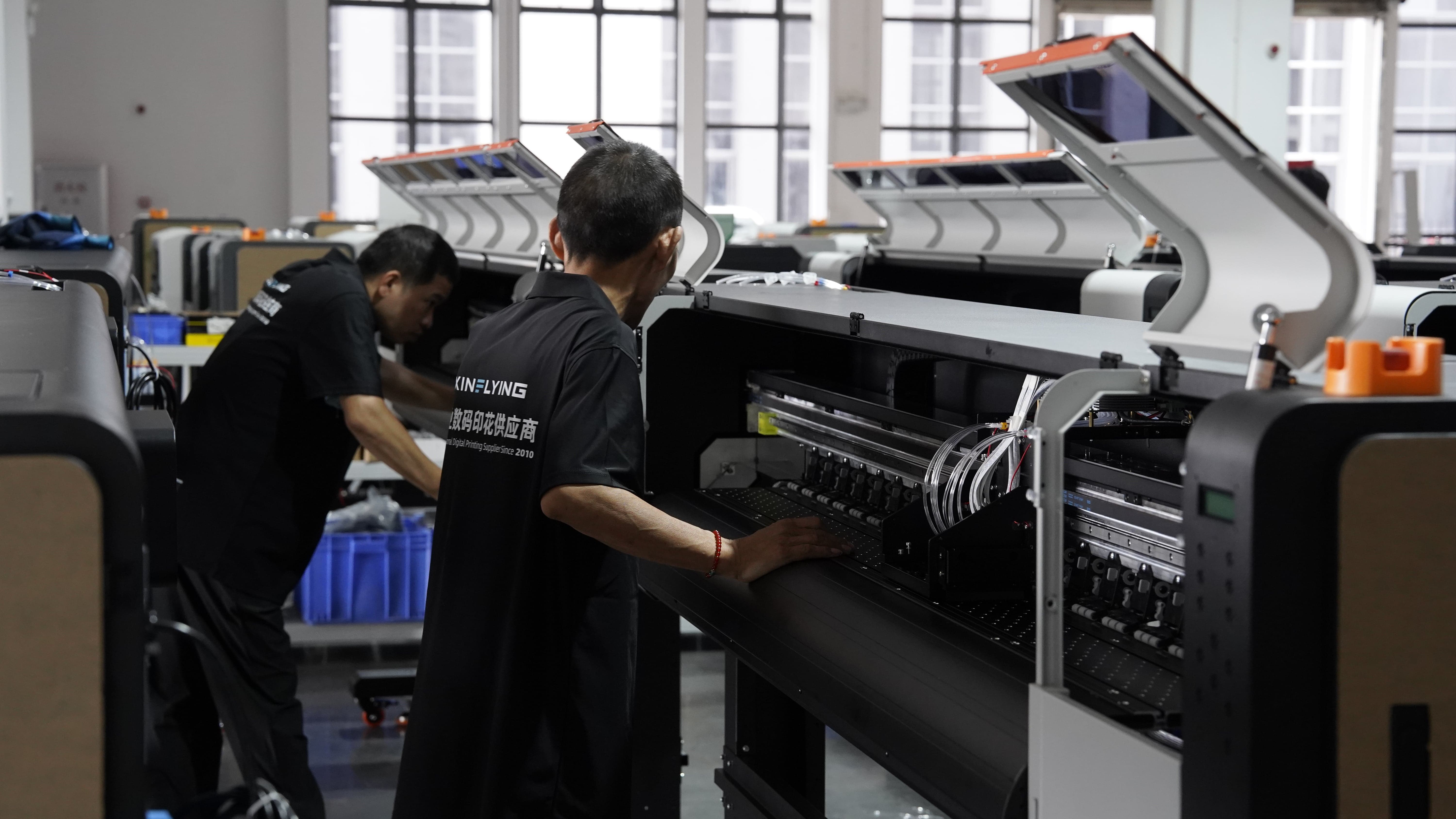
Stage 5 — Label and claim review. Once the client's name goes on the machine, four things come under review in the same meeting: the label model code, the party named on the declaration, the manual and safety language for each destination market, and every downstream claim in the product page, packaging and distributor material. This is where OEM relationships most often drift, because sales copy is written by people who never see the technical file.
Stage 6 — Ramp and change control. The aftermarket is part of the product. Installation guidance, remote technical support, operation training, maintenance recommendations and long-term spare parts availability are the factors named in supplier-side risk guidance as determining downtime exposure, and they belong in the agreement as commitments with named contacts rather than as service promises. Pair them with a notice period for component and ink changes.

Where the shared-responsibility model pays off
Sportswear and team kit. German textile manufacturer TRIGEMA describes sublimation customization as particularly suitable for sports and functional shirts with multiple logos or full-surface designs. For an OEM program this translates into two document-controlled requirements: colour repeatability across reorders and a fixed ink set that does not change mid-season.
Home textiles and blankets. Wide-format roll-to-roll output carries the volume, and the constraint is width plus continuous duty. The document constraint is that fabric-composition claims must match what the process can achieve on that substrate; a sublimation printer for blankets is a polyester-based proposition.
Soft signage, flags and banners. Short runs with frequent design changes put the emphasis on workflow and RIP discipline rather than hardware. The OEM partner's exposure here is claim accuracy, not machine capability.
Apparel sampling. A two-head platform such as the XF-H1802X-2I32A1, with an 1800 mm width and a stated maximum of 52 ㎡/h, is positioned for sampling and small-batch orders — the natural first phase before an industrial line is committed.
The polyester boundary. Sublimation printing works best on polyester and polyester-coated substrates; one printing-process reference identifies at least 80% polyester content as particularly suitable, a threshold that should not be generalised to every ink or substrate combination. Programs promising cotton performance under a sublimation label are heading for a claim dispute, since cotton is normally served by other processes.
Commercial terms worth fixing in writing
| Term | Stated position | Why it matters to an OEM program |
|---|---|---|
| Minimum order quantity | 1 unit | A single unit can be evaluated before a program is committed |
| Delivery terms | EXW / FOB / CIF / DDP | Determines who controls import clearance and the compliance file at the border |
| Acceptance criteria | Pre-shipment test | Defines the point at which configuration and performance are signed off |
| Payment terms | T/T, Western Union, PayPal | Sets cash-flow structure for pilot and volume orders |
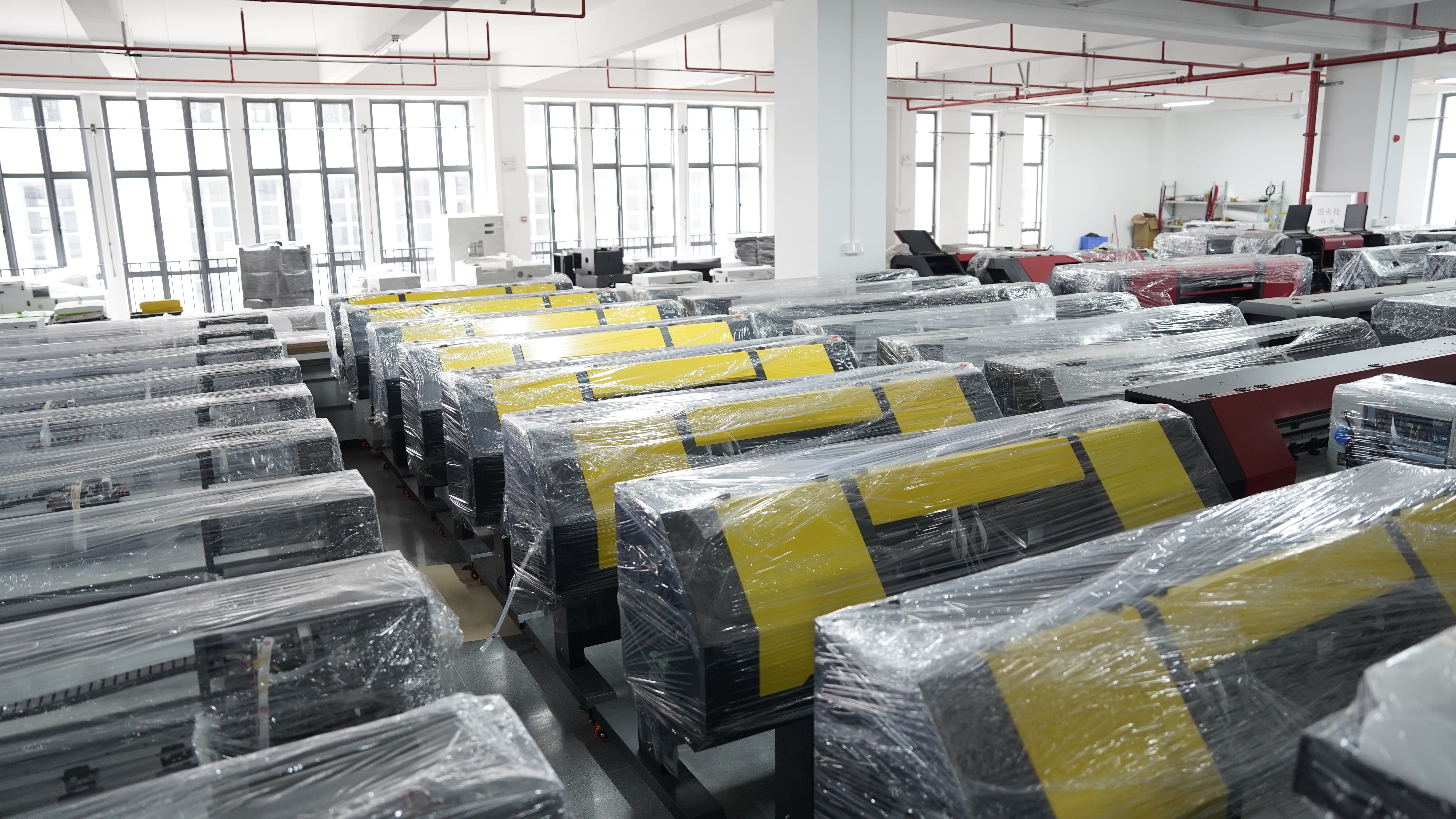
Price, lead time and warranty for a specific configuration are quoted per project; the table above describes the commercial frame, not a quotation. Capacity context is also company-reported: XINFLYING states an annual output of more than 20,000 units of digital printing equipment, 200+ employees and 20 R&D engineers. Treat those figures as a claim to be verified during a factory audit rather than as a substitute for one — the audit is where an OEM program confirms that reported capacity carries the model mix the brand actually intends to sell.
What this arrangement does not solve
Four limits are worth stating plainly before a program is signed. A CE technical file and a declaration of conformity confirm conformity of the machine to the applicable requirements; they say nothing about how well that machine will print on your specific fabric. An ECO PASSPORT certificate covers a chemical product; it does not certify a printed article against every customer's restricted-substance list. Sublimation remains a polyester-oriented process, so cotton and many dark blends are better served by DTG or DTF routes depending on the product mix. And an OEM agreement transfers manufacturing and documentation duties, not market access — local registration, distributor support and service coverage in the destination market remain the brand's work.
Frequently asked questions
Which compliance documents should an OEM buyer hold before a CE-labelled sublimation printer ships?
A model-level technical file and test reports for electrical safety and EMC, the declaration of conformity issued for the exact configuration, RoHS documentation covering the electrical and electronic components, and — for the ink — the chemical-safety certificate whose scope matches the ink code supplied. The working rule is that the model code on the label, on the invoice and on the certificate must be identical. Documents naming a different model or a superseded configuration do not transfer compliance to the shipment.
How should ECO PASSPORT evidence be checked for a model such as the XF-450PRO?
Treat it as an ink document rather than a machine document. Confirm the certificate holder, the exact chemical product name, current validity, and that the product name matches the ink code on the packing list; then read the criteria from the issuer's documentation. Because ECO PASSPORT is issued for textile chemicals, a printer-level statement is not an equivalent. Re-check the scope whenever the ink is reformulated, before the next production batch.
What makes a sublimation printer supplier suitable for long-term textile production?
Four things beyond machine specification: configuration stability, so that documents and marketing claims stay valid; spare parts availability over the life of the installed base; installation guidance, remote technical support and operator training; and a written change-notification process. Capacity evidence supports the assessment but does not replace it — XINFLYING reports a 37,440 m² facility, 200+ employees, a 20-engineer R&D team and more than 20,000 units of annual output, figures best confirmed through a factory audit and a reference check with existing accounts.
What are the standard purchasing terms for an OEM order?
The stated commercial frame is a minimum order quantity of one unit, delivery on EXW, FOB, CIF or DDP terms, acceptance based on pre-shipment test, and payment by T/T, Western Union or PayPal. Price, lead time and warranty for a specific configuration are quoted per project, so the frame above is the starting structure rather than a quotation.
Can a brand evaluate a machine before committing to a full OEM program?
Yes. Sampling and small-batch production are the intended first phase, and a two-head platform such as the XF-H1802X-2I32A1 is positioned for apparel sampling and small-batch orders before an industrial line is committed. Use that phase to test the documentation handover as well as the print result: a certificate set that is incomplete for one unit will not improve at fifty. XINFLYING's company profile and equipment portfolio can be reviewed in the downloadable brochure before a technical discussion begins.
Conclusion
Long-term capability in a sublimation printer OEM partnership is built on four documents and one habit. The documents are the model-level technical file and test reports, the declaration of conformity for the exact configuration, the RoHS file for the electrical and electronic components, and the ECO PASSPORT certificate whose scope matches the ink actually shipped — including for a compact model such as the XF-450PRO. The habit is checking all four against the model code and ink code on every shipment and every change, rather than once at the first order.
Everything else in the relationship — platform selection between the XF-H1802X-2I32A1, XF-O2000-4I32A1 and XF-19E8-PRO, the sampling phase, pre-shipment testing, training and spare parts — works predictably once that duty split is written down. Brands evaluating a China sublimation printer supplier for a roll-to-roll OEM program can request the current company brochure and the model documentation set for the platform under consideration, then confirm scope and configuration in a written quotation.
Company brochure (PDF, public download): XINFLYING Corporate Introduction. For documentation requests, contact info@xin-flying.com or WhatsApp +86 188-1322-1357.
Have Questions or Need More Details?
Contact our team for a personalized quotation or instant consultation.
Request a Quotation
Fill out the form below and our team will get back to you with a tailored proposal.
WhatsApp Direct Chat
Prefer to chat in real-time? Message us on WhatsApp for instant assistance & quick answers.
- Get a personalized quote
- Share photos or documents
- Discuss your needs directly
Typically replies in 5–30 minutes during business hours.