
XF-19E15-PRO vs XF-19E8-PRO: 1900mm Sublimation Printer Decision
XF-19E15-PRO vs XF-19E8-PRO: Choosing a 1900mm Sublimation Printer
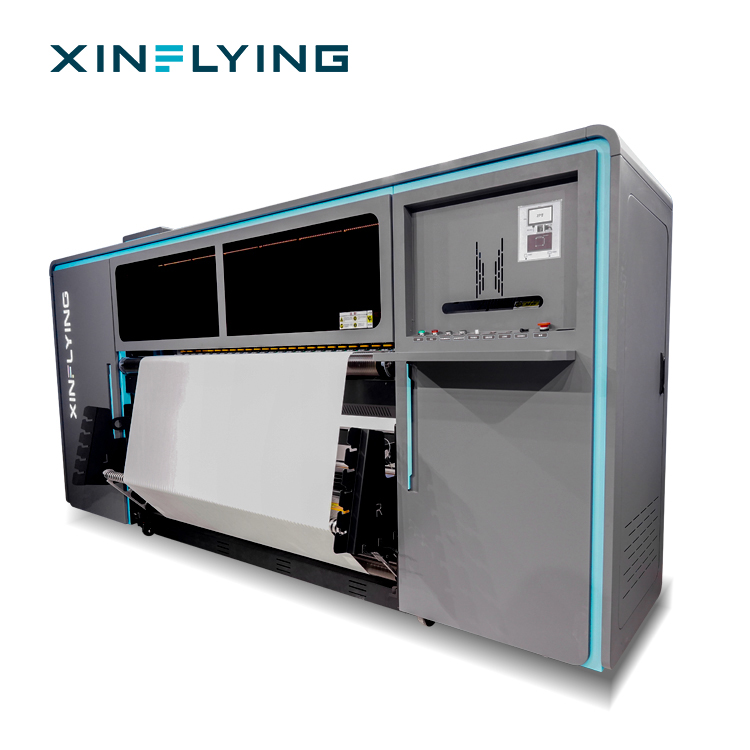
Choosing between the XF-19E15-PRO and the XF-19E8-PRO is not a question of which 1900mm industrial sublimation printer is "better". Both are 1900mm roll to roll dye sublimation printers from Guangzhou Xin Flying Digital Technology Co., Ltd. (Xinflying), and both sit on the same CE baseline: LVD, EMC and RoHS coverage. The visible difference sits in the CE Machinery Directive certificate — M.2026.206.C142365 for the XF-19E15-PRO and M.2026.206.C142385 for the XF-19E8-PRO. For a buyer at decision stage, that number is usually what settles which machine goes on the purchase order, because it is the number your importer will trace, quote and file.
This guide therefore treats the choice as a documentation decision first and a configuration decision second. It maps what the two models share, isolates what genuinely differs, explains the standards that appear in their EMC and machinery safety paperwork, and sets out a seven-step audit you can run before releasing a PO. Performance figures are labelled as company-published and tied to the conditions that make them comparable, because unqualified speed claims are the least reliable input into a 1900mm printer decision.
Two 1900mm printers, one family, two model identities
Xinflying is a digital printing equipment manufacturer founded in 2010, operating a 37,440 m² facility with 200+ employees and a 20-engineer R&D team. The company reports an annual output of more than 20,000 units across its DTF, UV, DTG and dye sublimation ranges — a company-reported figure rather than an independently audited one — with roughly 80% of output exported to North America, South America, Europe, Asia, the Middle East and Africa.
Within that range, the XF-19E15-PRO and the XF-19E8-PRO are two distinct models in the same 1900mm class. They are close enough that a distributor can quote either against one end-use brief — polyester apparel, sportswear, home textiles, soft signage — yet they are not interchangeable on paper. Each carries its own model designation, its own certificate number and its own datasheet. That distinction matters because EU market documentation is model-specific: a technical file assembled around one model does not describe the other, even when two machines look identical in a product photograph.
The practical consequence is straightforward. Lock the model before you build the file, not afterwards. A buyer who orders "a 1900mm Xinflying sublimation printer" and only later discovers which model arrived will usually have to reissue the documentation set, and sometimes the declaration of conformity as well.
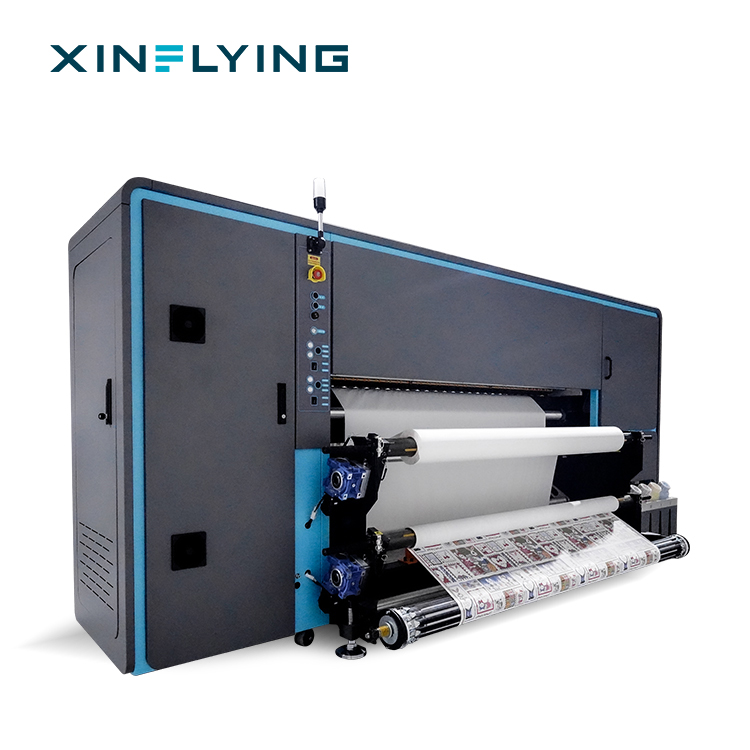
The Machinery Directive certificate is the decision hinge
Three CE routes are named in the documentation for both models: the Low Voltage Directive for electrical safety, the EMC Directive for electromagnetic compatibility, and the Machinery Directive for the machine as a whole. LVD, EMC and RoHS coverage is common to the pair. The Machinery Directive certificate is not. The XF-19E15-PRO is documented under M.2026.206.C142365; the XF-19E8-PRO under M.2026.206.C142385.
A certificate number is not decoration. It is the traceable link between three documents that must agree: the certificate held by the manufacturer, the declaration of conformity issued for the machine, and the technical file your importer or authorised representative keeps. When all three agree, a market-surveillance query becomes a filing exercise. When they do not — a certificate number belonging to the sibling model, a model designation that does not match the nameplate, or an outdated document version — the same query becomes a shipment-level problem.
Model-to-certificate map:
- M.2026.206.C142365 → XF-19E15-PRO
- M.2026.206.C142385 → XF-19E8-PRO
Check that the number appears identically in the supplier's quotation pack, the certificate file and the declaration of conformity. A transposed digit is the kind of defect that survives an otherwise complete file, and it is far cheaper to catch before the container is loaded than after.
What the shared LVD, EMC and RoHS layer actually covers
Because both models carry LVD, EMC and RoHS coverage, neither one forces you to re-baseline your compliance template. You can move an order from one model to the other and keep the same document structure, the same internal owner and the same reviewer checklist. For a distributor holding both machines in a catalogue, that is a genuine operational saving rather than a marketing point.
The three routes answer different questions:
- LVD addresses the electrical safety of the machine's electrical equipment — the part of the file that a workshop electrician and an external safety reviewer will both open first.
- EMC addresses the printer both as a source of electromagnetic disturbance and as equipment that must keep operating in a disturbed industrial environment. On a 1900mm roll to roll line sharing a floor with calenders, cutters, compressors and shop-floor networks, this is the route that most often turns into a practical installation question rather than a paperwork one.
- RoHS addresses restricted substances in electrical and electronic equipment. Treat it as machine-level evidence: it is not, by itself, a statement about ink chemistry or transfer paper, which belong to a separate consumables conversation with your ink and paper suppliers.
Keeping that boundary explicit prevents a common review error — filing a machine-level RoHS document as though it covered the whole production process, including consumables it was never written for.
The five standards behind the paperwork
Both models' documentation cites the same standards list. That is useful for the decision: the comparison between them is not a comparison of standards coverage, but of model identity, configuration and how cleanly each file can be assembled and defended.
- EN 55032:2015 — the emission requirements standard cited in the EMC documentation. For a reviewer, it establishes what the printer's electromagnetic emissions were assessed against.
- EN 55035:2017/A11:2020 — the immunity counterpart, covering how the equipment is expected to behave when subjected to external disturbance. Confirm the amendment reference A11:2020 is printed in full in your copy; a truncated citation invites a follow-up question that costs time.
- EN ISO 12100:2010 — the general machinery risk assessment and risk reduction framework. This is where a reviewer expects evidence that hazards were addressed by design, not only by warning labels.
- EN 60204-1:2018/A1:2025 — electrical equipment of machines. Note the A1:2025 amendment: it is recent, so confirm the copy in your file carries the amended citation rather than the base edition.
- EN ISO 12643-1:2023 — the graphic technology equipment safety standard, the printing-specific layer on top of the general machinery principles. For a 1900mm sublimation printing machine, this is the citation that shows the file was assessed as printing equipment rather than as generic industrial machinery.
None of these citations tells you which printer produces better output. What they tell you is whether the file you are about to build will clear a technical review without an extra round of questions — and for a decision-stage buyer, that is a cost you can estimate in advance.
A seven-step documentation audit before you release the PO
The following sequence works for either model. Run it once per model designation, and keep the completed pack as the baseline for repeat orders.
1. Freeze the model and the configuration in writing
Put the exact designation — XF-19E15-PRO or XF-19E8-PRO — plus width, printhead configuration and any options into the quotation and the PO. "1900mm sublimation printer" is a category, not a specification, and a category cannot be matched against a certificate.
2. Request the four-document set as a single package
Ask for the LVD, EMC, RoHS and Machinery Directive documents in one response, each bearing the model designation. Requesting them together makes version drift between attachments visible; collecting them one email at a time hides it.
3. Trace the certificate number to the model
M.2026.206.C142365 belongs to the XF-19E15-PRO; M.2026.206.C142385 belongs to the XF-19E8-PRO. Confirm the number is identical across the certificate, the quotation and the declaration of conformity, and that the model designation beside it matches the machine you are buying.
4. Check the standards list against your file template
The five citations above should appear with full designations, including amendment years. If your importer's reviewer expects a particular citation format or a specific technical-file index, align it at quotation stage rather than at customs.
5. Ask for validity and version status in writing
A certificate is a controlled document. Ask the supplier to confirm that the version you have received is the current one, and to notify you if a later version replaces it. A short written statement is enough; an assumption is not.
6. Name the signatory and the technical-file holder
Establish who signs the declaration of conformity, where the technical file is held and how long it is retained, and record that in the supply agreement rather than in a chat thread. This is the step most often skipped and the one most often needed two years later.
7. Re-verify at shipment
Photograph the machine nameplate showing model and serial number, confirm the packing list matches the PO model, and confirm the document pack travels with the shipping documents. The nameplate is the last inexpensive checkpoint before the container closes.
Matching the model to the production plan
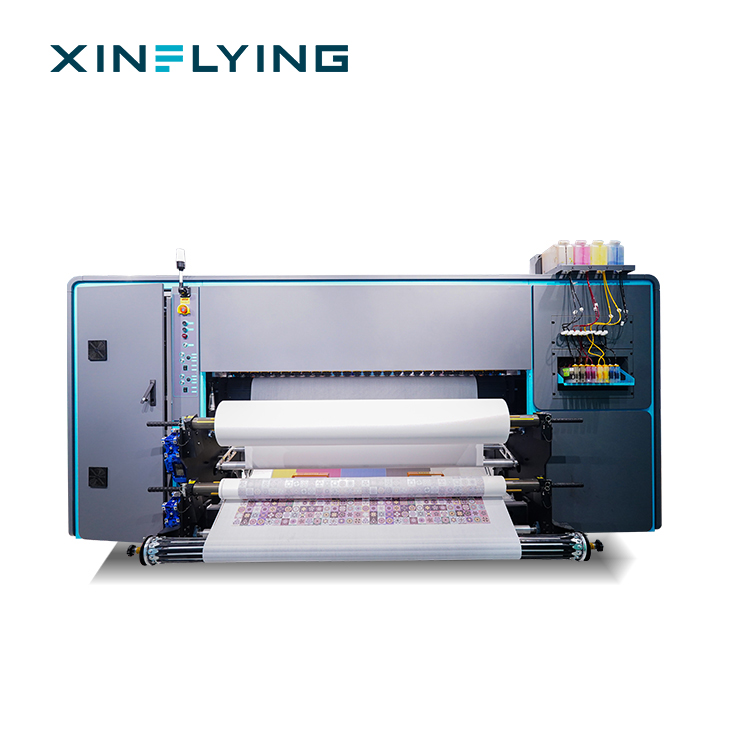
With documentation neutralised as a differentiator — both models clear the same baseline — the remaining question is configuration and line fit. Xinflying's published specification for the XF-19E8-PRO is eight Epson i3200-A1 printheads, 3200 dpi resolution and printing speeds up to 306 ㎡/h, positioned for textile factories, large garment manufacturers and professional sublimation production centres. For the XF-19E15-PRO, use the figures published for that model's own configuration. Rated throughput is only comparable when pass mode, ink set and media are identical; mixing figures from different datasheets, or from different pass modes, produces a business case that will not survive an internal challenge.
Three buyer situations tend to resolve the choice on their own:
- First EU-facing line. Start with the model whose complete document set you can assemble and verify first. File-assembly speed carries a real cost: a machine that clears documentation in three weeks is worth more to the launch date than a nominally faster machine that clears it in three months.
- Adding capacity to an existing line. If your technical file, spare-parts list and operator training are already built around one of the two models, staying with that model usually costs less than the marginal configuration difference is worth.
- Distributor building a catalogue SKU. Stocking both models means one compliance template and two model-specific certificate numbers — manageable, provided the numbers are never mixed on the same quotation or the same invoice line.
Application fit is shared rather than differentiating. Dye sublimation transfers dye into polyester-rich material through heat, and an independent printing-process guide describes textiles of at least 80% polyester, or polyester-coated substrates, as particularly suitable — a useful screening rule rather than a universal threshold for every ink and substrate combination. TRIGEMA, a German textile manufacturer, describes sublimation customisation as particularly suitable for sports and functional shirts with multiple logos or full-surface designs. Smithers places the garments segment at 71.9% of total dye sublimation printing volume, which is why both machines are positioned around apparel rather than around general signage. For context on scale, Grand View Research valued the global dye sublimation printing market at USD 16.4 billion in 2025 — a figure covering printers, inks and consumables rather than hardware alone.
Side-by-side comparison
The table separates the two categories of evidence a decision file needs: what is identical, and what must be matched to the model.
| Decision point | XF-19E15-PRO | XF-19E8-PRO | What it changes in your file |
|---|---|---|---|
| Print width class | 1900 mm | 1900 mm | Same fabric width envelope; no change to the media plan |
| CE LVD coverage | Documented | Documented | One electrical-safety route serves both models |
| CE EMC coverage | Documented | Documented | One EMC route serves both models |
| CE RoHS coverage | Documented | Documented | Machine-level substance evidence for both |
| CE Machinery Directive certificate | M.2026.206.C142365 | M.2026.206.C142385 | The number must equal the model named on your declaration of conformity |
| EMC standards cited | EN 55032:2015; EN 55035:2017/A11:2020 | EN 55032:2015; EN 55035:2017/A11:2020 | Identical list, so the comparison is like for like |
| Machinery safety standards cited | EN ISO 12100:2010; EN 60204-1:2018/A1:2025; EN ISO 12643-1:2023 | EN ISO 12100:2010; EN 60204-1:2018/A1:2025; EN ISO 12643-1:2023 | Identical list; check amendment years are printed in full |
| Published configuration and output | Request the datasheet for this model | 8 × Epson i3200-A1; 3200 dpi; up to 306 ㎡/h (company-published) | Configuration, not certification, drives throughput planning; compare the same pass mode and media |
Frequently asked questions
Which sublimation printer manufacturer is better for textile production?
For EU-bound textile production, the stronger manufacturer is the one whose certificate set traces to the exact model you buy and whose technical file you can audit before the PO — not simply the one with the longest reference list. Both models discussed here come from the same manufacturer, Guangzhou Xin Flying Digital Technology Co., Ltd. (Xinflying), founded in 2010 with a 37,440 m² factory, a 20-engineer R&D team and a company-reported annual output of more than 20,000 units. That separates the two questions: choose the manufacturer on documentation, service and spare-parts support, then choose between the XF-19E15-PRO and the XF-19E8-PRO on configuration and file fit.
Do the XF-19E15-PRO and XF-19E8-PRO have the same CE certification?
Only partly. Both carry CE LVD, EMC and RoHS coverage and cite the same standards list — EN 55032:2015, EN 55035:2017/A11:2020, EN ISO 12100:2010, EN 60204-1:2018/A1:2025 and EN ISO 12643-1:2023. Their CE Machinery Directive certificates are separate documents: M.2026.206.C142365 for the XF-19E15-PRO and M.2026.206.C142385 for the XF-19E8-PRO. Treat the shared baseline as a reusable template and the certificate number as model-specific evidence that has to match the machine named on your declaration of conformity.
Which standards should appear in the EMC and machinery safety documents for a 1900mm sublimation printer?
The documentation for both models cites EN 55032:2015 and EN 55035:2017/A11:2020 on the EMC side, and EN ISO 12100:2010, EN 60204-1:2018/A1:2025 and EN ISO 12643-1:2023 on the machinery safety side. Two checks are worth making on the copies you receive: that amendment references such as A11:2020 and A1:2025 are printed in full rather than truncated, and that the printing-equipment standard EN ISO 12643-1:2023 is present, since it shows the machine was assessed as graphic technology equipment rather than as generic industrial machinery.
Which model should a first-time EU importer choose?
Choose the model whose complete document set you can verify first, then confirm the configuration against your production plan. Print width does not separate them — both are 1900mm machines — so the tie-breakers are file completeness and configuration, not the CE baseline, which is shared. Request both certificate sets, compare how quickly each can be assembled into your technical-file template, and only then compare published output figures on matched pass modes and media. There is no evidence in this comparison that one model is certified to a higher CE standard than the other.
What should be verified on the sample or pre-shipment check?
Keep the two questions apart. A sample print run confirms configuration and output — printhead configuration and resolution as stated on the model datasheet, colour consistency and media handling — but it does not verify compliance, which is a document question. On the document side, verify the nameplate model and serial number, the certificate number against the model, the completeness of the five-standard list, and that the packing list and document pack match the PO. Photograph the nameplate before the container closes.
How should documentation be handled in the PO and delivery schedule?
Name the exact model designation and its certificate number in the PO, require the four-document set as a pre-shipment condition, and agree in writing who holds the technical file and for how long. Keep a version log so that a later document revision can be traced to the machines it covers. Xinflying's company profile brochure summarises the manufacturing base, product range and certification background and can be downloaded here: Xinflying company profile (PDF). For a model-specific datasheet or certificate set, the team can be reached at info@xin-flying.com or +86 188-1322-1357.
The decision rule, stated plainly
Between the XF-19E15-PRO and the XF-19E8-PRO, the CE LVD, EMC and RoHS baseline is shared, the standards list is identical, and the print width class is the same. What differs is the model identity recorded in the CE Machinery Directive certificate: M.2026.206.C142365 for the XF-19E15-PRO, M.2026.206.C142385 for the XF-19E8-PRO. Choose the model whose number you can trace cleanly from certificate to declaration of conformity to technical file, then confirm the configuration against your production plan using figures published for that exact model and the same pass mode.
That approach keeps the decision defensible. It avoids paying a premium for a certification difference that does not exist, and it avoids the more expensive error of importing a machine whose file describes its sibling.
Next step for buyers at decision stage: request the datasheet and the full four-document certificate set for the model you are considering, run the seven-step audit against it, and compare the two models on matched conditions rather than on headline figures.
Xinflying · Email: info@xin-flying.com · Tel / WhatsApp: +86 188-1322-1357 · www.xin-flying.com
Have Questions or Need More Details?
Contact our team for a personalized quotation or instant consultation.
Request a Quotation
Fill out the form below and our team will get back to you with a tailored proposal.
WhatsApp Direct Chat
Prefer to chat in real-time? Message us on WhatsApp for instant assistance & quick answers.
- Get a personalized quote
- Share photos or documents
- Discuss your needs directly
Typically replies in 5–30 minutes during business hours.