
What Is a Sublimation Printer? A Textile Production Overview
A sublimation printer is a specialized digital textile machine that uses heat-sensitive sublimation ink to transfer full-color designs permanently onto polyester fabrics and coated materials. For apparel manufacturers, textile producers, and print service providers, it is the core production tool for sportswear, home textiles, soft signage, and customized fabric products.
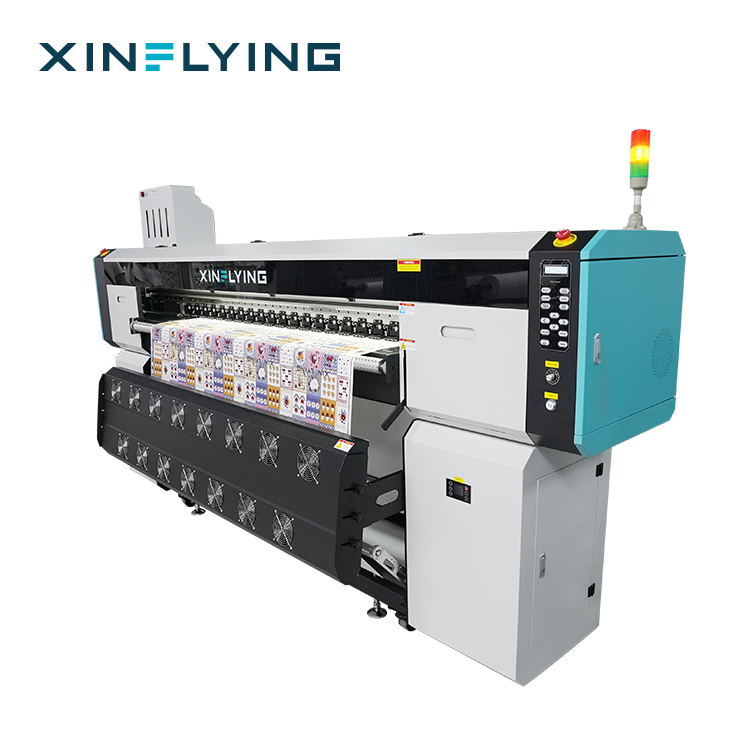
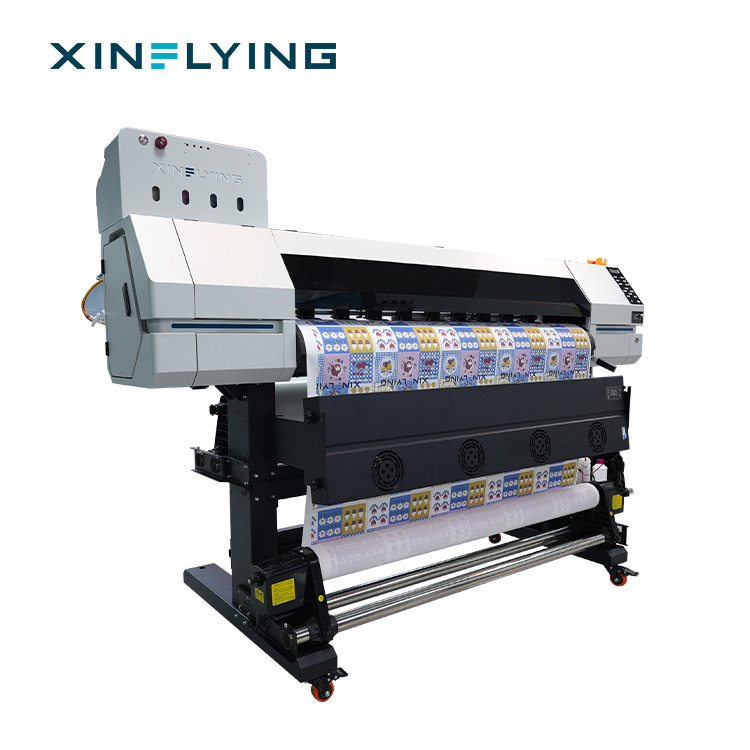
XinFlying sublimation printer XF-O2000-4I32A1
Why Sublimation Printer Research Can Feel Overwhelming
At the early research stage, most buyers are not looking for one specific model. They are looking for a basic understanding: what makes a dye sublimation printer different from other printing equipment, why some large format sublimation printers cost far more than desktop units, and which features actually affect production output. Without this baseline, technical specifications such as printhead count, print speed, and RIP software can be difficult to interpret.
Another common problem is misjudging production scale. A company that plans to print small-batch custom T-shirts may not need a 1.9m industrial machine, while a textile mill producing thousands of meters of printed polyester fabric each week cannot rely on an entry-level sublimation printer. The right starting point is to understand the technology and the equipment categories available.
Industry Background: The Growing Demand for Dye Sublimation Printing
Dye sublimation printing has become a standard production method for polyester-based textile products. According to Grand View Research, the global dye sublimation printing market was valued at USD 16.4 billion in 2025 and is projected to reach USD 39.0 billion by 2033, registering a CAGR of 11.5% from 2026 to 2033. The same report found that Asia Pacific accounted for 36.5% of global revenue in 2025, led by China.
At the equipment level, Mordor Intelligence estimated that the dye sublimation printer segment was worth USD 1.88 billion in 2025 and is expected to grow to USD 2.53 billion by 2030. Another report from Fortune Business Insights valued the large format printer market at USD 10.57 billion in 2025, with a projection of USD 16.52 billion by 2034. These figures reflect the rising use of digital textile printing in sportswear, custom apparel, home decor, and promotional products.
For buyers searching for a china sublimation printer, the country’s dominant position in the dye sublimation market means they can source from a deep manufacturing base. One such manufacturer is Guangzhou Xin Flying Digital Technology Co., Ltd., also known as XINFLYING.
How Dye Sublimation Printing Works
In dye sublimation printing, the printer does not print directly on the final fabric. Instead, it prints a mirrored image on sublimation transfer paper using special dye sublimation ink. The printed paper is then placed against a polyester fabric and subjected to controlled heat and pressure. At the right temperature, the solid ink particles turn into gas and penetrate the polyester fibers. When the fabric cools, the dye returns to a solid state inside the fiber, creating a permanent, soft-hand print that does not crack or peel.
This is why a sublimation printer requires special ink and polyester-based materials. The chemical bond between the dye and polyester is essential for durable results. Natural fibers such as cotton do not provide the same bonding capability, so sublimation is mainly used for polyester fabrics and polyester-coated products.
XINFLYING’s Sublimation Printer Product Line
Guangzhou Xin Flying Digital Technology Co., Ltd. was established in 2010 as a professional manufacturer of digital printing equipment. The company specializes in DTF printers, UV DTF printers, UV printers, DTG printers, and dye sublimation printing solutions. Its main products include DTF printer machines, dye sublimation printers, DTG printers, UV DTF printers, UV flatbed printer machines, printing consumables, and complete digital printing solutions. The manufacturing facility covers 37,440 square meters, employs more than 200 staff, and has an annual production capacity exceeding 20,000 units. The R&D team consists of 20 engineers.
Within the sublimation printer category, XINFLYING offers five digital textile printer models spanning from entry-level to high-volume industrial production.
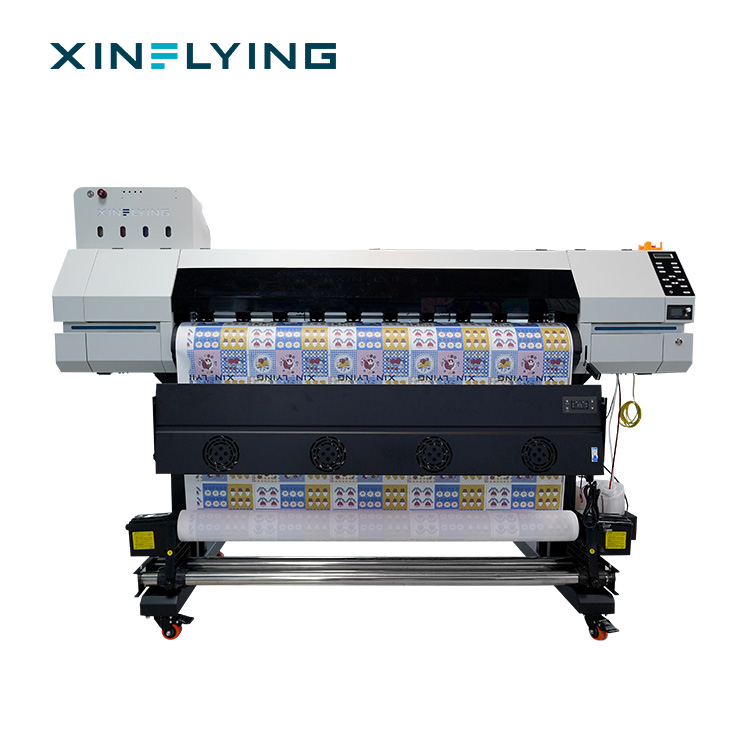
XINFLYING XF-H1301X-1I32A1 entry-level sublimation printer
- XF-H1301X-1I32A1 is a digital textile printer classified as a sublimation printer. It is designed for textile sublimation printing on polyester fabrics and intended for textile sublimation printing scenarios. It has a print width of 130 cm.
- XF-H1802X-2I32A1 is a wide-format digital textile printer manufactured by XinFlying. Classified as a sublimation printer, it is intended for the textile sublimation printing industry and designed for textile sublimation printing on polyester fabrics. It has a print width of 180 cm and is made of aluminum alloy, stainless steel, and ABS plastic.
- XF-O2000-4I32A1 is a digital textile printer classified as a sublimation printer. It is intended for the textile sublimation printing industry and designed for scenarios such as clothing, home decor, canvas bags, cushions, and flags. It has a print width of 195 cm.
- XF-19E8-PRO is a digital textile printer classified as a sublimation printer. It is intended for the industrial textile sublimation printing industry and has a print width of 190 cm. Equipped with 8 Epson i3200-A1 printheads and 3200dpi resolution, it reaches speeds up to 306 m²/h in 1PASS.
- XF-19E15-PRO is a digital textile printer classified as a sublimation printer. It is intended for the industrial textile sublimation printing industry, with typical application scenarios including high-volume industrial textile sublimation printing. It uses 15 Epson i3200-A1 printheads and reaches speeds up to 524 m²/h in 1PASS.
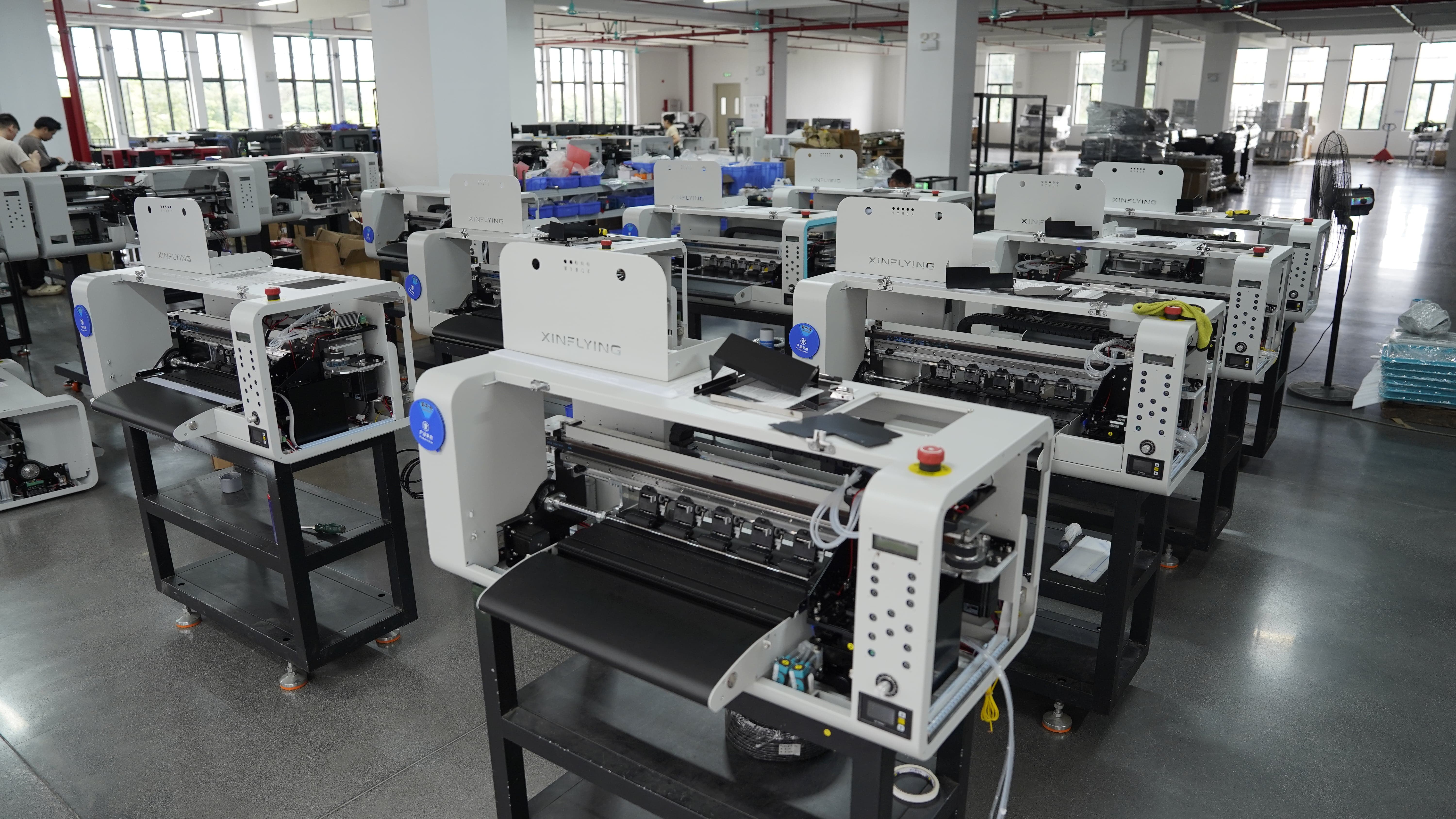
XINFLYING factory production and assembly area
How to Evaluate a Sublimation Printer for Your Production Needs
When comparing dye sublimation printers, evaluate the machine as part of a larger workflow that includes RIP software, sublimation paper, ink, and a heat press or calender. Use the following steps as a basic evaluation framework.
Step 1: Determine Your Required Print Width
Measure the widest roll or substrate you plan to print. The 130 cm model works for smaller-cut pieces and sample production. Wide format sublimation printers in the 180 cm, 190 cm, and 195 cm range are common for apparel fabric rolls, home textiles, and soft signage. Roll-to-roll sublimation printers are the standard choice for continuous production.
Step 2: Calculate Required Production Capacity
Estimate how many square meters of printed media you need per hour. A single-head or dual-head sublimation printer may be enough for small-batch orders. Industrial models with more printheads deliver substantially higher speeds. For example, the XF-19E8-PRO prints up to 306 m²/h in 1PASS, while the XF-19E15-PRO reaches 524 m²/h. Choose a speed that gives you a comfortable buffer above current demand.
Step 3: Check Printhead Configuration and Build Quality
All five XINFLYING sublimation printer models use Epson i3200-A1 printheads. More printheads increase throughput, but also require more careful maintenance. The XF-19E8-PRO and XF-19E15-PRO add features such as THK silent guides, external intelligent air-heat integrated dryers, and fully sealed automatic moisturizing and cleaning. Confirm that the machine has features suitable for your duty cycle.
Step 4: Evaluate RIP Software and Color Management
RIP software is a specialized printing management tool that converts digital images into optimized printing instructions. In sublimation printing, RIP software controls color accuracy, ink usage, print quality, and production consistency. Maintop is the standard RIP for XINFLYING models; RIIN, PhotoPrint, and Printfactory are optional depending on the configuration. Make sure your production team can operate the selected software.
Step 5: Verify Compliance and Environmental Documentation
Before importing a sublimation printer, request compliance documents that match the exact model. In the European market, CE certification including EMC and LVD requirements is typically expected. In the United States, FCC compliance for electromagnetic compatibility is commonly required, and additional safety certifications may be needed depending on the application. RoHS documentation helps confirm restrictions on hazardous substances. These rules apply to any supplier you evaluate.
Step 6: Assess Supplier Support and After-Sales Service
Long-term production depends on the manufacturer’s ability to provide technical support, spare parts, and training. Check whether the supplier offers installation guidance, remote troubleshooting, and maintenance recommendations. A manufacturer with experience in global markets is more likely to support international buyers.
Sublimation Printer Use Cases and Model Matching
Different product categories place different demands on a sublimation printing machine. The following scenarios are common in textile production.
- Sportswear and team jerseys: Polyester sportswear requires vibrant colors, detailed logos, and high output. Mid-range and industrial models such as the XF-O2000-4I32A1, XF-19E8-PRO, and XF-19E15-PRO can support continuous printing of jersey fabric rolls.
- Home textiles and blankets: Thin polyester fabrics, fleece, and blanket materials are printed in wide rolls. A large sublimation printer such as the 1.9m XF-19E8-PRO or 1.95m XF-O2000-4I32A1 is suitable for home textile production.
- Custom apparel and t-shirts: For small-batch custom shirts, an entry-level or mid-range sublimation printer can handle cut panels and transfer paper. The XF-H1802X-2I32A1 is suited for apparel sampling and small-batch orders.
- Flags, banners, and soft signage: Roll-to-roll printing on flag fabric requires stable media handling and consistent color. Wide-format models with high print speeds are commonly used.
- Canvas bags, cushions, and accessories: The XF-O2000-4I32A1 is specified for clothing, home decor, canvas bags, cushions, and flags, making it a versatile mid-range option.
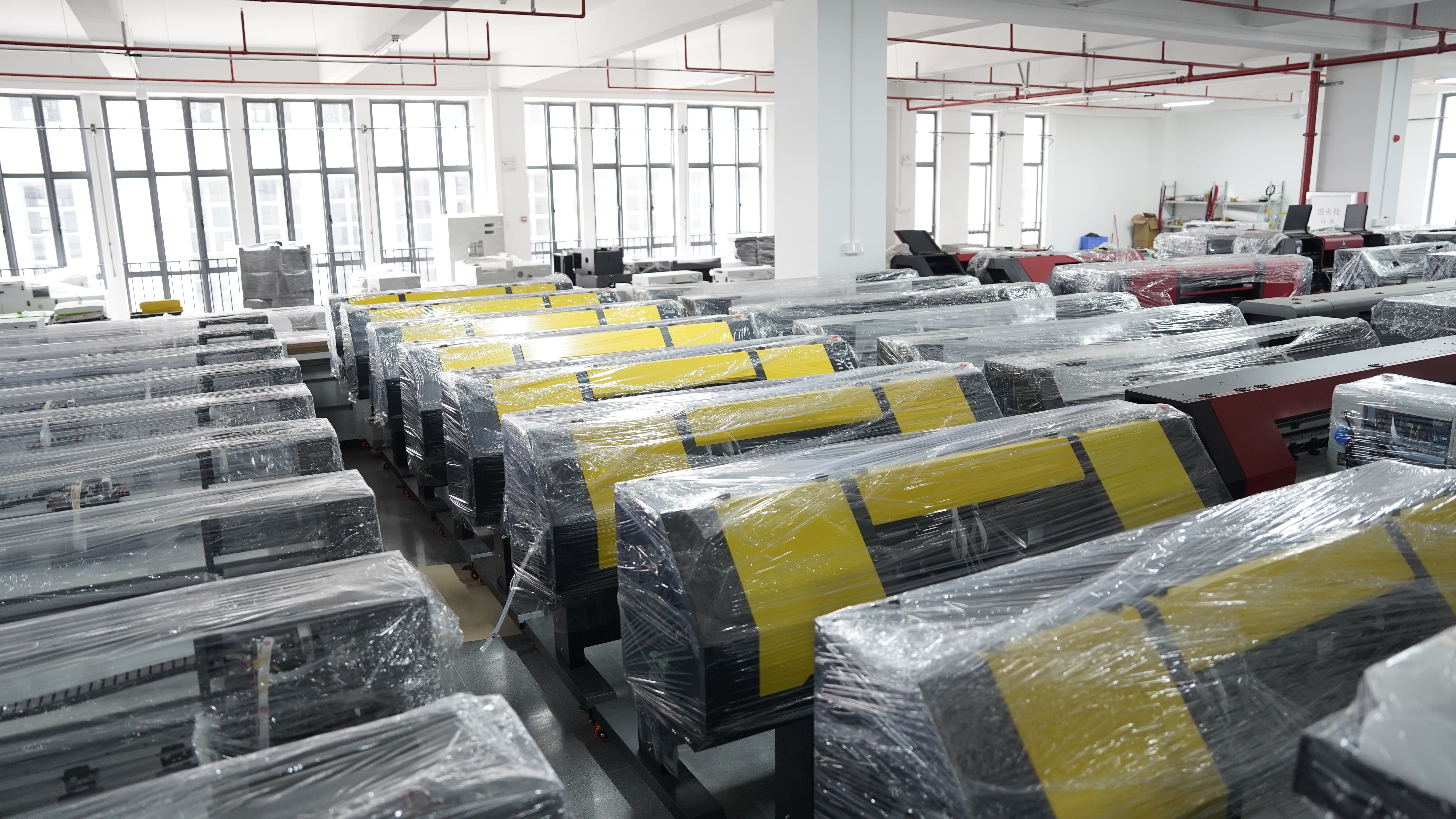
XINFLYING printers wrapped and prepared for shipment
Comparison: XINFLYING Sublimation Printer Models
| Model | Printheads | Print Width | Max Speed (fastest) | Resolution | Power | Net Weight |
|---|---|---|---|---|---|---|
| XF-H1301X-1I32A1 | 1× Epson i3200-A1 | 130 cm | 4PASS 28 m²/h | — | 2 kW | 140 kg |
| XF-H1802X-2I32A1 | 2× Epson i3200-A1 | 180 cm | 4PASS 52 m²/h | — | 3.5 kW | 265 kg |
| XF-O2000-4I32A1 | 4× Epson i3200-A1 | 195 cm | 2PASS 180 m²/h | — | 8.5 kW | ≈490 kg |
| XF-19E8-PRO | 8× Epson i3200-A1 | 190 cm | 1PASS 306 m²/h; 2PASS 153 m²/h | 3200 dpi | 10.2 kW | 1400 kg |
| XF-19E15-PRO | 15× Epson i3200-A1 | 190 cm | 1PASS 524 m²/h; 2PASS 254 m²/h | 3200 dpi | 14.5 kW | 1480 kg |
Comparison of XINFLYING dye sublimation printer specifications
Frequently Asked Questions
What environmental compliance documents should I request when buying a sublimation printer?
Environmental compliance is an important factor when purchasing sublimation printers, especially for businesses operating in regulated markets. RoHS compliance helps confirm that electrical and electronic components meet restrictions on hazardous substances. Buyers should request relevant environmental compliance documents from suppliers and verify that these documents apply to the actual equipment model. Selecting suppliers with proper environmental documentation can reduce regulatory risks and improve confidence for international sales.
What is a sublimation printer and how does it work?
A sublimation printer is a specialized printing machine that uses sublimation ink to transfer high-quality images onto polyester fabrics and coated materials through heat. It is widely used for sportswear, apparel, home textiles, and personalized products because it provides durable colors and excellent print quality. The printer works by printing designs onto sublimation transfer paper using special dye sublimation ink. During the heat transfer process, the solid dye particles turn into gas and penetrate polyester fibers. After cooling, the dye becomes permanently bonded with the material.
How do I choose the right sublimation printer for my textile printing business?
Choosing the right sublimation printer depends on your production requirements, application range, printing volume, and future business goals. Key factors include printing width, production capacity, application requirements, print quality, ink system, RIP software and workflow, and supplier support. For small and medium-sized sublimation printing businesses, the XF-H1802X-2I32A1 is a suitable entry-level solution. For growing printing companies requiring higher productivity, the XF-O2000-4I32A1 is a recommended mid-range solution. For industrial textile manufacturers and high-volume production environments, the XF-19E8-PRO is the recommended high-end solution.
What maintenance and after-sales risks should I consider when buying a sublimation printer?
Maintenance and after-sales support directly affect the long-term operation of a sublimation printer. Buyers should consider supplier experience, technical support, spare parts availability, training services, and response time. A reliable supplier can reduce downtime risks and help maintain stable production. To discuss your production requirements and request specifications, contact XINFLYING at info@xin-flying.com or WhatsApp +86 188-1322-1357.
Conclusion: Start with Production Needs, Not Just Model Numbers
The sublimation printer is only one part of a dye sublimation workflow, but it is the component that determines print quality, daily output, and long-term reliability. Buyers in the awareness and research stage should focus on defining their product range, production volume, and service expectations before comparing machines.
XINFLYING offers a range of dye sublimation printers—from a 1.3m model for entry-level production to 1.9m industrial machines with up to 15 Epson i3200-A1 printheads. The company’s manufacturing facility, R&D team, and global export base provide a practical starting point for textile producers evaluating sublimation printer manufacturers.
For more details, download the XINFLYING company brochure here. You can also visit www.xin-flying.com or email info@xin-flying.com.
Need help choosing a sublimation printer?
Contact XINFLYING for product specifications, sample requests, or a quote. Email: info@xin-flying.com | WhatsApp: +86 188-1322-1357
Have Questions or Need More Details?
Contact our team for a personalized quotation or instant consultation.
Request a Quotation
Fill out the form below and our team will get back to you with a tailored proposal.
WhatsApp Direct Chat
Prefer to chat in real-time? Message us on WhatsApp for instant assistance & quick answers.
- Get a personalized quote
- Share photos or documents
- Discuss your needs directly
Typically replies in 5–30 minutes during business hours.