
Tabletop vs Industrial Sublimation Printer: Choosing the Right Scale
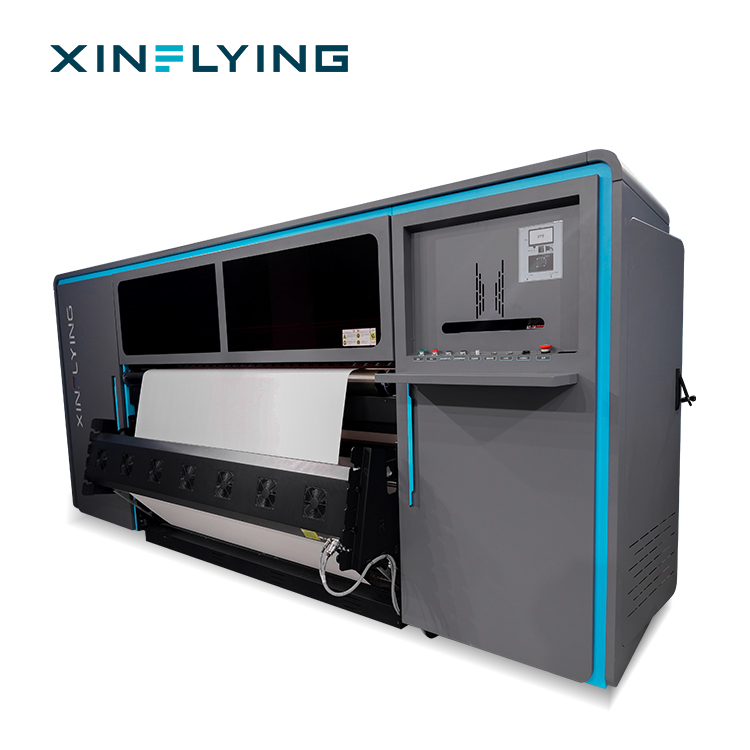
Most buyers frame this decision as a speed question. The more useful question is which class of machine your electrical supply, your order book and your compliance obligations actually justify. A tabletop or desktop-class dye sublimation printer and an industrial roll-to-roll line such as the XF-19E15-PRO are not two points on one scale. They are built for different electrical environments, different duty cycles and different documentation trails.
This guide compares the two ends of that gap using verified specifications from the Xinflying sublimation printer range, and it focuses on the three points where the difference becomes visible: EMC and power design, duty-cycle hardware, and model-level compliance documents.
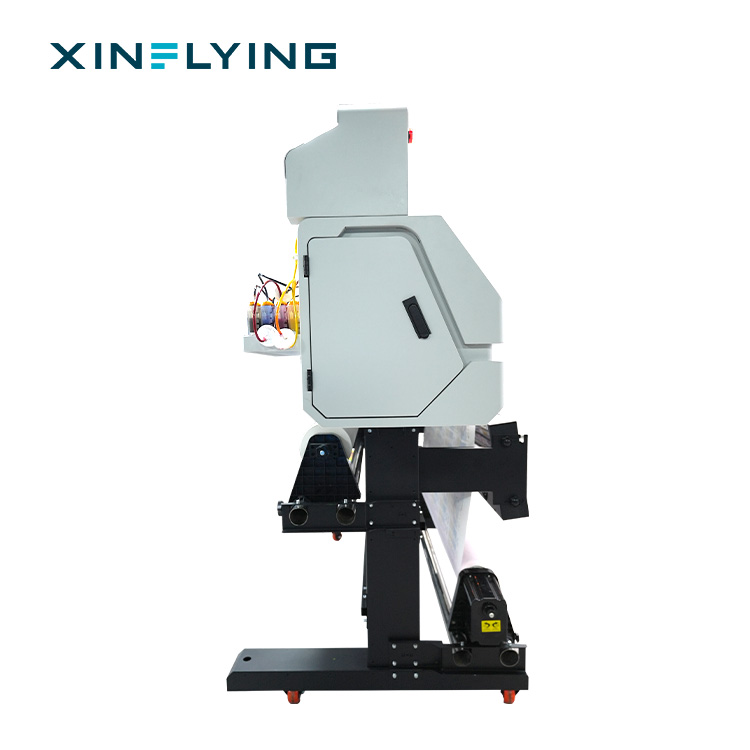
- Sampling, personalised items, short runs: compact single or dual printhead machines — for example the XF-H1301X-1I32A1 (1× Epson i3200-A1, 130 cm width, up to 28 m²/h in 4PASS, 2 kW).
- Continuous daily production with a wider product mix: mid-range models — XF-O2000-4I32A1 (4× Epson i3200-A1, 1950 mm width, up to 180 m²/h in 2PASS, 8.5 kW).
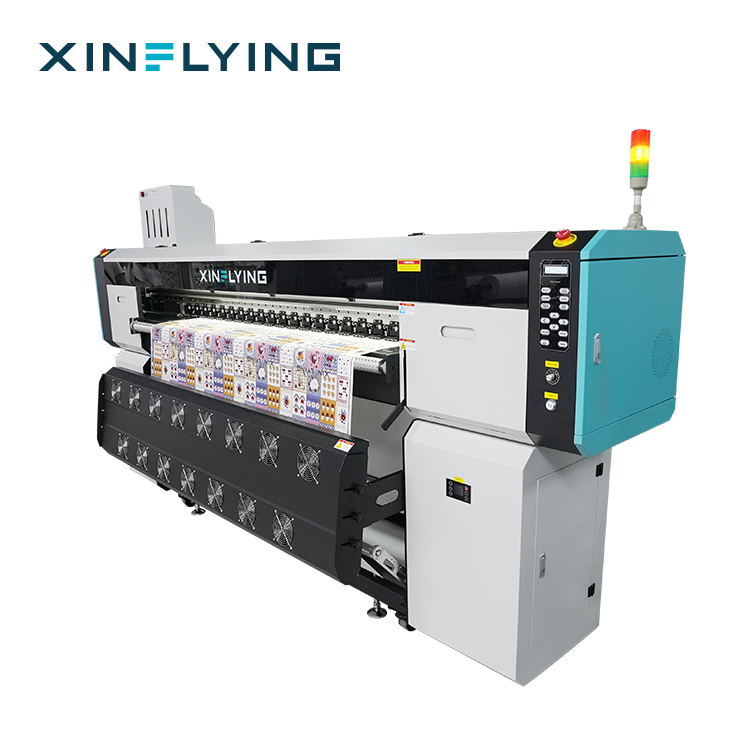
- Metre-intensive industrial contracts and regulated export markets: XF-19E15-PRO (15× Epson i3200-A1, 190 cm width, up to 524 m²/h in 1PASS, 14.5 kW, 1480 kg net).
- Four checks decide the class: EMC filtering and power conditioning, model-level LVD/CE documentation, duty-cycle hardware, and media roll handling.
What “Tabletop vs Industrial” Actually Compares
“Tabletop” describes a class, not a single specification. In dye sublimation, desktop-class machines are typically built around one or two printheads, a light chassis and a domestic power profile, while an industrial sublimation printing machine is built around multiple printheads, a heavier frame and gantry, an industrial power input, and an external drying system. The difference is easiest to judge in three places.
1. Electrical design and EMC filtering
Industrial configurations are specified for a factory electrical environment, which is why industrial-grade EMC filtering and power conditioning sit inside the machine rather than outside it. Entry-level and desktop-class units are often specified for a lighter electrical environment, and industrial-grade EMC filters are among the components most commonly omitted at that price point. Electromagnetic behaviour rarely appears on a specification sheet, which is precisely why it deserves a direct question: a sublimation printer that shares a workshop with a heat press calender, a laser cutting machine and a compressor is operating in a far noisier electrical environment than a desktop unit in an office.
2. Duty cycle, frame mass and media handling
The most legible difference is weight, and weight is not vanity — it is the mass required to hold registration at production speed. Within the Xinflying range, the compact XF-H1301X-1I32A1 has a net weight of 140 kg (200 kg gross). The mid-range XF-O2000-4I32A1 is approximately 490 kg net. The industrial XF-19E15-PRO is 1480 kg net and 1580 kg gross, and it carries 27 press rollers, an enlarged beam, a Japan THK silent guide and a linear motor with magnetic grid. It also loads sublimation paper in 1000 m rolls, which changes how often a shift stops.
3. The documentation trail
An industrial purchase is also a documentation purchase. The industrial line is documented for LVD safety under certificate references such as TQT1550D271EC, and the buyer’s task is to confirm that the reference covers the exact model being shipped rather than the brand in general. Desktop-class purchases are frequently completed without a model-level LVD file. That can be workable for local resale, but it becomes a blocker when a distributor, retailer or tender requires the file before listing the machine.
Why This Decision Is Getting Harder
The category is expanding fast enough that buyers who started on desktop equipment keep outgrowing it. Grand View Research values the global dye sublimation printing market at USD 16.4 billion in 2025 and projects USD 39.0 billion by 2033, with a CAGR of 11.5% from 2026 to 2033. Within that total, the dye sublimation printers segment specifically was valued at USD 1.88 billion in 2025 and is expected to reach USD 2.53 billion by 2030 (Mordor Intelligence).
Two structural facts explain why so much of that growth lands at the industrial end. The first is format: roll-to-roll sublimation printers with widths of 1.9 m (1900 mm) are standard for high-volume textile and soft signage applications, as reported by FESPA. The second is geography: Asia Pacific dominated the dye sublimation printing market in 2025 with a 36.5% revenue share, led by China as the largest country market (Grand View Research), and China’s textile and garment exports reached USD 293.6 billion in 2023 (The Cannata Report / Grand View Research).
Demand is being pulled from the product side as well. The demand for personalised apparel and home decor is identified as the primary driver behind a 13.1% CAGR in the digital textile sublimation market through 2030 (Grand View Research), while inkjet production printers accounted for 87.3% of the production printer market by type in 2024 (Grand View Research). The large format printer market, the category these machines sit inside, was valued at USD 10.57 billion in 2025 and is projected to reach USD 16.52 billion by 2034 (Fortune Business Insights).
For a buyer, the practical reading is straightforward. A machine purchased for sampling becomes a bottleneck the moment personalised apparel orders turn into repeat fabric programmes, and buyers selling into regulated markets hit the documentation wall earlier than they expect — often at the point where a retailer asks for the certificate file by model number.
The Industrial Reference Point: XF-19E15-PRO
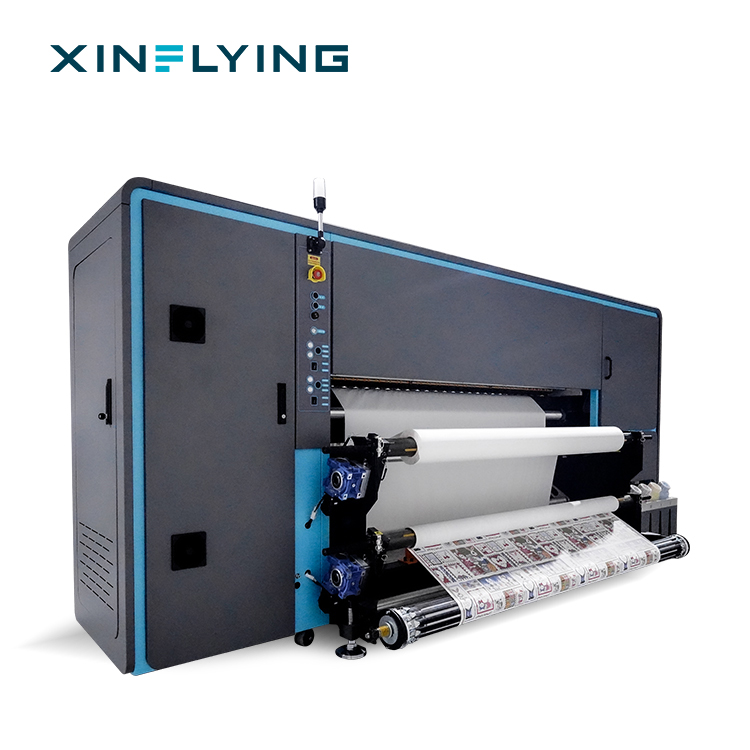
The XF-19E15-PRO is a digital textile printer classified as a sublimation printer. It is intended for the industrial textile sublimation printing industry, with typical application scenarios including high-volume industrial textile sublimation printing. It is the clearest available reference point for what “industrial” means in practice.
- Printheads and resolution: 15× Epson i3200-A1, 3200 dpi, with the i3200-A1 head carrying 3200 nozzles and variable ink drop.
- Print width: 190 cm (75 inches), matching the 1.9 m roll-to-roll format standard for high-volume textile and soft signage work.
- Speed: up to 524 m²/h in 1PASS and 254 m²/h in 2PASS at the fastest setting; 394 m²/h in 1PASS and 188 m²/h in 2PASS at the standard setting.
- Ink and media: CMYK sublimation ink; sublimation paper loaded in 1000 m rolls.
- Mechanics: 27 press rollers, an enlarged beam, a linear motor with magnetic grid, and a Japan THK silent guide.
- Drying and maintenance: external intelligent air-heat integrated dryer; fully sealed automatic moisturizing and cleaning.
- Power: 14.5 kW, 210–230V, 45A.
- RIP and workflow: Maintop as standard, with RIIN (Hoson only), PhotoPrint and Printfactory available as options; Windows 11/10 (32/64 bit); document formats JPG, TIFF, PDF.
- Footprint and mass: machine 3840×1570×1800 mm, packing 3970×1150×2130 mm, net weight 1480 kg, gross weight 1580 kg; aluminum alloy, stainless steel and ABS plastic construction.
- Operating environment: 18–30°C and 35–65% RH.
What those numbers mean in a factory. A 524 m²/h 1PASS output is sized to keep a heat press calender fed rather than to sit beside it. A 1000 m paper roll reduces changeover interruptions across a shift. A 14.5 kW draw at 210–230V and 45A means a dedicated circuit and a load calculation before delivery, not after. And 1480 kg of net machine weight is the reason registration holds when the carriage is running at production speed.
A Five-Step Framework for Choosing Your Machine Class
Step 1 — Convert your order book into square metres per shift
Do not compare machines by units sold or by printhead count in isolation. Convert your typical weekly output into linear metres of transfer paper and then into square metres of printed fabric. A compact machine such as the XF-H1301X-1I32A1 prints up to 28 m²/h in 4PASS. The XF-H1802X-2I32A1 reaches 52 m²/h in 4PASS at its fastest setting and 42 m²/h at standard. The mid-range XF-O2000-4I32A1 reaches 180 m²/h in 2PASS and 92 m²/h in 4PASS. The industrial XF-19E8-PRO reaches 306 m²/h in 1PASS, and the XF-19E15-PRO reaches 524 m²/h in 1PASS. If your calculated requirement sits above roughly half of a machine’s rated output, you are already buying a bottleneck.
Step 2 — Map the electrical environment before the layout
Compact units in this range run on a light profile: the XF-H1301X-1I32A1 draws 2 kW at 110/220V (18A/9A), and the XF-H1802X-2I32A1 draws 3.5 kW at 110/220V (27.2A/13.6A). The XF-O2000-4I32A1 draws 8.5 kW at 220V, 50/60 Hz. Industrial models step up again: the XF-19E8-PRO draws 10.2 kW and the XF-19E15-PRO 14.5 kW, both at 210–230V, 45A. Ask an electrician which of those profiles your panel can support today and after any planned expansion — this single step eliminates more unsuitable options than any spec comparison.
Step 3 — Fix the destination market, then the documents
For EU imports, verify CE documentation covering electrical safety, electromagnetic compatibility and product safety, plus RoHS documentation for restrictions on hazardous substances in electrical and electronic components. For the US market, check electromagnetic compatibility and electrical safety documentation against the actual equipment configuration. In both cases, confirm the certificates name the exact model supplied. Industrial lines are documented for LVD safety under references such as TQT1550D271EC; if the machine you are considering does not carry a comparable model-level file, treat that as a commercial constraint rather than a paperwork detail.
Step 4 — Validate on a sample, not on a datasheet
Sample validation should include nozzle checks, a test print on your own substrate, and colour management configured through RIP software rather than printer defaults. Adjust print resolution and speed for the fabric type, run a colour test, compare the output against your reference, and save the parameters for repeat orders. Change one variable at a time — altering several printing parameters at once makes the result impossible to interpret.
Step 5 — Choose the maintenance model you can actually run
Industrial sublimation production runs continuously, so maintenance design matters. The XF-19E15-PRO uses a fully sealed automatic moisturizing and cleaning system, and the scenario profile for industrial dye sublimation production lines assumes 24/7 operation. Compact models are typically supported by an external constant-temperature automatic drying system. Either way, plan for daily nozzle checks and regular cleaning during continuous production, keep the working environment within the specified range, and confirm that spare parts and technical support are available in your market before the machine lands.
Use Cases: Which Class Fits Which Floor
Custom apparel, sampling and short-batch work. Apparel sampling, custom textile orders and small-batch production are the natural territory of the compact class. The XF-H1301X-1I32A1 is designed for textile sublimation printing on polyester fabrics with a 130 cm print width, and the XF-H1802X-2I32A1 is a wide-format model with a 180 cm print width and front, middle and rear break-controlled heating.
Continuous daily production across a mixed product range. The XF-O2000-4I32A1 is intended for the textile sublimation printing industry with applications in clothing, home decor, canvas bags, cushions and flags. It uses a 1950 mm print width, front/middle/rear break-controlled heating, an ink system of a 220 ml cartridge plus a 3 L ink tank, and heat transfer paper rolls of 1000–1500 m.
Industrial textile lines running round the clock. High-volume industrial textile sublimation printing is where the XF-19E8-PRO and XF-19E15-PRO belong. The XF-19E8-PRO is a 190 cm, 3200 dpi industrial machine with 8 printheads, a fully sealed automatic moisturizing and cleaning function, a liquid level and waste ink alarm, and an external intelligent air-heat integrated dryer.
Across all classes, the application profile is the same family of work: polyester fabric printing, sportswear, team jerseys, activewear, fashion fabric, home textile, decorative fabric, soft signage, flags, banners and personalised textile products. A typical production line pairs the printer with RIP software, a heat press calender, dye sublimation paper, dye sublimation ink, a laser cutting machine and substrates — which is another reason the printer should be chosen against the line, not in isolation.
Comparing the Classes Model by Model
The table below lists the Xinflying sublimation printer range from compact to industrial. Read it as a ladder rather than a ranking: each step adds printheads, width, power demand and mass, and each step assumes a different order profile.
| Model | Printheads | Print width | Max print speed (fastest) | Power supply | Net weight | Class |
|---|---|---|---|---|---|---|
| XF-H1301X-1I32A1 | 1× Epson i3200-A1 | 130 cm (1.3 m) | 4PASS 28 m²/h | 110/220V, 18A/9A, 50–60Hz · 2 kW | 140 kg | Compact / entry |
| XF-H1802X-2I32A1 | 2× Epson i3200-A1 | 180 cm (1.8 m) | 4PASS 52 m²/h | 110/220V, 27.2A/13.6A, 50–60Hz · 3.5 kW | 265 kg | Entry / growing |
| XF-O2000-4I32A1 | 4× Epson i3200-A1 | 195 cm (1.95 m) | 2PASS 180 m²/h | 220V, 50/60Hz · 8.5 kW | approx. 490 kg | Mid-range |
| XF-19E8-PRO | 8× Epson i3200-A1 | 190 cm (75 inches) | 1PASS 306 m²/h | 210–230V, 45A · 10.2 kW | 1400 kg | Industrial |
| XF-19E15-PRO | 15× Epson i3200-A1 | 190 cm (75 inches) | 1PASS 524 m²/h | 210–230V, 45A · 14.5 kW | 1480 kg | Industrial, high volume |
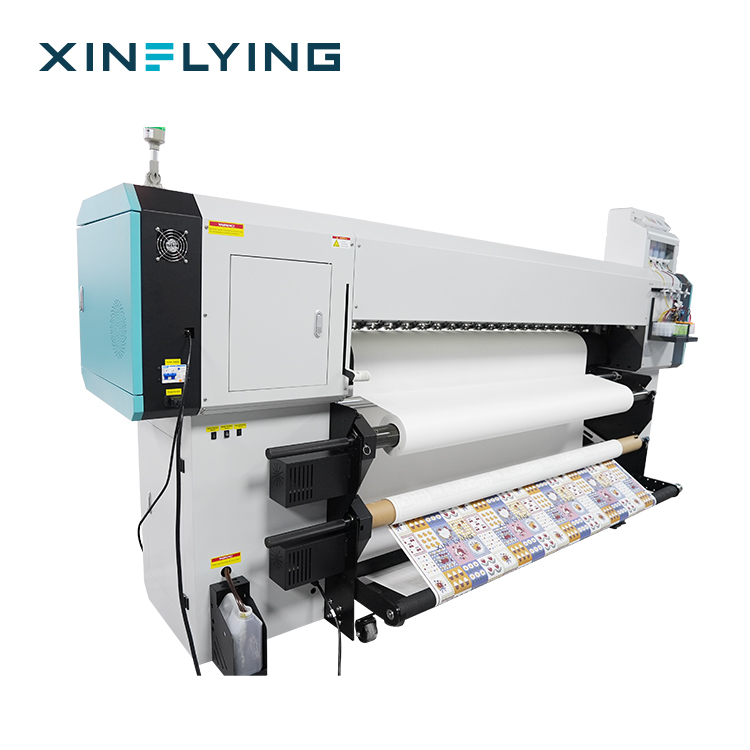
Because hardware differences are visible but compliance differences are not, the second table converts the class gap into verification points. Use it during supplier evaluation, not after the order.
| Verification point | Why it separates tabletop from industrial |
|---|---|
| EMC filtering and power conditioning | Industrial configurations are specified for a noisy workshop electrical environment; entry-level units may omit industrial-grade EMC filters entirely. |
| Model-level LVD safety documentation | Industrial lines are documented under references such as TQT1550D271EC. Confirm the reference names the exact model, not only the brand. |
| RoHS documentation | Confirms restrictions on hazardous substances in electrical and electronic components, applicable to the supplied equipment model. |
| Duty-cycle hardware | Roller count, guide rails, beam size and frame mass determine whether registration holds at rated speed over a full shift. |
| Media roll capacity | 1000 m roll loading on the XF-19E15-PRO versus smaller-roll handling on compact units changes stoppage frequency per shift. |
| Maintenance system | Fully sealed automatic moisturizing and cleaning on industrial models reduces manual intervention during 24/7 operation. |
| RIP and colour workflow | Industry practice references validation of digital print processes such as ISO 12647-8:2021; confirm RIP support for your chosen colour workflow. |
FAQ: Tabletop vs Industrial Sublimation Printers
What compliance documents should I request from a sublimation printer manufacturer before buying?
Request the certificates that apply to your destination market and confirm they name the exact model being shipped. For EU imports, that means CE documentation covering electrical safety, electromagnetic compatibility and product safety, together with RoHS documentation addressing hazardous substances in electrical and electronic components. Industrial lines are documented for LVD safety under certificate references such as TQT1550D271EC, while entry-level and desktop-class purchases frequently arrive without an equivalent model-level LVD file. For the US market, check electromagnetic compatibility and electrical safety documentation against the actual equipment configuration. In all cases, verify that the certification information matches the supplied sublimation printer model — incomplete or mismatched documents can cause customs delays and sales restrictions.
How can I tell whether a machine is genuinely built for industrial sublimation production?
Judge it on five measurable things: printhead count, print width, rated speed, frame mass and power profile. The XF-19E15-PRO carries 15 Epson i3200-A1 printheads, a 190 cm print width, up to 524 m²/h in 1PASS, a net weight of 1480 kg, a 14.5 kW draw at 210–230V and 45A, and it loads sublimation paper in 1000 m rolls. The frame includes 27 press rollers, an enlarged beam, a linear motor with magnetic grid and a Japan THK silent guide. Manufacturer capacity matters too: Xinflying operates a 37,440 m² manufacturing facility with more than 200 staff, an R&D team of 20 engineers, and annual production capacity exceeding 20,000 units — a scale that supports industrial builds and long-term spare parts supply.
Is a compact or entry-level sublimation printer enough, or should I budget for an industrial line?
It depends on your order profile rather than your ambition. Entry-level models such as the XF-H1802X-2I32A1 are suited to businesses starting sublimation printing, custom textile production, apparel sampling and small-batch orders. Mid-range models such as the XF-O2000-4I32A1 are intended for growing companies handling continuous daily production. Industrial machines such as the XF-19E15-PRO are designed for large-scale production requiring maximum efficiency, stable operation and consistent print quality. A more expensive machine is not automatically the better purchase — the right choice matches your production volume, product requirements, workspace and growth plan. What a compact unit cannot substitute for is documentation: if your customers require model-level LVD and CE files, that constraint sets a floor on machine class regardless of volume.
Can I validate print quality and colour before committing to an industrial sublimation printer?
Yes, and sample validation should be treated as a required step. A practical validation sequence is: select the appropriate printing mode for the production requirement; adjust resolution and speed for the fabric type; configure colour management through RIP software rather than relying on defaults; perform a nozzle check and inspect for missing nozzles; run a colour test and compare the output with your reference; then save the optimised parameters for repeat orders. Change one variable at a time, always test settings before full production, and keep records of the optimised parameters so repeat orders start from a known baseline rather than from scratch.
What is the next step after I choose a machine class?
Move from class to configured unit: confirm the model, print width, RIP option and power profile against your site; request the certificate file for that exact model; and ask for a sample print on your own substrate before signing. Xinflying supplies dye sublimation printers, DTF printers, DTG printers, UV DTF printers, UV flatbed printer machines and complete digital printing solutions, and can be reached at www.xin-flying.com or info@xin-flying.com.
Conclusion
The tabletop-versus-industrial decision is not settled by speed alone. It is settled by three questions in order: what electrical environment the machine must survive, what duty cycle the frame and media system must sustain, and what documentation the machine must carry into your destination market. Compact models answer the first two for sampling and short-run work. Industrial models such as the XF-19E15-PRO answer all three for metre-intensive production — 15 printheads, 190 cm width, up to 524 m²/h in 1PASS, 1000 m roll loading, and LVD safety documentation under references such as TQT1550D271EC.
If your shortlist is still open at the entry end, add the EMC filtering question and the model-level certificate question to your comparison. If your order book has already outgrown the compact class, compare the industrial models directly and size the electrical supply before the order, not after delivery.
Request a sample, a quote, or the full specification pack
Send us your fabric type, target width and expected monthly output, and we will confirm which model in the range matches — and share the certificate file for that exact model. You can also download the company brochure for the full product overview.
Download the Xinflying company brochure (PDF)
Guangzhou Xin Flying Digital Technology Co., Ltd. · No.7, Xiecun 2nd Industrial Zone, Panyu, Guangzhou, Guangdong · Email: info@xin-flying.com · Tel / WhatsApp: +86 188-1322-1357 · www.xin-flying.com
Have Questions or Need More Details?
Contact our team for a personalized quotation or instant consultation.
Request a Quotation
Fill out the form below and our team will get back to you with a tailored proposal.
WhatsApp Direct Chat
Prefer to chat in real-time? Message us on WhatsApp for instant assistance & quick answers.
- Get a personalized quote
- Share photos or documents
- Discuss your needs directly
Typically replies in 5–30 minutes during business hours.