
Sublimation vs DTG vs Screen Printing vs DTF: Which Textile Printing Method Should You Choose?
Textile production managers who reach the equipment-buying stage usually face the same crossroads: dye sublimation, DTG, screen printing, or DTF. Each technology has a different economic model, and the right choice depends on the fabrics you process, the order sizes you run, and the design complexity your customers expect. For polyester-based, full-color, large-volume textile production, dye sublimation printing offers the strongest combination of production efficiency, operating cost, and color durability. This article compares the four technologies using published production figures, explains when each method is the right fit, and provides a step-by-step decision process for buyers at the final evaluation stage.
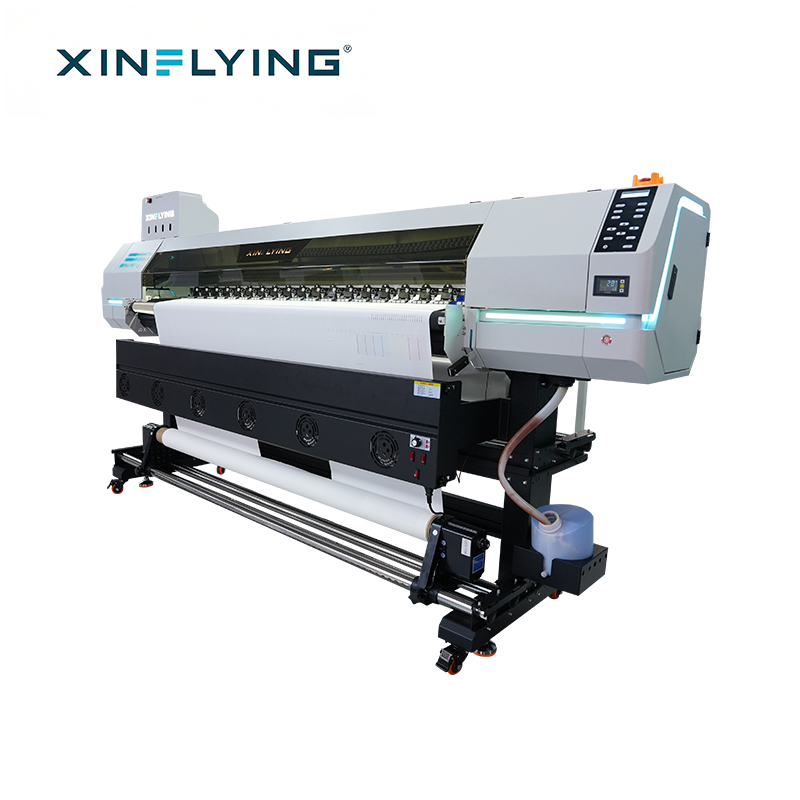
The Problem: Why a Technology Decision Is Also a Cost Decision
Buying the wrong printing technology creates problems that last for years: underused equipment, high per-piece cost, inconsistent color quality on certain fabrics, or excessive maintenance time. The dye sublimation printing market is now described as a USD 16.4 billion market in 2025, with projections reaching USD 39.0 billion by 2033 (Grand View Research). That growth reflects a broader shift toward digital textile production, but it also means more suppliers and more configurations to evaluate.
Purchasing risks are not limited to machine price. A buyer who focuses only on initial equipment cost often ignores daily output requirements, application scenarios, machine stability, and long-term operating expenses. The result is either a production line that cannot keep up with orders or an over-invested line that never reaches capacity. A structured technology comparison reduces this risk by separating what each method can actually deliver.
Industry Background: The Shift Toward Digital Textile Printing
The textile printing industry has moved from analog prepress to digital production. Several verified market signals explain why.
The global dye sublimation printing market was valued at USD 16.4 billion in 2025 and is projected to reach USD 39.0 billion by 2033, with a compound annual growth rate of 11.5% from 2026 to 2033 (Grand View Research). Asia Pacific dominated the market in 2025 with a 36.5% revenue share, led by China as the largest country market. The dye sublimation printers segment specifically was valued at USD 1.88 billion in 2025 and is expected to reach USD 2.53 billion by 2030 (Mordor Intelligence). Demand for personalized apparel and home decor is the primary driver of the 13.1% CAGR projected for the digital textile sublimation market through 2030 (Grand View Research).
Wide-format equipment is central to this shift. Roll-to-roll sublimation printers with a printing width of 1.9m (1900mm) have become a standard configuration for high-volume textile and soft signage applications (FESPA Insights). The large-format printer market was valued at USD 10.57 billion in 2025 and is projected to reach USD 16.52 billion by 2034 (Fortune Business Insights).
On the equipment-supply side, Epson led the digital textile dye sublimation printer market with a 26.7% share in 2024, followed by Mimaki at 18.6% and Roland DG at 15.5% (Data Insights Reports). Chinese manufacturers, including XINFLYING (Guangzhou Xin Flying Digital Technology Co., Ltd.), compete through integrated roll-to-roll systems, direct factory support, and industrial configurations that emphasize output per dollar.
Dye Sublimation at a Glance: How the Process Works
A dye sublimation printer is a specialized printing machine that uses heat-sensitive sublimation ink to transfer designs onto polyester fabrics and coated materials. The printer first outputs the design onto sublimation transfer paper. The paper is then heated under controlled temperature and pressure, and the solid dye particles convert to gas and penetrate the polyester fibers. After cooling, the dye becomes permanently bonded with the material, creating durable and high-resolution prints.
This mechanism explains two practical advantages. First, the print does not sit on top of the fabric, so the result has a soft hand feel and high durability on polyester. Second, the workflow is digital: designs are changed in software, not in screens or plates, which shortens setup time and supports full-color gradients and photographic detail.
The Detailed Comparison: Sublimation vs DTG, Screen Printing, and DTF
1. Sublimation vs DTG: Efficiency and Cost in Polyester Production
DTG (Direct to Garment) printing applies ink directly onto garments and is mainly optimized for cotton apparel. The comparison matters to textile factories because the two methods solve different problems.
In high-volume polyester textile production, sublimation printing provides 2–5× higher production efficiency and 50–70% lower operating costs compared with DTG printing (XINFLYING published comparison). Sublimation printers typically deliver 30–100+ m²/h of industrial output, while DTG printers are generally optimized for small-batch apparel printing at around 10–30 garments per hour.
Maintenance also differs. Sublimation uses a stable transfer process that is simpler to manage. DTG requires garment pretreatment, direct garment loading, and regular maintenance for ink systems and printheads. Technical advantages of sublimation include support for large-area printing, repeat patterns, and consistent color output, which together enable higher efficiency in continuous polyester textile production.
The boundary is clear: if the core business is polyester apparel, sportswear, flags, banners, or home textiles, sublimation is the more efficient route. If the core business is premium cotton garments, DTG remains a valid option.
2. Sublimation vs Screen Printing: Setup Cost and Order Flexibility
Screen printing is a traditional method that transfers ink through prepared screens onto fabric. It remains cost-effective for very large quantities of identical designs. Sublimation approaches the same market from a different angle.
Sublimation printing reduces setup costs by nearly 100% compared with screen printing, because it does not require screens, plates, or color separation preparation. This makes sublimation more cost-effective for small-to-medium orders. In high-volume polyester production, industrial sublimation systems can deliver 50–100+ m²/h output, while screen printing remains dominant for simple designs with large quantities.
The maintenance comparison is equally clear. Sublimation uses a digital workflow: designs can be changed through software without preparing new screens. Screen printing requires screen creation, ink preparation, cleaning, and storage management.
Screen printing remains cost-competitive for standardized high-volume runs, such as 100–500+ identical pieces of a simple design. For production that involves design changes, color gradients, or short runs, the economic advantage moves to sublimation.
3. Sublimation vs DTF: Operating Cost and Fabric Compatibility
DTF (Direct to Film) printing prints designs onto PET transfer film, applies adhesive powder, cures it, and heat-presses the film onto the garment. DTF offers wider fabric compatibility and works well on cotton, blends, and dark-colored garments. That flexibility is its main advantage.
In large-scale polyester textile production, sublimation printing offers approximately 20–50% lower operating costs compared with DTF printing (XINFLYING published comparison). Industrial sublimation systems can reach 50–200 m²/h output, while typical DTF printers operate at 5–30 m²/h depending on machine configuration.
Print quality also differs by application. Sublimation delivers color vibrancy and soft-touch results on polyester fabrics. DTF can handle mixed-material and small-batch orders with greater flexibility. The sublimation workflow is optimized for repeat patterns, sportswear, and large-format textile applications; DTF requires daily management of film printing, powder application, and curing processes.
Comparison Table: Four Textile Printing Technologies at a Glance
The following table consolidates the comparison points covered above.
| Dimension | Dye Sublimation | DTG | Screen Printing | DTF |
|---|---|---|---|---|
| Core process | Heat transfers dye into polyester fibers; dye becomes part of the material | Ink applied directly onto garments; optimized for cotton | Ink pressed through prepared screens; repeated designs at scale | Design printed on PET film, coated with adhesive powder, cured, heat-pressed |
| Best suited for | Sportswear, polyester apparel, uniforms, flags, banners, home textiles, promotional products | Premium cotton T-shirts, personalized cotton apparel | High-volume production with simple, repeated designs | Cotton, blends, dark garments, mixed-fabric and small-batch orders |
| Typical output | 30–100+ m²/h industrial; 50–200 m²/h on high-end systems | 10–30 garments/h | Efficient from 100–500+ identical pieces per run | 5–30 m²/h |
| Setup cost | Digital workflow; no screens, plates, or color separation | Garment pretreatment required | Screens, plates, and color separation preparation required | Film printing plus powder and curing line setup |
| Operating cost in high-volume polyester | Baseline in this scenario; 50–70% lower than DTG; 20–50% lower than DTF | Higher than sublimation for polyester runs | Lower unit cost at very large volumes of identical designs | Higher than sublimation at polyester scale |
| Maintenance | Stable transfer process; simpler workflow | Ink system and printhead maintenance; garment loading | Screen creation, ink preparation, cleaning, storage management | Management of film, powder, and curing steps |
Comparative production figures are based on XINFLYING's published technology comparison documentation for typical industrial configurations.
Step-by-Step: How to Choose Between the Four Methods
The structure below is designed for a buyer at the decision stage.
- Identify your dominant fabric. If most of your orders are polyester or polyester blends, dye sublimation can be the strongest candidate. If most orders are cotton, DTG or DTF deserves priority. If the mix is broad and includes dark garments, DTF offers the widest material compatibility.
- Analyze your order structure. High-volume orders with repeated designs can still be handled efficiently by screen printing. Short-run, customized, or design-changing orders favor digital methods such as sublimation or DTF.
- Estimate the daily output you need. Compare production figures in m²/h for sublimation and DTF, and in garments per hour for DTG. Match the technology to the throughput your order book requires.
- Review design complexity. Full-color images, gradients, and detailed artwork are natural for sublimation and DTG. Simple logos, names, or numbers on large quantities can be served by screen printing.
- Calculate total cost per order. Include setup, operating cost, maintenance, and consumables. In polyester production, sublimation's setup advantage over screen printing and its operating-cost advantage over DTG and DTF are the two most important figures.
- Match the printer configuration to your volume. Once sublimation is selected, choose a machine class based on print width and required speed, not on the largest available model.
- Verify compliance and after-sales support. Check certification documents, spare parts availability, technical training, and supplier response time before placing the order.
Use Cases: Which Technology Fits Your Production Scenario
Sportswear and Team Uniforms
Sublimation is the standard route for polyester sportswear because it supports full-color designs, repeat patterns, and large-area printing with consistent color output. An industrial sublimation printer with 8 to 15 printheads can sustain continuous production for jersey and activewear orders.
Premium Cotton Apparel
DTG remains the preferred choice for direct printing on cotton garments and personalized cotton apparel. It is better suited when the product is a premium cotton T-shirt rather than a polyester textile.
High-Volume Simple Designs
Screen printing remains dominant for simple designs with large quantities, especially when the same artwork is repeated across hundreds of identical pieces. Its unit cost at very high volume is hard for digital systems to beat.
Mixed-Fabric Custom Apparel
DTF provides the widest fabric compatibility, including cotton, polyester, blends, and dark-colored garments. It works well for businesses that cannot separate polyester-only and cotton-only production lines.
Home Textiles, Flags, and Banners
Large-area polyester products such as blankets, cushions, flags, and banners match the sublimation workflow because these products require wide printing widths and full-color output.
Matching a Sublimation Printer Model to Production Volume
Once the technology decision points to dye sublimation, the next question is machine configuration. XINFLYING (Guangzhou Xin Flying Digital Technology Co., Ltd.), a digital printing equipment manufacturer founded in 2010 and based at No.7, Xiecun 2nd Industrial Zone, Panyu, Guangzhou, Guangdong, China, produces a dye sublimation line that covers the main production tiers. The company's factory covers 37,440 m², employs more than 200 people, including a 20-engineer R&D team, and reports an annual output of over 20,000 units. About 80% of production is exported to North America, South America, Europe, Asia, the Middle East, and Africa.
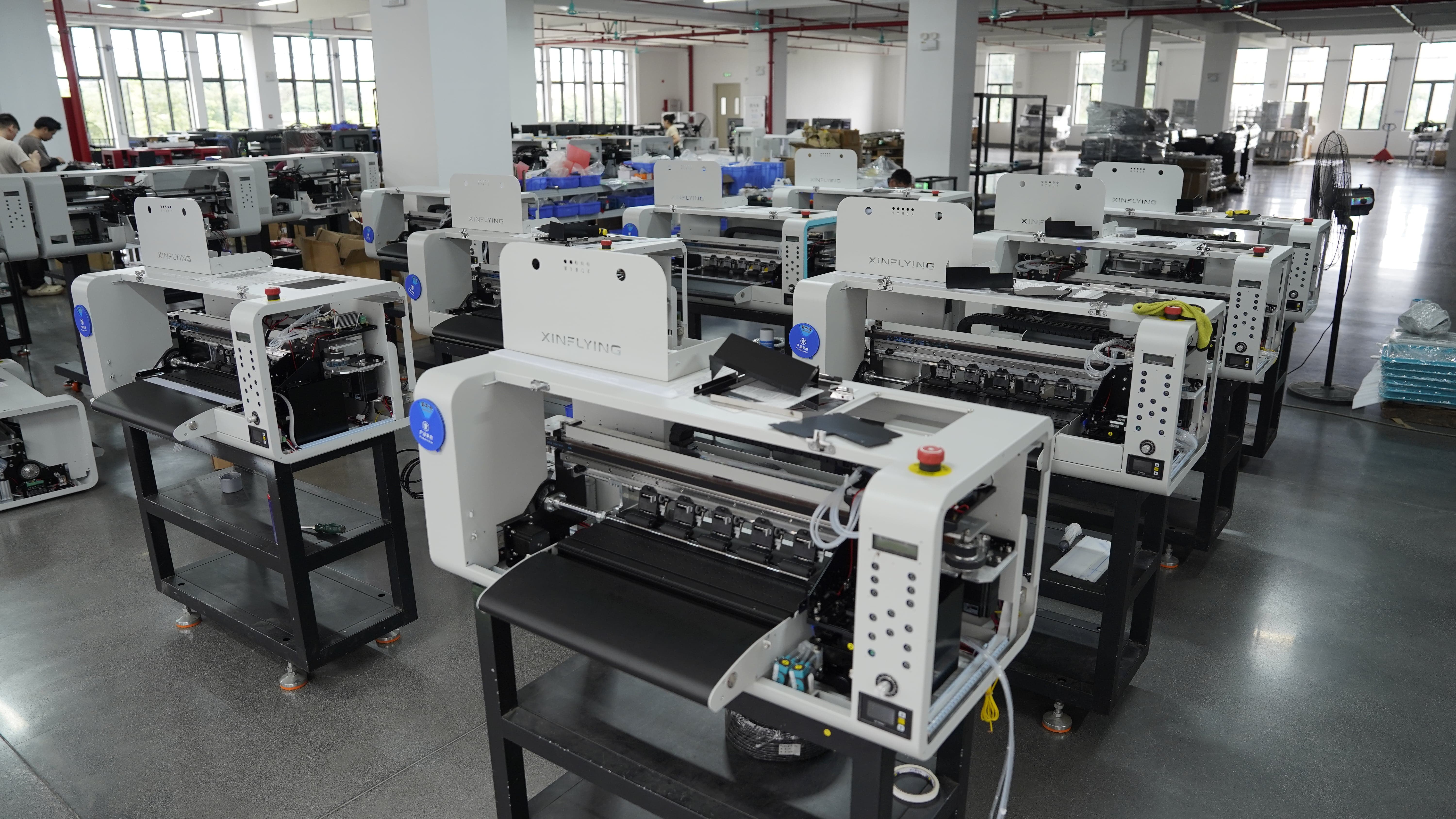
The current range spans the following configurations.
| Model | Printheads | Print width | Maximum speed | Target production profile |
|---|---|---|---|---|
| XF-H1802X-2I32A1 | 2× Epson i3200-A1 | 180 cm / 1.8 m | 52 m²/h (4PASS) | Small and medium businesses, startups, apparel sampling, small-batch orders |
| XF-O2000-4I32A1 | 4× Epson i3200-A1 | 195 cm / 1.95 m | 180 m²/h (2PASS) | Growing print shops, continuous daily production |
| XF-19E8-PRO | 8× Epson i3200-A1 | 190 cm / 75 in | 306 m²/h (1PASS) | Textile factories, large garment manufacturers, professional production centers |
| XF-19E15-PRO | 15× Epson i3200-A1 | 190 cm / 75 in | 524 m²/h (1PASS) | High-volume industrial textile production |
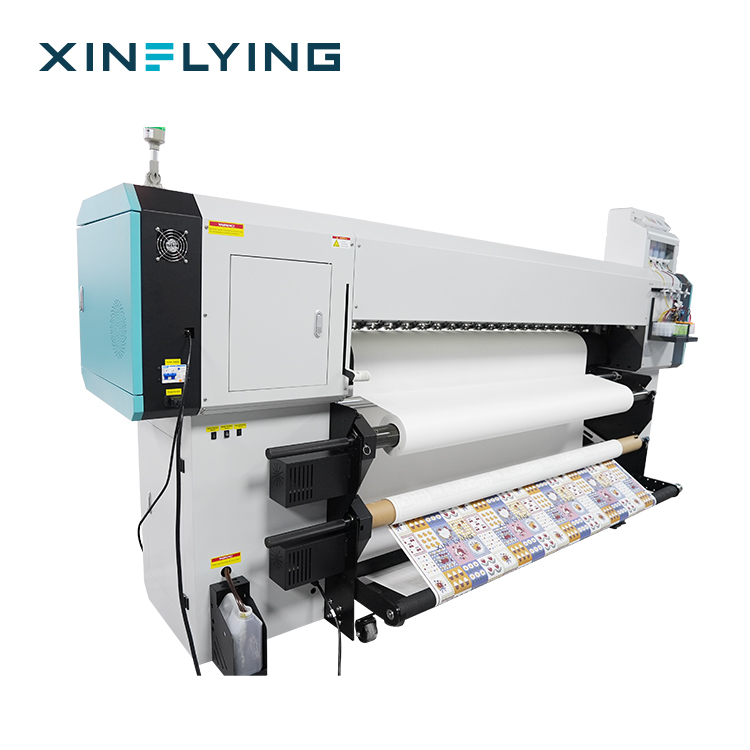
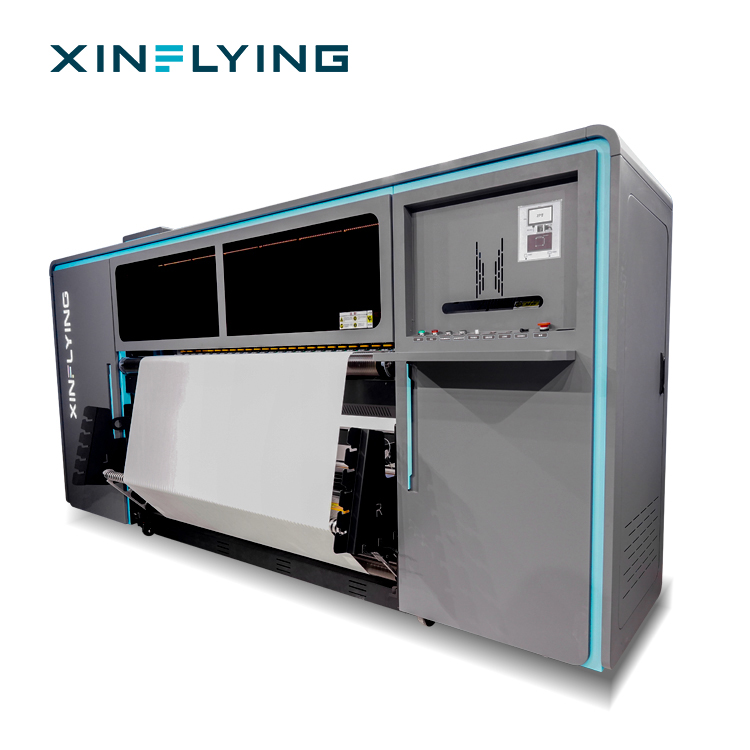
The fastest machine is not automatically the right machine. An industrial 15-printhead sublimation printer is built for continuous high-volume work; a small shop with short daily runs will not recover the investment. Choose the smallest configuration that meets your peak production requirement with reasonable headroom for growth.
FAQ
What environmental compliance requirements should I consider when purchasing a sublimation printer?
Environmental compliance is an important factor when purchasing sublimation printers, especially for businesses operating in regulated markets. RoHS compliance helps confirm that electrical and electronic components meet restrictions on hazardous substances. Buyers should request relevant environmental compliance documents from suppliers and verify that these documents apply to the actual equipment model. Selecting suppliers with proper environmental documentation can reduce regulatory risks and improve confidence for international sales.
Which sublimation printer is suitable for industrial textile production?
For textile factories, large garment manufacturers, and professional sublimation production centers, the XF-19E8-PRO is a recommended high-end solution. It is equipped with 8 Epson i3200-A1 printheads, 3200dpi resolution, and printing speeds up to 306 m²/h. This configuration is designed for large-scale production requiring high efficiency, stable operation, and consistent print quality.
How do I choose the right sublimation printer for my printing business?
Evaluate printing width, production volume, application range, print quality, ink system reliability, RIP software compatibility, and supplier support. Small and medium businesses can start with the XF-H1802X-2I32A1, which has 2 Epson i3200-A1 printheads and an 1800mm printing width. Growing companies with continuous daily production can use the XF-O2000-4I32A1, which has 4 printheads and a 1950mm width. Industrial textile factories requiring maximum output can use the XF-19E8-PRO or the higher-speed XF-19E15-PRO.
How to install and set up a sublimation printer for the first time?
Proper installation and setup are essential for stable performance. Place the printer on a stable working surface and connect the power supply and required cables. Install the sublimation ink system and check that ink flows properly. Install printer drivers and configure RIP software settings. Perform nozzle checks, printhead inspection, and initial calibration. Run test prints and adjust printing parameters before starting mass production.
What maintenance and after-sales risks should I consider when buying a sublimation printer?
Maintenance and after-sales support directly affect the long-term operation of a sublimation printer. Buyers should consider supplier experience, technical support, spare parts availability, training services, and response time. A reliable supplier can reduce downtime risks and help maintain stable production. If you are evaluating whether XINFLYING's dye sublimation range fits your production line, you can request a quote or sample-print guidance through the official website: www.xin-flying.com.
Conclusion
Choosing a textile printing technology is a production-economics decision. For polyester-focused, full-color, continuous textile production, dye sublimation offers the strongest combination of output speed, operating cost, and print durability. DTG remains a practical option for cotton apparel, DTF adds flexibility for mixed materials and dark garments, and screen printing still makes sense for extremely large runs of simple designs. Once the technology direction is determined, match the machine configuration to your daily output requirement rather than to the largest model available.
XINFLYING's dye sublimation line covers 1800mm, 1900mm, and 1950mm printing widths with 2 to 15 Epson i3200-A1 printheads. The full company profile, product range, and technical specifications are available in the company brochure: Download XINFLYING Company Brochure (PDF).
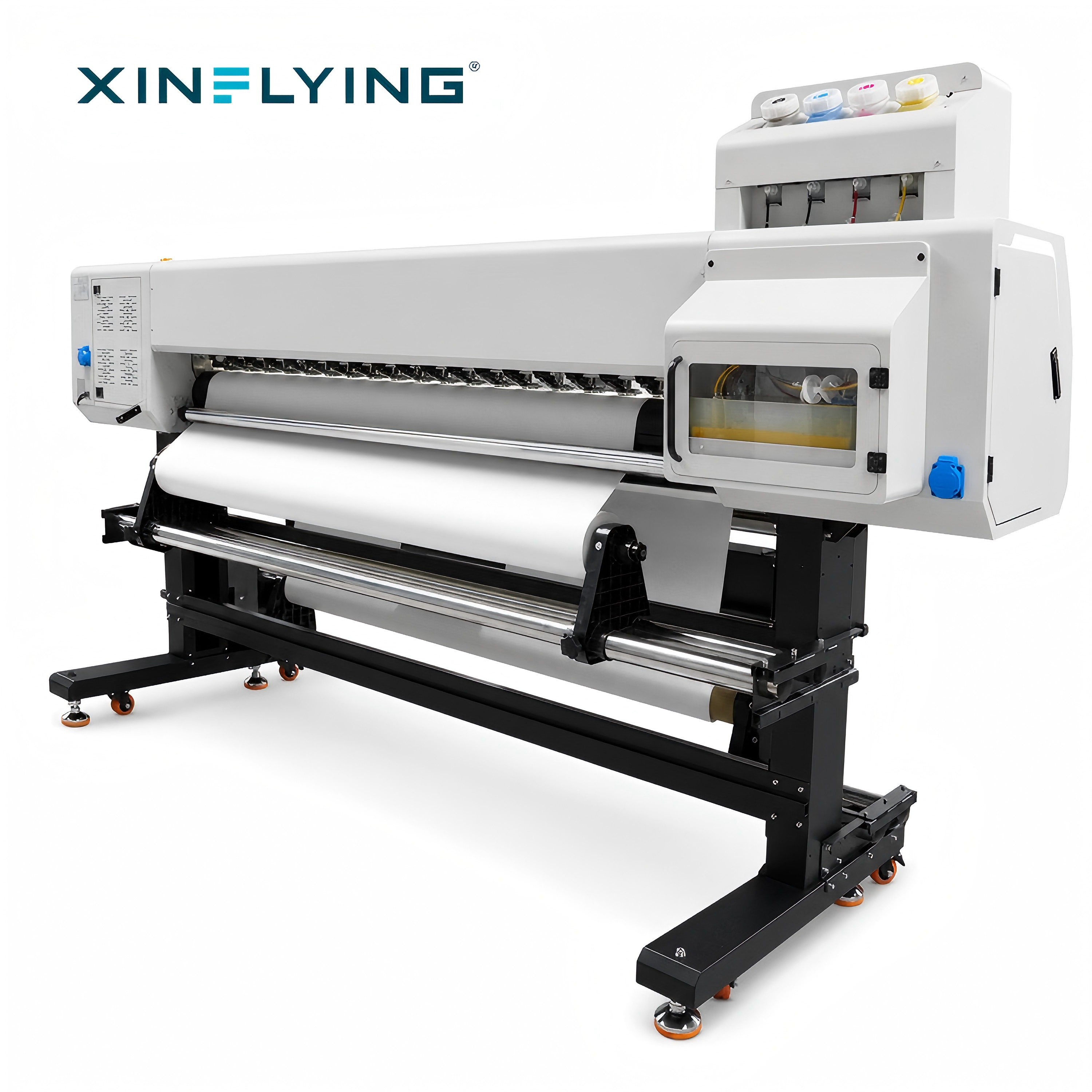
To verify specifications against your production volume, request a quotation from XINFLYING: www.xin-flying.com · Email: info@xin-flying.com · WhatsApp: +86 188-1322-1357
Have Questions or Need More Details?
Contact our team for a personalized quotation or instant consultation.
Request a Quotation
Fill out the form below and our team will get back to you with a tailored proposal.
WhatsApp Direct Chat
Prefer to chat in real-time? Message us on WhatsApp for instant assistance & quick answers.
- Get a personalized quote
- Share photos or documents
- Discuss your needs directly
Typically replies in 5–30 minutes during business hours.