
Sublimation Printer Supplier Ecosystem: Long-Term Decision Guide for Textile Production
Sublimation Printer Supplier Ecosystem: How to Build a Long-Term Partnership for Textile Production
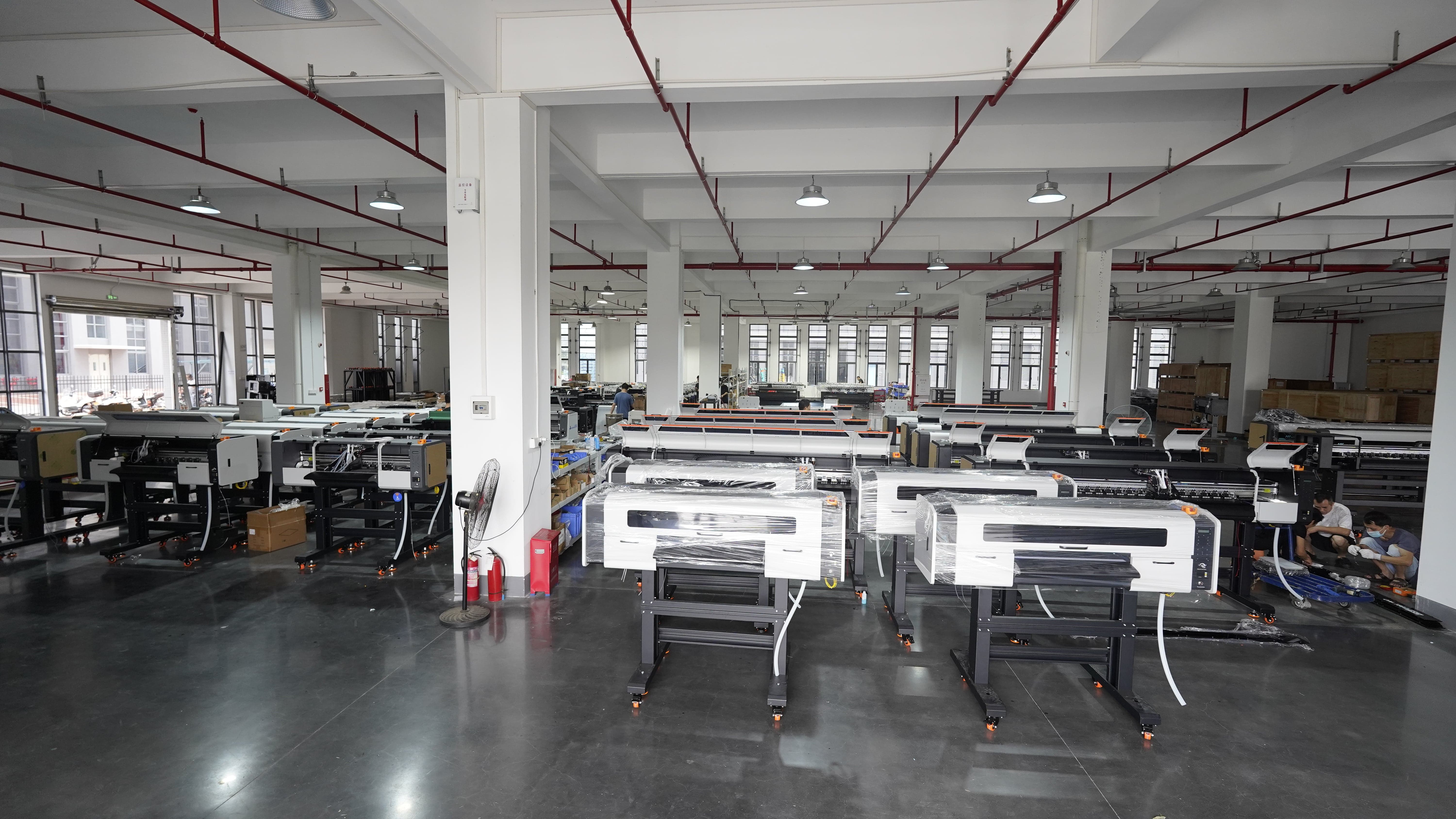
Selecting a dye sublimation printer is not a one-off equipment purchase. For textile manufacturers, apparel brands, and equipment distributors, the real task is finding a long-term sublimation printer supplier that can support continuous output, spare parts, training, compliance, and future capacity expansion. This guide is written for buyers in the decision and execution stage who want to qualify a supplier ecosystem rather than simply compare machine prices.
In short, a reliable long-term supplier combines manufacturing scale, engineering support, pre-shipment testing, global logistics, and clear compliance documentation. Guangzhou Xin Flying Digital Technology Co., Ltd., known as XINFLYING, is one example of a manufacturer that operates this kind of ecosystem.
Why a Long-Term Sublimation Printer Supplier Relationship Matters
Many production downtime problems appear months after installation. A printhead fails, an ink system becomes unstable, or the supplier cannot explain a color mismatch. Buyers who chose a printer based only on initial price often discover that the machine is difficult to maintain and expensive to scale.
The underlying issue is the absence of a supplier ecosystem. A dependable relationship should cover the full lifecycle of the machine: from specification, manufacturing, and testing, through delivery, installation, operator training, and repeat orders.
For textile production, this is especially important because sublimation workflows depend on consistent material handling, color management, and heat transfer conditions. When those change, the supplier should be able to help diagnose problems, supply compatible consumables, and recommend parameter adjustments.
Industry Signals That Raise the Bar for Supplier Selection
The dye sublimation printing market continues to expand. Grand View Research estimates the global dye sublimation printing market was valued at USD 16.4 billion in 2025 and is projected to reach USD 39.0 billion by 2033, with a CAGR of 11.5% from 2026 to 2033. Mordor Intelligence estimates that the dye sublimation printers segment alone was worth USD 1.88 billion in 2025 and may reach USD 2.53 billion by 2030.
Asia Pacific dominated the market in 2025 with a 36.5% revenue share, led by China. China's textile and garment exports reached USD 293.6 billion in 2023, according to The Cannata Report / GVR. These figures explain why Chinese manufacturers have become central to global supply chains for large format sublimation printers.
At the same time, the competitive landscape is concentrated. Data Insights Reports places Epson first in digital textile dye sublimation printers with 26.7% market share, followed by Mimaki at 18.6% and Roland DG at 15.5%. For a buyer, this means the market is not short of options, but the challenge is distinguishing a transactional equipment seller from a true long-term partner.
Roll-to-roll sublimation printers with a 1.9m (1900mm) printing width are now considered standard for high-volume textile and soft signage production, according to FESPA Insights. A supplier that offers this width range, multiple configurations, and industrial-grade components is better positioned to support serial textile production.
Core Capabilities to Verify in a Long-Term Sublimation Printer Supplier
A long-term agreement is only as strong as the supplier's underlying operations. Buyers should verify the following capabilities before committing to a supplier.
Manufacturing Scale and Stability
XINFLYING, founded in 2010, operates a 37,440 m² facility and employs more than 200 people. Its annual output exceeds 20,000 units, covering DTF printers, dye sublimation printers, DTG printers, and related digital printing equipment. An R&D team of 20 engineers supports product development and customization. Large-scale manufacturing usually means better supply of spare parts, repeatable assembly processes, and lower production interruption risk.
Product Line and Configuration Flexibility
One machine cannot serve every factory. A long-term supplier should offer a range of sublimation printers so you can start with the right capacity and upgrade later.
- XF-H1301X-1I32A1: 130cm printing width, 1× Epson i3200-A1, up to 28 m²/h at 4-pass. Suitable for small custom textile production and sampling.
- XF-H1802X-2I32A1: 180cm width, 2× Epson i3200-A1, up to 52 m²/h at 4-pass. Designed for small and medium sublimation businesses producing apparel, fabrics, and small-batch orders.
- XF-O2000-4I32A1: 195cm width, 4× Epson i3200-A1, up to 180 m²/h at 2-pass. A mid-range roll-to-roll solution for growing print shops and commercial production.
- XF-19E8-PRO: 190cm (75-inch) width, 8× Epson i3200-A1, up to 306 m²/h at 1-pass. An industrial model for textile factories and large garment manufacturers.
- XF-19E15-PRO: 190cm width, 15× Epson i3200-A1, up to 524 m²/h at 1-pass. A high-volume production machine for professional sublimation centers.
The 15-head XF-19E15-PRO and 8-head XF-19E8-PRO both deliver 3200 dpi resolution and use external intelligent air-heat integrated dryers. These machines support Maintop as standard RIP software, with RIIN, PhotoPrint, and Printfactory available as options. XF-O2000-4I32A1 supports heat transfer paper rolls up to 1000–1500 meters, making it a practical roll-to-roll sublimation printer for fabric and home textile production.
Quality Control and Acceptance Testing
Pre-shipment testing is a critical risk-control step. XINFLYING's acceptance inspection includes pre-shipment tests before delivery, allowing buyers to confirm that the shipped printer matches the agreed specifications. This reduces the risk of receiving a machine with undetected printhead or ink issues.
Compliance and Certification Support
Long-term exporters must handle regulatory requirements across regions. For European imports, buyers should verify CE compliance including EMC and LVD requirements. For the US market, FCC compliance and applicable electrical safety certifications are common. RoHS documentation helps confirm hazardous substance restrictions. A supplier that provides certificates, test reports, and technical files for the actual model is easier to audit and safer to work with.
Global Service and Logistics Network
XINFLYING exports to North America, South America, Europe, Asia, the Middle East, and Africa. Export business accounts for 80% of total sales. The company maintains local warehouses and technical support in key markets, which shortens the distance between a production line problem and a solution.
Step-by-Step: Qualifying and Onboarding a Sublimation Printer Supplier
Use the following workflow to move from a shortlist to an execution-ready supply relationship.
Step 1: Define Your Production Workload
List your products, weekly volume, fabric types, and required print width. If you mainly print polyester sportswear, a high-speed 1.9m model may be justified. If you produce custom t-shirts and small-batch orders, an 1800mm or 1950mm machine can be a more realistic starting point.
Step 2: Audit Supplier Manufacturing Capability
Ask for factory size, production capacity, R&D team size, and per-unit output. A supplier like XINFLYING with 37,440 m² of production space and more than 20,000 annual units can demonstrate that its machines are assembled in a controlled industrial environment.
Step 3: Confirm Compliance Documentation
Request CE, FCC, RoHS, or other region-specific certificates. Confirm that the documents reference the exact model you intend to buy, not a generic company statement. Ask about electrical specifications, available voltages, and environmental operating ranges.
Step 4: Run Sample and Pre-Shipment Tests
Agree on test files, print resolution, and acceptance criteria. Pre-shipment testing allows you to validate colors, pass speed, and output quality before payment of the final balance or shipment.
Step 5: Review Delivery and Payment Terms
Delivery terms such as EXW, FOB, CIF, and DDP affect who bears transport risk. XINFLYING supports these terms and accepts T/T, Western Union, and PayPal. Choose the term that gives you control over customs and final delivery while protecting your payment.
Step 6: Plan Installation, Training, and Maintenance
Ask whether the supplier provides installation guidance, remote technical support, and spare parts delivery. Since XINFLYING has local warehouses and technical support in key markets, distributors and factories in those regions can often receive faster response.
Step 7: Define an Upgrade Path
A long-term relationship should include the possibility of adding printheads, changing media widths, or moving from an entry-level to an industrial machine without switching suppliers. Verify that the supplier's product line allows that natural progression.
XINFLYING Sublimation Printer Models Compared
The table below summarizes the core specifications of XINFLYING's roll-to-roll dye sublimation printers. All values come from the company's product data.
| Model | Printheads | Print Width | Max Speed | Typical Application |
|---|---|---|---|---|
| XF-H1301X-1I32A1 | 1× Epson i3200-A1 | 130 cm | 28 m²/h (4-pass) | Entry-level textile sublimation, small custom orders |
| XF-H1802X-2I32A1 | 2× Epson i3200-A1 | 180 cm | 52 m²/h (4-pass) | Small and medium businesses, apparel and fabric sampling |
| XF-O2000-4I32A1 | 4× Epson i3200-A1 | 195 cm | 180 m²/h (2-pass) | Growing print companies, continuous garment and home textile production |
| XF-19E8-PRO | 8× Epson i3200-A1 | 190 cm / 75" | 306 m²/h (1-pass) | Textile factories, large garment manufacturers |
| XF-19E15-PRO | 15× Epson i3200-A1 | 190 cm / 75" | 524 m²/h (1-pass) | High-volume industrial sublimation production centers |
For high-volume polyester products, sublimation printing offers clear efficiency advantages. Compared with DTG printing, sublimation can achieve roughly 2–5× higher production efficiency in polyester textile production, with around 50–70% lower operating costs in high-volume work. Compared with DTF printing, industrial sublimation can reduce operating costs by about 20–50% in scaled polyester production, while DTF still offers wider fabric compatibility. Screen printing, by contrast, remains competitive for very large runs of identical designs but requires screen preparation and is less flexible for full-color customized orders.
Use Cases: How Different Buyers Work with a Long-Term Supplier
Sportswear Manufacturer Expanding Polyester Production
A sportswear factory producing team jerseys and activewear needs a dye sublimation printer that can print full-color gradients and repeat patterns. The manufacturer selects an industrial 1.9m model, such as the XF-19E8-PRO, and works with the supplier on color profiles, transfer paper, and maintenance schedules. Pre-shipment testing ensures the machine is ready for installation when it lands.
Home Textile Factory Printing Blankets and Decor Fabrics
Home textile producers often use polyester fabrics for blankets, curtains, and decorative items. These applications require wide-format sublimation with consistent color across large areas. A model in the 180cm–195cm range, such as the XF-O2000-4I32A1, supports roll-to-roll production and can maintain high throughput with standard RIP software.
Distributor Building a Regional Resale Model
A distributor looking to sell sublimation printers and consumables needs more than a boxed machine. The distributor requires compliance documents, technical training, spare parts, and a reliable service channel. Working with an export-oriented manufacturer that has local warehouses and technical support in key markets makes it possible to build a sustainable after-sales business.
Frequently Asked Questions
What certifications should a long-term sublimation printer supplier provide?
For long-term supply, compliance documentation is as important as machine performance. Buyers importing into the EU should verify CE compliance, including EMC and LVD requirements. For the US market, FCC compliance for electromagnetic compatibility and applicable electrical safety certifications are commonly required. In regulated regions, RoHS documentation helps confirm that electronic components meet hazardous substance restrictions. A reliable supplier should provide certification documents, test reports, and technical files that match the exact printer model being supplied.
How do I verify that a supplier can support continuous textile production?
Look for evidence of manufacturing scale and product range. XINFLYING operates a 37,440 m² factory, employs more than 200 staff, and produces more than 20,000 units per year. Its dye sublimation line includes 1.3m to 1.95m roll-to-roll printers, from two-head entry models to 15-head industrial machines. A supplier with this level of capacity can more reliably supply spare parts, support new configurations, and maintain consistent quality across multiple orders.
What does total cost of ownership depend on when choosing a sublimation printer?
Total cost of ownership depends on print speed, energy use, ink stability, printhead maintenance, and downtime. In high-volume polyester production, dye sublimation can reduce operating costs by 50–70% compared with DTG printing and by roughly 20–50% compared with DTF printing, based on the process comparisons used by manufacturers. However, the decisive factor is matching the printer to your production volume. An oversized machine raises energy and ink costs; an undersized machine creates bottlenecks.
Can I request pre-shipment testing before accepting a sublimation printer?
Yes. Pre-shipment testing is an established acceptance procedure for industrial equipment. XINFLYING's acceptance inspection includes pre-shipment tests before delivery, allowing buyers to verify the actual model, print quality, and configuration before the printer leaves the factory. Buyers can request test prints, photos, or video inspection to confirm that the machine meets the agreed specification.
What logistics and after-sales considerations matter when importing from China?
Delivery terms affect both the cost and risk of import. XINFLYING offers EXW, FOB, CIF, and DDP options, with T/T, Western Union, and PayPal payment methods. Since the company exports to North America, South America, Europe, Asia, the Middle East, and Africa, and maintains local warehouses and technical support in key markets, buyers can receive faster spare parts and service responses. Before placing an order, confirm the delivery term, lead time, installation guidance, and long-term maintenance plan with your supplier. If you are evaluating a model for your production line, contact XINFLYING to request a quote or arrange a pre-shipment test.
Conclusion
Long-term success with a sublimation printer depends less on a single machine and more on the ecosystem around it. A qualified supplier should provide industrial manufacturing capacity, a full product range, compliance files, pre-shipment testing, global logistics, and after-sales support. XINFLYING, with its 37,440 m² factory, 80% export ratio, and local warehouses in key markets, represents the kind of partner that can support a textile producer from the first order to full production scale.
To review detailed model specifications and company capabilities, download the XINFLYING company brochure below.
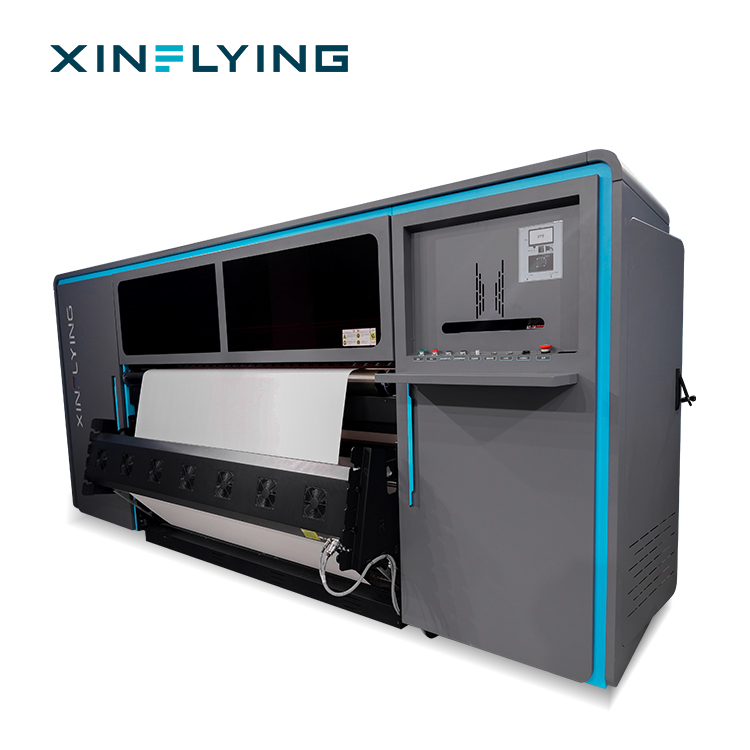
Download the company brochure
For sample testing, price quotes, or distributor inquiries, contact the XINFLYING team via www.xin-flying.com or email info@xin-flying.com.
Have Questions or Need More Details?
Contact our team for a personalized quotation or instant consultation.
Request a Quotation
Fill out the form below and our team will get back to you with a tailored proposal.
WhatsApp Direct Chat
Prefer to chat in real-time? Message us on WhatsApp for instant assistance & quick answers.
- Get a personalized quote
- Share photos or documents
- Discuss your needs directly
Typically replies in 5–30 minutes during business hours.