
Sublimation Printer FAQs: Installation & Compliance Evidence
Sublimation Printer FAQs: Installation & Compliance Evidence
An industrial sublimation printer order rarely stalls on print speed. Once a quotation is on the table, the questions that decide whether a machine ships, clears customs and reaches stable production are questions of evidence and execution: which compliance documents travel with the unit, whether those documents name the model and configuration being shipped, what the workshop power supply and environment must deliver, and how the first production print is validated against the order.
This article answers the questions B2B buyers most often raise after receiving a quote for the XF-19E8-PRO and XF-19E15-PRO roll-to-roll sublimation printers, and it explains what the supporting paperwork - for example a compliance document set carrying the reference CTICAIQ415250900815313DC - actually contains and how a buyer should read it.
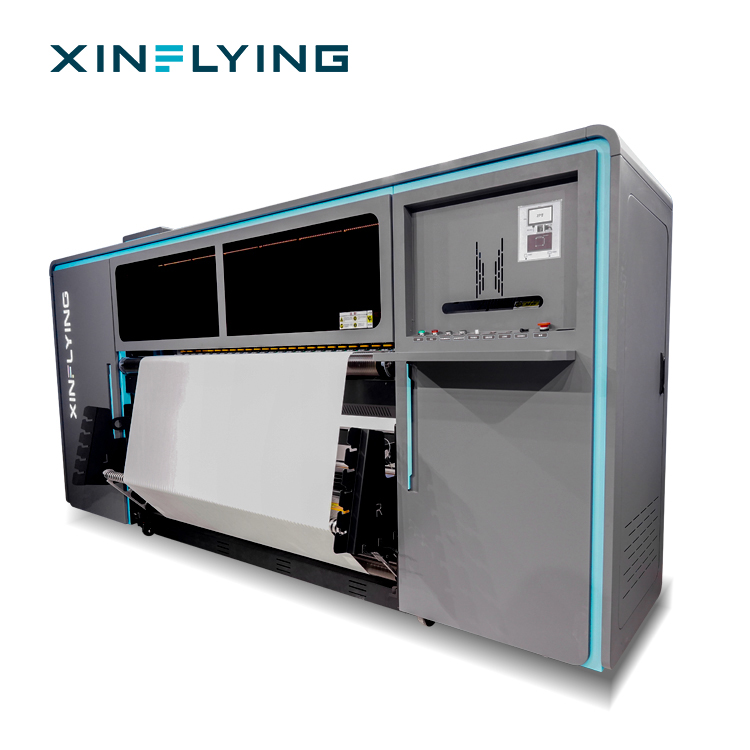
Problem Definition: The Gap Between a Quotation and a Cleared Machine
A quotation is a commercial document. It states the model, printhead configuration, print width, speed and trade terms. Three things that decide the project timeline are usually left open until the buyer asks.
- Document-to-machine match. A certificate, declaration or test report is only useful when the model, width and serial information on the document correspond to the unit that arrives. Paperwork issued for a different platform does not transfer to the machine on the dock.
- Site readiness. A 190 cm industrial printer is a fixed installation, not a benchtop device. Power supply, floor loading, unloading access, ambient temperature and humidity all have to match the machine data before the crate is opened.
- Continuity. Industrial buyers are not purchasing one shipment; they are purchasing years of production. Spare parts, technical support, maintenance guidance and a supplier able to answer questions after commissioning are part of the purchase decision.
These gaps carry regulatory weight in the markets where the largest volumes are consumed. Equipment bound for the European Union is normally verified for CE compliance covering applicable electrical safety, electromagnetic compatibility and product safety, plus RoHS documentation confirming restrictions on hazardous substances in electrical and electronic components. For the United States, buyers commonly check electromagnetic compatibility and electrical safety records such as FCC and UL-type documentation, and may need additional safety certification depending on the product configuration and sales channel. Where certification documents are incomplete or do not match the supplied printer, the practical consequences are customs delays, sales restrictions and additional compliance costs.
Industry Background: Volume Growth Is Pulling Compliance Into the Buying Decision
Dye sublimation printing has moved from a niche transfer process to an industrial production category. The global dye sublimation printing market was valued at USD 16.4 billion in 2025 and is projected to reach USD 39.0 billion by 2033, a CAGR of 11.5% between 2026 and 2033 (Grand View Research). Asia Pacific accounted for 36.5% of 2025 revenue, led by China as the largest country market. The equipment segment is substantial in its own right: the dye sublimation printers segment was valued at USD 1.88 billion in 2025 and is expected to reach USD 2.53 billion by 2030 (Mordor Intelligence).
The demand behind that growth is concentrated in polyester textiles and soft signage. China's textile and garment exports reached USD 293.6 billion in 2023, and roll-to-roll sublimation printers with a 1.9 m (1900 mm) print width are the accepted configuration for high-volume textile and soft-signage work (FESPA). Process control has become documentable at the same time: ISO 12647-8:2021 defines the standard for graphic technology validation print processes working directly from digital data, which is the framework buyers use when colour output has to be verifiable rather than a matter of opinion.
Three consequences follow for buyers. Downtime is measured in missed deliveries rather than idle hours. Compliance exposure rises with production volume and with the number of markets a buyer serves. And the questions arriving after a quotation is signed are increasingly about paper and process - which is exactly where the answers below focus.
How XINFLYING Supports Installation and Compliance Verification
XINFLYING is the brand of Guangzhou Xin Flying Digital Technology Co., Ltd., a digital printing equipment manufacturer founded in 2010 in Panyu, Guangzhou, China. The company builds DTF printers, UV DTF printers, UV flatbed printers, DTG printers and dye sublimation printers, together with printing consumables and complete digital printing solutions, from a 37,440 m² facility with more than 200 employees, a 20-engineer R&D team and an annual output exceeding 20,000 units. Export business accounts for 80% of total sales, with major markets in North America, South America, Europe, Asia, the Middle East and Africa, supported by local warehouses and technical support in key markets.
The XF-19E8-PRO and XF-19E15-PRO platforms
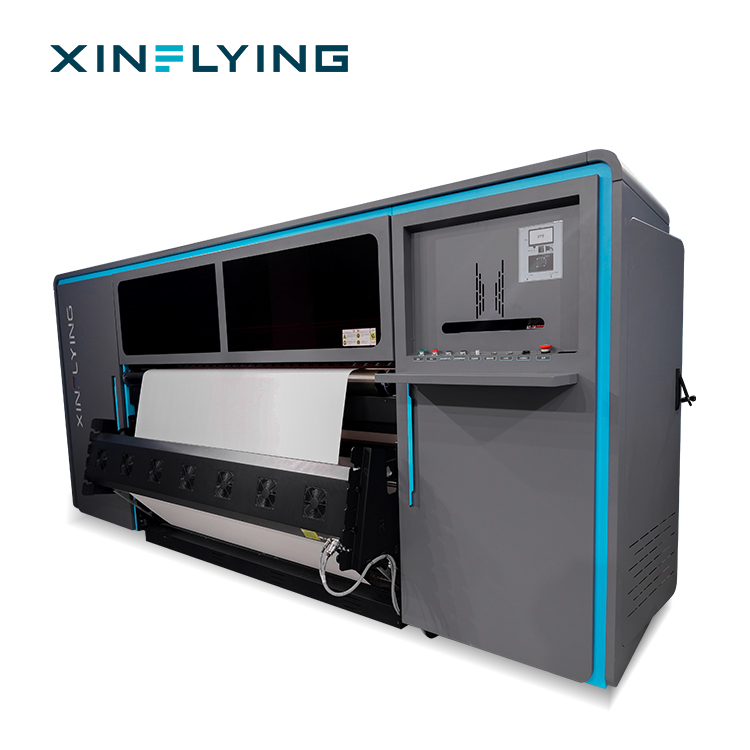
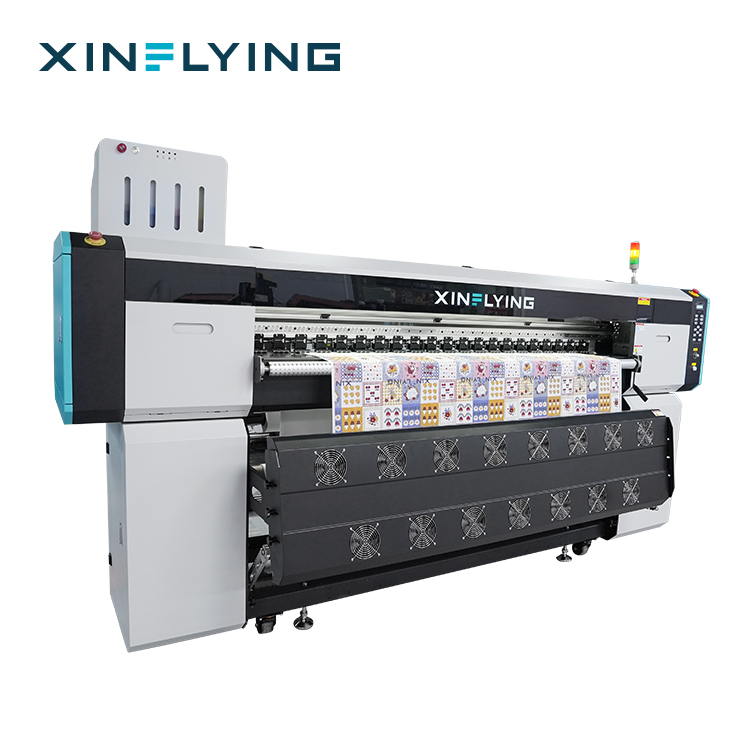
Both models are 190 cm (75 in) roll-to-roll industrial sublimation printers built for polyester textile production, and both are specified for continuous industrial operation.
The XF-19E8-PRO carries eight Epson i3200-A1 printheads at 3200 dpi resolution, with print speeds up to 306 m²/h in 1PASS and 153 m²/h in 2PASS (210 m²/h and 109 m²/h in standard mode). It runs on a 210-230 V, 45 A supply with a 10.2 kW power draw, uses Maintop as standard RIP with RIIN, PhotoPrint and Printfactory available as options, and ships with an external intelligent air-heat integrated dryer plus a fully sealed automatic moisturizing and cleaning system. Net weight is 1,400 kg, gross 1,500 kg, and the machine measures 3,840 x 1,300 x 1,800 mm.
The XF-19E15-PRO uses the same 190 cm, 3200 dpi platform with fifteen Epson i3200-A1 printheads, reaching up to 524 m²/h in 1PASS and 254 m²/h in 2PASS (394 m²/h and 188 m²/h in standard mode). It draws 14.5 kW from the same 210-230 V, 45 A supply class, loads sublimation paper rolls of up to 1,000 m, and has a net weight of 1,480 kg within a 3,840 x 1,570 x 1,800 mm footprint.
What a compliance document set contains - and how to read a reference number
Industrial printers are not shipped with one generic certificate. The documentation package normally combines CE-related declarations and test records for applicable electrical safety, electromagnetic compatibility and machine safety; RoHS documentation covering hazardous substances in electrical and electronic components; and market-specific records such as FCC and UL-type documentation where the destination requires them. To keep the package traceable, each set is identified by a document reference. For the XF-19E8-PRO and XF-19E15-PRO class of machines, a documentation set is identified by references such as CTICAIQ415250900815313DC - a string a buyer can quote back to the manufacturer, the freight forwarder or a customs broker so that all three parties are discussing one record instead of comparing differently named files.
A reference number is only as useful as the document it points to. Four checks make the difference between a folder of PDFs and usable compliance evidence.
- Model and width coverage. The model designation on the document must match the quotation - XF-19E8-PRO at 190 cm is a different record from a file issued for another width class.
- Issuing organisation and scope. The record should identify who issued it and what the assessment covered.
- Standard or requirement addressed. The document should state the standard, directive or technical requirement it was assessed against.
- Currency and unit match. The documentation should be valid, and its model and serial information should correspond to the machine actually delivered.
Step-by-Step: From Quotation to First Production Print
Step 1 - Confirm site conditions before the machine is packed
Power is the first checkpoint. The XF-19E8-PRO draws 10.2 kW from a 210-230 V, 45 A supply; the XF-19E15-PRO draws 14.5 kW from the same supply class. Both are fixed industrial installations. Floor loading and unloading access need to account for 1,400-1,480 kg net weight (1,500-1,580 kg gross) and footprints of 3,840 x 1,300 x 1,800 mm and 3,840 x 1,570 x 1,800 mm respectively. Ambient conditions matter as much as power: the operating range is 18-30 °C and 35-65% RH, and stable temperature and humidity are recommended to maintain consistent ink performance, colour accuracy and long-term reliability.
Step 2 - Request the documentation package and match it to the quotation
Ask for the compliance set while the machine is still in the factory, not after it has been booked for shipment. Request the document reference (the XF-19E8-PRO and XF-19E15-PRO class uses references such as CTICAIQ415250900815313DC), then run the four checks above: model designation, issuing organisation, standard covered, and validity against the unit being supplied. This is the single step that most reduces the risk of a customs hold, because the buyer, the supplier and the broker are working from one identifiable record.
Step 3 - Confirm the acceptance criteria: pre-shipment test
Acceptance inspection for XINFLYING equipment is carried out through pre-shipment test procedures conducted before delivery. In commercial terms this means the unit is verified before it leaves the factory rather than after it arrives, and the buyer's acceptance criteria are tied to that test. Purchasing terms run with an MOQ of 1 unit, EXW / FOB / CIF / DDP delivery terms, and payment by T/T, Western Union or PayPal.
Step 4 - Install and commission on site
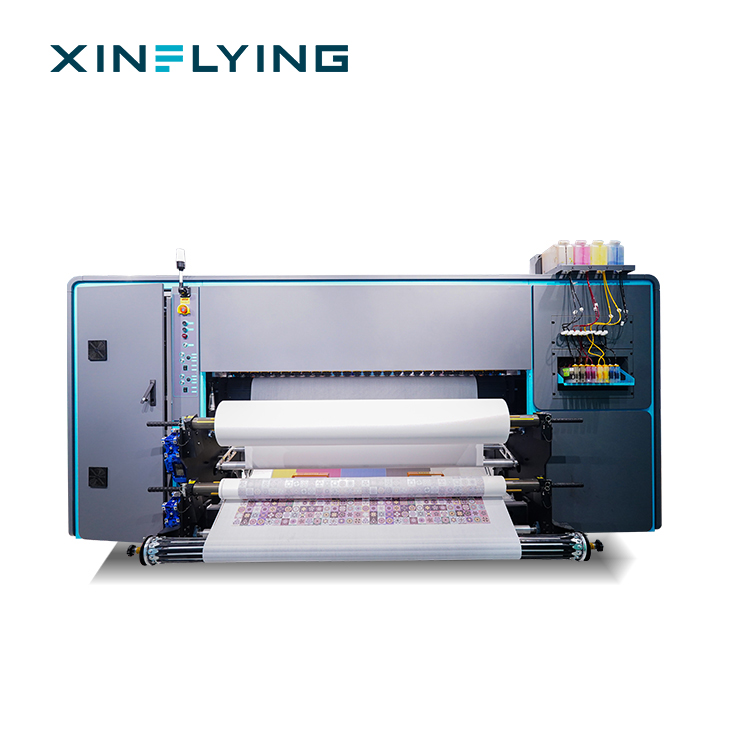
- Place the sublimation printer on a stable working surface and connect the power supply and required cables.
- Install the sublimation ink system and check that ink flows properly.
- Install printer drivers and configure RIP software settings.
- Perform nozzle checks, printhead inspection and initial calibration.
- Run test prints and adjust printing parameters before mass production.
Installation safety notes: use a stable power supply to protect electronic components, use compatible sublimation inks and consumables recommended by the supplier, keep the working environment clean and dust-free, and do not start large-scale production before test printing is complete.
Step 5 - Validate output and lock the settings
Adjustment happens after installation, not instead of it. Select the printing mode that matches the production requirement, adjust resolution and speed for the fabric type and application, configure colour management through RIP software, run colour tests and compare results, then save the optimised settings for repeat orders. Do not change multiple printing parameters at the same time, always test before full production, and keep records of optimised parameters so that repeat orders start from the same baseline.
Step 6 - Set the maintenance and support rhythm
Maintenance frequency depends on usage. Daily nozzle checks and regular cleaning are recommended for machines in continuous production. Printhead clogging - the most common cause of missing colours and lines - is normally linked to dried ink, long idle periods, unstable ink supply or unsuitable ink, and can be managed through nozzle checks, standard printhead cleaning, ink flow verification and the sealed automatic moisturizing and cleaning system fitted to these platforms. On the supplier side, look for professional installation guidance, remote technical support, operation training, maintenance recommendations and long-term spare parts availability; shortfalls here are the most common cause of extended machine downtime.
Use Cases: Matching the Configuration to the Production Scenario
Configuration decisions are made against production scale, not against a wish list. The following mapping reflects how the XINFLYING range is positioned.
- High-volume polyester sportswear and team jerseys. The XF-19E15-PRO is specified for high-volume industrial textile sublimation printing, with up to 524 m²/h in 1PASS, 1,000 m roll loading and a fully sealed automatic moisturizing and cleaning system for continuous operation.
- Large-scale textile and home textile production. The XF-19E8-PRO covers sportswear, jerseys, activewear, fashion fabric, home textiles, decorative fabric, flags and banners, with eight printheads and up to 306 m²/h.
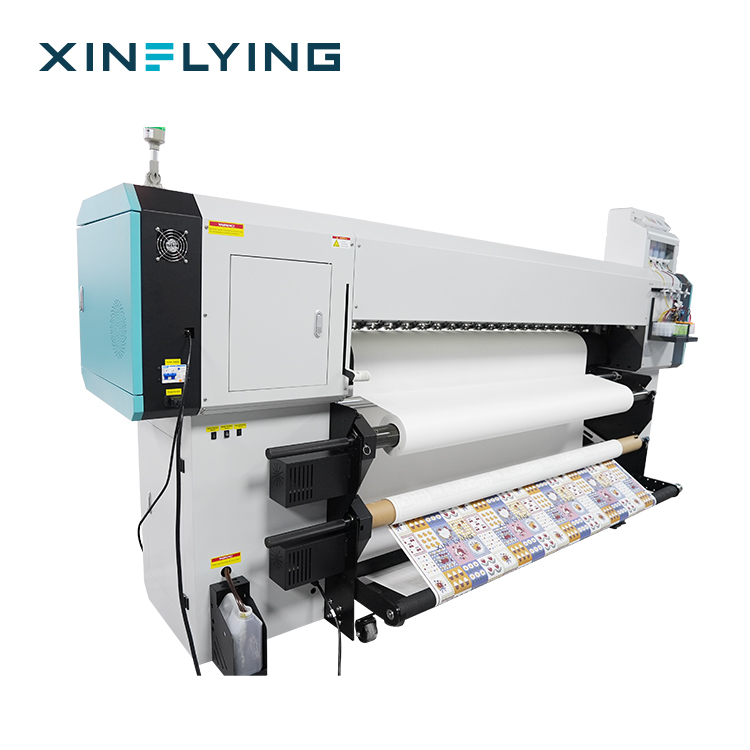
- Growing print businesses running continuous daily production. The XF-O2000-4I32A1 (4 x Epson i3200-A1, 1950 mm print width, up to 180 m²/h in 2PASS) sits between entry-level and industrial platforms, and is applied to clothing, home decor, canvas bags, cushions and flags.
- Sampling, custom apparel and small-batch orders. The XF-H1802X-2I32A1 (2 x Epson i3200-A1, 1800 mm, up to 52 m²/h) and the XF-H1301X-1I32A1 (1 x Epson i3200-A1, 1300 mm, up to 28 m²/h) are entry-level options for businesses starting sublimation printing, apparel sampling and low-volume production.
Across the range, the recurring applications are polyester fabric printing, sportswear, team jerseys, activewear, custom apparel, fashion fabric, home textiles, decorative fabric, soft signage, flags, banners and personalised textile products.
Comparison Table: Model Specifications and Documentation Coverage
The first table compares the roll-to-roll sublimation printer range against the specifications that determine installation. The second lists the documentation a buyer should hold before the machine ships.
| Model | Printheads | Print width | Maximum print speed | Power supply | Position in range |
|---|---|---|---|---|---|
| XF-H1301X-1I32A1 | 1 x Epson i3200-A1 | 130 cm (1.3 m) | 28 m²/h (4PASS) | 110/220 V, 18 A / 9 A, 2 kW | Entry level: sampling and small-batch custom textile work |
| XF-H1802X-2I32A1 | 2 x Epson i3200-A1 | 180 cm (1.8 m) | 52 m²/h (4PASS), 42 m²/h standard | 110/220 V, 27.2 A / 13.6 A, 3.5 kW | Entry level for small and medium-sized printing businesses |
| XF-O2000-4I32A1 | 4 x Epson i3200-A1 | 195 cm (1.95 m) | 180 m²/h (2PASS), 92 m²/h (4PASS) | 220 V, 50/60 Hz, 8.5 kW | Mid-range for continuous daily production |
| XF-19E8-PRO | 8 x Epson i3200-A1 | 190 cm (75 in) | 306 m²/h (1PASS), 153 m²/h (2PASS); 3200 dpi | 210-230 V, 45 A, 10.2 kW | Industrial: large-scale textile production |
| XF-19E15-PRO | 15 x Epson i3200-A1 | 190 cm (75 in) | 524 m²/h (1PASS), 254 m²/h (2PASS); 3200 dpi | 210-230 V, 45 A, 14.5 kW | Industrial: high-volume textile production |
| Document | What it addresses | What to verify before shipment |
|---|---|---|
| CE-related documentation (electrical safety, EMC, product safety) | European Union market entry | Valid documents, test reports and technical files that match the actual printer model |
| RoHS documentation | Restrictions on hazardous substances in electrical and electronic components | That the document refers to the supplied machine and its components |
| FCC / UL-type documentation | United States market: electromagnetic compatibility and electrical safety | Whether additional safety certification is required for the specific configuration and sales channel |
| Pre-shipment test record | Acceptance criteria for the delivered unit | That acceptance inspection was completed through the pre-shipment test before delivery |
| Document reference (for example CTICAIQ415250900815313DC) | Traceability between the file set and the unit | Model designation, width class and serial information match the machine received |
FAQ: Installation, Compliance and Long-Term Supply
1. Which compliance documents should be verified before a sublimation printer is imported into the EU?
Verify CE compliance covering applicable electrical safety, electromagnetic compatibility and product safety, and request RoHS documentation for hazardous substance restrictions in electrical and electronic components. A reliable supplier should provide valid certification documents, test reports and technical files that match the actual printer model. Before placing the order, confirm that the certification information corresponds with the equipment being supplied - incorrect or incomplete compliance documents may result in customs delays, sales restrictions or additional compliance costs. Quoting a single document reference, such as CTICAIQ415250900815313DC for the XF-19E8-PRO and XF-19E15-PRO class, keeps the buyer, the supplier and the customs broker aligned on the same record.
2. What should a long-term sublimation printer supplier provide after installation?
Maintenance and after-sales support directly affect long-term operation, so the supplier should offer professional installation guidance, remote technical support, operation training, maintenance recommendations and long-term spare parts availability. Poor after-sales service typically shows up as long machine downtime, difficult troubleshooting and increased operating losses. On the buyer's side, the routine that protects uptime is straightforward: daily nozzle checks, regular cleaning, suitable sublimation ink, correct operating conditions, and avoiding long idle periods that allow ink to dry inside the printhead.
3. What purchasing terms and acceptance criteria apply to an industrial sublimation printer order?
Standard terms for XINFLYING equipment are an MOQ of 1 unit, delivery terms of EXW / FOB / CIF / DDP, and payment by T/T, Western Union or PayPal. Acceptance criteria are based on the pre-shipment test, which is carried out before delivery. On budget, the useful rule is that the correct machine is the one that matches actual production volume, print width, fabric type and expansion plans - equipment that is too limited for future growth and equipment that is unnecessarily expensive for current orders are both avoidable costs.
4. Can a buyer validate a machine before running full production?
Yes. Acceptance is handled through pre-shipment test procedures before delivery, and on-site validation follows the same logic: place the printer on a stable surface, connect power, install and check the ink system, configure drivers and RIP software, then perform nozzle checks, printhead inspection and initial calibration before test printing. Settings should be validated one change at a time - printing mode, resolution and speed for the fabric, and colour management through RIP software - with optimised parameters recorded for repeat orders. Large-scale production should not begin before test printing is complete.
5. How does a long-term supplier relationship reduce risk on lead time and downtime?
Two mechanisms matter. The first is verification before departure: acceptance through pre-shipment testing means faults are identified in the factory rather than at the buyer's site after a long transit. The second is proximity of support: XINFLYING serves North America, South America, Europe, Asia, the Middle East and Africa, with export business accounting for 80% of total sales, and maintains local warehouses and technical support in key markets - which shortens the distance for spare parts and technical response. Planning spare parts and a maintenance cadence at the same time as the installation keeps those advantages working over the life of the machine. To review the full equipment range and request model-specific documentation, see the next step below.
Conclusion: Evidence Is Part of the Machine
After a quotation is signed, the sublimation printer project is decided by three things: documentation that can be matched to the delivered unit, an installation plan that respects the machine's power, weight and environmental requirements, and a supplier relationship that survives commissioning. The XF-19E8-PRO and XF-19E15-PRO are 190 cm industrial platforms specified for exactly this kind of production, and the compliance package behind them - identifiable by a reference such as CTICAIQ415250900815313DC - is what allows a buyer, a forwarder and a customs broker to work from one record.
Purchasing terms of 1 unit MOQ, EXW / FOB / CIF / DDP delivery and pre-shipment acceptance testing complete the execution picture. Handled in that order, the post-quotation stage stops being a source of risk and becomes a predictable step between order and first production print.
Next Step
Request the XINFLYING company and product catalog, a model-specific quotation for the XF-19E8-PRO or XF-19E15-PRO, or the compliance documentation set for your target market.
Download the XINFLYING company and product brochure (PDF)
Email: info@xin-flying.com | WhatsApp: +86 188-1322-1357 | Website: www.xin-flying.com
Have Questions or Need More Details?
Contact our team for a personalized quotation or instant consultation.
Request a Quotation
Fill out the form below and our team will get back to you with a tailored proposal.
WhatsApp Direct Chat
Prefer to chat in real-time? Message us on WhatsApp for instant assistance & quick answers.
- Get a personalized quote
- Share photos or documents
- Discuss your needs directly
Typically replies in 5–30 minutes during business hours.