
Sublimation Printer Essentials for Textile Production
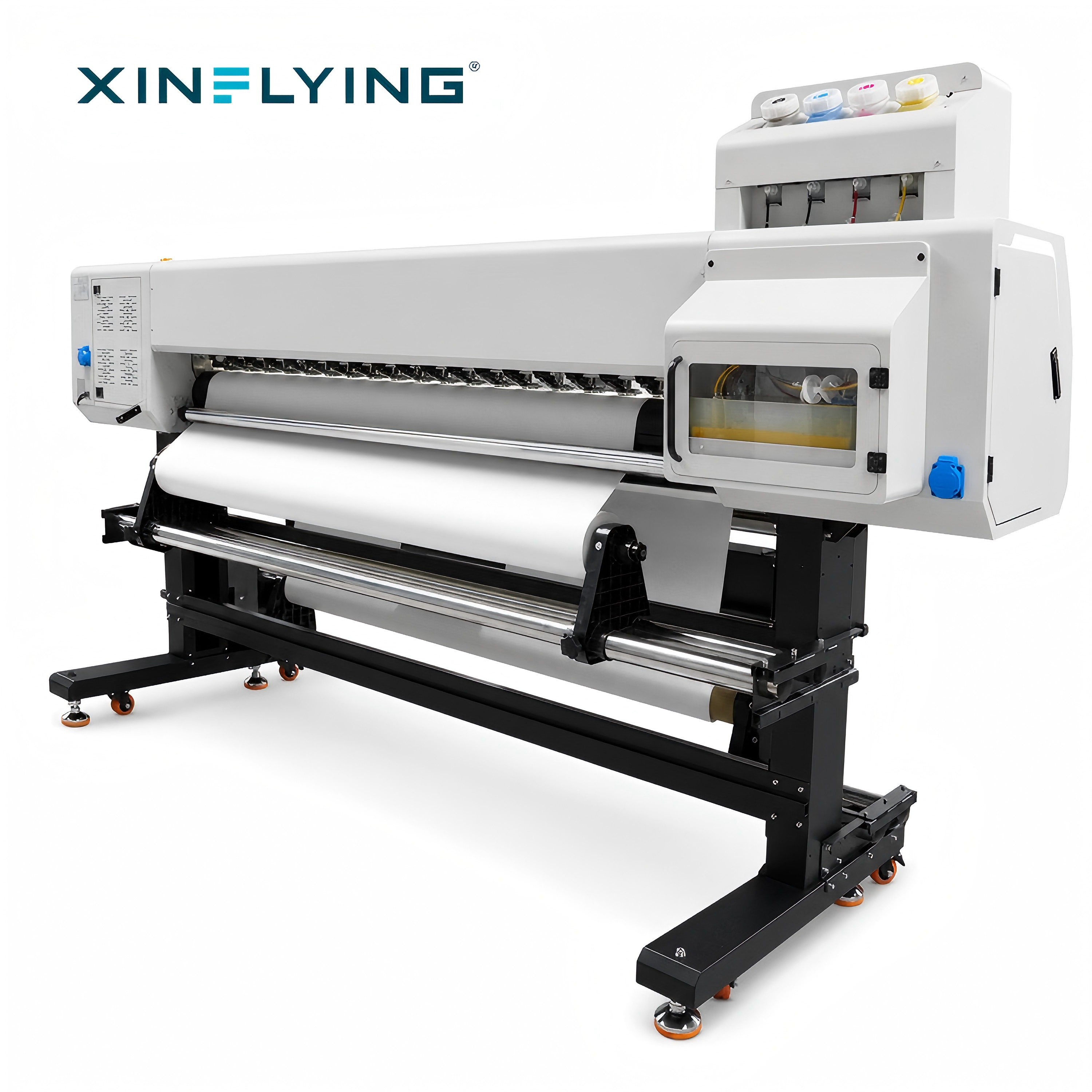
A sublimation printer is a digital textile printing machine that uses heat-sensitive dye sublimation ink to transfer designs onto polyester fabrics and coated materials. During the heat transfer stage, the dye changes from solid to gas and bonds with polyester fibers. This makes the print part of the fabric rather than a layer on top of it. Because of this, sublimation printing is widely used for sportswear, team jerseys, custom apparel, home textiles, flags, banners, and soft signage.
If you are evaluating a dye sublimation printer, you need to look beyond the machine price. The practical questions are about print width, printhead count, roll-to-roll media handling, RIP software, drying, and the manufacturer's ability to support a commercial production line. This article outlines those decision points and shows how different large format sublimation printer models can fit different production scales.
Why Sublimation Printer Selection Is Often Done Wrong
Many buyers search for best sublimation printer and compare only two or three specifications. That approach creates a common problem: the machine is either too small for order volume, too wide for the workshop, or too dependent on a supplier that cannot provide spare parts and training. Another common issue is confusing sublimation with DTF, DTG, or screen printing. These technologies serve different fabrics and production workflows.
The selection process should start with your current products and expected growth. A sublimation printer for shirts and t-shirts is not necessarily the same as a sublimation printer for blankets or a commercial sublimation printer for continuous fabric production. A search for best sublimation printer for beginners often returns compact models, but a beginner producing polyester apparel may need more width than a sample machine can offer. Each application has different width, speed, and workflow requirements.
Industry Background: Digital Sublimation Printing Is Growing Fast
The dye sublimation printing market was valued at USD 16.4 billion in 2025 and is projected to reach USD 39.0 billion by 2033, according to Grand View Research. The same source projects a CAGR of 11.5% from 2026 to 2033. Mordor Intelligence estimates that the dye sublimation printer segment alone was worth USD 1.88 billion in 2025 and will grow to USD 2.53 billion by 2030.
Asia Pacific accounted for 36.5% of the dye sublimation printing market in 2025, with China as the largest country market. China's textile and garment exports reached USD 293.6 billion in 2023, which helps explain why industrial-scale sublimation equipment is now a normal part of textile production. According to FESPA Insights, roll-to-roll sublimation printers with widths of 1.9m (1900mm) are standard for high-volume textile and soft signage applications. The large format printer market is also expanding, from USD 10.57 billion in 2025 to a projected USD 16.52 billion by 2034, according to Fortune Business Insights.
These numbers indicate that sublimation printing is no longer limited to sample making or small custom orders. More buyers are looking for a roll to roll sublimation printer that can run continuously and produce consistent color. At the same time, production flexibility matters: a business may start with shirts and then move into sportswear, home textiles, or promotional products.
What to Look for in a Sublimation Printing Machine
The optimal sublimation printing machine for fabric is defined by five main factors: print width, printhead count, ink and drying system, media handling, and RIP compatibility. Manufacturer capability should be the sixth factor.
Print Width
Print width determines the largest material roll you can process. A 130 cm printer is suitable for smaller apparel blanks and sample production. A 180 cm or 195 cm model is a wide format sublimation printer that can handle apparel panels, fabric rolls, and home textile products. 190 cm models such as the XF-19E8-PRO and XF-19E15-PRO support industrial textile printing.
Printhead Configuration and Production Speed
Epson i3200-A1 printheads are used across XINFLYING sublimation printers. More printheads generally mean higher output. A single-head machine may be enough for sampling; a two-head machine provides a step up for small production; four, eight, or fifteen heads are for continuous and high-volume work.
Ink, Drying, and Media Handling
Sublimation printers require dedicated sublimation ink. The ink is printed onto transfer paper, and a heat press or calender later transfers the design. For industrial models, XINFLYING uses external intelligent air-heat integrated dryers and fully sealed automatic moisturizing and cleaning systems to support long production runs. The XF-O2000-4I32A1 supports heat transfer paper rolls of 1000–1500 m and uses 220 ml cartridges with a 3 L ink tank. These details matter because they affect downtime.
RIP Software and Color Management
RIP software converts digital images into printing instructions and controls color profiles, ink density, resolution, and output consistency. Maintop is included as standard on most XINFLYING models. The XF-O2000-4I32A1 supports RIIN Print and Maintop. For color-critical production, confirm that your supplier provides ICC profile guidance and test prints.
Manufacturer Capability
Guangzhou Xin Flying Digital Technology Co., Ltd. (XINFLYING) was established in 2010 as a manufacturer of digital printing equipment. The company produces DTF printers, UV DTF printers, UV printers, DTG printers, and dye sublimation printing solutions. Its manufacturing facility covers 37,440 square meters, with more than 200 staff and an R&D team of 20 engineers. Annual production capacity exceeds 20,000 units. About 80% of output is exported, with main markets in North America, South America, Europe, Asia, the Middle East, and Africa. Buyers searching for a China sublimation printer should evaluate the factory, not only the export price.
XINFLYING Sublimation Printer Range
The following five models illustrate how printhead count and print width scale with production requirements.
XF-H1301X-1I32A1 — 130 cm Entry-Level Model
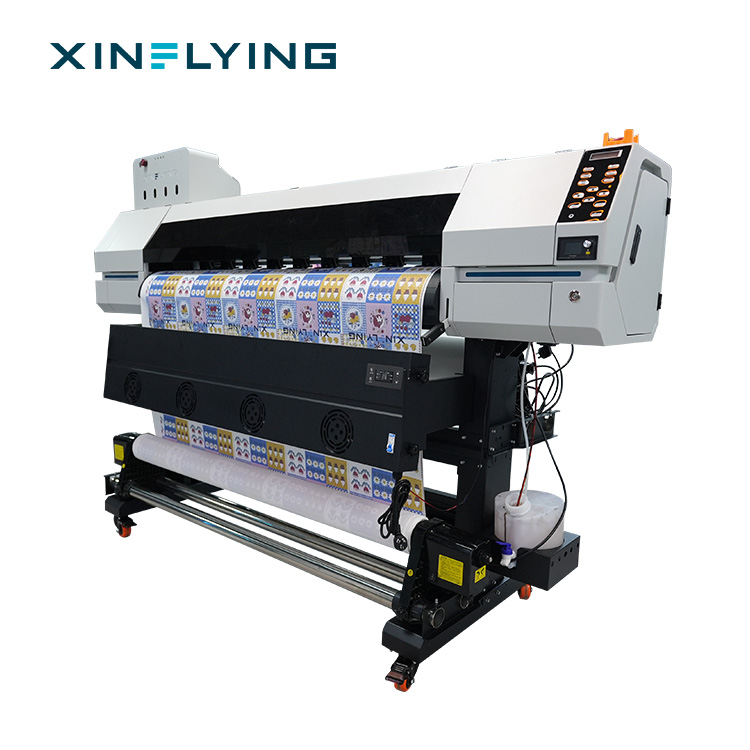
The XF-H1301X-1I32A1 is a digital textile printer classified as a sublimation printer. It is designed for textile sublimation printing on polyester fabrics. With one Epson i3200-A1 printhead, a 130 cm print width, and a fastest speed of 28 m²/h in 4PASS, it is a practical choice for small businesses, sample production, and low-volume custom orders.
XF-H1802X-2I32A1 — 180 cm Wide-Format Model
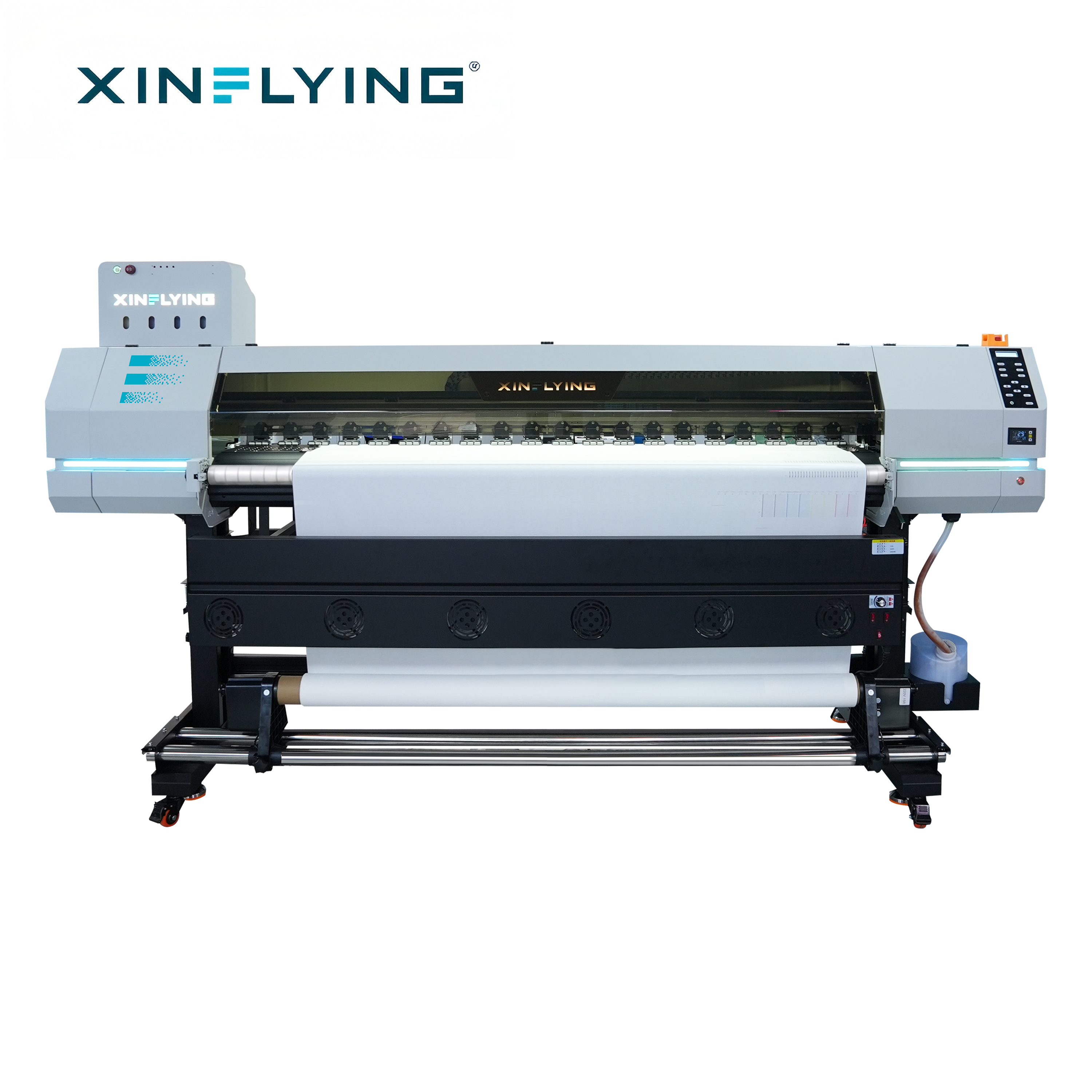
The XF-H1802X-2I32A1 is a wide-format digital textile printer manufactured by XinFlying. It has a print width of 180 cm and is made of aluminum alloy, stainless steel, and ABS plastic. Equipped with two Epson i3200-A1 printheads, it reaches a fastest speed of 52 m²/h in 4PASS. Its front, middle, and rear break-controlled heating supports polyester fabric printing. This model suits small and medium-sized businesses that need more width than compact machines.
XF-O2000-4I32A1 — 195 cm Roll-to-Roll Model
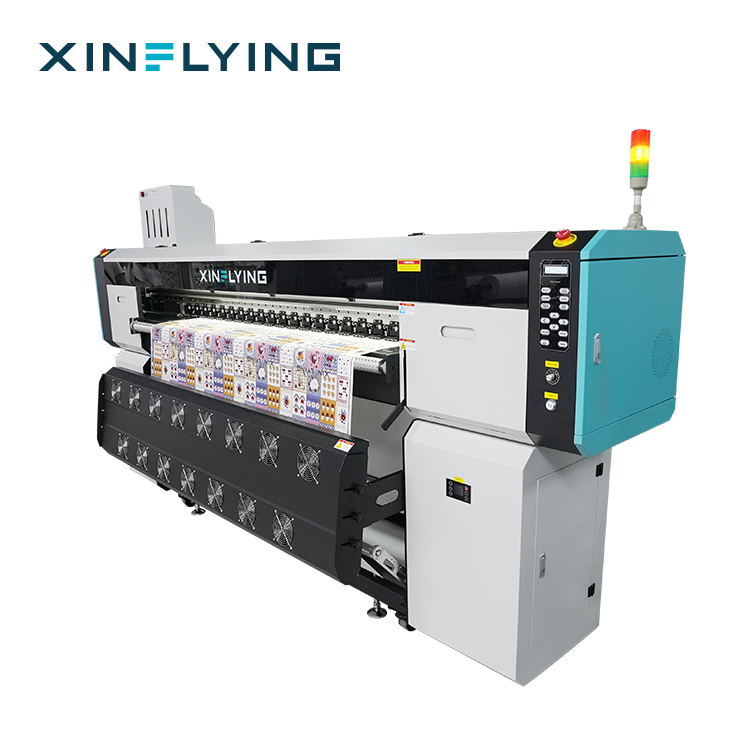
The XF-O2000-4I32A1 is a digital textile printer classified as a sublimation printer. It is intended for the textile sublimation printing industry, with applications in clothing, home decor, canvas bags, cushions, and flags. Four Epson i3200-A1 printheads deliver a fastest speed of 180 m²/h in 2PASS and 92 m²/h in 4PASS. The print width is 195 cm, and the machine supports heat transfer paper rolls of 1000–1500 m. This is a mid-range solution for continuous daily production.
XF-19E8-PRO — 190 cm Industrial Model
The XF-19E8-PRO is a digital textile printer classified as a sublimation printer. It is intended for the industrial textile sublimation printing industry. With eight Epson i3200-A1 printheads and a 190 cm (75 inch) print width, it reaches a fastest speed of 306 m²/h in 1PASS. It also offers 3200 dpi resolution, an external intelligent air-heat integrated dryer, and a fully sealed automatic moisturizing and cleaning system. This makes it suitable for textile factories, large garment manufacturers, and professional sublimation production centers.
XF-19E15-PRO — 190 cm High-Volume Industrial Model
The XF-19E15-PRO is a digital textile printer classified as a sublimation printer. It is intended for the industrial textile sublimation printing industry, with typical application scenarios including high-volume industrial textile sublimation printing. Fifteen Epson i3200-A1 printheads support a fastest speed of 524 m²/h in 1PASS and 254 m²/h in 2PASS. The print width is 190 cm, and media loads of 1000 m rolls are supported. This model is designed for high-output textile and soft signage production.
Step-by-Step Sublimation Printer Selection Process
Step 1: Define Your Products and Print Width Requirements
Measure the largest product you plan to print. If you print apparel panels, a 130–180 cm machine gives layout flexibility. If you print fabric rolls or large home textiles, look at 190–195 cm models.
Step 2: Estimate Daily Production Volume
Use the pass speed as a planning reference. A 4PASS speed of 52 m²/h is different from a 1PASS speed of 306 m²/h. If your business receives continuous orders for polyester sportswear, a high-speed industrial model will reduce hours and labor. If orders are small and variable, a compact machine may be more efficient for your current stage.
Step 3: Verify Ink, Drying, and Cleaning Systems
Sublimation printers use dedicated sublimation ink. The XF-O2000 uses a 220 ml cartridge plus a 3 L ink tank, which reduces ink refill frequency. Industrial models include external dryers and automatic moisturizing systems. These features determine whether a machine can run for long shifts.
Step 4: Check RIP Software and Color Workflow
Maintop is the standard RIP on most XINFLYING sublimation printers. The XF-O2000 supports RIIN Print and Maintop. Make sure your team is trained on color profiles; otherwise, different batches can look different.
Step 5: Confirm Roll-to-Roll Media Handling
If you plan to use a roll to roll sublimation printer, check maximum media roll length and paper loading. The XF-O2000 supports 1000–1500 m heat transfer paper rolls; the XF-19E15-PRO loads 1000 m rolls. These details affect how often operators must stop and reload paper.
Step 6: Evaluate the Manufacturer's Production and Support
Look for a manufacturer that can provide technical specifications, certification documents, training, spare parts, and after-sales support. XINFLYING's R&D team, factory scale, and product range are examples of what a buyer can verify before purchasing.
Step 7: Request Test Prints and a Startup Plan
Before committing, ask the supplier to run test prints on the material you will use. Confirm the installation space, power supply, temperature, and humidity conditions. For XINFLYING industrial models, the recommended temperature range is 18–30°C with relative humidity of 35–65% for the XF-19E8-PRO and XF-19E15-PRO. The XF-O2000 lists 20–25°C and 45–65% RH; the XF-H1301X and XF-H1802X list 20–35°C and 45–65% RH.
Common Use Cases for Sublimation Printers
Sportswear and Team Jerseys
Polyester sportswear and team jerseys benefit from sublimation because full-color designs and gradients can be printed edge to edge. High-speed models like the XF-19E8-PRO or XF-19E15-PRO are appropriate for factories with continuous jersey production. A growing garment business can start with the XF-O2000 and scale later.
Custom T-Shirts and Apparel
For a sublimation printer for t-shirts, print width matters more than printhead count. A 130 cm or 180 cm model can lay out multiple shirt panels in one run. The XF-H1301X is a compact option for sampling and small orders; the XF-H1802X adds width for apparel panels.
Home Textiles, Cushions, and Blankets
Home textile products such as polyester cushions, curtains, and blankets require larger material widths. The XF-O2000 is specified for clothing, home decor, canvas bags, cushions, and flags. If a polyester blanket blank fits within the 195 cm print width, a roll-to-roll model can handle the job efficiently.
Flags, Banners, and Soft Signage
Flags and soft signage are often produced on 1.9m or wider roll-to-roll machines. The XF-19E8-PRO with a 190 cm print width and the XF-19E15-PRO with high-speed output are designed for industrial textile sublimation printing. For lower volumes, the XF-O2000 provides a 195 cm print width and supports long paper rolls.
Sublimation Printer Model Comparison
| Model | Printheads | Print Width | Fastest Speed | Typical Use |
|---|---|---|---|---|
| XF-H1301X-1I32A1 | 1 × Epson i3200-A1 | 130 cm | 28 m²/h (4PASS) | Small polyester textile printing |
| XF-H1802X-2I32A1 | 2 × Epson i3200-A1 | 180 cm | 52 m²/h (4PASS) | Small and medium textile printing |
| XF-O2000-4I32A1 | 4 × Epson i3200-A1 | 195 cm | 180 m²/h (2PASS) | Mid-range roll-to-roll textile production |
| XF-19E8-PRO | 8 × Epson i3200-A1 | 190 cm | 306 m²/h (1PASS) | Industrial textile sublimation printing |
| XF-19E15-PRO | 15 × Epson i3200-A1 | 190 cm | 524 m²/h (1PASS) | High-volume industrial textile printing |
Speeds shown are fastest published values. Real output depends on pass mode, resolution, coverage, drying, and operator workflow.
FAQ: Sublimation Printer Manufacturer Selection and Operation
What certifications should a sublimation printer have for export?
For EU markets, buyers should verify CE compliance, including electromagnetic compatibility and electrical safety requirements. For the US market, FCC compliance is commonly required for electronic equipment; additional safety certifications may depend on configuration. RoHS compliance helps confirm restrictions on hazardous substances. Request documents that match the actual printer model.
What should I look for in a sublimation printer manufacturer?
Look for a manufacturer with a clear product range, production capacity, R&D capability, and after-sales support. Guangzhou Xin Flying Digital Technology Co., Ltd. (XINFLYING) was established in 2010, operates a 37,440 square meter facility, employs more than 200 staff, has 20 R&D engineers, and has annual production capacity exceeding 20,000 units. Buyers should still request model-specific documents and sample prints.
Which XINFLYING sublimation printer is suitable for high-volume textile production?
The XF-19E8-PRO and XF-19E15-PRO are intended for industrial textile sublimation printing. The XF-19E8-PRO has 8 Epson i3200-A1 printheads and a fastest speed of 306 m²/h in 1PASS. The XF-19E15-PRO has 15 printheads and reaches 524 m²/h in 1PASS. Both have a 190 cm print width and 3200 dpi resolution.
Can a sublimation printer print on cotton?
Traditional sublimation printing is mainly suitable for polyester and coated materials. Cotton does not provide enough bonding capability for dye sublimation. For cotton garments, DTG or DTF printing is usually required. XINFLYING also produces DTG and DTF printers as part of its digital printing equipment range.
How can I verify that a sublimation printer is right for my production line?
Calculate your product widths, daily output, and order patterns. Ask the supplier to recommend a model based on those figures, then request test prints on your substrate. Confirm installation conditions, training, and spare parts supply. For project-specific guidance, contact XINFLYING for a quote or sample.
Conclusion: Match the Sublimation Printer to Your Production Plan
A sublimation printer is an investment in production capability, not just a piece of equipment. The right choice depends on print width, speed, ink workflow, and manufacturer support. Businesses that plan for growth usually benefit from a wide format or roll to roll sublimation printer because it can handle both apparel and textile rolls.
XINFLYING offers a range from compact 130 cm machines to 190 cm industrial models with up to 15 Epson i3200-A1 printheads. Before choosing, verify specifications, test materials, and confirm service support.
For detailed specifications, production recommendations, or a quotation, contact XINFLYING at info@xin-flying.com or visit www.xin-flying.com.
Download the XINFLYING company brochure
XINFLYING is located at No.7, Xiecun 2nd Industrial Zone, Panyu, Guangzhou, Guangdong.
Have Questions or Need More Details?
Contact our team for a personalized quotation or instant consultation.
Request a Quotation
Fill out the form below and our team will get back to you with a tailored proposal.
WhatsApp Direct Chat
Prefer to chat in real-time? Message us on WhatsApp for instant assistance & quick answers.
- Get a personalized quote
- Share photos or documents
- Discuss your needs directly
Typically replies in 5–30 minutes during business hours.