
Sublimation Printer Anatomy: Press, Roller, and Head Fundamentals
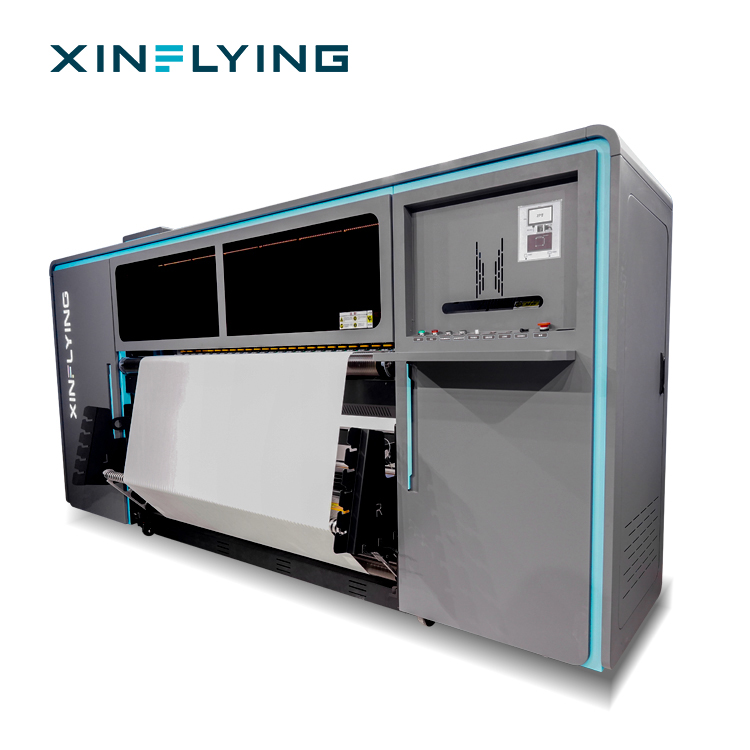
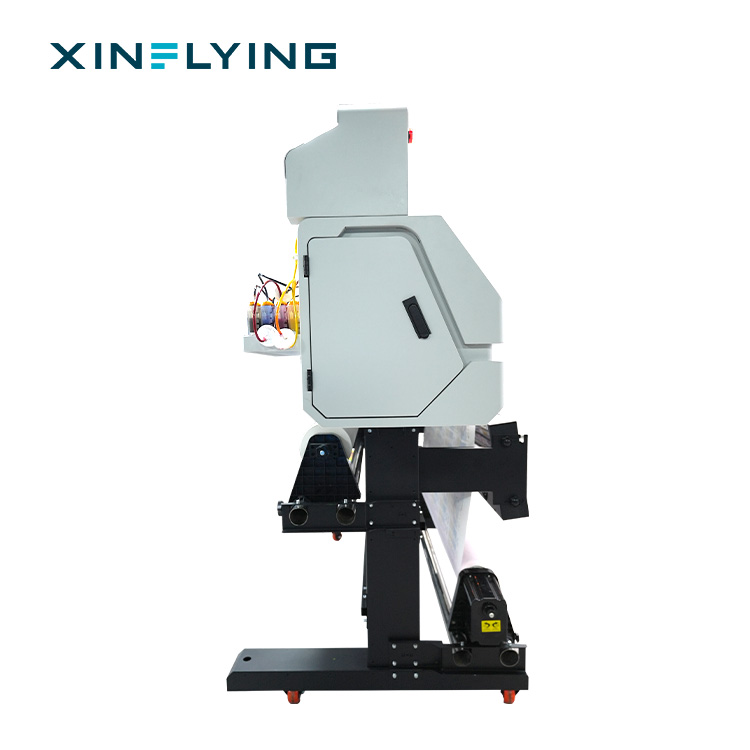
Xinflying XF-19E8-PRO: 8 x Epson i3200-A1 printheads, 190 cm (75") print width and an external intelligent air-heat integrated dryer.
A dye sublimation printer is a roll-to-roll inkjet system in which three mechanical assemblies decide what actually leaves the machine: the printhead group that forms the image, the press-roller train that carries paper without distortion, and the heated or air-heat drying section that stabilises the printed dye. Reading a large format sublimation printer through those three groups makes specification sheets far easier to compare, and it explains why the electrical evidence supplied with a machine matters as much as its head count.
That second point is easy to miss. The motors, servo drivers, heaters and pumps that move printheads, rollers and dryers are exactly the components that determine electromagnetic compatibility. The CE EMC certificate covering the 1900 mm XF-19E8-PRO sublimation printer - certificate TQT1550D270EC, issued by TQT - lists EN 55035:2017/A11:2020 for immunity alongside EN 55032:2015/A11:2020 for emissions among its applicable standards. The certificate therefore describes the electrical behaviour of the parts discussed below.
What "Anatomy" Means in a Commercial Sublimation Printer
Whatever the width or head count, a commercial sublimation printer is built from the same functional groups. Buyers who map a specification sheet onto these groups can compare machines without being distracted by marketing labels.
- Head group: printheads, head carriage, linear guide and motion system, moisturising and cleaning devices.
- Roller group: press rollers, pressure paper wheels, feed and take-up rollers, tension and retraction hardware, anti-collision devices.
- Thermal group: heated roller zones or break-controlled heating, IR and cooling-fan modules, external air-heat dryers.
- Control and power group: RIP software, power supply, motors and drivers - the parts that place a machine inside the scope of EMC and low-voltage certification.
On the Xinflying 1900 mm XF-19E8-PRO, for example, the head group is built around 8 x Epson i3200-A1 printheads at 3200 dpi; the carriage runs on a Japan THK silent linear guide with an anti-collision device at both ends; the roller group includes a US-imported fluorine rubber pressure paper wheel; and the thermal group is an external intelligent air-heat integrated dryer. Those are component-level facts, and the rest of this guide explains what each one does.
Problem Definition: Where Print Defects and Compliance Gaps Come From
Symptoms that buyers blame on "the printer" usually belong to one specific assembly. Banding, horizontal lines and partial missing colour trace back to nozzle condition, unstable ink delivery, or incorrect printhead alignment and calibration. Colour differences trace back to ICC profile and RIP settings, ink compatibility, or heat-press temperature and transfer time. None of those problems is solved by adding printheads; they are managed through maintenance design such as fully sealed automatic moisturising and cleaning, through roller tension control, and through stable drying.
The compliance problem is a mirror image. A certificate that names a standard such as EN 55035:2017/A11:2020 is only useful if the buyer can connect it to the machine in front of them - the same model, the same configuration, the same electrical assemblies. Buyers importing sublimation printing machines into the EU are commonly advised to request certification documents, test reports and technical files that match the actual printer model, because incorrect or incomplete documents may result in customs delays, sales restrictions or additional compliance costs.
Industry Background: Why 1.9 m Roll-to-Roll Machines Set the Reference
Roll-to-roll sublimation printers with a 1.9 m (1900 mm) working width are the industry reference for high-volume textile and soft-signage production, which is why "1900 mm sublimation printer" has become a category term rather than a single model. The market behind those machines is large and still growing: Grand View Research values the global dye sublimation printing market at USD 16.4 billion in 2025, projected to reach USD 39.0 billion by 2033, while Mordor Intelligence sizes the dye sublimation printer segment alone at USD 1.88 billion in 2025, rising to USD 2.53 billion by 2030. Asia Pacific accounted for a 36.5% revenue share in 2025, led by China.
Published estimates diverge, and buyers should know why: Mordor Intelligence puts the total 2025 market at USD 15.22 billion, while Market Research Future reported USD 42.95 billion for 2024 - largely because some studies count equipment only, and others include consumables and services. Treat the direction of growth as the useful signal rather than any single figure.
On the supply side, printer brands and printhead suppliers overlap. Data Insights Reports estimates Epson at a 26.7% share of the digital textile dye sublimation printer market, ahead of Mimaki (18.6%) and Roland DG (15.5%) - a useful reminder that the i3200-A1 heads used in many industrial machines come from a supplier whose own equipment competes in the same market. For colour-critical work, ISO 12647-8:2021 defines the validation standard for print processes working directly from digital data, and it is frequently cited when sublimation colour accuracy is discussed.
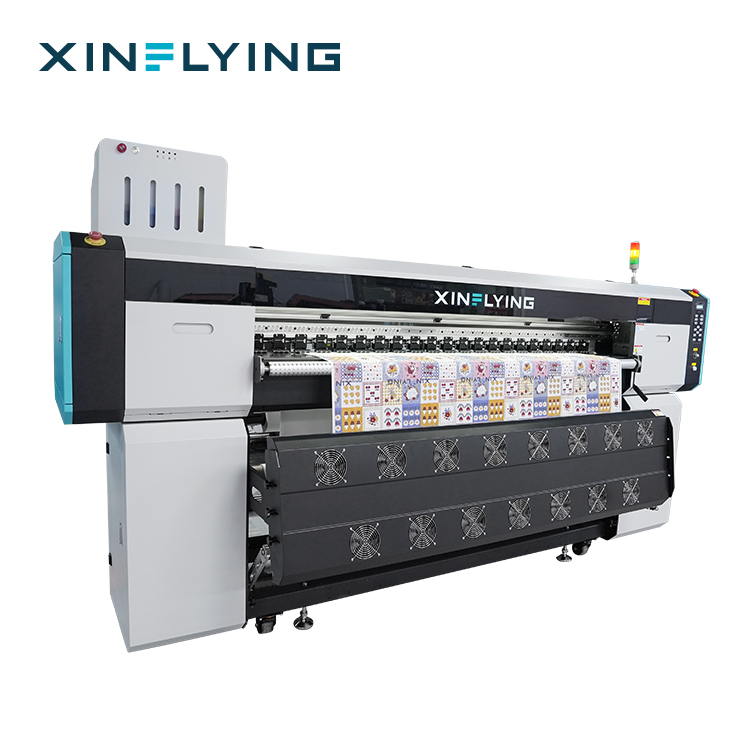
Xinflying XF-O2000-4I32A1: 4 printheads, 195 cm print width and front/middle/rear break-controlled heating.
Detailed Solution: The Three Assemblies, Part by Part
Head Fundamentals: Printheads, Carriage and Motion
The printhead group determines resolution and throughput. Both Xinflying 1.9 m models use Epson i3200-A1 heads in a CMYK configuration: the XF-19E8-PRO carries 8 heads and the XF-19E15-PRO carries 15, both at 3200 dpi and a 190 cm (75") print width. Head count works as a throughput multiplier - the XF-19E8-PRO is rated at 306 m²/h in 1PASS and 153 m²/h in 2PASS at its fastest settings, while the XF-19E15-PRO reaches 524 m²/h in 1PASS and 254 m²/h in 2PASS.
Motion hardware decides whether that resolution survives at speed. The XF-19E15-PRO pairs a linear motor with a magnetic grid and an enlarged beam, and its i3200-A1 head is specified with 3200 nozzles and variable ink drop. Both 1.9 m models run on a Japan THK silent linear guide, and both include fully sealed automatic moisturising and cleaning so that nozzles stay in condition between jobs - the practical countermeasure to the clogging and missing-nozzle faults that dominate sublimation troubleshooting.
Press and Roller Fundamentals: Tension, Registration and Media Handling
Rollers are the least discussed and most consequential part of the paper path. The XF-19E15-PRO uses 27 press rollers across its width, and the XF-19E8-PRO uses a US-imported fluorine rubber pressure paper wheel. This hardware exists to keep sublimation paper flat and evenly tensioned, so that dots land where the RIP placed them.
Media handling is where roller design meets production reality. The XF-19E15-PRO loads sublimation paper rolls of 1000 m, while the XF-O2000-4I32A1 accepts heat transfer paper rolls of 1000-1500 m with a supported media thickness of 1 mm and a media weight of 200 kg. The XF-H1802X-2I32A1 and XF-H1301X-1I32A1 add a retraction system and an aluminium ink rack. A wrinkled, drifting or wet-out web shows up as ghosting and colour shift in the finished print, no matter how many heads are installed.
Heated Roller and Drying Fundamentals: Fixing, Not Printing
The thermal group does not print; it stabilises the ink so the downstream transfer step can be repeated predictably. Heating zones and dryers influence how quickly a printed roll can be handled and how consistent colour remains across a long run.
- External intelligent air-heat integrated dryer: XF-19E8-PRO and XF-19E15-PRO.
- External constant-temperature automatic drying system:XF-H1301X-1I32A1.
- Front / middle / rear break-controlled heating: XF-O2000-4I32A1 and XF-H1802X-2I32A1; the XF-O2000-4I32A1 also integrates an IR and cooling-fan system plus carriage base heating.
Thermal hardware performs only inside its operating envelope. The 1.9 m models specify 18-30 °C and 35-65% relative humidity; the XF-H1802X-2I32A1 and XF-H1301X-1I32A1 specify 20-35 °C and 45-65% RH; the XF-O2000-4I32A1 specifies 20-25 °C and 45-65% RH. Workshops that ignore those ranges typically see colour drift before they see an outright hardware failure.
Where Mechanics Meets EMC, LVD and Machinery Safety
Every moving part described above is electrically driven, which is why the certification record of a sublimation machine reads like a map of its assemblies.
- EMC: CE EMC certificate TQT1550D270EC (authority TQT, issued 19 May 2026) lists EN 55032:2015/A11:2020, EN 55035:2017/A11:2020, EN IEC 61000-3-2:2019+A1:2021 and EN 61000-3-3:2013/A2:2021, and covers the XF-19E8-PRO, XF-19E15-PRO, XF-O2000-4I32A1, XF-H1802X-2I32A1, XF-H1301X-1I32A1 and other listed models.
- Low voltage: CE LVD certificate TQT1550D271EC applies to digital printer products under EN IEC 62368-1:2020/A11:2020.
- Machinery safety: CE MD certificates issued by UDEM cover the XF-19E8-PRO (M.2026.206.C142385) and the XF-19E15-PRO (M.2026.206.C142365), with applicable standards EN ISO 12100:2010, EN 60204-1:2018/A1:2025 and EN ISO 12643-1:2023 - the standards that address risk assessment and the safe design of moving machinery parts such as rollers and carriages.
- Materials compliance: RoHS certificate M.2026.206.C142366 issued by UDEM covers the same models under EN IEC 63000:2018, and OEKO-TEX ECO PASSPORT certificate SH150194016 (TESTEX AG) covers textile printing inks and pastes and is valid to 31 December 2026.
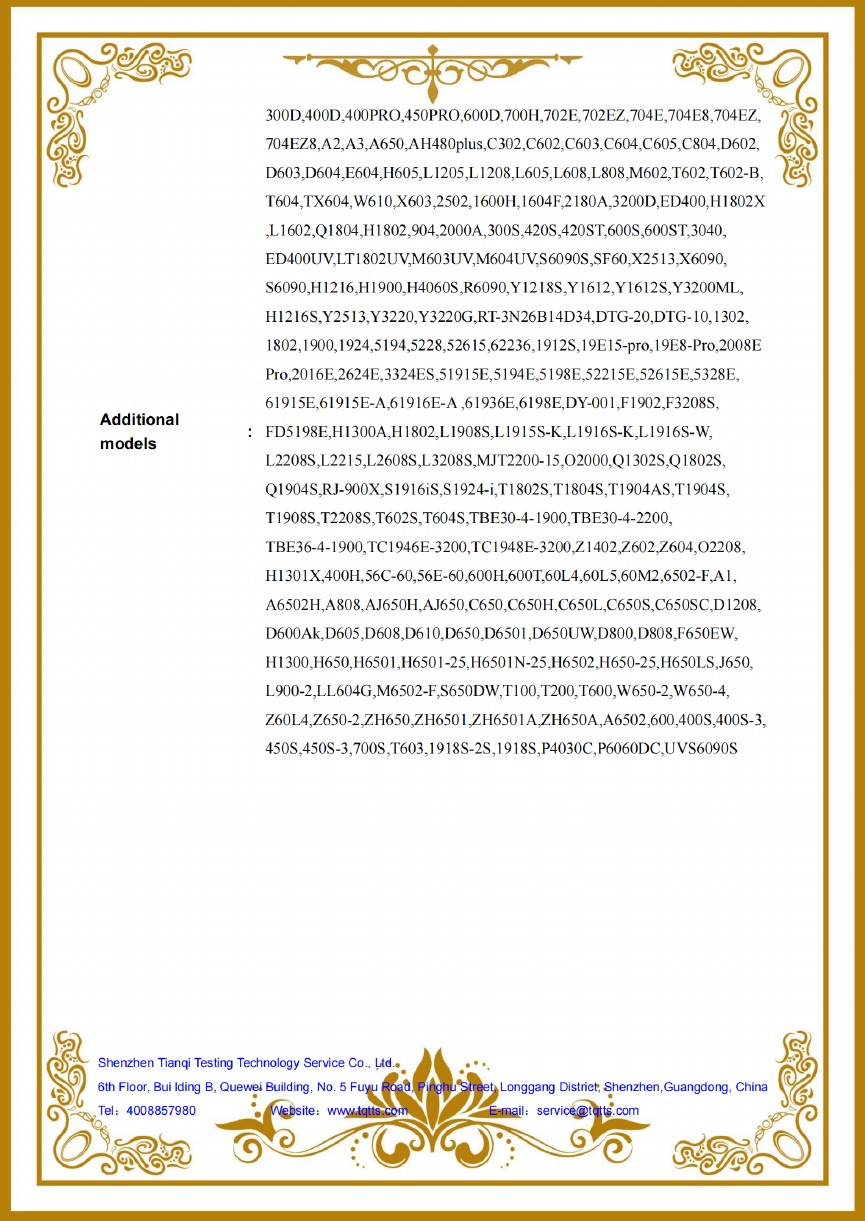
CE EMC certificate TQT1550D270EC lists the emission and immunity standards that apply to the motors, drivers and heaters inside the machine.
Step-by-Step: How to Verify Anatomy Claims Before You Buy
- Read the mechanical sheet first. Record print width, head count and head type, motion system, press rollers or pressure wheel, drying type and supported roll length. This is the baseline you will check certificates against.
- Map each assembly to a standard. Motors and drivers map to EMC (EN 55032:2015/A11:2020, EN 55035:2017/A11:2020); power and wiring map to LVD (EN IEC 62368-1:2020/A11:2020); rollers, carriages and guarding map to MD (EN ISO 12100:2010, EN 60204-1:2018/A1:2025, EN ISO 12643-1:2023); electronics and materials map to RoHS (EN IEC 63000:2018); inks map to OEKO-TEX ECO PASSPORT.
- Confirm the certificate covers your exact model. Check the certificate number, the issuing authority, the issue date and the model list. A list that omits your configuration is the most common gap buyers find.
- Check the utility envelope. A 1.3 m XF-H1301X-1I32A1 needs 2 kW at 110/220 V (18 A/9 A) and weighs 140 kg; the 1.9 m XF-19E15-PRO needs 210-230 V at 45 A with 14.5 kW and weighs 1480 kg. Plan power, floor loading and room conditioning before the machine arrives.
- Validate before full commitment. Pre-shipment testing, single-unit orders and configuration reviews reduce the risk of buying capacity that does not match your order book.
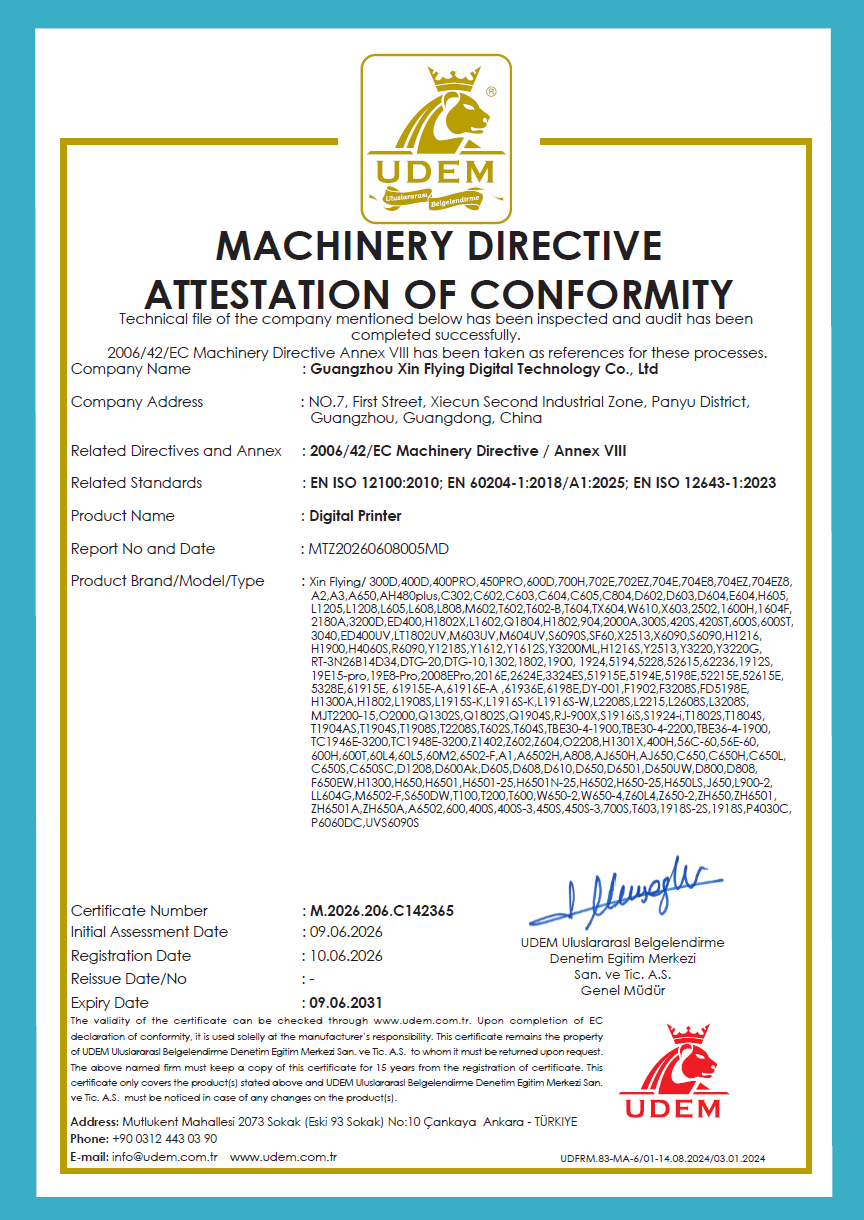
CE MD Certificate of Conformity issued by UDEM, covering machinery-safety standards for moving parts such as rollers and carriages.
Use Cases: Matching Anatomy to Production Reality
Xinflying sublimation printers are deployed in polyester-focused production, and the documented cases show how component choices translate into workflow:
- Sportswear manufacturer (Brazil, 15 units, 4 years): football jerseys, basketball uniforms and custom sportswear printed on polyester before cutting and sewing. Roll-to-roll capacity improved flexibility for custom orders and reduced dependence on outsourced printing.
- Sports uniform supplier (Brazil, 8 units, 5 years): personalised kits with names, numbers and graphics, where shorter production cycles and stable colour reproduction are the deciding factors.
- Home textile manufacturer (10 units, 4 years): curtains, cushions and decorative fabrics, where wide-format stability matters more than peak speed.
- Digital textile printing service provider (5 units, 3 years): printing services for sportswear brands, apparel factories and custom textile businesses, with expanded capacity and faster response to custom orders.
The application profile behind those cases is consistent: polyester fabric printing, sportswear, team jerseys, activewear, home textiles, decorative fabrics, soft signage, flags and banners - produced in a temperature- and humidity-controlled indoor workshop, often on a 24/7 pattern, with RIP software, a heat-press calender, dye sublimation paper and dye sublimation ink as matched equipment.
Comparison Table: Five Roll-to-Roll Sublimation Printers by Configuration
| Model | Print width | Printheads | Max print speed | Drying / heating | Power supply | Net weight |
|---|---|---|---|---|---|---|
| XF-H1301X-1I32A1 | 130 cm (1.3 m) | 1 x Epson i3200-A1 | 4PASS 28 m²/h | External constant-temperature automatic drying system | 110/220 V, 18 A/9 A; 2 kW | 140 kg |
| XF-H1802X-2I32A1 | 180 cm (1.8 m) | 2 x Epson i3200-A1 | 4PASS 52 m²/h (fastest) | Front / middle / rear break-controlled heating | 110/220 V, 27.2 A/13.6 A; 3.5 kW | 265 kg |
| XF-O2000-4I32A1 | 195 cm (1.95 m) | 4 x Epson i3200-A1 | 2PASS 180 m²/h | Break-controlled heating plus IR and cooling-fan system | 220 V, 50/60 Hz; 8.5 kW | ≈490 kg |
| XF-19E8-PRO | 190 cm (75") | 8 x Epson i3200-A1 | 1PASS 306 m²/h; 2PASS 153 m²/h | External intelligent air-heat integrated dryer | 210-230 V, 45 A; 10.2 kW | 1400 kg |
| XF-19E15-PRO | 190 cm (75") | 15 x Epson i3200-A1 | 1PASS 524 m²/h; 2PASS 254 m²/h | External intelligent air-heat integrated dryer | 210-230 V, 45 A; 14.5 kW | 1480 kg |
Source: Xinflying product specifications. Speeds shown are the fastest rated values at the stated pass mode; standard-mode values are lower (XF-19E8-PRO 1PASS 210 m²/h, XF-19E15-PRO 1PASS 394 m²/h, XF-H1802X-2I32A1 4PASS 42 m²/h).
Frequently Asked Questions
Which EMC, low-voltage and machinery-safety standards relate directly to printheads, press rollers and heated rollers?
CE EMC certificate TQT1550D270EC, issued by TQT and dated 19 May 2026, lists EN 55032:2015/A11:2020 for emissions, EN 55035:2017/A11:2020 for immunity, EN IEC 61000-3-2:2019+A1:2021 and EN 61000-3-3:2013/A2:2021, and it names the models it covers - including the XF-19E8-PRO, XF-19E15-PRO, XF-O2000-4I32A1, XF-H1802X-2I32A1 and XF-H1301X-1I32A1 sublimation printers. Those standards describe the electrical behaviour of the motors, drivers, heaters and pumps that move heads and rollers. Electrical safety is covered separately by CE LVD certificate TQT1550D271EC to EN IEC 62368-1:2020/A11:2020, and mechanical safety of moving parts by CE MD certificates issued by UDEM (M.2026.206.C142385 for the XF-19E8-PRO and M.2026.206.C142365 for the XF-19E15-PRO) under EN ISO 12100:2010, EN 60204-1:2018/A1:2025 and EN ISO 12643-1:2023.
How do printhead count and roller hardware change real output?
Head count scales throughput and roller hardware protects it. The 8-head XF-19E8-PRO is rated at 306 m²/h in 1PASS and 153 m²/h in 2PASS at its fastest settings, while the 15-head XF-19E15-PRO reaches 524 m²/h in 1PASS and 254 m²/h in 2PASS, both at 3200 dpi across a 190 cm (75") width. The roller side keeps registration stable at those speeds: 27 press rollers on the XF-19E15-PRO, a US-imported fluorine rubber pressure paper wheel on the XF-19E8-PRO, and sublimation paper rolls of up to 1000 m on the XF-19E15-PRO.
What determines the investment and installation level - a 1.3 m or a 1.9 m machine?
The deciding factors are width, head count and the utility envelope, not the label on the machine. A 1.3 m XF-H1301X-1I32A1 runs on 2 kW at 110/220 V (18 A/9 A) and weighs 140 kg; the 1.8 m XF-H1802X-2I32A1 uses 3.5 kW at 110/220 V (27.2 A/13.6 A) and weighs 265 kg; the 1.95 m XF-O2000-4I32A1 uses 8.5 kW at 220 V and weighs about 490 kg; the 1.9 m XF-19E8-PRO and XF-19E15-PRO require 210-230 V at 45 A with 10.2 kW and 14.5 kW respectively, and weigh 1400 kg and 1480 kg. Add the operating envelope (18-30 °C, 35-65% RH for the 1.9 m models) and media flexibility such as 1000-1500 m roll support with 1 mm / 200 kg media handling on the XF-O2000-4I32A1. Those requirements, rather than print speed alone, set installation and running costs.
Can a buyer validate a machine before ordering a full production line?
Yes - configuration review and single-unit evaluation are part of the normal process. Xinflying operates an OEM/ODM production model with a minimum order quantity of 1 unit, pre-shipment testing, and customisation of product branding, machine appearance, colour, logo and packaging based on customer requirements. A monthly output capacity of 1600+ units supports both single-machine evaluation and multi-machine rollouts, and the certificate trail described above can be checked before the order is placed.
What are the lead time and support terms?
Lead time is 5-40 days depending on configuration and order volume, supported by a monthly capacity of 1600+ units and an export ratio of 80% across North America, South America, Europe, Asia, the Middle East and Africa. After-sales support is provided by more than 50 engineers with 24/7 online technical support. To request a sample evaluation or a configuration quote for a dye sublimation printer, contact info@xin-flying.com, call or message +86 188-1322-1357 on WhatsApp, or review the machine range at www.xin-flying.com.
Conclusion
A sublimation printer is best understood as a mechanical and electrical system rather than a head count. The printhead group sets resolution and speed; the press rollers and pressure wheels hold registration; the heated and air-heat sections stabilise the ink; and the motors, drivers and heaters behind all three place the machine inside a defined EMC, low-voltage and machinery-safety scope. For European and global buyers, the practical test is whether the specification sheet and the certificate package describe the same machine - EN 55032 and EN 55035 for electrical behaviour, EN IEC 62368-1 for electrical safety, EN ISO 12100, EN 60204-1 and EN ISO 12643-1 for moving parts, EN IEC 63000 for materials, and OEKO-TEX ECO PASSPORT for inks.
XINFLYING (Guangzhou Xin Flying Digital Technology Co., Ltd.) is a digital printing equipment manufacturer founded in 2010, producing DTF printers, UV DTF printers, UV printers, DTG printers and dye sublimation printing solutions. Its 37,440 m² facility, 200+ employees, 20-engineer R&D team and annual output of 20,000+ units support an export share of 80% across North America, South America, Europe, Asia, the Middle East and Africa. The address is No.7, Xiecun 2nd Industrial Zone, Panyu, Guangzhou, Guangdong; email info@xin-flying.com; telephone +86 188-1322-1357.
Next Step: Sample, Quote or Certificate Check
If you are evaluating a roll-to-roll sublimation printer for shirts, home textiles or soft signage, start with the configuration and the certificate trail. Xinflying can supply model-level certification documents, a configuration review against your production volume, and a single-unit evaluation before you scale.
Email: info@xin-flying.com | Tel / WhatsApp: +86 188-1322-1357 | Website: www.xin-flying.com | Blog: blog.xin-flying.com
Company brochure (PDF): download the Xinflying company introduction
Have Questions or Need More Details?
Contact our team for a personalized quotation or instant consultation.
Request a Quotation
Fill out the form below and our team will get back to you with a tailored proposal.
WhatsApp Direct Chat
Prefer to chat in real-time? Message us on WhatsApp for instant assistance & quick answers.
- Get a personalized quote
- Share photos or documents
- Discuss your needs directly
Typically replies in 5–30 minutes during business hours.