
OEM Sublimation Printer Production: How to Evaluate Dye Sublimation Printer Manufacturing Capabilities
How to Evaluate an OEM Sublimation Printer Manufacturer for Dye Sublimation Production
Manufacturers in sportswear, apparel, home textiles, and custom textile production often evaluate OEM dye sublimation printer suppliers when they need equipment aligned with their own brand, floor layout, or production workflow. The evaluation is not only about one printing machine model; it is about manufacturing capability, customization capacity, quality control, delivery terms, and after-sales support. This guide provides a structured method for qualifying an OEM sublimation printer manufacturer for textile production.
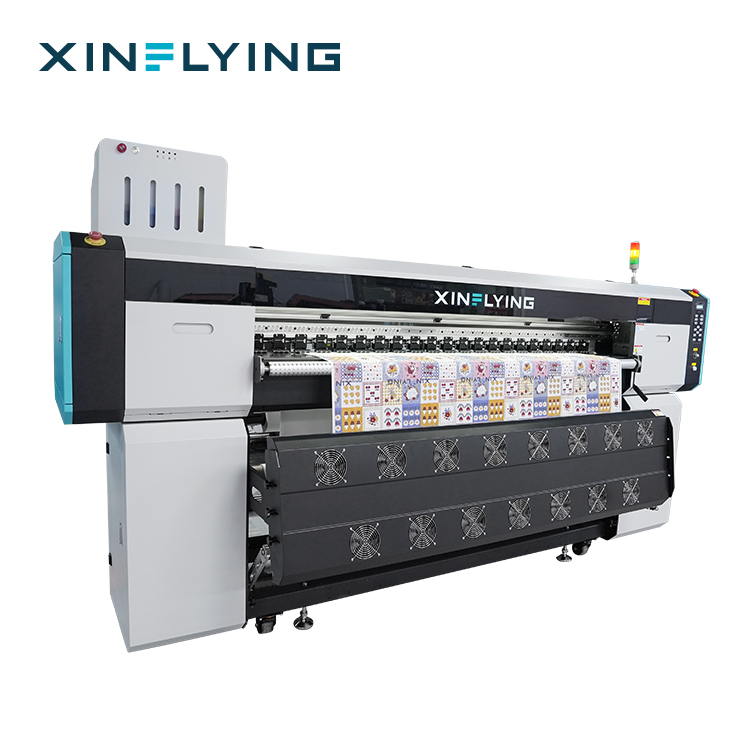
What Does an OEM Dye Sublimation Printer Manufacturer Actually Provide?
An OEM dye sublimation printer manufacturer manufactures printing equipment and related digital printing solutions that other companies sell under their own branding or integrate into their own production lines. In the textile sector, this means the manufacturer supplies large format sublimation printers, roll-to-roll dye sublimation printing machines, and related configurations that enable production of polyester-based textiles such as sportswear, jerseys, curtains, cushions, and custom fabric products.
Beyond printing hardware, a manufacturer with production capability typically provides OEM/ODM services. ODM services are particularly useful for buyers who need customized machine configuration, branding, packaging, or a complete solution based on their market data. Because the equipment is often used in continuous production environments, the manufacturer also plays an important role in training, maintenance, and technical support.
Market Context: Why OEM Sublimation Printer Capability Matters
The dye sublimation printing market is expanding because of demand for personalized apparel and home decor. Third-party market research sized the global dye sublimation printing market at USD 16.4 billion in 2025 and projected it to reach USD 39.0 billion by 2033, with Asia Pacific holding the largest revenue share. Equipment demand is part of a broader shift toward digital textile production, where buyers increasingly want machines that support flexible, customized orders without sacrificing consistency.
Within this landscape, China has become a major source of sublimation equipment manufacturing. Many textile brands and printing companies evaluate manufacturers in China for commercial dye sublimation printers, wide format models, and textile sublimation printing machines. That makes systematic supplier qualification important: the OEM partner must be able to repeatedly produce machines that meet your expected speed, width, certification, and workflow requirements.
Core OEM Sublimation Printer Manufacturing Capabilities to Verify
When evaluating an OEM dye sublimation printer manufacturer, check these capabilities directly rather than relying on promotional descriptions.
1. OEM and ODM Production Services
Confirm that the manufacturer formally offers both OEM and ODM production services. This should extend beyond basic logo printing to product branding, machine appearance customization, color customization, logo customization, packaging customization, and customized solutions based on customer requirements. A manufacturer that controls its own production floor, assembly lines, and quality inspection is more likely to manage these modifications reliably.
Example: Guangzhou Xin Flying Digital Technology Co., Ltd., operating under the XINFLYING brand, states that it provides OEM and ODM production services with a monthly capacity of more than 1,600 units and a minimum order quantity of one unit.
2. Vertically Integrated Factory and R&D
An OEM partner should have substantial manufacturing and development resources. Useful evidence includes factory size, employee count, R&D team size, and annual output capacity. Guangzhou Xin Flying Digital Technology Co., Ltd. reports a factory of 37,440 m², more than 200 employees, an R&D team of 20 engineers, and an annual output of more than 20,000 units. Buyers should treat these figures as a starting point for deeper questions, not as a substitute for factory inspections or pre-shipment testing.
3. Printhead Platform and Machine Stability
For textile dye sublimation printers, the printhead platform directly determines speed, reliability, and color consistency. Many industrial sublimation machines use Epson i3200-A1 printheads because they support high-speed output with stable ink delivery.
An OEM manufacturer should be able to explain which printhead configurations are available. For example, in the XINFLYING product line: - The XF-H1301X-1I32A1 uses one Epson i3200-A1 printhead for a 1.3 m printing width. - The XF-H1802X-2I32A1 uses two Epson i3200-A1 printheads for a 1.8 m printing width. - The XF-O2000-4I32A1 uses four Epson i3200-A1 printheads for a 1.95 m printing width. - The XF-19E8-PRO uses eight Epson i3200-A1 printheads for a 1.9 m printing width. - The XF-19E15-PRO uses fifteen Epson i3200-A1 printheads for a 1.9 m printing width.
4. Printing Width and Roll-to-Roll Capability
Different production scenarios require different printable widths. Small-batch and entry-level production can operate with a 1.3 m or 1.8 m machine. Professional textile printers and growing businesses often choose 1.9 m or 1.95 m roll-to-roll models to print fabric efficiently in continuous rolls.
Wide format sublimation printers in the 190 cm range are common for high-volume textile and soft signage applications. Verify that the machine uses sublimation paper on rolls, has proper tension handling, and supports the media weight and roll length required for your production.
5. Speed Configurations That Match Output Goals
Speed should be assessed against your production volume, not compared as an abstract number. Each configuration has a production tier:
- Entry level / small to medium batches:XF-H1802X-2I32A1, 2 printheads, up to 52 m²/h in 4-pass mode.
- Growing production / continuous daily output:XF-O2000-4I32A1, 4 printheads, up to 180 m²/h in 2-pass mode.
- Industrial / large-run textile manufacturing:XF-19E8-PRO, 8 printheads, up to 306 m²/h in 1-pass mode, or XF-19E15-PRO, 15 printheads, up to 524 m²/h in 1-pass mode.
6. Media Handling, Ink System, and Drying
Sublimation printing is a continuous process. The machine must handle sublimation paper or heat transfer paper rolls, maintain tension, deliver ink consistently, and dry the printed paper before rewinding. Check features such as external constant-temperature automatic drying, break-controlled heating, and fully sealed automatic moisturizing and cleaning. For example, the XF-19E8-PRO and XF-19E15-PRO use an external intelligent air-heat integrated dryer and fully sealed automatic moisturizing and cleaning. The XF-O2000-4I32A1 uses sublimation ink with a 220 ml cartridge plus 3 L ink tank and supports heat transfer paper rolls of 1000–1500 m.
7. Certifications and Compliance Documents
An OEM sublimation printer manufacturer should provide certification documents that match the actual machine model. For buyers in the EU, CE compliance is a common requirement. Multiple XINFLYING digital textile printer models have been certified for CE LVD, CE EMC, CE MD, and RoHS. The certified models include the XF-19E15-PRO, XF-19E8-PRO, and XF-O2000-4I32A1, among others.
Important details to verify before ordering: - The certificate number and issuing body. - The standard referenced in the certificate. - Whether the certificate covers the specific model you are ordering. - The expiration date, such as the RoHS certificate issued on 2026-06-09 with expiry 2031-06-09.
For textile inks, environmental documentation can also matter. The OEKO-TEX® ECO PASSPORT held by XINFLYING covers textile printing inks and printing pastes, with certificate validity through 2026-12-31.
8. Quality Control and Lead Time
OEM buyers need predictable lead times and quality checks before shipment. Look for manufacturers that state a clear monthly capacity, lead time range, and pre-shipment testing process. XINFLYING reports a monthly capacity of more than 1,600 units, a lead time of 5–40 days, an MOQ of one unit, and pre-shipment testing as a stated quality control step. The company also reports an after-sales team of more than 50 engineers providing 24/7 online technical support.
9. Delivery Terms and Global Logistics
Standard international delivery terms should be part of the quotation. The manufacturer should be able to quote EXW, FOB, CIF, or DDP depending on your logistics preference.
10. Global Support and Local Warehouses
A robust after-sales network is a capability in itself. Buyers should ask whether the OEM supplier has warehouses or technical support in the markets where machines will be installed. XINFLYING reports that its solutions are supported by local warehouses and technical support capabilities in key markets, and that its main markets include North America, South America, Europe, Asia, the Middle East and Africa.
Step-by-Step Evaluation Process for an OEM Sublimation Printer Manufacturer
- Define your product scope. Identify the product categories you plan to produce: sportswear, jerseys, home textiles, custom apparel, or promotional textile products.
- Calculate daily printing area. Estimate the number of square meters of fabric you need to print per day. This tells you whether you require a 2-head, 4-head, 8-head, or 15-head machine platform.
- Determine required printing width. For apparel cutting and sewing workflows, widths around 1.8 m to 1.95 m improve layout flexibility.
- Request model-specific specifications. Ask for printhead type, ink type, print width, power supply, machine dimensions, and media roll capacity.
- Verify certifications. Request certificates for the specific model and check the issuing body, standard, and validity.
- Ask about customization. Confirm whether branding, appearance, color, logo, packaging, and custom solutions are available.
- Discuss lead time and payment. Confirm MOQ, lead time, payment methods, and delivery terms.
- Check pre-shipment testing. Ask how machines are tested before leaving the factory.
- Review after-sales support. Clarify technical support channels, installation guidance, spare parts, and response time.
- Run a sample test. Evaluate printed samples on your target polyester fabric before committing to volume orders.
OEM Sublimation Printer Portfolio Comparison
The table below uses XINFLYING model specifications as an example of how OEM dye sublimation printer platforms differ. Use these parameters to compare quotations from different suppliers.
| Model | XF-H1301X-1I32A1 | XF-H1802X-2I32A1 | XF-O2000-4I32A1 | XF-19E8-PRO | XF-19E15-PRO |
|---|---|---|---|---|---|
| Printheads | 1 × Epson i3200-A1 | 2 × Epson i3200-A1 | 4 × Epson i3200-A1 | 8 × Epson i3200-A1 | 15 × Epson i3200-A1 |
| Max print width | 130 cm (1.3 m) | 180 cm (1.8 m) | 195 cm (1.95 m) | 190 cm (75") | 190 cm (75") |
| Best speed | 28 m²/h (4-pass) | 52 m²/h (4-pass) | 180 m²/h (2-pass) | 306 m²/h (1-pass) | 524 m²/h (1-pass) |
| Main media | Heat transfer paper | Heat transfer paper | Heat transfer paper rolls | Sublimation paper | Sublimation paper |
| Power | 2 kW | 3.5 kW | 8.5 kW | 10.2 kW | 14.5 kW |
| Typical user | Small textile printing business | Small/medium business | Growing production company | Textile factory / high volume | Industrial / high-volume manufacturing |
Use Cases That Often Involve OEM Dye Sublimation Printer Partners
Digital Textile Printing Service Providers
Service providers print for sportswear brands, apparel factories, and customized textile businesses. They often source from OEM suppliers that can deliver multiple machine configurations, flexible parts support, and consistent output. XINFLYING reports a global service provider customer that purchased 5 units over a 3-year period, using the solution to expand production capacity and improve response speed for customized orders.
Sports Uniform Suppliers and Sportswear Manufacturers
Sportswear manufacturers use roll-to-roll sublimation capability for football jerseys, basketball uniforms, training uniforms, and team apparel with names, numbers, and graphics. XINFLYING reports a sports uniform supplier in Brazil that purchased 8 units over 5 years and a sportswear manufacturer in Brazil that purchased 15 units over 4 years. The stated benefits include shorter production cycles and reduced dependence on outsourced printing services.
Home Textile Manufacturers
Home textile products such as curtains, cushions, and decorative fabrics require large-format consistency. A home textile manufacturer using XINFLYING equipment purchased 10 units over 4 years to develop customized textile collections with rich patterns and accurate color reproduction.
These examples are supplier-reported and should be treated as an indication of install base, not as guaranteed results for every facility.
What an OEM Sublimation Printer Partner Must Get Right
- Capacity to meet your volume, from small-batch testing to factory-scale output.
- Flexible configuration for the way you actually produce textile goods.
- Traceable quality control with model-specific testing.
- Regulatory documents that correspond to the ordered equipment.
- Global delivery options that fit your logistics strategy.
- Technical support adapted to production shifts and local time zones.
Certification and Compliance Checklist for OEM Sublimation Printers
- CE LVD certificate for electrical safety, where required.
- CE EMC certificate for electromagnetic compatibility.
- CE MD certificate for machinery safety risks.
- RoHS certificate for hazardous substances.
- OEKO-TEX® or similar ink/chemical documentation where product safety matters.
- ISO 9001 quality management certification for the production organization.
Each certificate should include the correct model number and should be requested before the order is placed.
FAQ
A: Verify that the manufacturer provides OEM/ODM services, has an in-house factory and R&D team, uses reliable printheads such as Epson i3200-A1, offers models in the width and speed range you need, provides model-specific compliance documents, and supports international delivery terms.
A: Many full-capability OEM/ODM manufacturers can customize branding, machine appearance, color, logo, packaging, and complete solutions based on buyer requirements. Ask the supplier directly and confirm whether your required customization is included in the quotation.
A: The XF-O2000-4I32A1 uses four Epson i3200-A1 printheads, prints up to 180 m²/h at 195 cm width, and suits growing printing companies. The XF-19E8-PRO uses eight Epson i3200-A1 printheads, prints up to 306 m²/h at 190 cm width, and suits high-volume industrial textile production.
A: Look for information such as factory area, employee count, R&D engineer count, production capacity, and monthly output. For example, XINFLYING reports a 37,440 m² factory, 200+ employees, approximately 20 R&D engineers, and an annual output of more than 20,000 units.
A: Some manufacturers support an MOQ of one unit. XINFLYING reports a lead time of 5–40 days. To get an accurate schedule, define the machine configuration, customization level, and delivery destination before requesting a formal quotation.
A: Standard international terms include EXW, FOB, CIF, and DDP. The most suitable term depends on your logistics resources and how much of the shipping process you want the supplier to manage.
A: Prepare your expected production output, fabric width, available power supply, target markets, and desired customization. Then request a formal quotation, a product catalog, and a brochure that explains the supplier's manufacturing capability. You can download the XINFLYING company brochure to start the review process.
Conclusion
Qualifying an OEM dye sublimation printer manufacturer requires a structured review of production services, factory scale, printhead configuration, machine portfolio, certification documents, quality control, logistics, and after-sales support. A supplier with OEM/ODM capability allows equipment to be adapted to your brand and production workflow. A supplier with an in-house factory, documented capacities, and model-specific compliance support gives you a more reliable basis for commercial textile production. Use this guide to build a scoring sheet, compare suppliers, and move forward with an OEM dye sublimation printer partner that matches your current and planned production needs.
Request a brochure or discuss your OEM project with XINFLYING.
Guangzhou Xin Flying Digital Technology Co., Ltd.
Website: www.xin-flying.com
Email: info@xin-flying.com
WhatsApp/Tel: +86 188-1322-1357
Brochure: Download PDF
Have Questions or Need More Details?
Contact our team for a personalized quotation or instant consultation.
Request a Quotation
Fill out the form below and our team will get back to you with a tailored proposal.
WhatsApp Direct Chat
Prefer to chat in real-time? Message us on WhatsApp for instant assistance & quick answers.
- Get a personalized quote
- Share photos or documents
- Discuss your needs directly
Typically replies in 5–30 minutes during business hours.