
Interior Decor Production: Adapting Large Roll-Fed Sublimation Printers
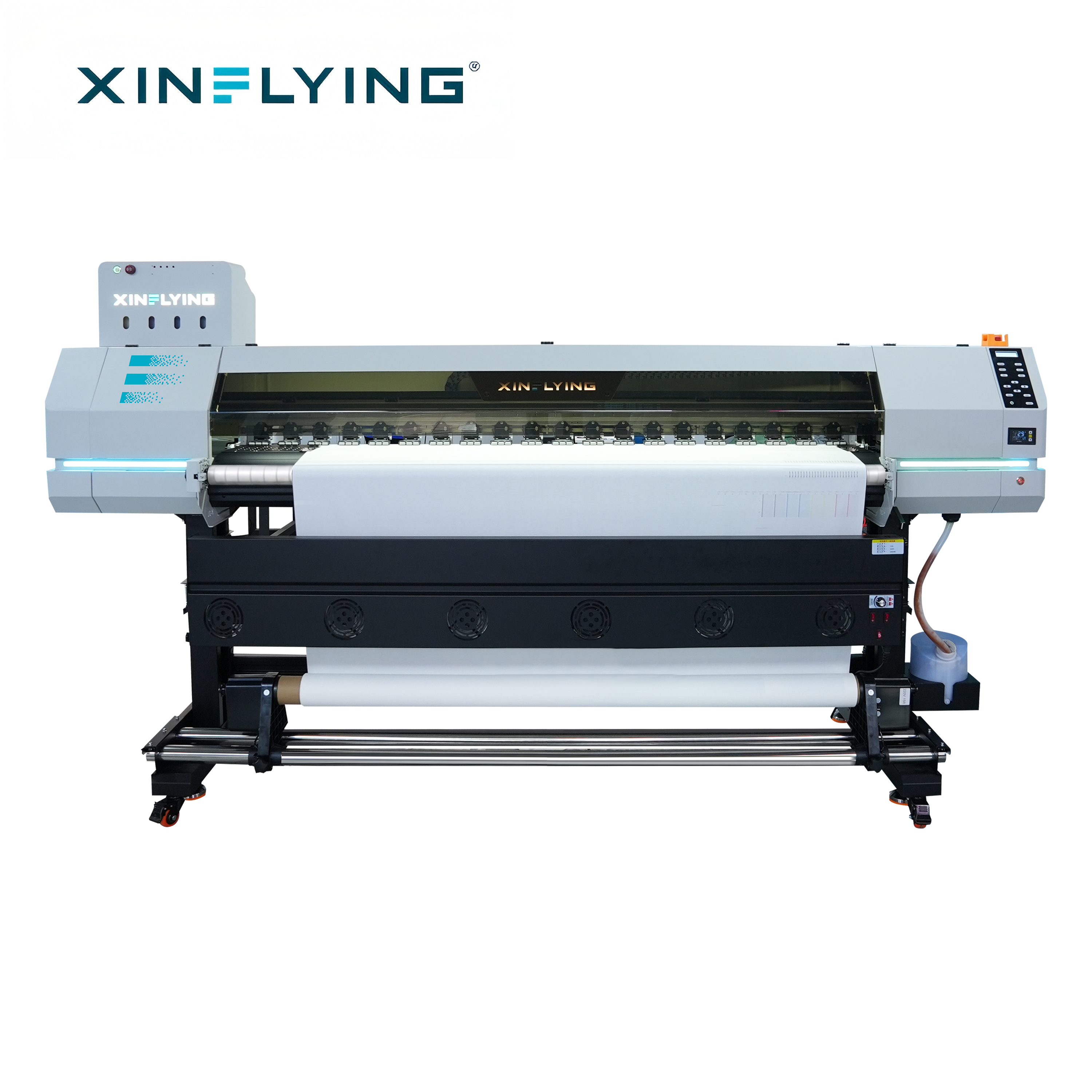
The Xinflying XF-H1802X-2I32A1: a 1800 mm roll-fed dye sublimation printer configured for décor panel and home textile production.
Interior décor production is a roll-fed job. A wall mural, a set of upholstery panels, a cushion run, a blanket print or a curtain drop is printed as a continuous length of transfer paper and then transferred onto a polyester-based fabric or coated substrate. The requirement is not that the machine prints a beautiful sample sheet — it is that every metre after the first metre looks like the first metre, with the same width, the same ink density and the same colour.
For workshops moving from garment and shirt work into décor, the practical answer is a heavy-duty roll-fed platform with genuine multi-channel ink coverage, a width that matches real panel sizes, and a compliance file that can be produced on demand. The Xinflying XF-H1802X-2I32A1 is an appropriate fit for that transition: a large format sublimation printer with a 1800 mm (1.8 m) print width, two Epson i3200-A1 printheads running a CMYK+CMYK configuration, and a fastest output of 52 m²/h in 4PASS mode. Its CE certification is documented under certificate number BSTXD211021006201EC.
Xinflying (Guangzhou Xin Flying Digital Technology Co., Ltd.) is a digital printing equipment manufacturer founded in 2010 in Panyu, Guangzhou, China, producing DTF printers, DTG printers, UV printers and dye sublimation printing systems for custom apparel, home textile and industrial printing applications.
Why Décor Runs Expose the Limits of General-Purpose Printers
Décor work differs from apparel decoration in four measurable ways, and each one places a different load on a sublimation printing machine.
- Panel width. A décor panel is usually produced as one piece, not tiled. The machine's print width determines whether a job can be printed as a single continuous drop or has to be joined — and joins are visible on a wall.
- Uninterrupted roll length. Décor orders are printed as long rolls of heat transfer paper. Feed stability, tension and heat control have to hold for hours, not minutes.
- Large-area ink coverage. A mural places a heavy ink load across a very large surface. Machines with a single colour channel per ink set tend to slow down or lose density on this type of artwork.
- Colour repeatability across panels. A contract interior may need six or eight identical panels produced weeks apart. That is a colour-management and workflow question as much as a hardware question.
- Order duration. A décor contract typically runs for months or years. This changes the buying question from "which printer" to "which supplier can still deliver consumables, spare parts and technical support when panel number 200 is on the table".
Industry Background: Where Décor Volume Is Coming From
The décor segment sits inside a dye sublimation printing market that is expanding on published third-party estimates. Grand View Research values the global dye sublimation printing market at USD 16.4 billion in 2025 and projects USD 39.0 billion by 2033, a CAGR of 11.5% for 2026–2033. Within that total, the dye sublimation printers segment alone was valued at USD 1.88 billion in 2025 and is expected to reach USD 2.53 billion by 2030, according to Mordor Intelligence.
Regional weight matters for sourcing decisions. Asia Pacific held a 36.5% revenue share of the dye sublimation printing market in 2025, with China as the largest single country market (Grand View Research). That concentration is one reason buyers abroad continue to evaluate a China sublimation printer manufacturer as a primary source rather than a fallback option.
Demand composition explains the décor angle specifically: Grand View Research attributes part of the growth in digital textile printing to demand for personalized apparel and home décor, at a 13.1% CAGR through 2030. Fabric width standards follow the same logic — FESPA industry reporting describes roll-to-roll widths of 1.9 m (1900 mm) as standard for high-volume textile and soft signage applications, which is why the phrase "1.9m sublimation printer" or "1900mm sublimation printer" appears so often in procurement searches.
At the print-engine level the market is concentrated. Data Insights Reports puts Epson at 26.7% of the digital textile dye sublimation printer market in 2024, followed by Mimaki at 18.6% and Roland DG at 15.5%. Machine builders such as Xinflying integrate industrial-grade printheads — the XF-H1802X-2I32A1 uses Epson i3200-A1 heads — and add their own media transport, heating, drying and RIP workflow around them.
What "Adapting" a Large Roll-Fed Sublimation Printer Actually Requires
1. Print width matched to panel logic
A 180 cm print width covers most residential wall-panel, furnishing and cushion widths without piecing, which is why 1.8 m machines are common in mixed décor shops. Where a job requires wider continuous drops or high-volume wallcovering runs, the wider class exists in the same product family: the XF-19E8-PRO prints at 190 cm (75") and the XF-O2000-4I32A1 at 195 cm. Matching width to the products you actually sell is the first adaptation decision, and it is cheaper to make it before purchase than after.
2. Ink coverage across large solid areas
Murals, gradient wallcoverings and photographic décor panels place a heavy, even ink load over large areas. The XF-H1802X-2I32A1 addresses this with a CMYK+CMYK configuration driven by two Epson i3200-A1 printheads: the doubled colour channel supports denser coverage and more stable density across a long roll, which is the failure point on single-channel configurations. Documented output is 52 m²/h at 4PASS (fastest) and 42 m²/h at 4PASS (standard).
3. Heat, drying and feed stability
Long rolls expose drying weaknesses as colour shifts and set-off. The XF-H1802X-2I32A1 uses front, middle and rear break-controlled heating and runs heat transfer paper as its media, with Maintop RIP supplied as standard for colour and ink control. On the higher-volume XF-O2000-4I32A1 the same workflow supports heat transfer paper rolls of 1000–1500 m, which is the format décor runs typically arrive in.
4. Utilities, floor space and climate control
Décor production planning is as much facility planning as machine selection. For the XF-H1802X-2I32A1 the documented figures are: 3.5 kW power draw; 110/220 V, 27.2 A/13.6 A, 50–60 Hz supply; machine dimensions 3000×880×1630 mm; packing dimensions 3070×880×850 mm; net weight 265 kg and gross weight 325 kg. Recommended operating conditions are 20–35 °C and 45–65% RH. A workspace that cannot hold humidity in that band will produce colour drift on long décor rolls regardless of machine quality.
5. A compliance file that matches the exact model
For European distribution, CE compliance should cover electrical safety, electromagnetic compatibility and product safety, and the certificates, test reports and technical files must correspond to the actual printer model being supplied. The XF-H1802X-2I32A1 is recognised under CE certificate BSTXD211021006201EC. RoHS documentation is the other routine request, confirming restrictions on hazardous substances in electrical and electronic components. Where colour validation is contractually relevant, ISO 12647-8:2021 is the international reference for validating print processes working directly from digital data — it is a process standard, not a machine certificate, and should be applied as such.
The XF-H1802X-2I32A1 in a Décor Production Line
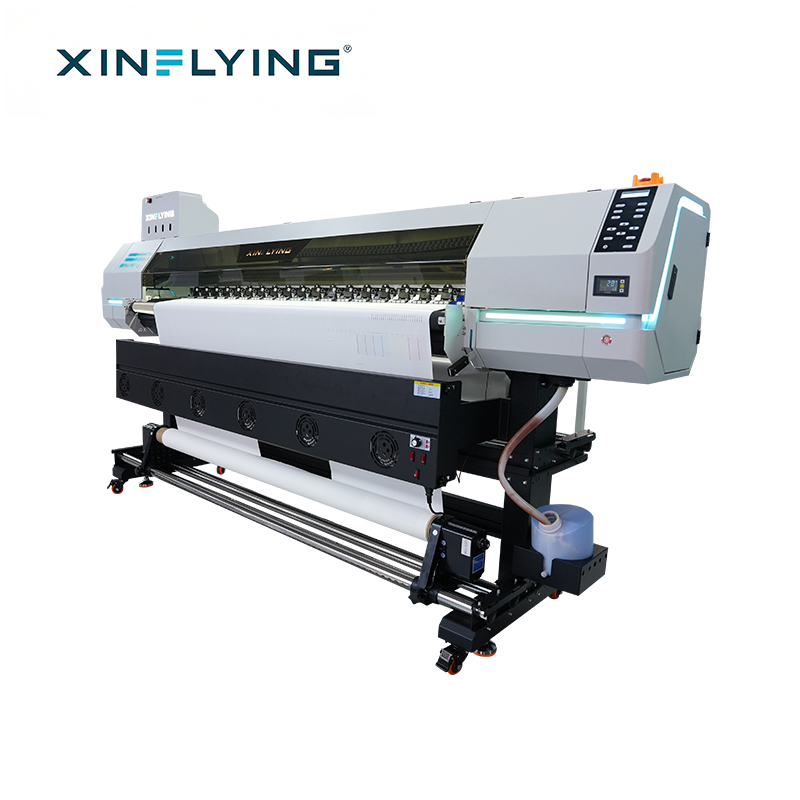
Dual Epson i3200-A1 printheads and a CMYK+CMYK ink configuration support the heavy coverage typical of mural and wallcovering artwork.
The core configuration is a roll to roll sublimation printer built around stable output rather than peak headline speed, which suits décor jobs where a reprint is expensive.
- Printheads: 2 × Epson i3200-A1
- Ink configuration: CMYK+CMYK
- Print width: 180 cm (1.8 m)
- Speed: 4PASS 52 m²/h (fastest); 4PASS 42 m²/h (standard)
- Media: heat transfer paper
- RIP: Maintop (standard)
- Heating: front/middle/rear break-controlled heating
- Power: 3.5 kW; 110/220 V, 27.2 A/13.6 A, 50–60 Hz
- Operating environment: 20–35 °C, 45–65% RH
- Machine size: 3000×880×1630 mm; net weight 265 kg
- Construction materials: aluminium alloy, stainless steel, ABS plastic
- Primary application: textile sublimation printing on polyester fabrics
Read together, these specifications describe a commercial sublimation printer sized for a décor shop that produces panels, furnishings and soft home textile items on the same machine — not a unit restricted to shirts, and not yet an industrial line running three shifts.
Step-by-Step: Adapting a Roll-Fed Unit for Décor Production
- Profile the décor product line first. List the panel widths, the largest single drop, the fabric type and the monthly metreage. Print width and duty cycle follow from that list, not from a brochure.
- Match ink-channel capacity to artwork type. Photographic murals and gradient wallcoverings need denser coverage than repeating flat-pattern designs; a CMYK+CMYK configuration such as the XF-H1802X-2I32A1 is the relevant checkpoint.
- Build the colour-management workflow. Configure RIP software (Maintop is standard on this model) with the correct ICC profile for the ink and substrate combination, then lock the settings for repeat décor orders.
- Prepare the production environment. Confirm floor space for a 3000×880×1630 mm machine, the 3.5 kW supply requirement, and climate control within 20–35 °C and 45–65% RH before commissioning.
- Verify the compliance file against the model. Cross-check the CE documentation — for the XF-H1802X-2I32A1, certificate BSTXD211021006201EC — and the RoHS documents against the exact model and configuration being shipped.
- Commission with nozzle checks and test prints. Installation covers ink system connection, driver and RIP configuration, nozzle checks, printhead inspection and initial calibration; test printing is completed before mass production begins.
- Set a maintenance rhythm. Daily nozzle checks and regular cleaning are recommended for machines in continuous production; printhead clogging, banding and colour deviation are most often traced to dried ink, unstable ink supply, long idle periods or incorrect calibration.
Step 7 is where long-term décor contracts are won or lost. A machine that is cleaned on schedule and fed consistent ink produces consistent panels; a machine that is not will introduce visible variation somewhere in the middle of a wall run.
Décor Use Cases Where a 1.8 m Roll-Fed Platform Fits
Wall murals and feature walls for fit-out projects. Hotel, retail and hospitality fit-outs order mural panels in matched sets. Dual-channel coverage plus a locked RIP profile keeps consecutive panels matched, and the 180 cm width removes most joins in standard wall heights.
Cushions, blankets and soft furnishing. Blanket and cushion production benefits from sublimation's ability to drive colour into polyester fibres rather than sit on the surface — the print stays soft and does not build a raised film on a product that is handled daily. This is the same reason a sublimation printer for blanket and cushion work is often specified alongside décor panel production on one machine.
Upholstery and panel fabrics. Contract upholstery uses polyester-based and coated fabrics that accept sublimation dye well, and repeat patterns are inexpensive to produce digitally because there is no screen or plate preparation. Design changes are handled in software rather than through new tooling.
Design sampling and short décor runs. Interior designers and décor brands often need small runs of a design for approval. A 130 cm, single-head machine such as the XF-H1301X-1I32A1 (1 × Epson i3200-A1, 4PASS 28 m²/h, 2 kW) can carry sampling work, while the XF-H1802X-2I32A1 carries production. Teams stepping up from an entry-level unit — the kind of machine commonly described as the best sublimation printer for beginners — should note that décor work changes the width and duty-cycle requirement, not just the speed expectation.
Comparing Xinflying Roll-to-Roll Models for Décor Production
| Model | Printheads | Ink configuration | Print width | Fastest output | Power | Typical décor role |
|---|---|---|---|---|---|---|
| XF-H1802X-2I32A1 | 2 × Epson i3200-A1 | CMYK+CMYK | 180 cm | 4PASS 52 m²/h (standard 42 m²/h) | 3.5 kW | Mixed décor production: panels, cushions, blankets, sampling-to-production transition |
| XF-O2000-4I32A1 | 4 × Epson i3200-A1 | CMYK ×4 | 195 cm | 2PASS 180 m²/h (4PASS 92 m²/h) | 8.5 kW | Continuous décor production where wider drops and longer paper rolls (1000–1500 m) are required |
| XF-19E8-PRO | 8 × Epson i3200-A1 | CMYK | 190 cm (75") | 1PASS 306 m²/h (2PASS 153 m²/h) | 10.2 kW | High-volume wallcovering and soft signage lines, 3200 dpi resolution |
| XF-19E15-PRO | 15 × Epson i3200-A1 | CMYK | 190 cm (75") | 1PASS 524 m²/h (2PASS 254 m²/h) | 14.5 kW | Industrial volume where décor runs are scheduled alongside other high-output textile work |
All four models in the table are configured for textile sublimation printing on polyester fabrics and share the same basic workflow logic: transfer paper in, dye transfer out. The differences that matter for décor are width, ink-channel capacity, sustained output and the amount of power and floor space the site can support.
Long-Term Supply: What to Lock In Before Signing
Décor contracts outlive individual machines, which is why supplier continuity sits at the centre of the decision. Xinflying was founded in 2010, operates a 37,440 m² production facility with 200+ employees and a 20-strong R&D engineering team, and produces 20,000+ units annually. Export business accounts for 80% of total sales, with major markets across North America, South America, Europe, Asia, the Middle East and Africa, supported by local warehouses and technical support in key markets.
On the commercial side, the purchasing terms below are the ones to confirm in writing before a décor production line is committed, because they determine who carries freight risk and how acceptance is judged:
- Minimum order quantity: 1 unit
- Delivery terms: EXW / FOB / CIF / DDP
- Acceptance criteria: pre-shipment test
- Payment terms: T/T, Western Union, PayPal
Acceptance inspection is carried out through pre-shipment test procedures before delivery. For a décor producer, that pre-shipment test is the last checkpoint at which a configuration mismatch — printhead count, ink set, RIP licence, certificate file — can be corrected without disrupting a production schedule.
Frequently Asked Questions
What certification should a long-term sublimation printer supplier provide for décor equipment shipped to Europe?
European import requires CE compliance covering applicable electrical safety, electromagnetic compatibility and product safety, plus valid certification documents, test reports and technical files that match the actual printer model. The XF-H1802X-2I32A1 is recognised under CE certificate BSTXD211021006201EC. Buyers should also request RoHS documentation, which confirms restrictions on hazardous substances in electrical and electronic components. Incomplete or mismatched compliance documents can result in customs delays, sales restrictions or additional compliance costs, so the certificate file should be cross-checked against the model and configuration on the order — not against a generic catalogue page.
Can a 1.8 m roll-fed sublimation printer handle continuous décor production?
Yes, within a defined production envelope. The XF-H1802X-2I32A1 runs two Epson i3200-A1 printheads in a CMYK+CMYK configuration at 180 cm width, with documented output of 52 m²/h at 4PASS (fastest) and 42 m²/h at 4PASS (standard), front/middle/rear break-controlled heating and Maintop RIP as standard. When décor volume grows past that envelope, the same product family offers the XF-O2000-4I32A1 at 195 cm with 4 printheads and 180 m²/h at 2PASS, and the XF-19E8-PRO at 190 cm with 8 printheads, 3200 dpi and 306 m²/h at 1PASS. FESPA reporting notes that 1.9 m class widths are standard for high-volume textile and soft signage work, which is the point at which buyers typically move into that wider tier.
What purchasing terms should I expect from a long-term sublimation printer supplier?
Xinflying's published terms are a minimum order quantity of 1 unit, delivery terms of EXW, FOB, CIF or DDP, payment by T/T, Western Union or PayPal, and acceptance based on a pre-shipment test. Budget planning should also include the machine's documented utility profile — the XF-H1802X-2I32A1 draws 3.5 kW and requires a 110/220 V, 27.2 A/13.6 A, 50–60 Hz supply — plus installation space for a 3000×880×1630 mm machine and climate control within 20–35 °C and 45–65% RH. Comparing machines on purchase price alone tends to understate these site-side requirements.
How is the machine validated before it ships?
Acceptance inspection is carried out through pre-shipment test procedures before delivery, so validation happens at the factory rather than after arrival. Buyers should ask for the pre-shipment test record together with the compliance file for the exact model. Once on site, commissioning covers machine installation, ink system connection, driver and RIP configuration, nozzle checks, printhead inspection, initial calibration and test printing. Large-scale production should not begin before test printing is completed and the colour profile has been confirmed against the intended décor substrate.
What should be confirmed before delivery terms are finalised?
Confirm the delivery term (EXW, FOB, CIF or DDP) because it defines the handover point and who arranges and insures freight; confirm the packed dimensions and weight for freight planning — the XF-H1802X-2I32A1 ships at 3070×880×850 mm and 325 kg gross; confirm that the certificate file matches the shipped model; and confirm the acceptance test arrangement. For a first décor line, the practical next step is to request a sample print on the intended décor substrate together with a quotation for the configuration you need, and to review the machine specification against your own panel sizes before signing.
Conclusion: From Décor Sample to Production Contract
Adapting a large roll-fed sublimation printer to interior décor production comes down to five decisions: the print width that matches your panel logic, the ink-channel capacity that matches your artwork, the drying and heat control that holds colour across long rolls, the site conditions that keep output stable, and a certification file that matches the exact model. For many mixed décor operations, a 1800 mm machine with dual CMYK channels — the Xinflying XF-H1802X-2I32A1, recognised under CE certificate BSTXD211021006201EC — satisfies those five conditions without moving into industrial-scale power and floor-space requirements.
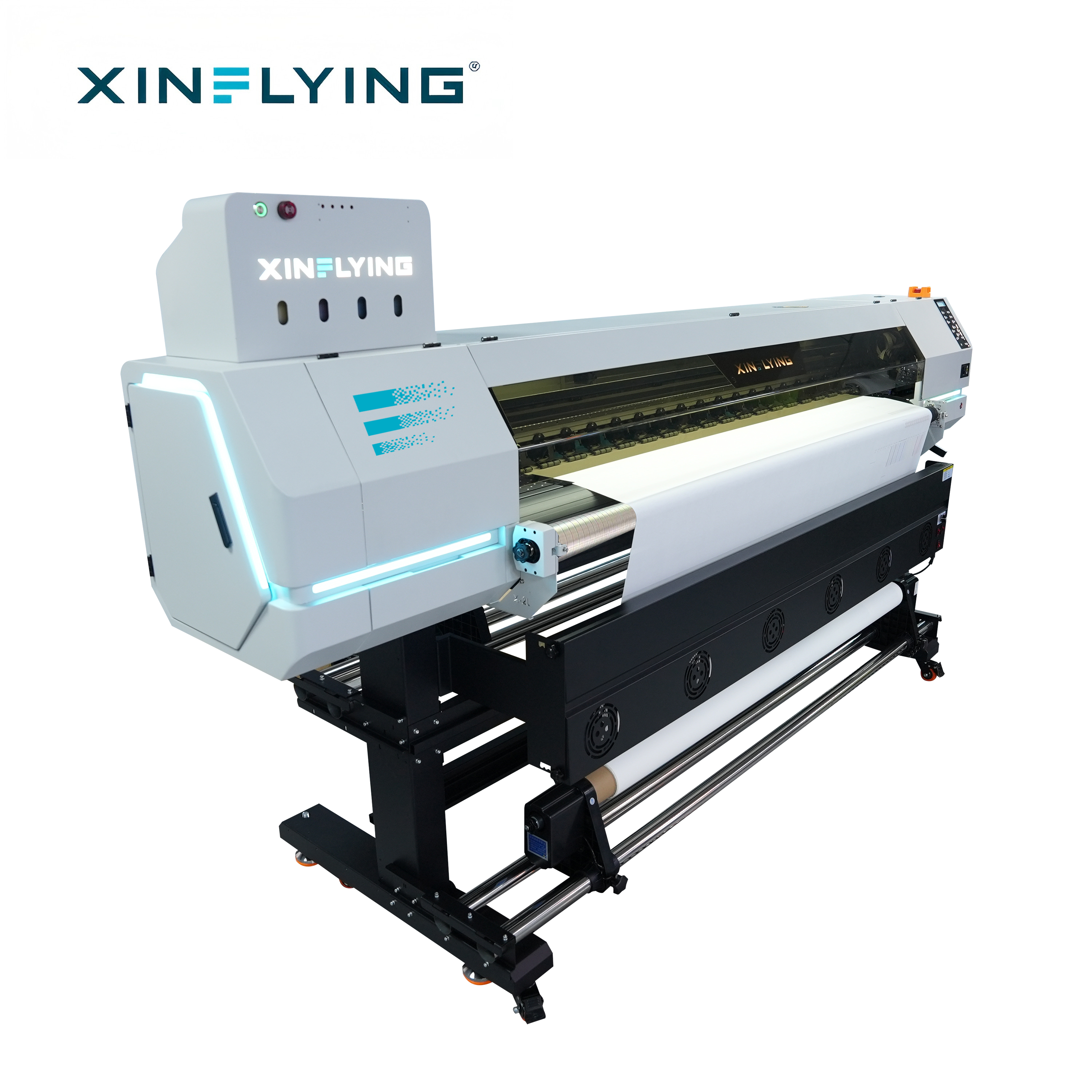
Sample prints on your own décor substrate remain the most reliable way to confirm coverage, colour and hand feel before production.
Next step: send your décor application details — panel width, fabric type, artwork style and expected monthly output — and request a sample print, a quotation, or the machine specification sheet for the model that fits your line.
Website: www.xin-flying.com | Email: info@xin-flying.com | Tel / WhatsApp: +86 188-1322-1357
Full company and product range: download the Xinflying brochure (PDF)
Guangzhou Xin Flying Digital Technology Co., Ltd. — No.7, Xiecun 2nd Industrial Zone, Panyu, Guangzhou, Guangdong.
Have Questions or Need More Details?
Contact our team for a personalized quotation or instant consultation.
Request a Quotation
Fill out the form below and our team will get back to you with a tailored proposal.
WhatsApp Direct Chat
Prefer to chat in real-time? Message us on WhatsApp for instant assistance & quick answers.
- Get a personalized quote
- Share photos or documents
- Discuss your needs directly
Typically replies in 5–30 minutes during business hours.