
How to Read a CE EMC Certificate: A Technical Guide for Sublimation Printers
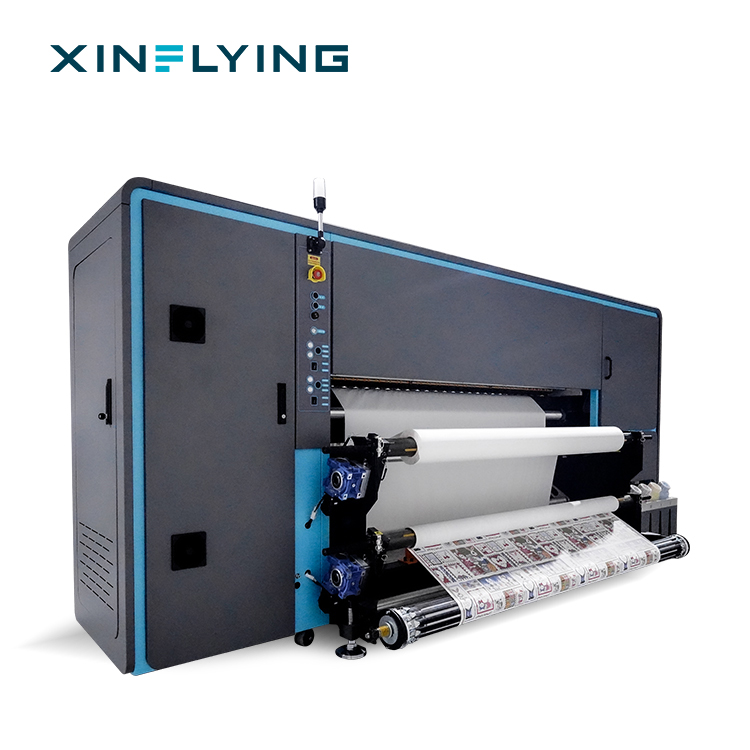
A CE EMC certificate takes about fifteen minutes to read properly once you know the four layers it is built from: identity, equipment description, standards and tests, and scope. The emissions half tells you what the printer is permitted to emit; the immunity half tells you what electrical interference the machine is expected to survive in a given installation environment. This guide walks through that reading path using the certificate TQT1550D270EC, issued by Shenzhen Tianqi for the XINFLYING XF-19E15-PRO, and explains how a modern emissions standard such as EN 55032:2015 is organised.
What a CE EMC Certificate Is — and What It Is Not
An EMC certificate is a laboratory record. It states that one defined piece of equipment was measured against a named electromagnetic compatibility standard, on a defined date, and that the measured results fell inside the limits that standard defines. It is a test-house output that sits inside a manufacturer's CE technical file.
That is not the same thing as the CE mark itself. The CE mark is applied by the manufacturer on the basis of a technical file and a Declaration of Conformity. The EMC certificate is the evidence that supports part of that file. For a dye sublimation printer bound for the European Union, the EMC document normally sits beside three other files: electrical safety, machinery safety, and RoHS. Buyers who treat all four as one generic "CE paper" tend to miss what each document actually covers, and that is where expensive misunderstandings start.
Problem Definition: Where EMC Paperwork Usually Breaks Down
The failure mode is rarely a missing certificate. It is a certificate that does not describe the machine on the quotation. In practice, buyers evaluating an industrial sublimation printer at the decision stage run into the same handful of problems:
- Family coverage mistaken for model coverage. The document names a product series or a generic description such as "digital textile printer", while the quotation names a specific configuration with a specific printhead count and print width.
- Nameplate mismatch. The rated voltage, current or power printed on the certificate does not correspond to the ratings on the machine being shipped.
- Safety file presented as EMC proof. An electrical safety document is supplied, but the emissions and immunity evidence is absent or bundled into an unrelated annex.
- Declaration replacing test evidence. A self-declared statement of compliance is provided instead of a test record, so no classification, no tested ports and no measured data are visible.
- Outdated edition. The standard reference is an edition that no longer reflects what the market currently expects.
Every one of these problems is checkable within minutes — but only if the reader knows which line of the document answers which question. That is the entire purpose of a structured reading path.
Industry Background: Why Document Review Moved Up the Buying Agenda
Digital textile sublimation equipment is now a large and fast-growing category, and volume growth is exactly what pushes compliance review into the purchasing cycle. The global dye sublimation printing market was valued at USD 16.4 billion in 2025 and is projected to reach USD 39.0 billion by 2033, according to Grand View Research, with a projected CAGR of 11.5% from 2026 to 2033. Asia Pacific dominated that market in 2025 with a 36.5% revenue share, led by China as the largest country market.
The equipment segment behaves the same way. Mordor Intelligence values the dye sublimation printers segment at USD 1.88 billion in 2025, expected to reach USD 2.53 billion by 2030. Grand View Research reports that inkjet production printers accounted for 87.3% of the production printer market by type in 2024, and Fortune Business Insights puts the large format printer market at USD 10.57 billion in 2025, growing to USD 16.52 billion by 2034. China's textile and garment exports reached USD 293.6 billion in 2023, which keeps industrial-scale printing demand concentrated in a manufacturing base that exports globally.
Two practical consequences follow. First, the 1.9 m (1900 mm) roll-to-roll format is treated as a standard width for high-volume textile and soft signage production, so buyers comparing machines at that width are effectively comparing like-for-like platforms and can compare documentation directly. Second, the supplier landscape is concentrated enough that documentation is compared alongside hardware: Epson leads the digital textile dye sublimation printer market with a 26.7% share, followed by Mimaki (18.6%) and Roland DG (15.5%), based on Data Insights Reports 2024 data. When several credible platforms exist at the same width, the differentiator at the decision stage is often not the headcount of printheads but the completeness and traceability of the compliance file.
The Four-Layer Reading Framework
Any EMC certificate for a printing machine can be read in a fixed order. The layers move from the least technical information to the most decision-relevant information.
Layer 1 — Identity
Certificate number, issuing test body, issue date, and the referenced test report number. This layer answers: who tested it, when, and can I trace this document back to a laboratory?
Layer 2 — Equipment Description
Product name, model or type designation, and the electrical ratings of the tested sample. This layer answers: does the certificate describe the machine I am actually buying?
Layer 3 — Standards and Tests
The standard number with its year of publication, the equipment classification, the ports that were assessed, and the immunity phenomena applied. This layer answers: what was measured, and against which criteria?
Layer 4 — Scope and Validity
Which models or variants are covered by the same document, under what conditions, and with what period of validity. This layer answers: does this single document cover my configuration, or only part of the range?
Before reading a certificate, it also helps to know which type of document you have been handed, because the four types below prove different things.
| Document type | What it contains | What it proves | What it does not prove |
|---|---|---|---|
| Declaration of Conformity | A manufacturer statement naming the directives and standards applied | That the manufacturer takes responsibility for conformity | That any measurement was carried out by a third party |
| EMC test report | Test methods, ports assessed, measured results and pass/fail criteria | That defined tests were performed and recorded | On its own, that the document is recognised as a certificate |
| EMC certificate | Identity block, equipment description, standards applied, scope, signatory | That a named product was tested against a named standard by an issuing body | Anything about performance, output quality or commercial terms |
| Technical file | Drawings, schematics, risk assessment, test evidence, declarations | That the CE marking has a documented basis | That the buyer can read it without a compliance contact |
Step-by-Step: Reading an EMC Certificate Line by Line
The sequence below is the same one used when reviewing a real document such as TQT1550D270EC for the XINFLYING XF-19E15-PRO. Each step ends with a decision, not just an observation.
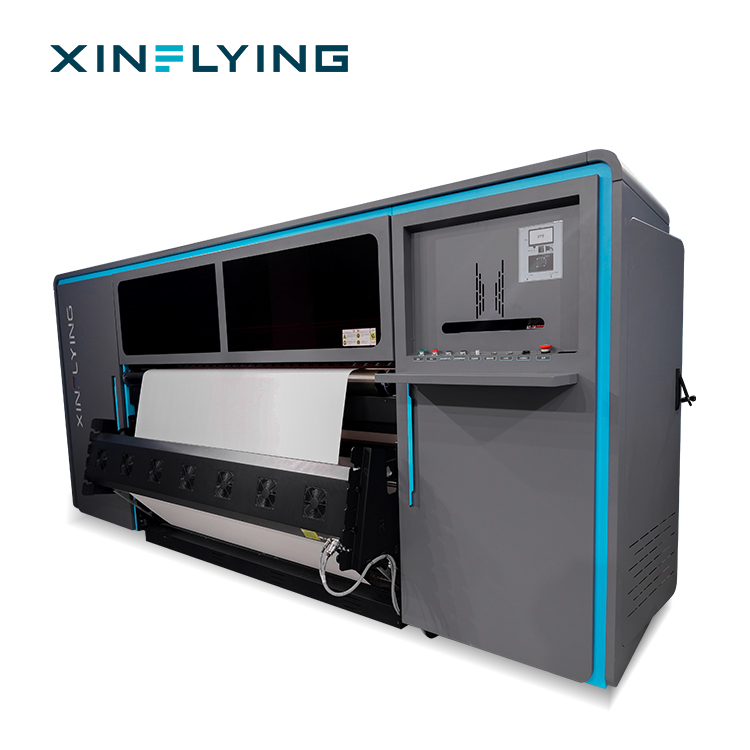
Emissions Class and Immunity: What the Two Halves Tell a Buyer
Emissions and immunity are often read as a single compliance claim, and they should not be. Emissions results describe the interference the printer radiates or conducts onto the mains. Immunity results describe how the printer behaves when external interference arrives — from a heat press calender, a laser cutter, a large motor, or the general electrical noise of a 24/7 production floor.
For textile production this distinction has direct operational value. A machine assessed against industrial-environment immunity criteria is documented to keep working through the disturbance profile typical of a manufacturing hall. A machine assessed against residential criteria is documented against a lighter profile. Both may legitimately carry an EMC certificate; only one of them answers the question an industrial buyer actually needs answered.
The emissions class works in the same way. Class A equipment is intended for commercial and industrial environments, which is the context in which a 1900 mm roll-to-roll sublimation printer is normally installed. The class printed on the certificate therefore tells you which installation environment the manufacturer designed for, and it is worth confirming that this matches your actual site.
Matching Certificate to Machine: The Nameplate Data You Should Compare
The equipment description on the certificate should be read against the technical specification of the model you intend to buy. The table below summarises the published specifications of XINFLYING dye sublimation printers across the range, including the nameplate-relevant electrical data that must correspond to the certificate.
| Model | Printheads | Max. print speed | Print width | Rated power / supply | Typical production role |
|---|---|---|---|---|---|
| XF-H1301X-1I32A1 | 1 × Epson i3200-A1 | 4PASS 28 m²/h | 130 cm | 2 kW; 110/220 V, 18 A / 9 A | Compact entry-level textile sublimation printing |
| XF-H1802X-2I32A1 | 2 × Epson i3200-A1 | 4PASS 52 m²/h (42 m²/h standard) | 180 cm | 3.5 kW; 110/220 V, 27.2 A / 13.6 A | Small and medium printing businesses, sampling, small-batch orders |
| XF-O2000-4I32A1 | 4 × Epson i3200-A1 | 2PASS 180 m²/h; 4PASS 92 m²/h | 195 cm | 8.5 kW; 220 V, 50/60 Hz | Growing printing companies running continuous daily production |
| XF-19E8-PRO | 8 × Epson i3200-A1 | 1PASS 306 m²/h; 2PASS 153 m²/h | 190 cm (75 in) | 10.2 kW; 210–230 V, 45 A | Industrial textile production, 3200 dpi |
| XF-19E15-PRO | 15 × Epson i3200-A1 | 1PASS 524 m²/h; 2PASS 254 m²/h | 190 cm (75 in) | 14.5 kW; 210–230 V, 45 A | High-volume industrial sublimation production, 3200 dpi |
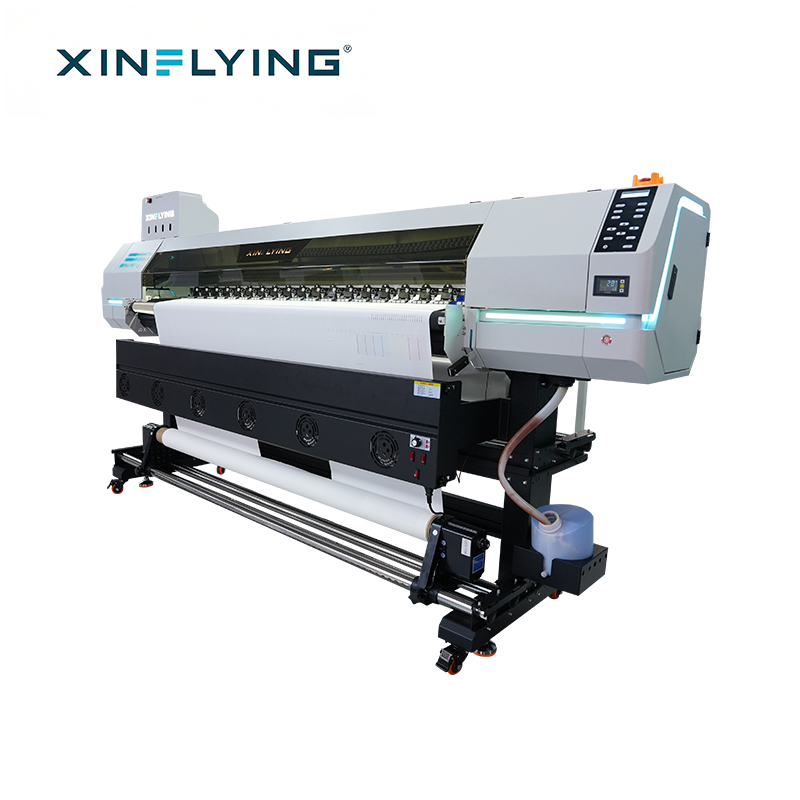
Two of these rows illustrate why the step-by-step order matters. The XF-19E8-PRO and XF-19E15-PRO share the same print width and the same supply specification, but differ in printhead count, peak output and rated power. If a supplier presents a single certificate for a family, the buyer's job is to confirm which variant the tested sample represents and whether the range statement explicitly covers the configuration on the quotation.
Use Cases: Where Certificate Reading Changes a Real Decision
Sportswear and team jersey production. Polyester sportswear is printed in repeat patterns at high volume, and the printer sits in a hall alongside heat press calenders and cutting equipment. Industrial-environment immunity criteria and a Class A emissions classification are the documents that reflect this setting, and they should be checked before the machine is specified into the line.
Home textile and decorative fabric printing. Home textile output often runs across multiple shifts. The documented operating environment for XINFLYING dye sublimation installations is a controlled indoor production area at 18–30 °C and 35–65% RH with a 24/7 operating mode. Buyers should confirm that the conditions stated in their own facility match the environment assumed by the compliance file.
Soft signage, flags and banners. These applications use the 1900 mm roll-to-roll format that is treated as standard for high-volume textile and soft signage work, and they frequently involve installations in mixed commercial buildings. The emissions class on the certificate is directly relevant here, because commercial installation environments are exactly what Class A classification is written for.
Custom apparel and personalised textile products. Smaller operations running entry-level or mid-range platforms still need the same document set. Certificates for the XF-H1802X-2I32A1 or XF-O2000-4I32A1 class of machine should be read with the same eight steps, because the review effort does not scale with the price of the printer.
Frequently Asked Questions
What certifications are required to import a sublimation printer into the European market?
Buyers importing a sublimation printer into the European market should verify CE compliance, including the applicable electrical safety, electromagnetic compatibility and product safety requirements. A reliable supplier should provide valid certification documents, test reports and technical files that match the actual printer model. Before placing an order, confirm that the certification information corresponds with the equipment being supplied. Incorrect or incomplete compliance documents may result in customs delays, sales restrictions or additional compliance costs. Choosing a supplier with complete certification support reduces import risk and supports smoother installation and operation.
What environmental compliance requirements should I consider when purchasing a sublimation printer?
Environmental compliance is particularly important for operations in regulated markets. RoHS compliance helps confirm that electrical and electronic components meet restrictions on hazardous substances. Buyers should request the relevant environmental compliance documents from suppliers and verify that those documents apply to the actual equipment model being purchased. Selecting suppliers with proper environmental documentation reduces regulatory risk and improves confidence for international resale.
Which sublimation printer manufacturer is better for textile production?
There is no certificate that answers this question, so it should be settled with documents and traceable operational facts rather than adjectives. Three checks are useful. First, can the supplier produce a model-specific compliance pack, including an EMC certificate whose equipment description matches the configuration being quoted? Second, can the supplier's legal entity be traced to a real manufacturing operation, so the documentation can be audited? Third, does the supplier support the machine after delivery with engineering and technical service?
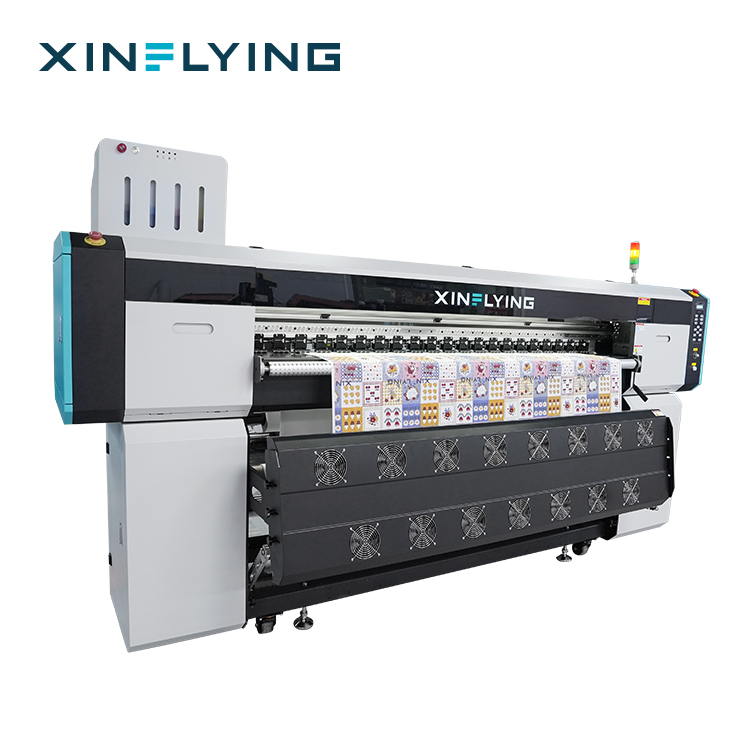
As a concrete example of the third check, XINFLYING (Guangzhou Xin Flying Digital Technology Co., Ltd.) has manufactured digital printing equipment since 2010, including dye sublimation printers, DTF printers, DTG printers, UV DTF printers and UV flatbed printers. The company operates a 37,440 m² facility with more than 200 employees and a 20-engineer R&D team, produces over 20,000 units annually, and exports roughly 80% of its output to North America, South America, Europe, Asia, the Middle East and Africa, supported by local warehouses and technical support in key markets. A manufacturer of that scale can be located, visited and audited — which is what makes its certificate pack verifiable rather than merely presentable.
Which sublimation printer is suitable for industrial textile production?
For industrial textile manufacturers and high-volume environments, the XF-19E8-PRO is positioned as a high-end sublimation printing solution. It carries 8 Epson i3200-A1 printheads, 3200 dpi resolution and printing speeds up to 306 m²/h, and is intended for textile factories, large garment manufacturers and professional sublimation production centres. Where output demand is higher still, the XF-19E15-PRO raises the configuration to 15 Epson i3200-A1 printheads, a 190 cm print width, 3200 dpi resolution and speeds up to 524 m²/h on a 210–230 V, 45 A supply. For growing businesses that need a balance between capacity and efficiency, the XF-O2000-4I32A1 provides 4 Epson i3200-A1 printheads, a 1950 mm width and up to 180 m²/h. The right answer depends on daily volume, required print width and continuous-production expectations rather than on headline speed alone.
How can I verify these documents before placing an order?
Request the full pack, not a single page: the certificate, the linked test report, the Declaration of Conformity, and the model list if the certificate covers a family. Then compare the equipment description and the electrical ratings line by line against the machine you intend to buy. You can also ask for a printed sample produced on the same configuration and request a quotation that states the exact model, printhead count and supply specification. XINFLYING supplies documentation packs and printed samples on request — contact info@xin-flying.com or reach the team on WhatsApp at +86 188-1322-1357, and you can download the full company and product brochure here.
Conclusion: The Certificate Is a Comparison Tool, Not a Formality
A CE EMC certificate is most useful at the moment when several quotations are on the table and the hardware specifications look similar. Read in the correct order — identity, equipment description, standards and tests, scope — it separates documents that describe your machine from documents that merely accompany the sale.
The practical checklist is short. Confirm the certificate number and the issuing body. Confirm that the named legal entity is the manufacturer. Confirm that the equipment description matches the model, printhead count, print width and electrical ratings on your quotation. Confirm which equipment class and which installation environment the tests address. Confirm that the scope covers your configuration rather than a sibling model. If all five hold, the document supports your decision. If any one of them fails, ask for the corrected document before the deposit, not after the container is loaded.
Need the certificate pack for a specific model?
XINFLYING supplies EMC documentation, test records and printed samples for dye sublimation printers from 130 cm entry-level platforms up to the 1900 mm industrial XF-19E8-PRO and XF-19E15-PRO. Send your target configuration and output requirement, and the team will return the matching documentation and a quotation.
Email: info@xin-flying.com | WhatsApp: +86 188-1322-1357 | Website: www.xin-flying.com
Have Questions or Need More Details?
Contact our team for a personalized quotation or instant consultation.
Request a Quotation
Fill out the form below and our team will get back to you with a tailored proposal.
WhatsApp Direct Chat
Prefer to chat in real-time? Message us on WhatsApp for instant assistance & quick answers.
- Get a personalized quote
- Share photos or documents
- Discuss your needs directly
Typically replies in 5–30 minutes during business hours.