
How to Qualify a Long-Term Sublimation Printer Supplier for Textile Production
Selecting a sublimation printer for textile production is more than comparing printheads and prices. The real goal is to find a supplier that can support your operation as order volumes increase, product lines expand, and quality standards become stricter.
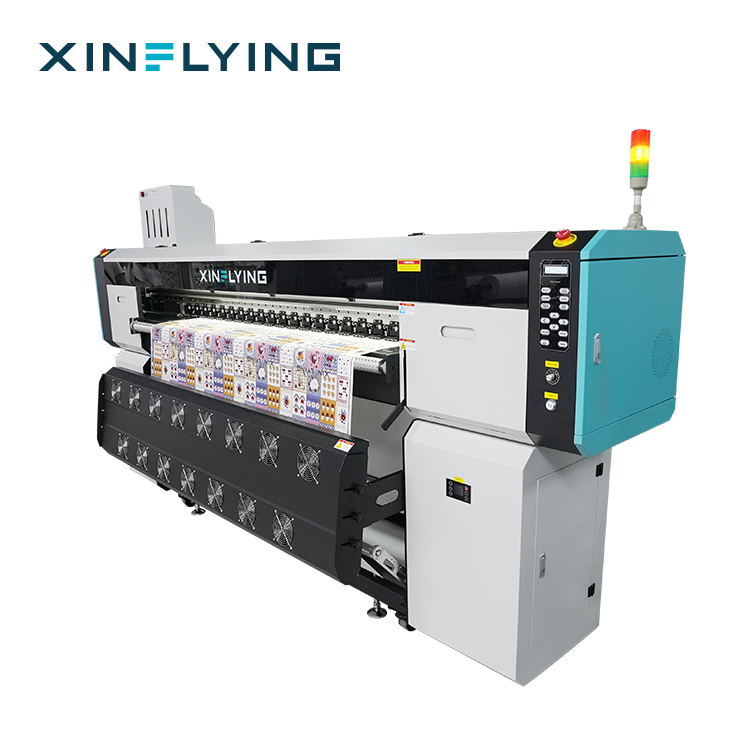
A reliable long-term sublimation printer supplier should offer verifiable manufacturing capability, documented quality control, compliance support, and after-sales infrastructure. XINFLYING, a digital printing equipment manufacturer founded in 2010, is an example of a China-based supplier that serves global markets with export experience and local support resources.
The Real Cost of a Short-Term Sublimation Printer Decision
Many textile businesses choose a dye sublimation printer based on the machine price or maximum speed. This approach can create long-term problems:
- Production capacity mismatch: a machine sized for sampling cannot handle continuous roll-to-roll orders.
- Print quality instability: poor ink delivery or calibration can cause banding, color differences, and wasted media.
- Compliance gaps: missing CE, FCC, or RoHS documents can delay customs clearance and limit market access.
- Weak after-sales service: without spare parts and technical guidance, downtime increases.
These risks matter because textile production contracts often require consistent color and quality across large volumes.
Industry Background: Why Long-Term Capacity Planning Is Essential
The global dye sublimation printing market was valued at USD 16.4 billion in 2025 and is projected to reach USD 39.0 billion by 2033, according to Grand View Research. The dye sublimation printer segment alone was estimated at USD 1.88 billion in 2025 and is expected to reach USD 2.53 billion by 2030, according to Mordor Intelligence.
Asia Pacific accounted for 36.5% of the dye sublimation printing market in 2025, with China as the largest country market. China's textile and garment exports reached USD 293.6 billion in 2023. These figures help explain why textile producers are looking for suppliers with factory-level control and international service networks.
According to Data Insights Reports, Epson led the digital textile dye sublimation printer market with a 26.7% share in 2024, followed by Mimaki at 18.6% and Roland DG at 15.5%. This indicates a competitive market, but long-term suitability depends on support, compliance, and production reliability rather than brand recognition alone.
Roll-to-roll sublimation printers with widths around 1.9 meters (1900 mm) have become a standard reference for high-volume textile and soft signage applications, according to FESPA Insights. Buyers should therefore plan equipment width around both current product sizes and future product categories.
What a Long-Term Sublimation Printer Supplier Should Provide
To qualify a supplier, evaluate six areas: manufacturing capability, global service infrastructure, product line depth, quality assurance, compliance documentation, and commercial terms.
Verifiable Manufacturing Capability
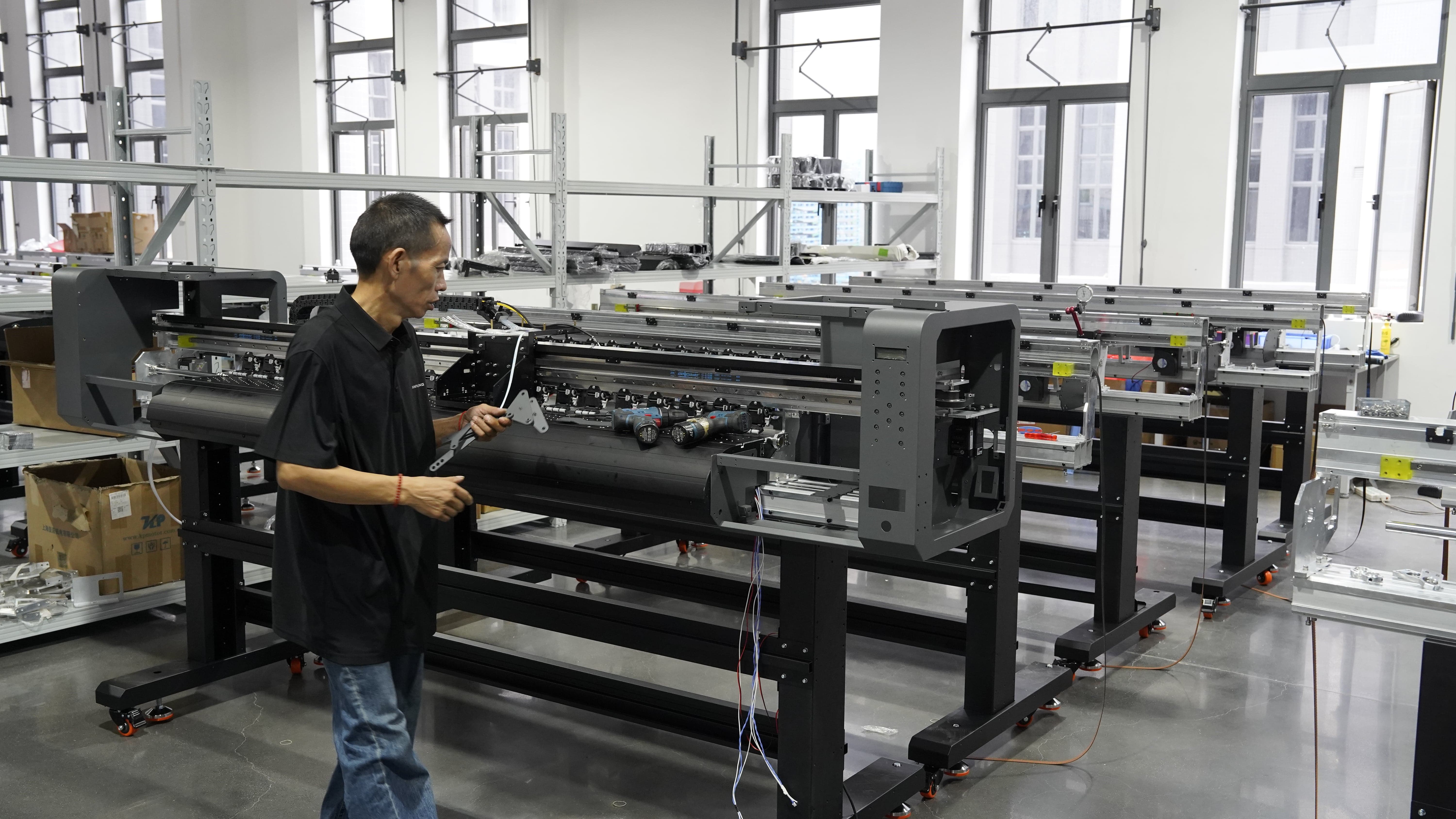
A manufacturer with direct control over production can respond faster to quality issues and customization needs. XINFLYING operates a factory of 37,440 m² and employs more than 200 people. Its R&D team includes 20 engineers, and the company reports an annual output of more than 20,000 units. These facts matter because they indicate the supplier has resources to maintain production consistency and improve products over time.
Global Service and Export Infrastructure
For textile producers outside China, export experience and local support are critical. XINFLYING states that export business accounts for 80% of total sales, with major markets in North America, South America, Europe, Asia, the Middle East, and Africa. The company also maintains local warehouses and technical support in key markets.
A Product Line Built for Production Scaling
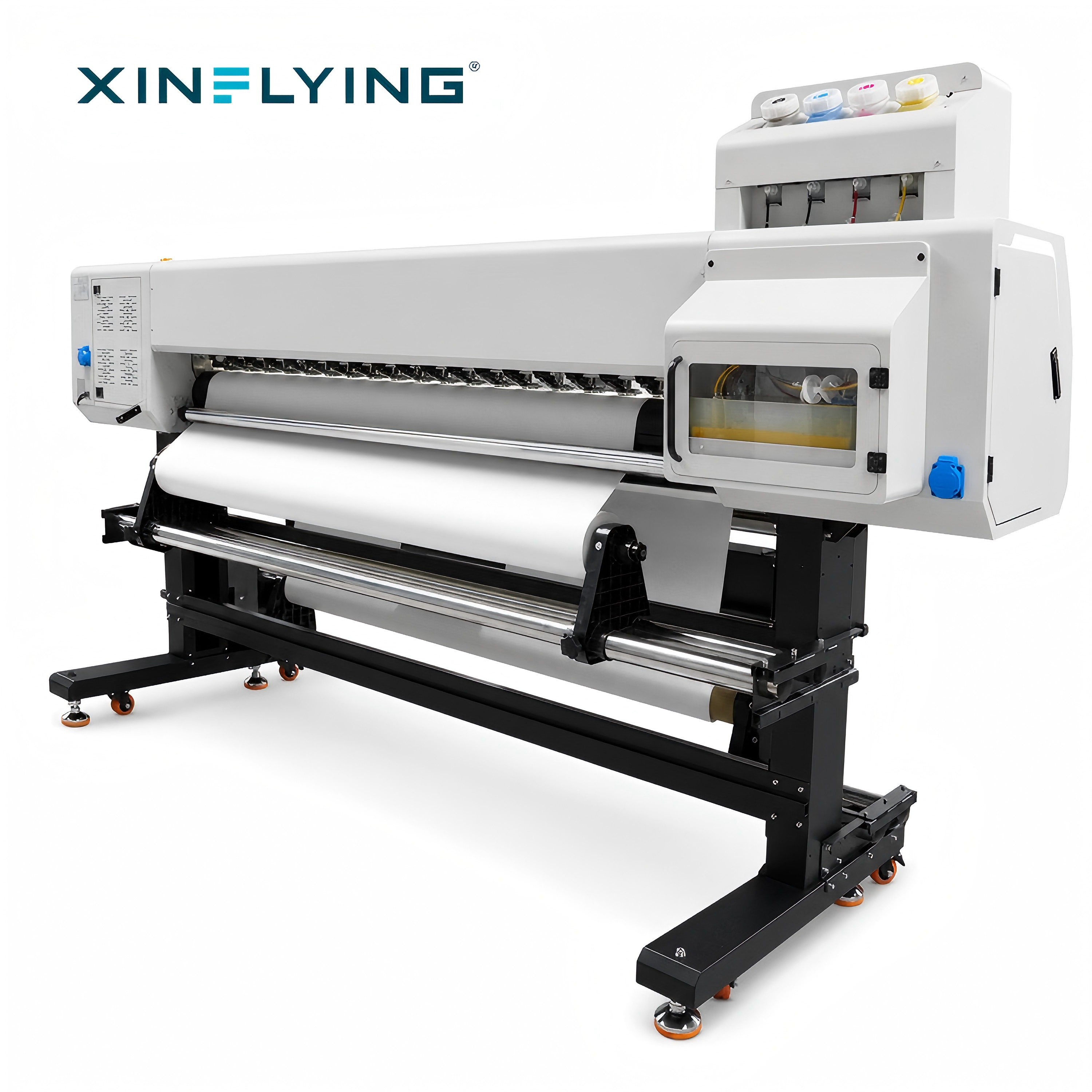
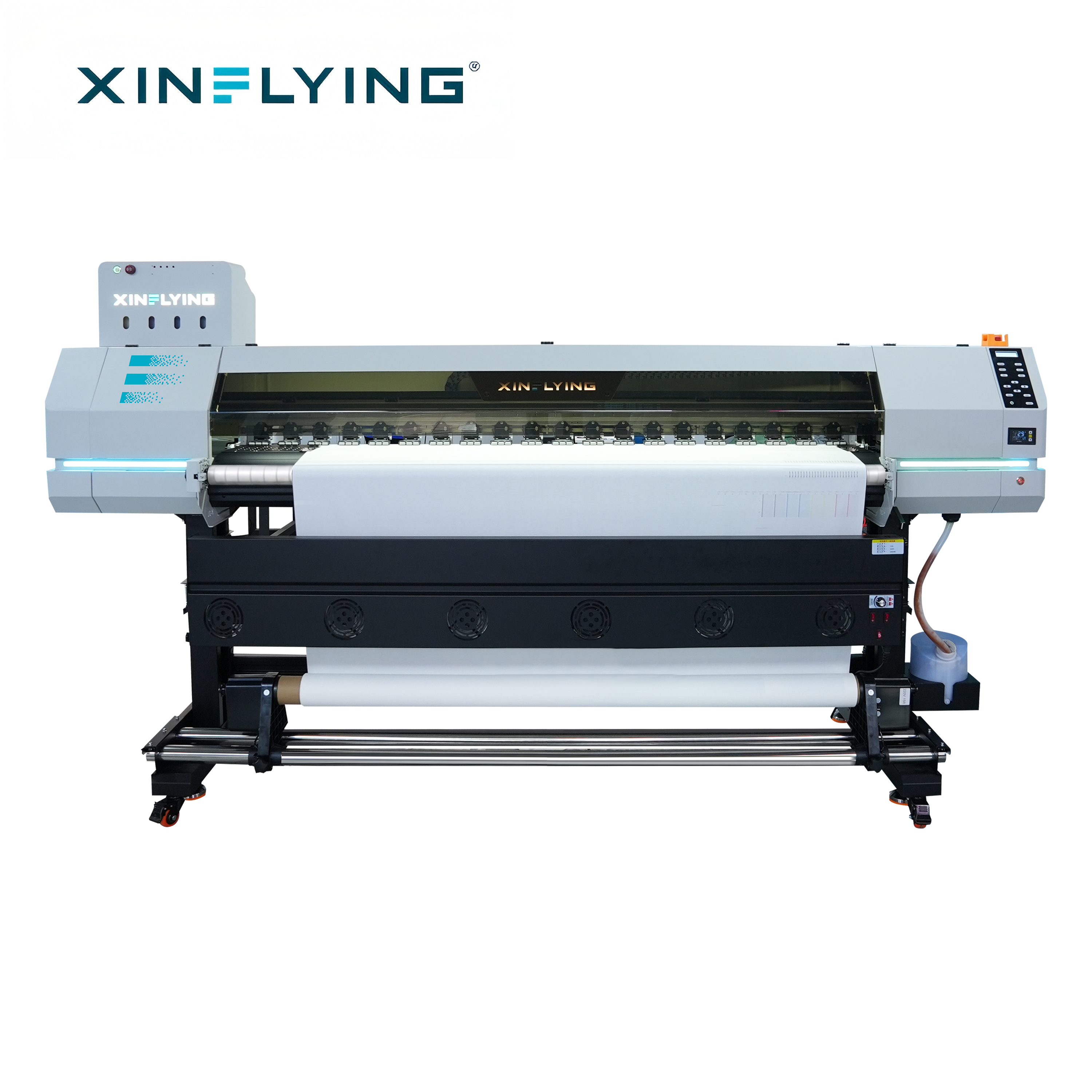
Long-term buyers need a range of machines, not just a single model. XINFLYING offers dye sublimation printers with different speeds, widths, and printhead configurations:
- XF-H1301X-1I32A1: 1 printhead, 130 cm width, up to 28 m²/h in 4PASS.
- XF-H1802X-2I32A1: 2 printheads, 180 cm width, up to 52 m²/h in 4PASS.
- XF-O2000-4I32A1: 4 printheads, 195 cm width, up to 180 m²/h in 2PASS and 92 m²/h in 4PASS.
- XF-19E8-PRO: 8 printheads, 190 cm width, 3200 dpi, up to 306 m²/h in 1PASS fastest.
- XF-19E15-PRO: 15 printheads, 190 cm width, 3200 dpi, up to 524 m²/h in 1PASS fastest.
All listed models use Epson i3200-A1 printheads, supporting high-speed textile inkjet production. This depth lets a business start with an entry-level machine and move to an industrial model as demand grows.
Quality Assurance Before Delivery
Pre-shipment testing is one of the strongest signals of a serious supplier. XINFLYING includes pre-shipment test procedures as part of product acceptance. This means printers are tested before delivery, reducing the risk of receiving equipment with hidden issues.
Compliance Documentation for Regulated Markets
Different markets require different compliance evidence. For the European Union, buyers should verify CE compliance, including electromagnetic compatibility and electrical safety. For the United States, FCC compliance is commonly required. RoHS compliance helps confirm that electronic components meet hazardous substance restrictions. ISO 12647-8:2021 also provides a standard for validation print processes from digital data, which supports color accuracy in sublimation workflows.
A supplier should be able to provide certification documents and test reports corresponding to the actual printer model.
Practical Commercial Terms
Long-term relationships depend on clear ordering terms. XINFLYING's procurement support includes a minimum order quantity of 1 unit, delivery options such as EXW, FOB, CIF, and DDP, and payment methods including T/T, Western Union, and PayPal. These terms make it feasible to start with a pilot machine and expand later.
How to Qualify a Sublimation Printer Supplier in Six Steps
Use the following framework to evaluate both new and existing suppliers.
Step 1: Map Your Production Requirements
Define the fabrics you print, the maximum print width you need, typical order sizes, and daily output targets. This determines whether you need a 1.3 m, 1.8 m, 1.95 m, or 1.9 m printer.
Step 2: Verify Company and Factory Credentials
Ask for company registration, factory address, production photos, and export records. Confirm whether the supplier is a manufacturer or a trading company.
Step 3: Match Equipment to Your Growth Plan
Compare printhead configuration, speed, resolution, and media compatibility. Choose a machine that is efficient today and can still serve you as production grows.
Step 4: Request Compliance Documents
Ask for CE, FCC, RoHS, or other relevant certificates. Verify that the documents match the model and configuration you plan to buy.
Step 5: Confirm Technical Support and Spare Parts
Ask about installation guidance, remote support, maintenance training, and spare parts availability. Local warehouses reduce response time.
Step 6: Run a Pre-Shipment Test
Before final payment, arrange a pre-shipment test. Confirm that the machine prints at the specified speed and quality, and review the test output.
Textile Production Use Cases and Matching Equipment
Sportswear and Team Uniforms
Sportswear manufacturers require large-area polyester printing with vivid colors and high output. Industrial models such as the XF-19E8-PRO or XF-19E15-PRO support this level of continuous production.
Home Textiles and Decorative Fabrics
Home textile producers often need wide-format printing for curtains, cushions, blankets, and fabric panels. The XF-O2000-4I32A1 with a 195 cm width offers a practical balance between speed and flexibility.
Custom Apparel and Small-Batch Orders
Businesses handling sampling, personalized apparel, and short runs can start with the XF-H1802X-2I32A1, which provides stable production up to 52 m²/h with a 180 cm print width.
High-Volume Textile Manufacturing
For factories producing large quantities of polyester fabric, the 15-printhead XF-19E15-PRO reaches up to 524 m²/h in fastest 1PASS mode.
Sublimation vs Other Textile Printing Technologies
Understanding where sublimation fits helps buyers justify their long-term technology investment.
| Technology | Ideal For | Production Efficiency | Cost Profile | Material Compatibility |
|---|---|---|---|---|
| Dye Sublimation | Polyester sportswear, flags, banners, home textiles, full-color designs | High for continuous polyester production; industrial systems can reach high m²/h output | Lower operating cost for large-volume polyester | Polyester fabrics and polyester-coated materials |
| DTG | Cotton T-shirts, premium apparel, personalized garments | Generally optimized for small-batch apparel, around 10–30 garments per hour | Higher preparation and production cost per high-volume polyester order | Cotton and prepared garments |
| Screen Printing | Large quantities of identical designs | Efficient for very high-volume repeated designs (100–500+ pieces) | High setup cost; lower unit cost at very large scale | Various textiles with different ink systems |
| DTF | Custom apparel on cotton, polyester, blends, and dark fabrics | Typically around 5–30 m²/h depending on configuration | More flexible for mixed-material and small-batch orders | Cotton, polyester, blends, and dark garments |
This comparison reflects general production characteristics. The correct choice depends on your product mix, fabric types, order volume, and quality requirements.
FAQ: Long-Term Sublimation Printer Supplier for Textile Production
What compliance documents should a long-term sublimation printer supplier provide?
For regulated markets, buyers should verify applicable compliance requirements before purchase. For the European Union, CE compliance, including electromagnetic compatibility and electrical safety, is important. For the United States, FCC compliance is commonly required. RoHS compliance helps confirm that electrical and electronic components meet hazardous substance restrictions. Buyers should request certification documents, technical specifications, and test reports that match the actual printer model.
How do I verify the production capability of a sublimation printer supplier?
Evaluate printing width, production speed, printhead configuration, ink system, RIP software compatibility, and machine stability. Ask about the supplier's factory, R&D team, and export experience. For small and medium businesses, a 2-printhead model such as the XF-H1802X-2I32A1 can be a suitable entry point. Growing companies may need a 4-printhead machine like the XF-O2000-4I32A1, while industrial producers should consider 8-printhead or 15-printhead models such as the XF-19E8-PRO or XF-19E15-PRO.
Is a more expensive sublimation printer always better for long-term production?
Not necessarily. The best choice is the printer that matches your production needs, budget, and future expansion plans. A machine with a high maximum speed adds little value if it exceeds your actual workload. Total cost of ownership includes ink, maintenance, training, and potential downtime.
Can I test a sublimation printer before committing to a long-term supplier?
Buyers should confirm the supplier's acceptance procedure before ordering. XINFLYING includes pre-shipment test procedures as part of product acceptance, meaning equipment is tested before delivery. Requesting test prints and reviewing sample output before mass production is recommended.
What delivery and after-sales terms matter in a long-term sublimation printer partnership?
Clear commercial terms reduce the risk of starting a relationship. XINFLYING supports a 1-unit minimum order, delivery options such as EXW, FOB, CIF, and DDP, and payment methods including T/T, Western Union, and PayPal. The company also maintains local warehouses and technical support in key markets. To request a quotation or discuss lead time, email info@xin-flying.com or contact XINFLYING on WhatsApp.
Conclusion: Build a Supplier Relationship Before You Need It
A long-term sublimation printer supplier should be more than a machine vendor. It should be a manufacturing partner with verified production capability, global service infrastructure, clear compliance support, and documented quality control.
XINFLYING demonstrates this profile: a China-based manufacturer founded in 2010, with 80% export sales, local warehouses in key markets, a multi-model sublimation printer lineup, and pre-shipment acceptance testing. For buyers planning to scale textile production, evaluating these factors before purchase reduces operational risk and supports stable growth.
Download the XINFLYING company brochure: XINFLYING Corporate Brochure
Visit XINFLYING WebsiteEmail XINFLYING
Get a sample or quotation: WhatsApp
Have Questions or Need More Details?
Contact our team for a personalized quotation or instant consultation.
Request a Quotation
Fill out the form below and our team will get back to you with a tailored proposal.
WhatsApp Direct Chat
Prefer to chat in real-time? Message us on WhatsApp for instant assistance & quick answers.
- Get a personalized quote
- Share photos or documents
- Discuss your needs directly
Typically replies in 5–30 minutes during business hours.