
How to Audit DTF Printer Manufacturer Claims: A 2026 Buyer's Checklist
Short answer: Auditing a DTF printer manufacturer is a documentation exercise, not a trust exercise. Four checks carry most of the weight: whether a CE certificate exists for the exact model being quoted and which accredited body issued it; whether the textile and safety standards named in the offer can be produced as certificates with a defined scope; whether every performance figure can be traced to a stated test condition; and whether capacity, facility and delivery claims can be traced to a real address and a real production line. Buyers who request the certificate copies themselves — for example the CE certificates issued for models such as XF-F606 and XF-L608 by bodies such as TQT and UDEM — validate production readiness rather than paperwork alone.
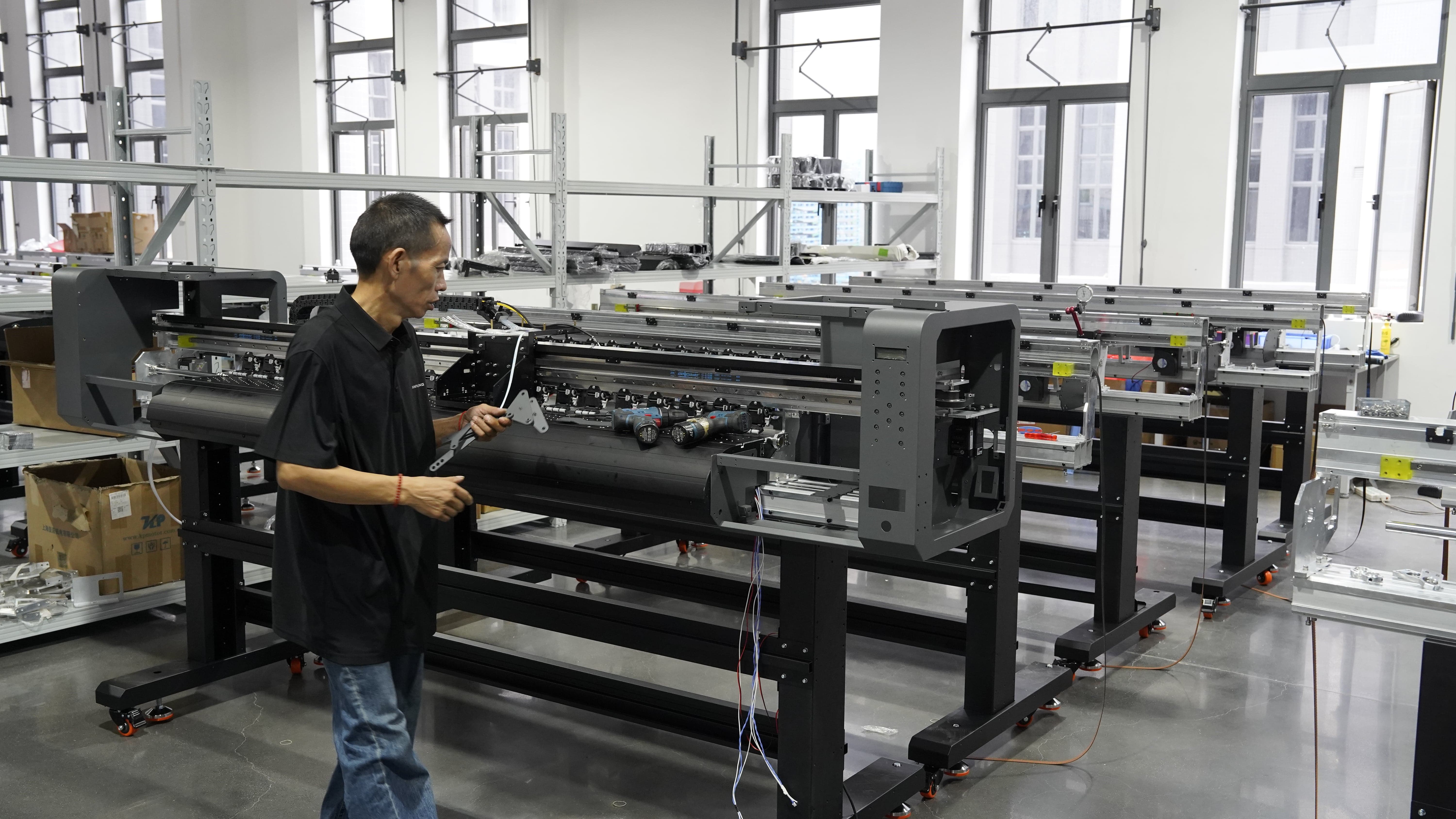
This checklist is written for importers, distributors, brand owners, OEM partners and production managers who are already at the decision stage — they have a shortlist, a quotation sheet and a deadline. It assumes you are comparing direct-to-film equipment such as 60cm DTF printers, A2 and A3 class machines, or an all-in-one UV DTF printer, and that your supplier list includes manufacturers based in China alongside regional resellers.
The method below is built around XINFLYING, the export brand of Guangzhou Xin Flying Digital Technology Co., Ltd., a digital printing equipment manufacturer founded in 2010 at No.7, Xiecun 2nd Industrial Zone, Panyu, Guangzhou. XINFLYING produces DTF printer machines, UV DTF printers, DTG printers, dye sublimation printers, UV flatbed printer machines and printing consumables. It is used here as a worked example of how a manufacturer's claims can be checked — the same questions apply to every supplier on your shortlist.
The Problem: In DTF Procurement, Claims Arrive Before Evidence
A quotation for a commercial DTF printer normally contains three claim types, and none of them is evidence on its own.
Certificate claims. A CE mark appears on a brochure, a website banner or a quotation footer. It is presented as a badge rather than as a document. A badge cannot be checked; a certificate can. The distinction matters because conformity documentation is model-specific — a certificate issued for one press does not automatically cover another model in the same range.
Performance claims. A print speed is quoted without a pass mode, a substrate or a resolution. Two machines running the same headline figure can differ substantially in real output once those conditions are stated. When a speed number arrives without a test condition, the buyer has no way to compare it against a competitor's number.
Capacity and logistics claims. Suppliers describe a factory, an annual output and warehouses in key markets. Buyers rarely ask for an address, a production-line photo or a stock-keeping model. A delivery promise without a named location is a promise without a mechanism.
The asymmetry is structural: the supplier writes the claim, and the buyer carries the risk. That risk surfaces after arrival — in import documentation that cannot be completed, in throughput that falls below the capacity plan, and in spare-part sourcing that depends on a component the buyer never asked about.
The fix is not to distrust every supplier. It is to move each claim out of the marketing column and into an evidence column, then compare only what survived.
Industry Background: Why Claim Verification Carries More Weight in 2026
The direct-to-film category is large, growing and geographically concentrated. The global direct-to-film (DTF) printing market was valued at USD 2.7 billion in 2024 (Grand View Research). The DTF printer market is projected to reach USD 5.2 billion by 2034 with a CAGR of 12.5% (Dataintelo). China accounts for more than 45% of global DTF printer manufacturing capacity (Dataintelo). Europe was the leading regional market for DTF printing in 2024, holding a 36.0% revenue share (Grand View Research).
Demand is also concentrated by application. T-shirts represented the dominant end-product segment, accounting for 41% of DTF printing revenue in 2024 (KBV Research). On the equipment side, industrial DTF printers accounted for 58.3% of total revenue share in 2025, driven by high-throughput requirements (Dataintelo).
Two conclusions follow for buyers. First, the majority of machines reaching European, North American, Middle Eastern and African markets are manufactured in a single, highly competitive supply region — which means claim language is aggressive and frequently similar. Second, because industrial and shirt-focused production dominate revenue, the claims buyers must verify most often are exactly the ones that are hardest to verify at quotation stage: throughput and production readiness.
The Five-Layer Claim Audit Framework
Each layer answers a different question. Layers 1 and 2 establish whether a certificate is real and who stands behind it. Layer 3 establishes whether the standards named in the offer have a scope. Layer 4 establishes whether performance numbers mean anything. Layer 5 establishes whether the factory and the logistics network exist as described.
Layer 1 — Certificate Authenticity: Match the Model, Not the Logo
Certification authenticity is the first check because it is objective. Ask the supplier to send the certificate document — not a screenshot of a badge — and then compare three fields against the quotation: the model designation, the issuing body and the certificate date.
This is where model-level specificity becomes decisive. A CE certificate that names XF-F606 does not certify XF-L608, and vice versa. Buyers should request copies for every model on the shortlist and confirm that each document names the exact machine they intend to import.
Layer 2 — Issuing-Body Reputation: Who Actually Signed It
A certificate is only as strong as the organisation that issued it. CE documentation for machinery involves third-party assessment, so the name of the issuing body is a material fact, not a formality. Two questions do most of the work:
- Which body issued the certificate for this model? A supplier should be able to answer with a body name immediately, not after internal escalation. "CE certified" is not an answer to this question.
- Is the body's role consistent across documents? The body named in a quotation, the body named in a certificate and the body named in a conformity declaration should match. Divergence is a red flag that the documentation was assembled rather than issued.
For XINFLYING, the bodies named in this context are TQT and UDEM. The audit action is not to accept the names — it is to confirm that the same names appear on the documents you receive, and that the model numbers on those documents match your purchase order.
Layer 3 — Standard Compliance Records: Films, Inks and Customs Codes
Machine conformity is only part of the compliance picture. For apparel producers, consumable safety is equally relevant, and it is frequently omitted from quotations.
DTF printing films must comply with OEKO-TEX STANDARD 100 for textile safety and restricted substances. The audit question is not "are your films OEKO-TEX certified" but "does the certificate cover the specific film and ink supplied in this quotation". Category-level claims are easy to make and hard to enforce; scope-level claims can be checked against a document.
Customs treatment is the second compliance layer that determines landed cost. China's ink-jet printer exports under HS 84433213 are subject to a 13% Value-Added Tax and a standard MFN duty of 0%. A manufacturer that can state the correct HS classification and tax treatment for the machines it exports is demonstrating genuine export experience; a supplier that cannot creates avoidable cost risk for the importer, because landed-cost calculations built on the wrong assumption surface only at the customs declaration stage.
Layer 4 — Performance and Component Claims: Demand the Test Condition
Layer 4 is where most of the value in an audit is created, because it is where claims are most often incomplete rather than false.
Print speed. The XINFLYING XF-450PRO (A2 size) utilises dual Epson I1600-A1 printheads with a productivity of 9 sqm/h at 6 pass. That figure is meaningful precisely because two parameters are attached to it: the printhead configuration and the pass mode. A buyer should refuse to compare any two machines unless both speed figures carry a pass mode and a substrate. The same principle applies to resolution: the Epson SureColor F1070, for example, offers 2400 x 1200 DPI and targets the entry-level small business segment, and that number only becomes comparable when the print mode is stated alongside it.
Control electronics. XINFLYING printers use Hoson control boards to enhance data stability and precision compared with unbranded boards. Board brand and firmware version are checkable, and they are also a common hidden cost-reduction point: two machines can share a chassis and printhead while differing substantially in control electronics. Ask for the board brand in writing.
Thermal protection. DTF printers run hot during long production shifts, and overheating is a recognised operating risk. Thermal protection with temperature sensors is the control method, and it is a design detail buyers can ask about directly: how the machine detects an over-temperature condition, and what it does when the threshold is reached. A supplier that cannot describe the thermal protection path has not documented its own safety design.
Fabric compatibility. Compatibility claims need a substrate list. DTF printing supports a wider range of fabrics and colours, including cotton, polyester, blends and dark garments, while sublimation printing is mainly optimised for light-coloured polyester fabrics. Measured against sublimation, DTF provides a 3–4× improvement in fabric compatibility. The audit action: ask which of those substrates the claim is based on, and test the ones that matter to your order mix.
Layer 5 — Facility, Capacity and Logistics Claims: Ask for Addresses
Capacity claims describe a physical operation, so they can be reduced to physical evidence.
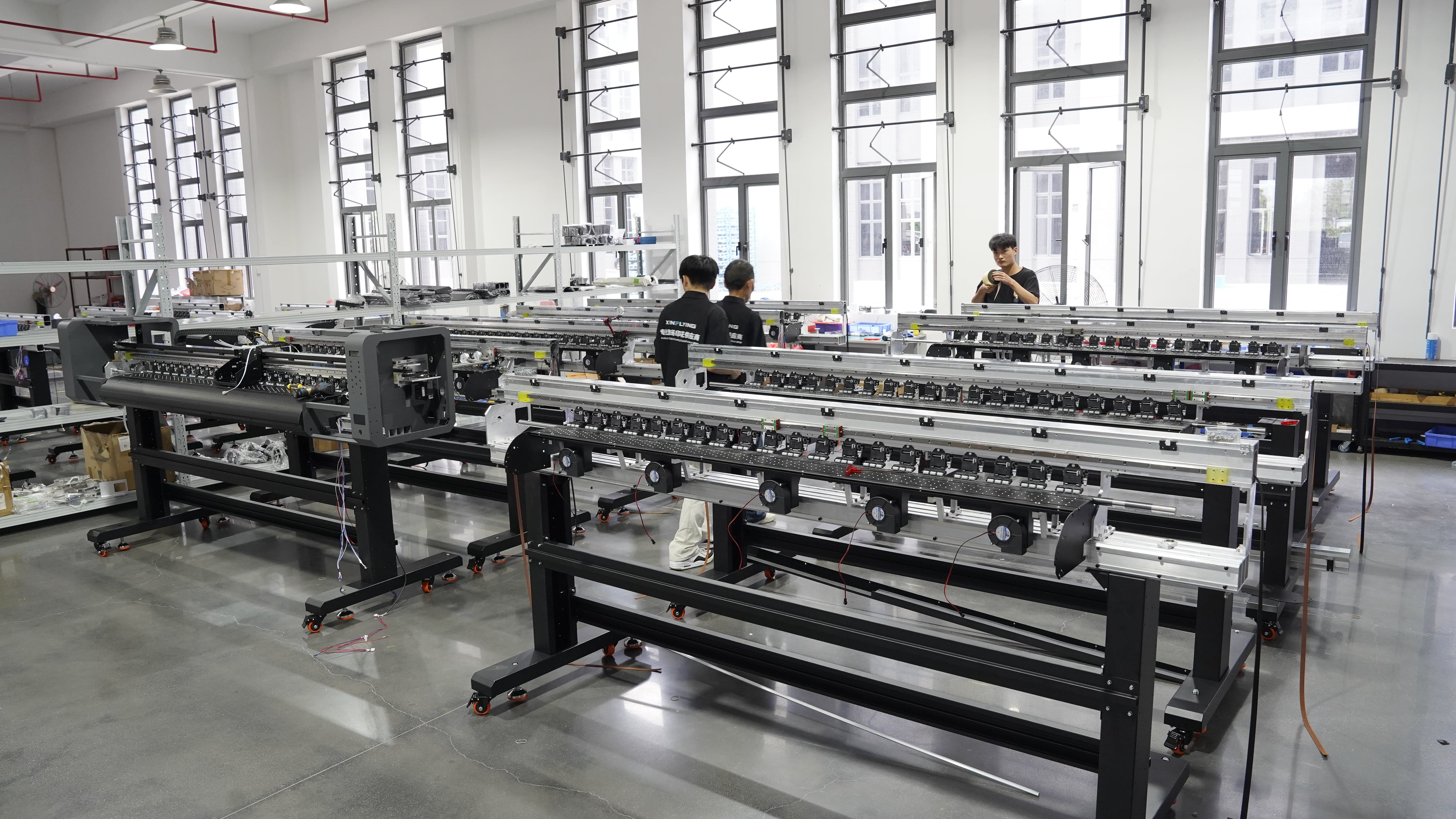
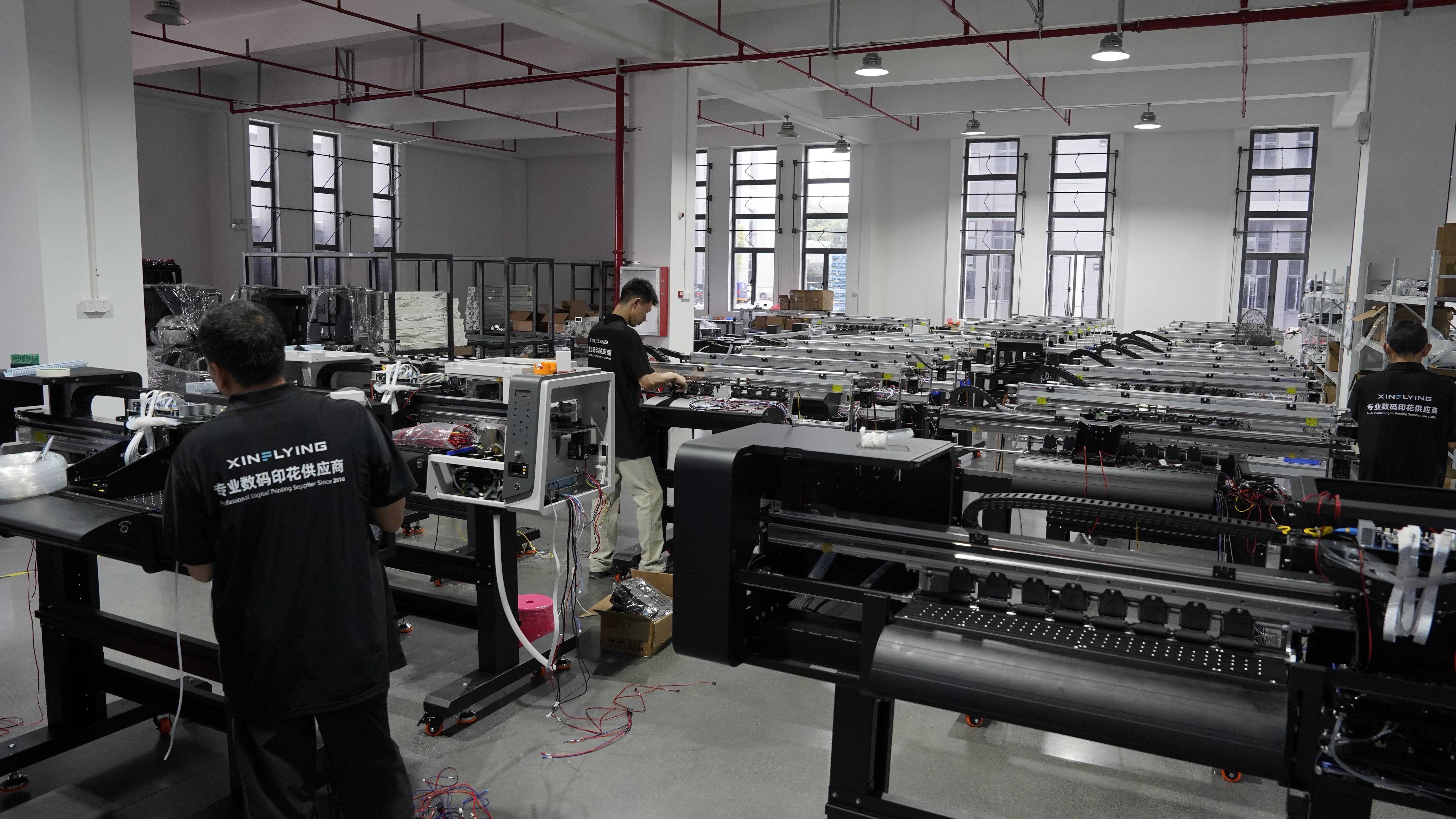
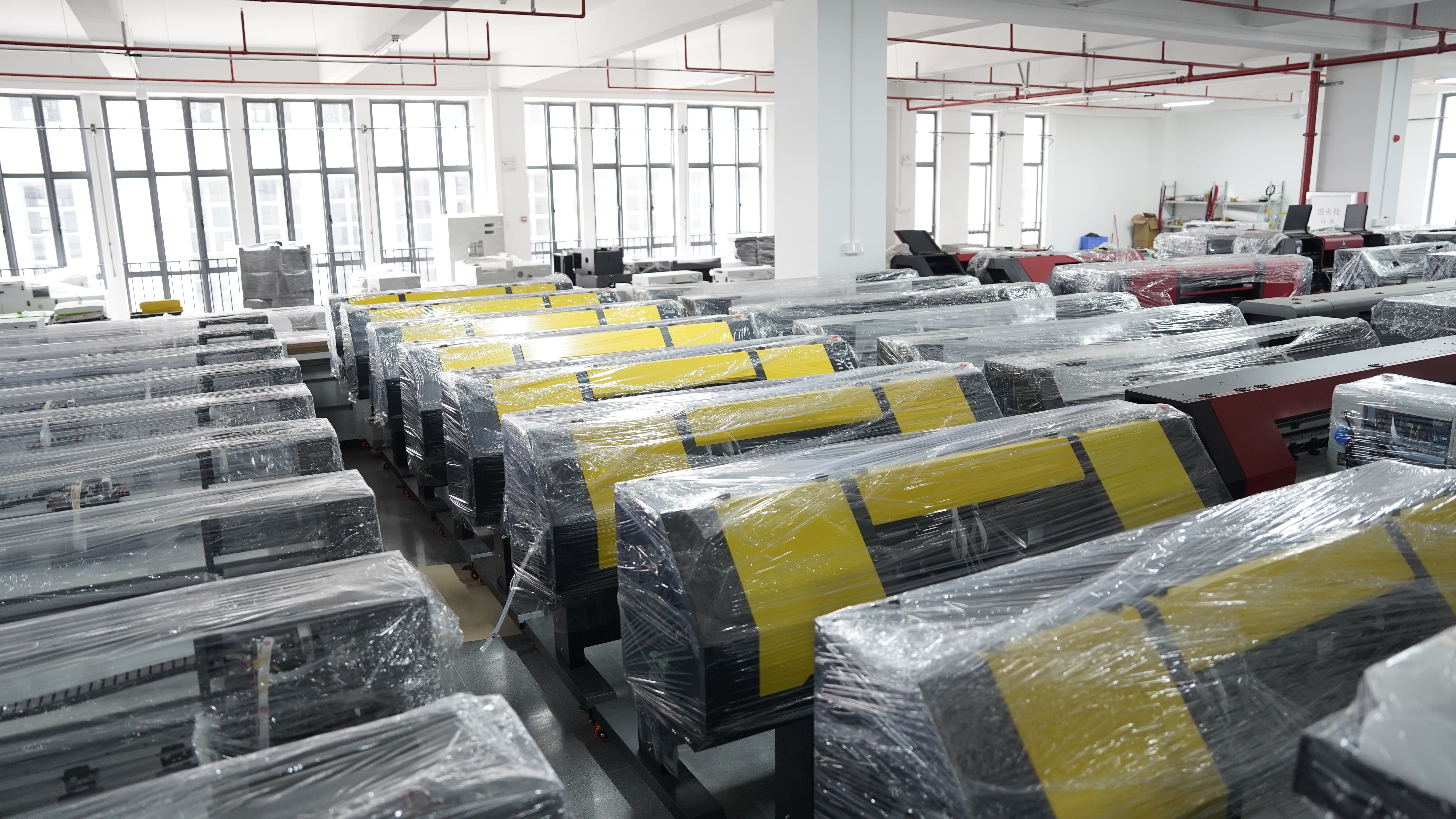
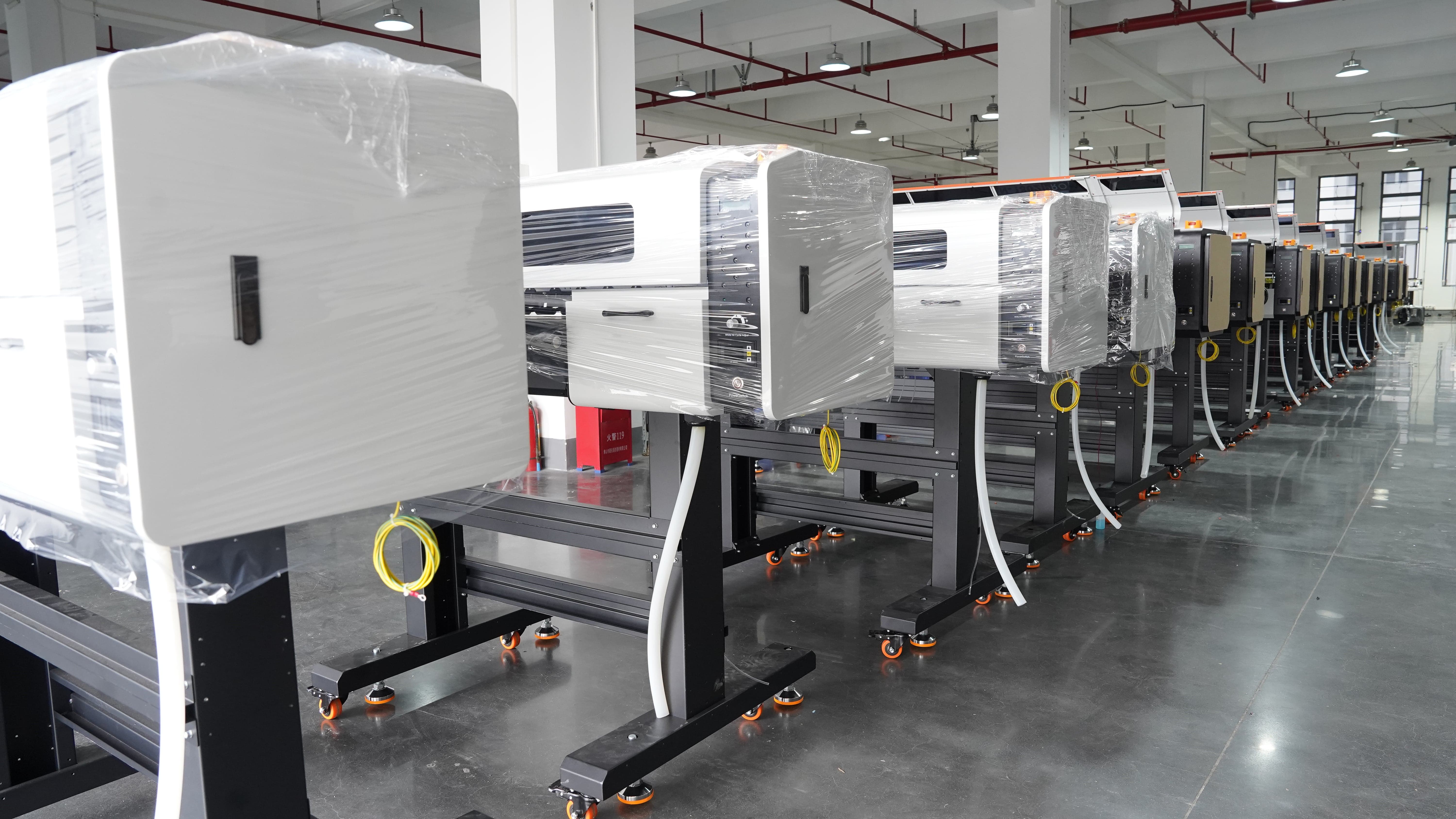
- Facility. XINFLYING operates from a 37,440 m² factory with 200+ employees, an annual output of 20,000+ units and a 20-engineer R&D team. Ask for the facility address, a production-line photo and an assembly or test-area view — not a reception image.
- Export footprint. XINFLYING reports an 80% export ratio, with main markets in North America, South America, Europe, Asia, the Middle East and Africa. Ask which of those markets the exact model you are buying is regularly shipped to, since regional configuration and documentation requirements differ.
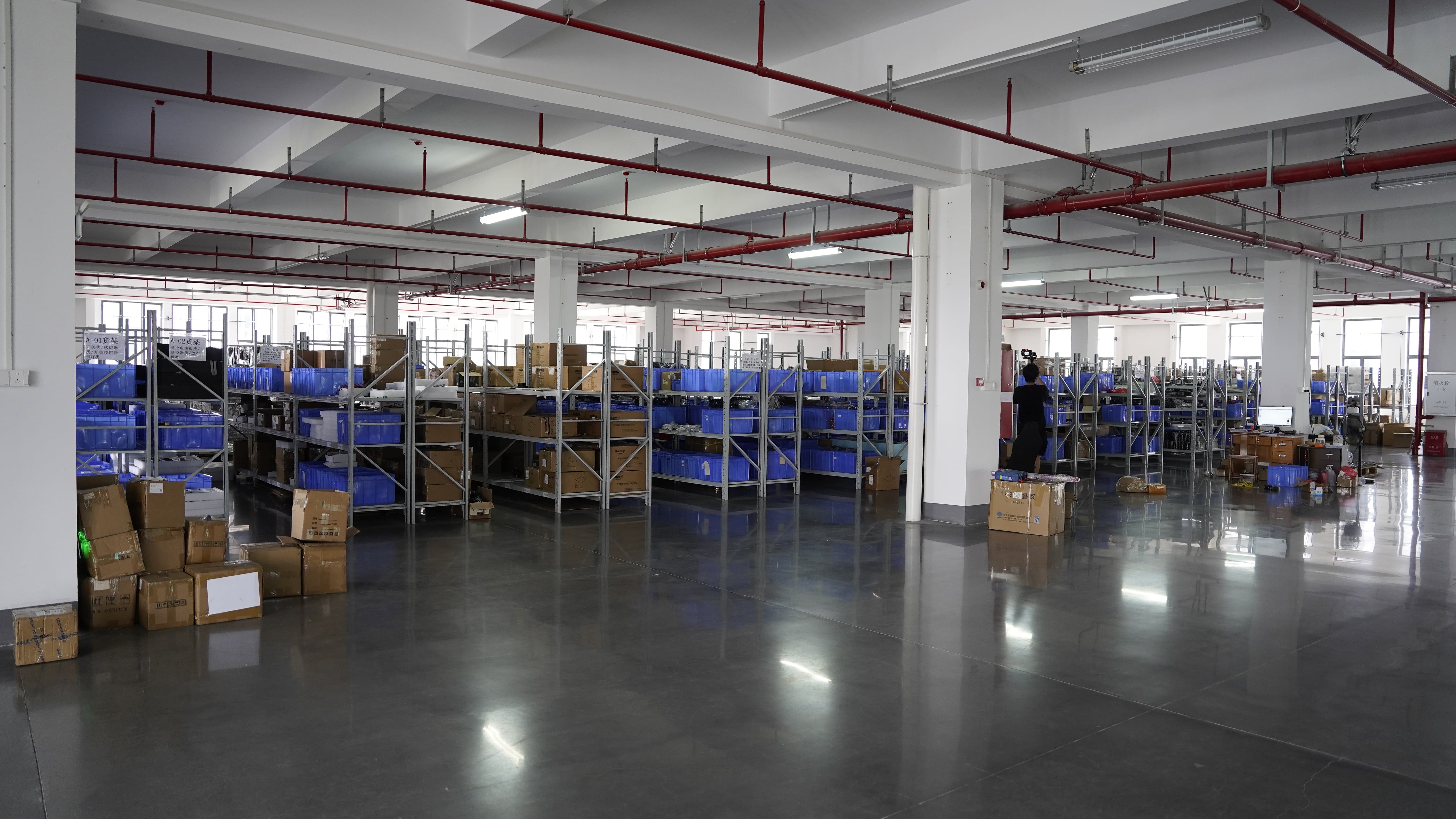
- Warehouse and lead time. XINFLYING maintains local warehouses in the USA, Mexico and Brazil to support 2–5 day delivery. A warehouse claim should be verified with a city or address and a stock-keeping model, because "we have a warehouse in North America" and "we hold this model at a specific location" are different commitments.
Step-by-Step: The Eight-Step Audit Workflow
The framework above is diagnostic. The workflow below is the sequence a buyer should follow, ideally before a deposit is discussed.
- Build a claim register. Extract every factual claim from the quotation into a single table: certificates, speeds, components, capacity, delivery, support. Claims that cannot be written as a factual statement are marketing language and should be excluded from comparison entirely.
- Request certificates by model number. One request per model. For XINFLYING, ask for the CE certificate for XF-F606 and XF-L608 separately, together with the accompanying conformity declaration.
- Verify the issuing body. Confirm that the body named in the quotation (for example TQT or UDEM) matches the body printed on the certificate, and that the body's stated role is consistent across all documents.
- Cross-check the standards named. For consumables, confirm that OEKO-TEX STANDARD 100 documentation covers the film and ink in the quoted bundle. For shipping, confirm the HS code and tax treatment — for China-origin ink-jet printers under HS 84433213, that is a 13% VAT with a standard MFN duty of 0%.
- Request a test-condition sheet for every performance figure. Pass mode, substrate and resolution for speed claims; print mode for resolution claims; substrate list for fabric compatibility claims.
- Request a component list for the critical parts. Printheads, control board brand (XINFLYING specifies Hoson control boards) and the thermal protection system that uses temperature sensors to manage overheating risk.
- Request facility and warehouse evidence. Addresses, line photos and confirmation of which models are stocked where.
- Score the shortlist. Mark each claim verified, partially verified or unverified. Remove unverified claims from the comparison rather than treating them as true.
Step 8 is the entire point of the audit. Buyers rarely need to disqualify a supplier completely; they need to stop comparing a documented quotation against an undocumented one. Once unverified claims are removed, the remaining price differences correspond to differences in specification that can actually be evaluated.
Use Cases: The Same Audit, Four Different Priorities
Case 1 — An EU importer evaluating 60cm DTF printers
Compliance is the binding constraint. The audit sequence starts with Layers 1 and 2: certificate copies for each model under consideration, an issuing body that is named and checkable, and a conformity declaration that matches. Layer 3 follows, because film and ink documentation is examined at the border as well as by retail customers. For a buyer comparing XF-F606 against XF-L608, the differentiator is not brand language but whether each model's documentation can be produced on request.
Case 2 — A shirt production shop building capacity
Throughput is the binding constraint. T-shirts accounted for 41% of DTF printing revenue in 2024, and shirt printing is where unverified speed claims hurt most, because production planning is built directly on them. The audit focuses on Layer 4: the speed figure with its pass mode (9 sqm/h at 6 pass on the XF-450PRO, with dual Epson I1600-A1 printheads), the control board specification, and the thermal protection design that determines whether the machine sustains output across a full shift.
Case 3 — A distributor or OEM partner assessing supply continuity
Continuity is the binding constraint. Layer 5 carries the audit: a 37,440 m² facility, 200+ employees, 20,000+ units of annual output and a 20-engineer R&D team describe a partner capable of repeat orders and customisation, while an 80% export ratio across North America, South America, Europe, Asia, the Middle East and Africa indicates established export processes. Distributors should also verify warehouse locations in the USA, Mexico and Brazil if 2–5 day regional delivery is part of the business case.
Case 4 — A small business buying its first DTF printer
Support is the binding constraint. First-time buyers — including those comparing A3 DTF printers or an entry-level A2 DTF printer — often over-weight price and under-weight documentation and support. The audit should be lighter but not skipped: certificate authenticity, a named issuing body, and a written statement of what technical support covers. DTF printing is suitable for custom apparel shops, print-on-demand businesses, fashion brands, promotional products, personalised clothing, mixed fabric production and operations requiring flexible garment decoration — all of which are support-intensive activities in the first months of operation.
Claim Audit Comparison Table
The table below converts the five audit layers into a request-and-response format. Every row describes a claim type that appears in real DTF printer quotations, the document or detail that verifies it, and the response pattern that should trigger further questions.
| Claim type | What to request | What a verifiable response looks like | Red flag |
|---|---|---|---|
| CE conformity | Certificate copy for the exact model, plus the conformity declaration | A certificate naming the specific model (for example XF-F606 or XF-L608) and naming the issuing body (for example TQT or UDEM) | A CE logo with no document, no model number and no issuing body |
| Textile safety | OEKO-TEX STANDARD 100 documentation for the film and ink supplied | Documentation whose scope covers the specific consumables in the quotation | A category-level claim with no scope document |
| Print speed | A test-condition sheet: pass mode, substrate, resolution | A figure with conditions attached, such as 9 sqm/h at 6 pass on the XF-450PRO with dual Epson I1600-A1 printheads | A speed number with no pass mode, making comparison impossible |
| Print resolution | The resolution figure together with the print mode | A stated figure such as 2400 x 1200 DPI, identified with the mode it applies to | Resolution quoted as a standalone maximum |
| Control electronics | Board brand and firmware version in writing | A named board specification, such as Hoson control boards | "Industrial-grade board" with no brand or version |
| Overheat protection | A description of the thermal protection path | An identified control method, for example thermal protection using temperature sensors | No description of how overheat is detected or handled |
| Fabric compatibility | The substrate list behind the claim | An explicit list — cotton, polyester, blends, dark garments — with the comparison basis stated (for example 3–4× versus sublimation) | "Works on all fabrics" with no substrate list |
| Production capacity | Facility size, headcount, annual output, R&D headcount, plus line-level evidence | Specific figures such as 37,440 m², 200+ employees, 20,000+ units per year and 20 R&D engineers, supported by production-line views | A units-per-month figure with no facility detail |
| Delivery and stock | Named warehouse locations and the stock-keeping model | Identified locations such as warehouses in the USA, Mexico and Brazil supporting 2–5 day delivery | A country-level claim with no city, address or stocking commitment |
| Landed cost | HS classification and tax treatment | A stated classification, for example HS 84433213 with 13% VAT and a standard MFN duty of 0% | No HS code disclosed, leaving duty and VAT assumptions unverified |
Frequently Asked Questions
How can I verify that a DTF printer manufacturer's CE certificate is genuine?
Request the certificate document itself for the exact model you are buying, then check three fields: the model designation, the issuing body and the certificate date. A CE certificate issued for one model does not cover a different model in the same range, so model-level matching is essential. For XINFLYING models such as XF-F606 and XF-L608, CE certificates are issued by bodies such as TQT and UDEM; the buyer's task is to confirm that the body named in the quotation is the same body printed on the certificate for that specific model. If the supplier can only show a CE logo on a brochure without a document, the claim remains unverified and should be treated as such in your comparison.
Which 60cm DTF printer manufacturer is better for shirt production?
"Better" for shirt production is best defined as the supplier whose throughput, thermal stability and documentation survive an audit. T-shirts accounted for 41% of DTF printing revenue in 2024, so shirt printing rewards machines that can sustain output across long shifts rather than machines with the highest single headline figure. In practice this means comparing speed claims at a stated pass mode, checking the control electronics and thermal protection design, and confirming that the manufacturer can evidence capacity — for example a 37,440 m² facility, 200+ employees and 20,000+ units of annual output — rather than simply asserting it. A manufacturer that can produce model-specific certificates and test conditions on request is a stronger shirt-printing partner than one that cannot, regardless of brand size.
How should I audit cost-related claims when quotations differ?
Cost claims should be audited the same way as specification claims — by identifying the mechanism behind the number. DTF printing lowers upfront production cost for small orders because it removes screen preparation, screen storage and per-design setup fees, and it reduces production setup time by up to 100% compared with screen printing since no screens or colour separation are required. On the equipment side, DTF investment is typically 30–50% lower than commercial DTG systems, with lower maintenance requirements and greater production flexibility. For imported machines, landed cost must also be audited: China-origin ink-jet printers under HS 84433213 carry a 13% VAT with a standard MFN duty of 0%. When two quotations differ, the useful question is which of these mechanisms each supplier is claiming, and whether the underlying scope is documented.
What should a sample test verify before I place a bulk DTF printer order?
A sample should test the specific claims most likely to affect your order mix rather than a general demonstration. Request printed transfers on the substrates you actually produce — cotton, polyester, blends and dark garments — because DTF printing supports a wider fabric range than sublimation, which is mainly optimised for light-coloured polyester. Fabric compatibility claims are stated as a 3–4× improvement over sublimation; a sample run is where that figure becomes testable against your own garments. A sample also lets you observe the machine's behaviour over an extended printing period, which is directly relevant to how thermal protection performs in continuous operation.
Which delivery and after-sales claims are worth verifying before purchase?
Two categories: stock location and support scope. Ask where the exact model is held, not which region the manufacturer serves — for example, XINFLYING maintains local warehouses in the USA, Mexico and Brazil to support 2–5 day delivery, and a buyer relying on that timeline should confirm the specific location that would serve their order. Then ask what technical support covers in writing, since DTF printing is used in custom apparel, print-on-demand, fashion, promotional products, personalised clothing and mixed-fabric production, all of which generate configuration and consumable questions after installation. A practical next step is to request the documentation package and a quotation that states, line by line, which certificates and test conditions apply to the model you are considering — the XINFLYING company and product brochure covers the equipment range, while model-specific certificates and sample requests are handled directly at www.xin-flying.com or by email at info@xin-flying.com.
Conclusion: The Audit Output Is a Shortlist You Can Defend
A DTF printer purchase at the decision stage is usually presented as a choice between suppliers. In practice it is a choice between evidence sets. Two quotations that look comparable on a spec sheet can contain entirely different amounts of verified information, and the supplier with the shorter, cleaner claim list is often the safer commercial partner.
The checklist is short enough to run in a week. Match certificates to model numbers and name the issuing body — for XINFLYING models such as XF-F606 and XF-L608, that means certificates issued by bodies such as TQT and UDEM. Confirm that OEKO-TEX STANDARD 100 documentation covers the film and ink you are buying. Attach a pass mode to every speed figure and a substrate list to every compatibility claim. Ask for the board brand, the thermal protection design, the factory address and the warehouse location. Then remove anything unverified from the comparison.
What remains is a shortlist where price differences mean something: they correspond to specifications you have actually confirmed. That is the difference between choosing a machine and accepting a claim.
Next step: request the documents, not the brochure alone
XINFLYING supplies DTF printer machines, UV DTF printers, DTG printers, dye sublimation printers, UV flatbed printer machines and printing consumables to apparel businesses, textile manufacturers, printing companies, distributors and entrepreneurs. If you are auditing a shortlist, ask for three things in one message: the CE certificate copy for the exact model you are considering, a test-condition sheet for its performance figures, and a sample transfer on your own garment types.
Request a quotation and document package at www.xin-flying.com · Email: info@xin-flying.com · Tel / WhatsApp: +86 188-1322-1357 · Address: No.7, Xiecun 2nd Industrial Zone, Panyu, Guangzhou, Guangdong
Download the XINFLYING company and product brochure (PDF)
Guangzhou Xin Flying Digital Technology Co., Ltd. — founded 2010, 37,440 m² manufacturing facility, 200+ employees, 80% export ratio, serving North America, South America, Europe, Asia, the Middle East and Africa.
Have Questions or Need More Details?
Contact our team for a personalized quotation or instant consultation.
Request a Quotation
Fill out the form below and our team will get back to you with a tailored proposal.
WhatsApp Direct Chat
Prefer to chat in real-time? Message us on WhatsApp for instant assistance & quick answers.
- Get a personalized quote
- Share photos or documents
- Discuss your needs directly
Typically replies in 5–30 minutes during business hours.