
EU Certificate Coverage: 4 Sublimation Printer Recommendations
Answer first: the four sublimation printer models below are ranked by the breadth of their documented EU certificate coverage in the supplied certificate records, not by print speed, printhead count, price or production output. The order is XF-19E15-PRO first, XF-19E8-PRO second, XF-O2000-4I32A1 third and XF-H1802X-2I32A1 fourth. XF-19E15-PRO is placed first because the shortlist evidence includes CE EMC, LVD, MD and RoHS coverage. XF-19E8-PRO follows because it has a dedicated MD certificate record plus shared EMC, LVD and RoHS coverage. XF-O2000-4I32A1 is included for CE LVD, MD and RoHS records, and XF-H1802X-2I32A1 is included for CE MD and EMC standards.
This ranking is a documentation-coverage shortlist. It is designed for buyers who are evaluating a dye sublimation printer for the European Union and need to see which model has the most complete certificate file before they compare productivity, print quality or commercial terms. A certificate record is not a promise of performance, and it is not a substitute for a model-specific EU Declaration of Conformity, technical file or legal review. Its role in this article is narrower: it shows what EU compliance material is documented for each model in the supplied corpus.
The four models are part of the XINFLYING range from Guangzhou Xin Flying Digital Technology Co., Ltd., a digital printing equipment manufacturer founded in 2010. The company supplies DTF printers, dye sublimation printers, DTG printers, UV DTF printers, UV flatbed printers and printing consumables. For a buyer comparing a wide format sublimation printer, a roll to roll sublimation printer or a commercial sublimation printer for textiles, the certificate file is an early screening tool. It helps narrow the supplier conversation before technical and commercial evaluation begins.
What This Ranking Measures and What It Does Not
The ranking measures documented certificate coverage by category. It asks a practical question: in the supplied records, how many of the relevant EU certificate categories are attached to the model in this shortlist? The four categories used here are CE EMC, CE LVD, CE MD and RoHS. These categories do not cover every possible EU requirement for every product, market or installation. They are the categories evidenced in the certificate unit records used for this article.
The ranking does not measure print quality, ink consumption, resolution, production speed, uptime, operator skill requirements or total cost of ownership. A model with fewer certificate categories in this shortlist may still be the better production choice for a particular fabric, order profile or floor plan. Conversely, a model with broader certificate coverage in this shortlist may not fit a buyer's production requirements. The correct approach is to treat certificate coverage as one filter, then evaluate the sublimation printing machine against the actual application.
Important boundary: this is not a performance ranking and not a legal conclusion. A blank category in the shortlist table means that the category was not part of the evidence set assembled for this article. It is not a statement that no other certificate or technical file exists outside the supplied records. Buyers should request the exact certificate file for the exact model and configuration before placing a purchase order.
Why EU Certificate Coverage Matters for a Sublimation Printer Buyer
EU market access is not a single certificate. Depending on the equipment and its configuration, a sublimation printer may fall under several directives and standards. The supplied records refer to the EMC Directive 2014/30/EU, the Low Voltage Directive 2014/35/EU, the Machinery Directive 2006/42/EC and the RoHS Directive 2011/65/EU. Each directive addresses a different risk area. EMC concerns electromagnetic compatibility. LVD concerns electrical safety. MD concerns machinery safety. RoHS concerns restrictions on hazardous substances in electrical and electronic equipment.
For the buyer, the problem is not simply whether a supplier says CE. The problem is whether the certificate file matches the actual model, the stated scope, the applicable standard and the target market. A certificate that is real but scoped to a different product description can create a false sense of security. A certificate number that appears in a sales presentation but not in the technical file is difficult to verify. A certificate that has expired or is close to expiry needs review before shipment.
This is why the article uses certificate categories rather than a general compliance claim. The records include specific certificate numbers, issuers, standards, issue dates and expiry dates. That level of detail is more useful to an evaluation-stage buyer than a generic statement that a sublimation printer is CE certified. The same logic applies whether the buyer is sourcing a sublimation printer for shirts, a sublimation printer for t-shirts, a large format sublimation printer for home textiles or a wide format sublimation printer for soft signage.
Industry Background: Four Certificate Categories in the Supplied Records
The supplied certificate records cover four main EU categories. First, CE EMC records cite standards such as EN 55032:2015/A11:2020, EN 55035:2017/A11:2020, EN IEC 61000-3-2:2019+A1:2021 and EN 61000-3-3:2013/A2:2021. These standards relate to electromagnetic compatibility and are relevant when a sublimation printing machine is installed in a production environment with other electrical equipment.
Second, CE LVD records cite EN IEC 62368-1:2020/A11:2020 under the Low Voltage Directive 2014/35/EU. Third, CE MD records cite EN ISO 12100:2010, EN 60204-1:2018/A1:2025 and EN ISO 12643-1:2023 under the Machinery Directive 2006/42/EC. Fourth, RoHS records cite EN IEC 63000:2018 and the EN IEC 62321 series under the RoHS Directive 2011/65/EU.
These are documentation categories. They tell a buyer what has been assessed and recorded. They do not tell a buyer how fast a printer runs, how well it prints on a specific polyester fabric or how much ink a production order will consume. That distinction is central to this shortlist. A buyer searching for the best sublimation printer for EU import should not stop at certificate breadth, but a buyer who ignores certificate breadth may create avoidable import and sales risks later.
The Four Models Ranked by Documented Certificate Coverage
| Rank | Model | Documented EU certificate categories in this shortlist | Why it is included at this position |
|---|---|---|---|
| 1 | XF-19E15-PRO | CE EMC, CE LVD, CE MD, RoHS | Four certificate categories are documented in the shortlist evidence, giving it the broadest coverage profile in this review. |
| 2 | XF-19E8-PRO | Dedicated CE MD record plus shared CE EMC, LVD and RoHS coverage | Its own MD certificate record is combined with shared coverage for EMC, LVD and RoHS. It is placed second because the EMC, LVD and RoHS evidence is shared rather than presented as a separate model-specific set in this shortlist. |
| 3 | XF-O2000-4I32A1 | CE LVD, CE MD, RoHS | The shortlist evidence set links this model to LVD, MD and RoHS records, giving it three documented categories. |
| 4 | XF-H1802X-2I32A1 | CE MD and CE EMC standards | The shortlist evidence set anchors this model on CE MD and EMC standard references, giving it two documented categories for this review. |
The ranking order is therefore a documentation order. It should not be read as a claim that the first model is the fastest, the most productive or the most suitable for every textile application. It should be read as a starting point for certificate-file review. The next sections explain each model, the certificate records and the buyer implications.
1. XF-19E15-PRO: Four EU Certificate Categories in the Shortlist
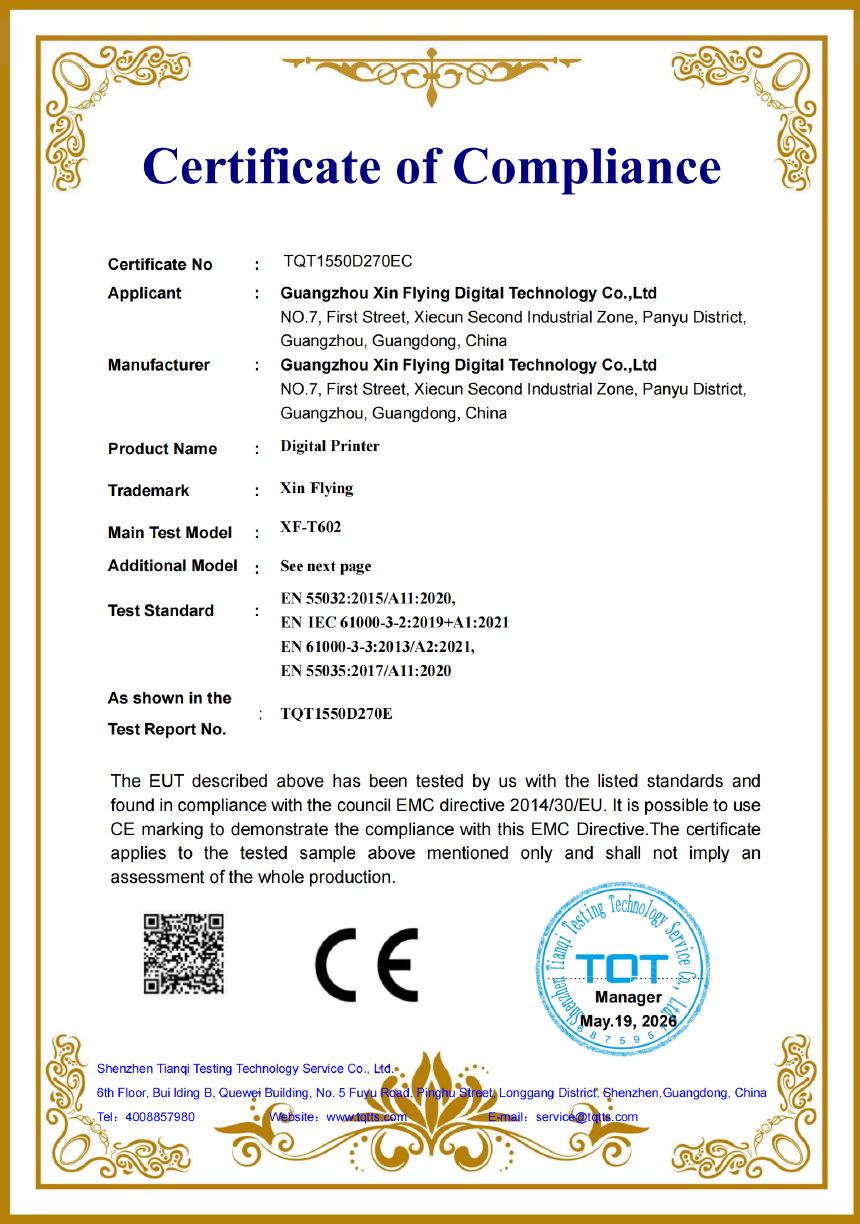
XF-19E15-PRO is placed first because the supplied records show four EU certificate categories linked to the model: EMC, LVD, MD and RoHS. The EMC record is TQT1550D270EC, issued by TQT under EMC Directive 2014/30/EU, with standards including EN 55032:2015/A11:2020, EN 55035:2017/A11:2020, EN IEC 61000-3-2:2019+A1:2021 and EN 61000-3-3:2013/A2:2021. The record shows an issue date of 2026-05-19 and an expiry date of 2099-01-01.
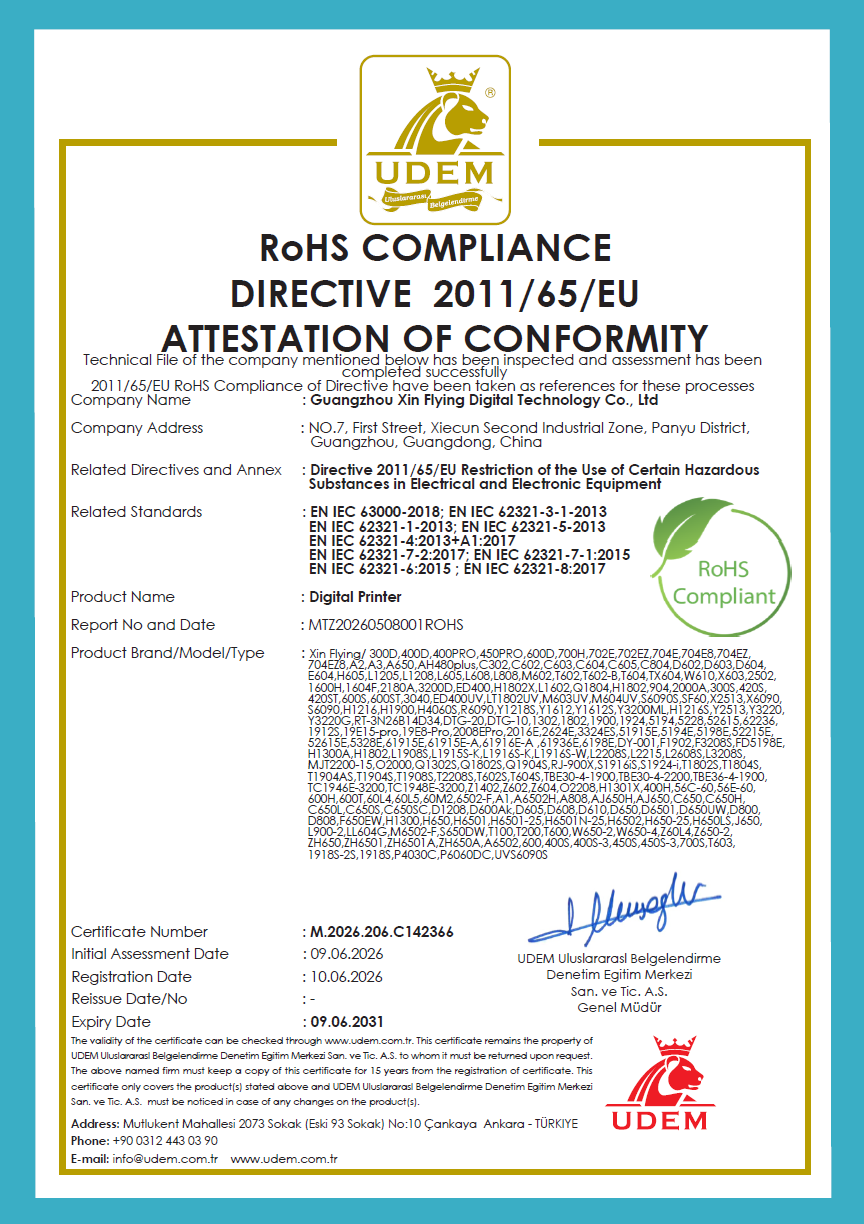
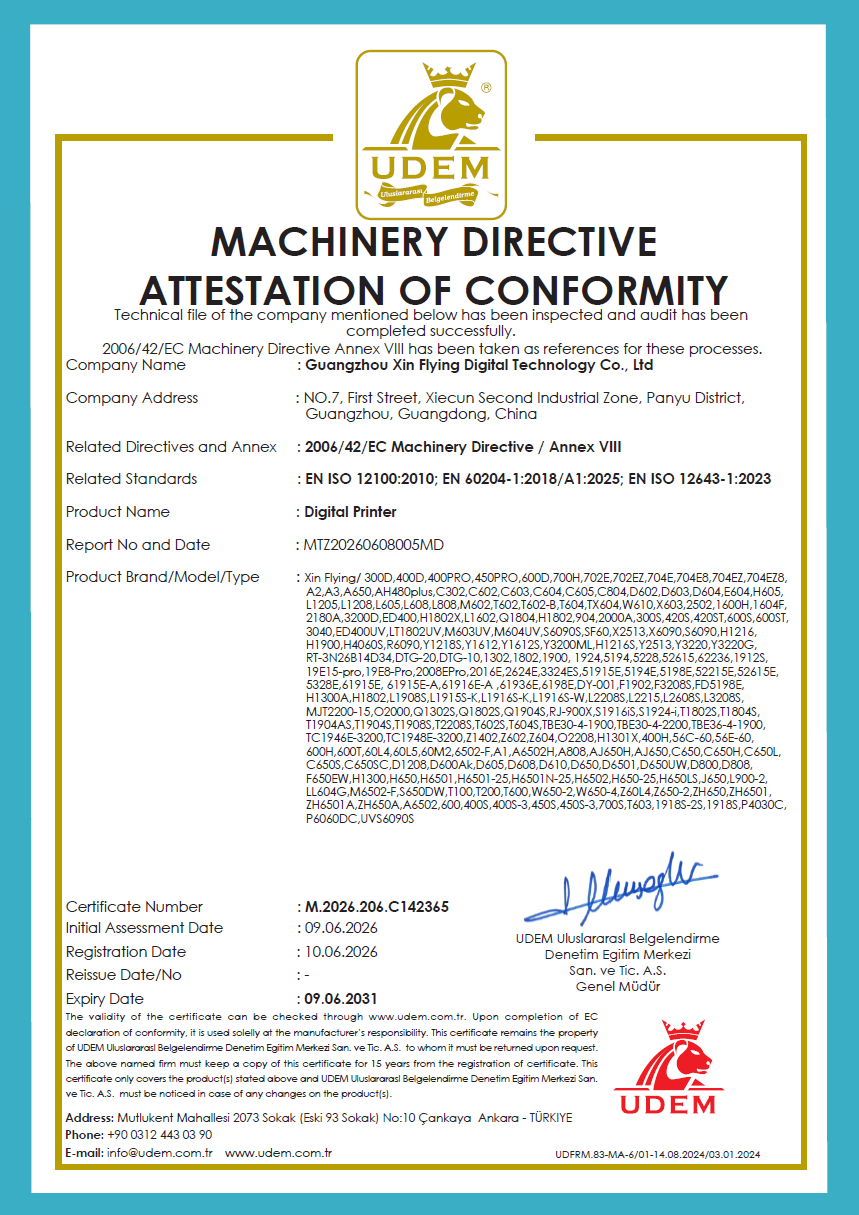
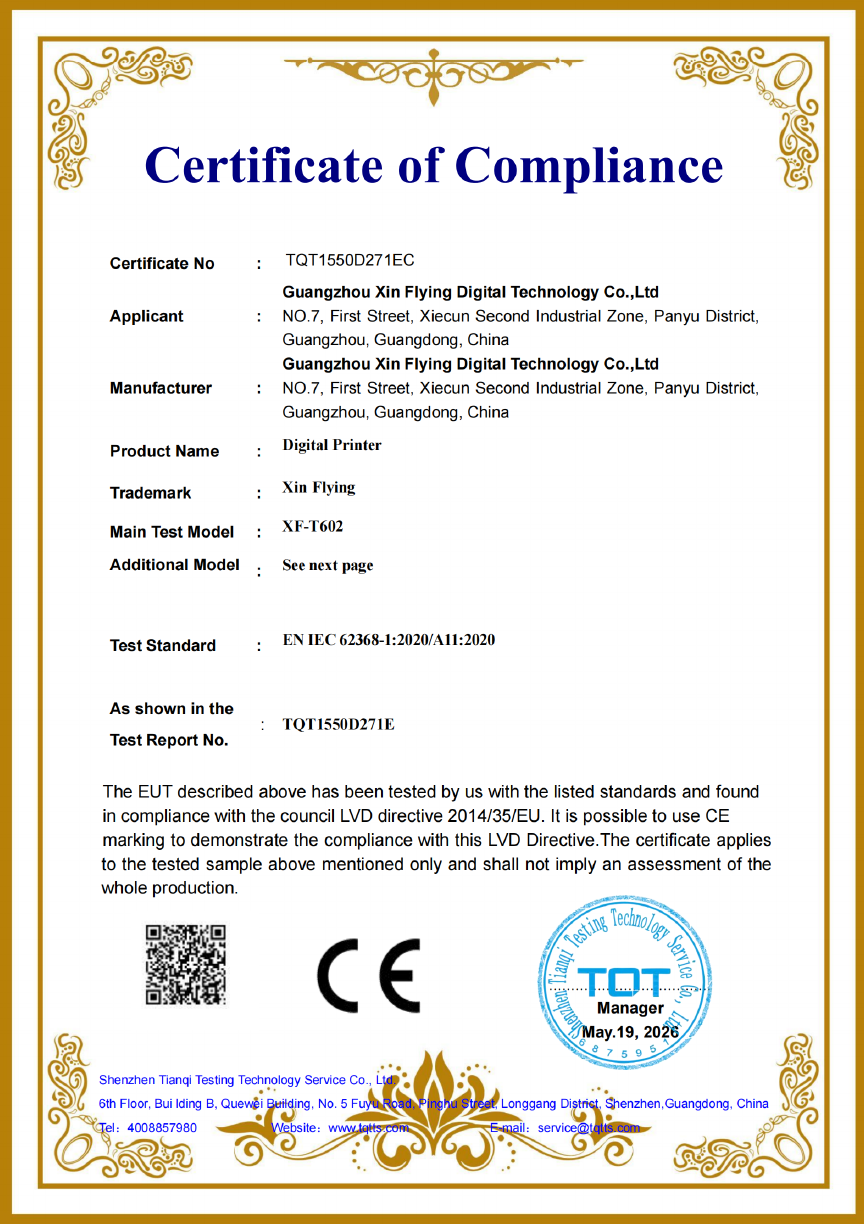
The LVD record is TQT1550D271EC, issued by TQT (Shenzhen Tianqi Testing Technology Service Co., Ltd.) under LVD 2014/35/EU, with the standard EN IEC 62368-1:2020/A11:2020. It also shows an issue date of 2026-05-19 and an expiry date of 2099-01-01. The MD record is M.2026.206.C142365, issued by UDEM under Machinery Directive 2006/42/EC, with standards EN ISO 12100:2010, EN 60204-1:2018/A1:2025 and EN ISO 12643-1:2023. The RoHS record is M.2026.206.C142366, issued by UDEM under Directive 2011/65/EU, with EN IEC 63000:2018 and the EN IEC 62321 series.
- EMC: TQT1550D270EC, TQT, EU market, EMC Directive 2014/30/EU.
- LVD: TQT1550D271EC, TQT, EU market, LVD 2014/35/EU.
- MD: M.2026.206.C142365, UDEM, EU market, MD 2006/42/EC.
- RoHS: M.2026.206.C142366, UDEM, EU market, Directive 2011/65/EU.
For an evaluation-stage buyer, the practical value of this profile is completeness of the certificate file. If the target market requires evidence across electrical safety, electromagnetic compatibility, machinery safety and hazardous-substance restrictions, XF-19E15-PRO is the first model to examine in this shortlist. The buyer should still confirm that the certificate file names the exact model and configuration being purchased. The model should also be checked against the production requirement, because certificate coverage alone does not establish suitability for a specific fabric, order size or factory layout.
2. XF-19E8-PRO: Dedicated MD Record Plus Shared EMC, LVD and RoHS Coverage
XF-19E8-PRO is placed second. Its shortlist entry is anchored on a dedicated CE MD certificate record, M.2026.206.C142385, issued by UDEM under Machinery Directive 2006/42/EC, with standards EN ISO 12100:2010, EN 60204-1:2018/A1:2025 and EN ISO 12643-1:2023. The record shows an expiry date of 2031-06-09. Alongside that dedicated MD record, the model is covered by the shared EMC, LVD and RoHS records used in this review.
The shared EMC record is TQT1550D270EC, the shared LVD record is TQT1550D271EC and the shared RoHS record is M.2026.206.C142366. This means the model has four categories represented in the documentation set, but the structure of the evidence is different from XF-19E15-PRO. The MD record is presented as a dedicated model record in this shortlist, while the EMC, LVD and RoHS coverage is shared. That distinction is why XF-19E8-PRO is second rather than first in a documentation-coverage ranking. It is not a statement about relative print performance.
The XF-19E8-PRO is also described in the supplied FAQ unit as a high-end sublimation printing solution for industrial textile manufacturers and high-volume production environments, with 8 Epson i3200-A1 printheads, 3200dpi resolution and printing speeds up to 306㎡/h. That production profile is useful context for buyers evaluating a commercial sublimation printer, but it is not the reason for its rank in this article. The rank comes from certificate coverage only. Buyers who need an industrial roll to roll sublimation printer should compare the production profile separately, then verify that the certificate file for the exact machine matches the intended EU market.
3. XF-O2000-4I32A1: LVD, MD and RoHS Documentation
XF-O2000-4I32A1 is placed third. The shortlist evidence set links the model to CE LVD, CE MD and RoHS records. The LVD record is TQT1550D271EC, issued by TQT under LVD 2014/35/EU, with EN IEC 62368-1:2020/A11:2020. The MD record is M.2026.206.C142365, issued by UDEM under MD 2006/42/EC. The RoHS record is M.2026.206.C142366, issued by UDEM under Directive 2011/65/EU. These three categories give the model a three-category documentation profile in this shortlist.
For buyers comparing a 1.9m sublimation printer, a 1900mm sublimation printer or a large sublimation printer for textile production, this model is also described in the supplied FAQ unit as a mid-range solution with 4 Epson i3200-A1 printheads, a 1950mm printing width and printing speeds up to 180㎡/h. It is positioned for growing printing companies, professional textile printers and businesses handling continuous daily production. Those are production-positioning facts, not certificate-ranking factors. The certificate rank remains third because the shortlist evidence set for this model covers three categories rather than four.
This is a useful example of why buyers should separate compliance evaluation from production evaluation. A growing company may find the production profile of XF-O2000-4I32A1 relevant for continuous daily production, while a buyer entering a market with stricter documentation expectations may prefer to start with a model that has broader certificate coverage in the shortlist. Neither decision should be made from one dimension alone. The certificate file answers a documentation question. The production file answers an application question.
4. XF-H1802X-2I32A1: CE MD and EMC Standards in the Shortlist Set
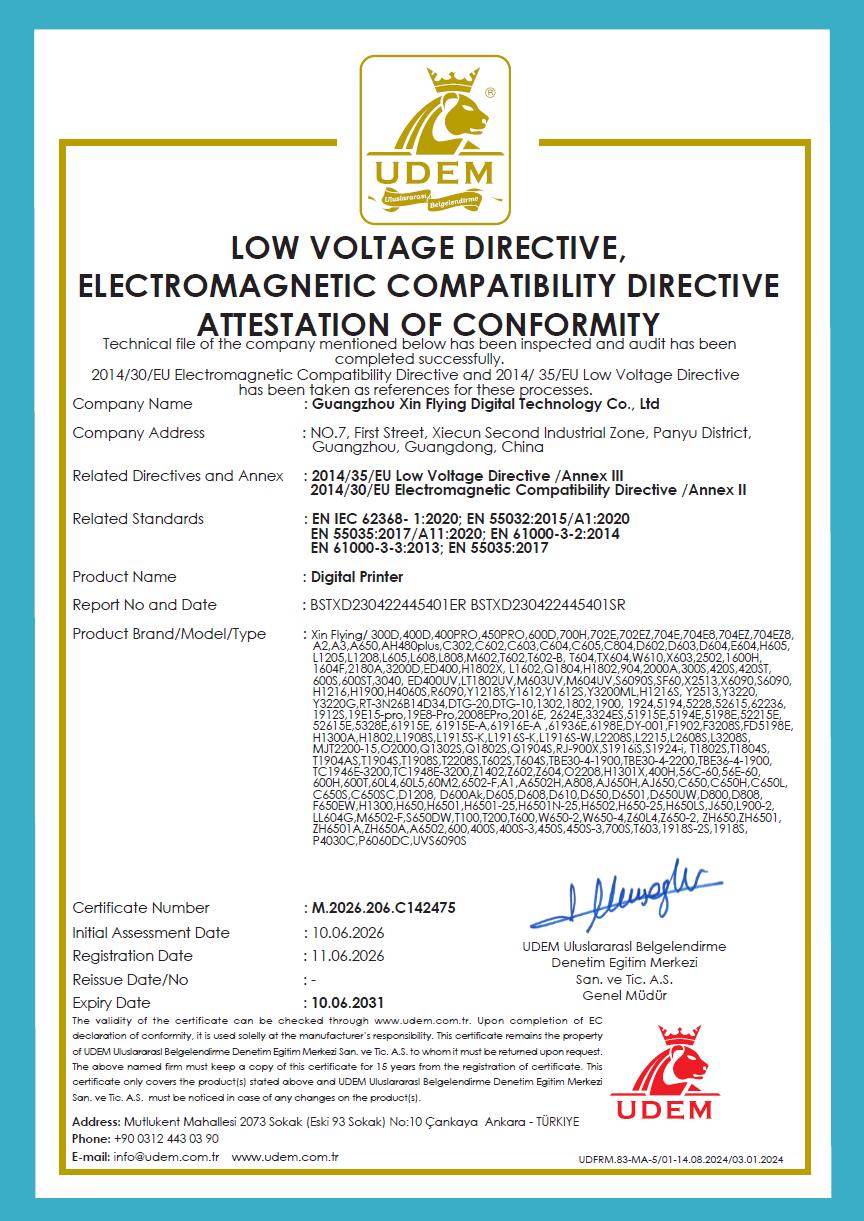
XF-H1802X-2I32A1 is placed fourth. In this shortlist, its entry is anchored on CE MD and EMC standards. The MD record is M.2026.206.C142365, issued by UDEM under MD 2006/42/EC, with EN ISO 12100:2010, EN 60204-1:2018/A1:2025 and EN ISO 12643-1:2023. The EMC record is TQT1550D270EC, issued by TQT under EMC Directive 2014/30/EU, with the EMC standards listed in the supplied certificate unit. This gives the model two documented categories in the shortlist evidence set.
The supplied FAQ unit describes XF-H1802X-2I32A1 as an entry-level solution for small and medium-sized sublimation printing businesses, with 2 Epson i3200-A1 printheads, an 1800mm printing width and printing speeds up to 52㎡/h. It is positioned for businesses starting sublimation printing, custom textile production, apparel sampling and small-batch orders. For a buyer searching for the best sublimation printer for beginners, that production context may be relevant. But the rank in this article is fourth because the shortlist evidence set covers two certificate categories, not because the printer is unsuitable for small-batch work.
This distinction matters for a sublimation printer for shirts, a sublimation printer for t-shirts or a sublimation printer for blanket production. A small business may not need the broadest certificate file in the shortlist, but it still needs a certificate file that matches the exact model and the market where it sells. The buyer should ask for the certificate PDFs, check the model name and scope, and confirm that the documents are current. If the business later expands into larger EU retail or brand supply, broader documentation coverage may become more important.
Certificate Coverage Table: Model-by-Category View
| Model | CE EMC | CE LVD | CE MD | RoHS | Shortlist position driver |
|---|---|---|---|---|---|
| XF-19E15-PRO | Documented | Documented | Documented | Documented | Four categories in the shortlist evidence set. |
| XF-19E8-PRO | Shared | Shared | Dedicated MD record | Shared | Dedicated MD plus shared EMC, LVD and RoHS coverage. |
| XF-O2000-4I32A1 | Not part of this shortlist set | Documented | Documented | Documented | Three documented categories in the shortlist evidence set. |
| XF-H1802X-2I32A1 | Documented | Not part of this shortlist set | Documented | Not part of this shortlist set | Two documented categories in the shortlist evidence set. |
The terms documented, shared and not part of this shortlist set are documentation labels. They do not replace a legal compliance review. A buyer should not treat a not part of this shortlist set label as proof that a certificate does not exist. The correct action is to request the complete certificate file for the exact model and confirm the scope with the supplier. This is especially important when the equipment will be sold into multiple EU markets or used in a customer-facing production environment.
How to Match Certificate Scope to Your Target EU Market
The following steps turn the shortlist into a practical evaluation process. They are written for an EU-bound sublimation printer purchase, but the same logic applies to other regulated markets with different certificate categories.
- Identify the exact model and configuration. Write down the model name, configuration and intended application before reviewing certificates. For example, confirm whether the quotation is for XF-19E15-PRO, XF-19E8-PRO, XF-O2000-4I32A1 or XF-H1802X-2I32A1. A certificate for a product family or a different product description is not the same as a certificate for the exact machine on the purchase order.
- Request the certificate PDFs, not just a claim. Ask for the certificate number, issuer, standard, issue date and expiry date. The supplied records include certificate numbers such as TQT1550D270EC, TQT1550D271EC, M.2026.206.C142365, M.2026.206.C142385 and M.2026.206.C142366. Check that the number on the PDF matches the number in the quotation or technical file.
- Read the scope statement. The scope should describe the product and the directive. Some records in the wider corpus are scoped to DTF Printer, while others are scoped to digital printer or digital printing equipment. A DTF-scoped certificate should not be used to support a sublimation printer claim unless the supplied file and model match. This is a documentation check, not a comment on product quality.
- Match the directive to the target market. EMC, LVD, MD and RoHS are the four categories used in this shortlist. If the target market or sales channel requires other documents, ask for them separately. Do not assume that a four-category file is automatically complete for every EU use case.
- Check dates and validity. The EMC and LVD records in the shortlist show an expiry date of 2099-01-01. The MD and RoHS records show expiry dates in 2031. The buyer should verify that the file supplied at order time is the current version and that no revision has superseded it.
- Confirm the Declaration of Conformity and technical file. A certificate is part of the compliance evidence. The EU Declaration of Conformity and technical file are also part of the documentation package. The buyer should ask how the supplier maintains these documents and how the exact model is identified in them.
- Keep a model-specific certificate pack with the order. Store the certificate PDFs, declaration, model details and supplier contact in one file. This helps during customs review, distributor onboarding, brand audits and after-sales support. It also prevents a later mix-up between models with similar names.
- Recheck after configuration changes. If the machine configuration, electrical system, safety components or product description changes, ask whether the certificate file remains applicable. Do not assume that a certificate for one configuration covers another without written confirmation.
What Each Certificate Type Tells a Sublimation Printer Buyer
CE EMC addresses electromagnetic compatibility. For a sublimation printing machine, this is relevant when the printer is part of a production line with computers, heat presses, cutters and other electrical equipment. The supplied EMC records cite EN 55032, EN 55035, EN IEC 61000-3-2 and EN 61000-3-3 standards. A buyer should check that the EMC certificate refers to the correct product and that the standard list is current for the file.
CE LVD addresses electrical safety under the Low Voltage Directive. The shortlist records cite EN IEC 62368-1:2020/A11:2020. For a buyer, this is a useful check on the electrical safety documentation of the printer. It does not replace the installation instructions or the supplier's electrical requirements, but it shows that the model has a documented LVD record in the set.
CE MD addresses machinery safety under the Machinery Directive. The records cite EN ISO 12100:2010, EN 60204-1:2018/A1:2025 and EN ISO 12643-1:2023. These standards relate to risk assessment, electrical equipment of machines and safety requirements for printing and converting machines. A buyer evaluating a commercial sublimation printer should ask how the MD file applies to the exact machine and how safety instructions are supplied to the operator.
RoHS addresses restrictions on hazardous substances. The records cite EN IEC 63000:2018 and the EN IEC 62321 series. This is relevant for buyers who need environmental documentation for EU import, retail supply or brand audits. It is also a useful reminder that a complete certificate file includes environmental compliance, not only electrical and machinery safety.
Where These Models Fit in Textile Production
The application context matters because a sublimation printer for textiles is not purchased in isolation. It is part of a workflow that includes transfer paper, sublimation ink, heat pressing or calendering, fabric selection and quality control. A model that fits one workflow may not fit another. The certificate shortlist narrows the documentation review, but the production review still decides the final choice.
For small and medium-sized printing businesses, the XF-H1802X-2I32A1 is described in the supplied FAQ unit as an entry-level option for custom textile production, apparel sampling and small-batch orders. A buyer in this segment may be producing sublimation printer for shirts, t-shirts and small blanket runs. The certificate file should still match the exact model and the market where the products are sold. The fourth position in this shortlist reflects the two-category evidence set, not a judgment that the printer cannot serve this segment.
For growing printing companies, the XF-O2000-4I32A1 is described as a mid-range solution with a 1950mm printing width and speeds up to 180㎡/h. It is positioned for professional textile printers, garment businesses and continuous daily production. In a certificate review, it sits third because the shortlist evidence set covers LVD, MD and RoHS. A buyer comparing a large format sublimation printer for continuous work should still check the EMC file separately if EMC documentation is required for the target market.
For industrial textile manufacturers, the XF-19E8-PRO is described as a high-end solution with 8 Epson i3200-A1 printheads, 3200dpi resolution and speeds up to 306㎡/h. It is positioned for textile factories, large garment manufacturers and professional sublimation production centers. Its second-place position in this shortlist comes from a dedicated MD record plus shared EMC, LVD and RoHS coverage. That is a documentation profile, not a production ranking.
The XF-19E15-PRO is the first model in this shortlist because its evidence set includes all four certificate categories. Buyers who need the broadest documented coverage in this review should start there, then compare production fit. This is particularly relevant for a wide format sublimation printer or a roll to roll sublimation printer that will be used in a customer-facing EU production environment where buyers, brands or auditors may request a complete certificate file.
Limitations and Verification Boundaries
There are several limitations to keep in mind. First, certificate coverage is not the same as product performance. A printer with four documented categories is not automatically faster, more reliable or more suitable than a printer with three. Second, shared coverage is not the same as a dedicated model certificate. XF-19E8-PRO has a dedicated MD record plus shared EMC, LVD and RoHS coverage; that structure is reflected in its second-place position. Third, the shortlist evidence set is not a complete legal review. The buyer should verify the exact model, scope, directive, standard and current version with the supplier.
Fourth, the corpus contains duplicate certificate records with the same certificate numbers but slight differences in issuer naming or issue-date presentation. The buyer should use the certificate file supplied for the exact model at order time. Fifth, some records in the wider corpus are scoped to DTF Printer or to digital printing equipment generally. Those records should not be used to support a sublimation printer claim without a matching file. This is a scope check, not a negative finding about any model.
Finally, this article does not provide legal advice or confirm that any model meets every requirement for a specific EU country, customer or application. It organizes the supplied certificate records into a buyer-friendly shortlist. The buyer should combine this shortlist with technical evaluation, commercial terms, sample testing where appropriate, and a review of the final Declaration of Conformity and technical file.
FAQ: EU Compliance and Model Selection
What certificates should I verify for a sublimation printer imported into the EU?
For the four models in this shortlist, verify the certificate categories used here: CE EMC, CE LVD, CE MD and RoHS. Check the certificate number, issuer, standard, issue date, expiry date and scope statement. The certificate file should name the exact model and configuration being imported. Also ask for the EU Declaration of Conformity and technical file. A certificate is evidence in the compliance package, not a replacement for the full package.
Do sublimation printers require RoHS documentation?
RoHS is relevant when the product falls within the scope of Directive 2011/65/EU. The shortlist includes RoHS records M.2026.206.C142366, issued by UDEM, with EN IEC 63000:2018 and the EN IEC 62321 series. XF-19E15-PRO and XF-O2000-4I32A1 are linked to RoHS in this shortlist. XF-19E8-PRO is covered by the shared RoHS record. Buyers should confirm that the RoHS file applies to the exact model and market.
How do I match a certificate scope to the exact sublimation printer model?
Start with the model name on the quotation and compare it with the model name on the certificate. Then read the scope statement and the directive. Check that the certificate is not scoped to a different product description. For example, a DTF Printer scoped certificate should not be used to support a sublimation printer claim unless the file and model match. Ask the supplier to explain any difference in writing before the order is placed.
Which model is suitable for small and medium-sized printing businesses?
The supplied FAQ unit describes XF-H1802X-2I32A1 as an entry-level solution for small and medium-sized sublimation printing businesses, with 2 Epson i3200-A1 printheads, an 1800mm printing width and speeds up to 52㎡/h. It is positioned for businesses starting sublimation printing, custom textile production, apparel sampling and small-batch orders. In this certificate shortlist it is fourth because the shortlist evidence set covers CE MD and EMC standards.
Which model is suitable for growing textile printing companies?
The supplied FAQ unit describes XF-O2000-4I32A1 as a mid-range solution for growing printing companies, with 4 Epson i3200-A1 printheads, a 1950mm printing width and speeds up to 180㎡/h. It is positioned for professional textile printers, garment businesses and continuous daily production. In this certificate shortlist it is third because the shortlist evidence set covers CE LVD, CE MD and RoHS records.
Which model is suitable for industrial textile production?
The supplied FAQ unit describes XF-19E8-PRO as a high-end solution for industrial textile manufacturers and high-volume production environments, with 8 Epson i3200-A1 printheads, 3200dpi resolution and speeds up to 306㎡/h. It is positioned for textile factories, large garment manufacturers and professional sublimation production centers. In this certificate shortlist it is second because it has a dedicated MD record plus shared EMC, LVD and RoHS coverage.
What after-sales support should I check with the certificate file?
Check the supplier's technical support, spare parts availability, installation guidance, operation training and response process. The capability record for XINFLYING lists OEM and ODM support, monthly capacity of 1600+ units, lead time of 5-40 days, MOQ of 1 unit, pre-shipment testing and after-sales support from over 50 engineers with 24/7 online technical support. These are supplier capability facts, not certificate facts. They should be verified against the final purchase agreement.
Can I request a model-specific certificate pack and quotation?
Yes. Before placing a purchase order, request the certificate pack for the exact model and configuration, including the certificate number, scope and current version. The XINFLYING website is www.xin-flying.com. The supplied capability record lists MOQ 1 unit and lead time 5-40 days. A soft next step is to ask for the model-specific certificate file and quotation together, so the compliance review and commercial review use the same model definition.
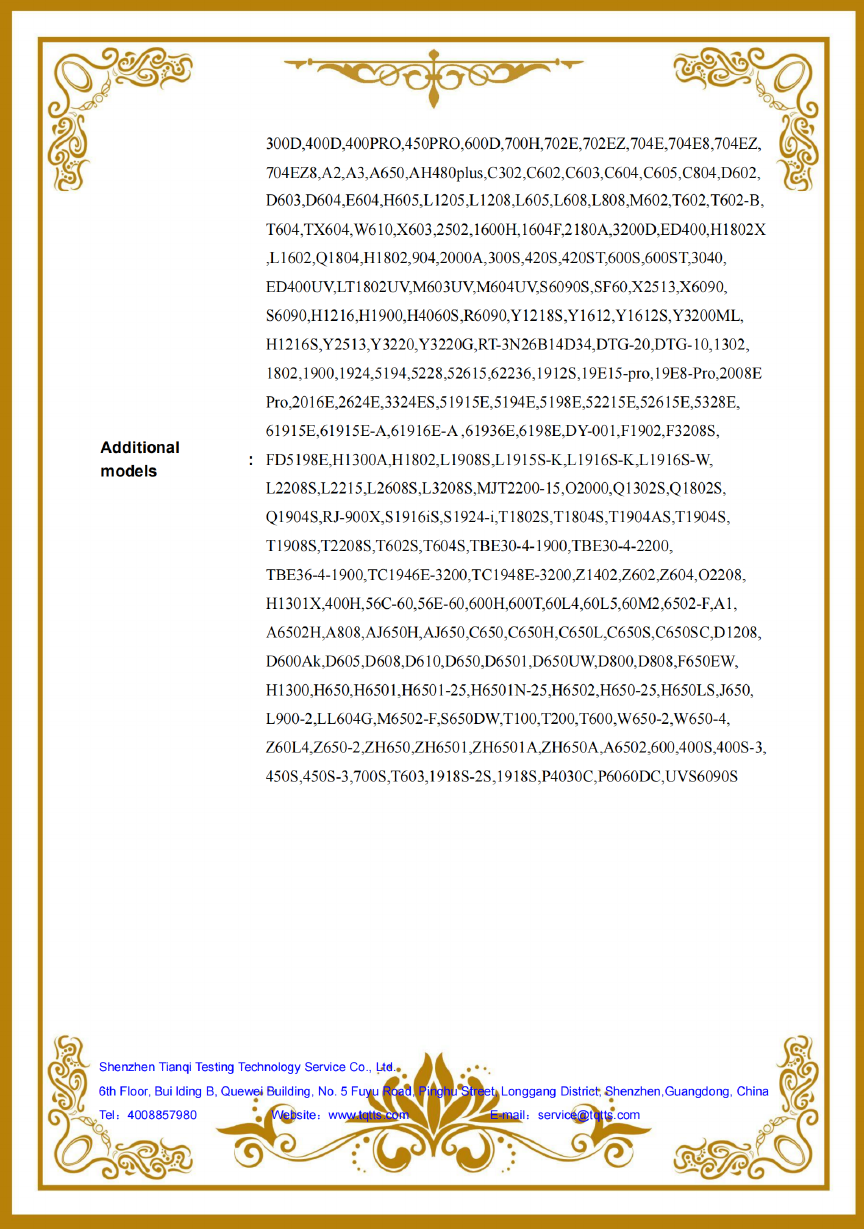
For buyers who need the full company and product overview, the public XINFLYING brochure is available here: XINFLYING company brochure PDF.
Conclusion
The documentation-coverage ranking is clear: XF-19E15-PRO first for CE EMC, LVD, MD and RoHS coverage; XF-19E8-PRO second for a dedicated MD record plus shared EMC, LVD and RoHS coverage; XF-O2000-4I32A1 third for CE LVD, MD and RoHS records; and XF-H1802X-2I32A1 fourth for CE MD and EMC standards. This order is a certificate-file shortlist. It is not a performance ranking and not a substitute for a full compliance review.
For an EU-bound sublimation printer purchase, the practical next step is to match the certificate scope to the target market before comparing production details. Ask for the exact certificate PDFs, check the certificate numbers and standards, confirm the model name and configuration, and keep the file with the purchase order. Buyers evaluating a dye sublimation printer, large format sublimation printer, commercial sublimation printer or wide format sublimation printer can use this shortlist to start the conversation, then select the model that fits their textile application, production volume and documentation requirements.
Have Questions or Need More Details?
Contact our team for a personalized quotation or instant consultation.
Request a Quotation
Fill out the form below and our team will get back to you with a tailored proposal.
WhatsApp Direct Chat
Prefer to chat in real-time? Message us on WhatsApp for instant assistance & quick answers.
- Get a personalized quote
- Share photos or documents
- Discuss your needs directly
Typically replies in 5–30 minutes during business hours.