
Compliance Trail: Meeting EU Standards for Imported Textile Machinery
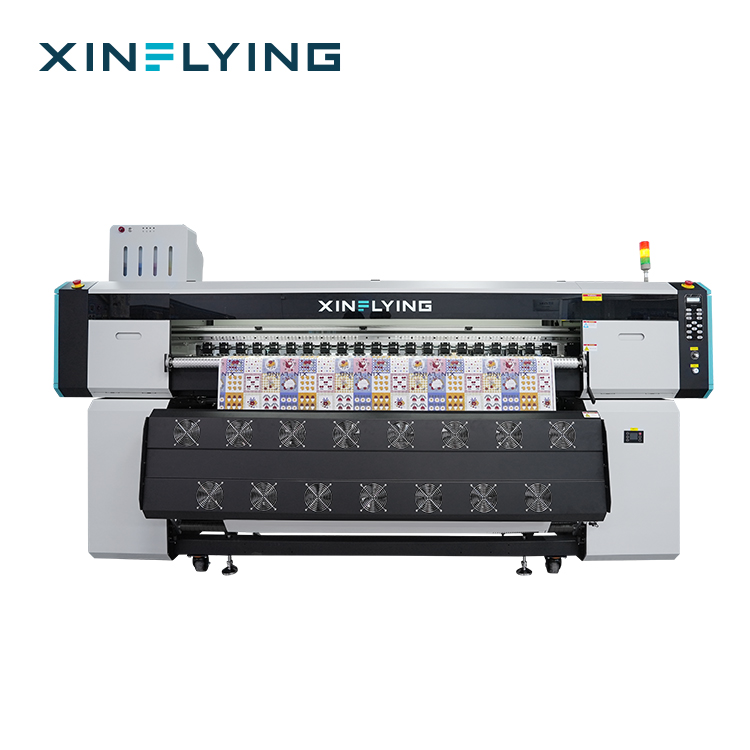
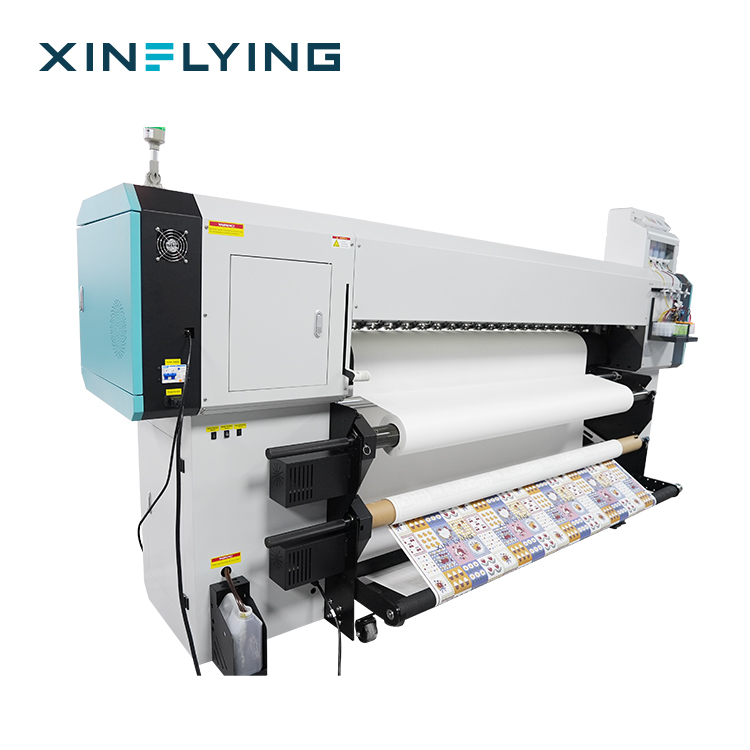
XINFLYING XF-O2000-4I32A1 — the 1950 mm roll-to-roll sublimation printer used as the worked example in this compliance trail.
A wide-format sublimation printer can clear customs and still fail a customer audit. The difference is rarely the machine; it is the paper trail behind it. For RoHS — Directive 2011/65/EU — the document that closes that gap is a model-specific certificate, not a logo printed on a brochure. The XINFLYING XF-O2000-4I32A1, a 1950 mm roll-to-roll sublimation printer, is named on the applicable-product list of RoHS Compliance Certificate M.2026.206.C142366, issued by UDEM for the EU market and valid until 2031-06-09.
Guangzhou Xin Flying Digital Technology Co., Ltd., trading as XINFLYING, is a digital printing equipment manufacturer founded in 2010 in Panyu, Guangzhou. The company builds DTF printers, UV DTF printers, UV flatbed printers, DTG printers and dye sublimation printers, employs more than 200 people, and exports around 80% of its production to North America, South America, Europe, Asia, the Middle East and Africa.
This article is written for importers, distributors and textile producers comparing suppliers at the research and evaluation stage. It explains how an EU compliance trail is assembled for a RoHS-relevant machine, where that trail typically breaks between the factory and the EU warehouse, and how to verify each document against the unit that actually arrives.
The Gap Between a CE Mark and a Compliant Import
A compliance trail is an unbroken documentary chain: directive, harmonised standard, conformity assessment, certificate, named model, and finally the physical machine in your warehouse. Each link answers a different question. The directive defines which rules apply. The standard defines how compliance was assessed. The certificate records the outcome. The model list ties the outcome to a product. The nameplate ties the product to your order.
In practice, the chain breaks in four predictable places:
- The certificate exists but does not name your model. Family-level statements are common in equipment sales and difficult to defend when a buyer or an authority asks which technical file applies to unit X.
- The scope is the wrong scope. A document about electromagnetic compatibility or electrical safety does not evidence substance restrictions. RoHS documentation must reference Directive 2011/65/EU explicitly.
- The validity window has lapsed. Certificates carry an expiry date. A buyer who files a PDF without reading that date inherits the problem.
- The tested configuration differs from the shipped configuration. Voltage, frequency and machine build must match the unit on the packing list — a point that matters in the EU, where supply is commonly 230 V / 50 Hz.
EU rules place responsibility for compliance on the economic operator that places equipment on the market, which for imported machinery is generally the importer. During market surveillance, that is the party expected to produce documentation on request. Requesting it from the manufacturer before shipment is far cheaper than reconstructing it afterwards.
RoHS applies to electrical and electronic equipment. Where a printer is supplied as a standalone machine, buyers generally treat it as in-scope equipment and ask for substance-restriction documentation rather than relying on a scope-exclusion argument. Requiring the document costs nothing; arguing an exclusion after delivery does not.
Why EU Buyers Now Ask for the Paperwork First
The commercial pressure behind this paperwork is straightforward. Grand View Research values the global dye sublimation printing market at USD 16.4 billion in 2025 and projects USD 39.0 billion by 2033, a CAGR of 11.5% between 2026 and 2033. Asia Pacific accounted for 36.5% of 2025 revenue, with China the largest single country market. Mordor Intelligence focuses more narrowly on equipment and values the dye sublimation printers segment at USD 1.88 billion in 2025, rising to USD 2.53 billion by 2030. Fortune Business Insights places the wider large format printer market at USD 10.57 billion in 2025, reaching USD 16.52 billion by 2034.
Those figures do not agree with each other, and the reason is scope. Market Research Future, for example, values the dye sublimation printing market at USD 42.95 billion for 2024 because its definition reaches further into consumables and services. Buyers comparing market studies should treat the definitions, not the headline numbers, as the useful information.
Competitive structure is more consistent. Data Insights Reports places Epson at 26.7% share of the digital textile dye sublimation printer market in 2024, followed by Mimaki at 18.6% and Roland DG at 15.5%. The practical consequence is expectation transfer: because the largest suppliers publish structured compliance documentation, importers increasingly apply the same documentation standard to every supplier on a shortlist, regardless of company size.
Two industry conventions shape what a compliant machine should look like. Roll-to-roll sublimation printers at 1.9 m width are the standard format for high-volume textile and soft signage work, a convention documented in FESPA market insights; the XF-O2000-4I32A1 sits slightly above it at 1950 mm, while the 1900mm sublimation printers in the same range match it directly. Separately, ISO 12647-8:2021 standardises the validation of print processes working directly from digital data — a colour and process standard that sits alongside, but does not replace, machinery and substance compliance.
The RoHS Trail in Five Layers: XF-O2000-4I32A1 as a Worked Example
RoHS compliance for an industrial sublimation printer is not a single document. It is five layers, each of which can be checked independently.
Layer 1 — Directive scope
The trail starts with the directive reference. For this machine it is RoHS Compliance under Directive 2011/65/EU, restricted to the EU market. A certificate that does not state this directive, or that states a different one, is answering a question you did not ask.
Layer 2 — Harmonised standard route
The certificate for this model references EN IEC 63000:2018 together with the EN IEC 62321 series. In plain terms, EN IEC 63000:2018 is the route used to compile the technical documentation needed to assess electrical and electronic equipment against hazardous-substance restrictions, while the EN IEC 62321 series provides the test methods used to determine restricted substances in that equipment. When the two appear together, both the assessment route and the measurement method are named — which is what makes the certificate auditable rather than merely reassuring.
Layer 3 — The certificate itself
RoHS Compliance Certificate M.2026.206.C142366 was issued by UDEM for the EU market, covering RoHS Compliance (Directive 2011/65/EU). It was issued in June 2026 and is valid until 2031-06-09. The same conformity is recorded in an attestation of conformity from UDEM International Certification Auditing Centre Industry and Trade Inc. Co. Four fields decide whether the document is usable: certificate number, issuing body, directive reference and expiry date.
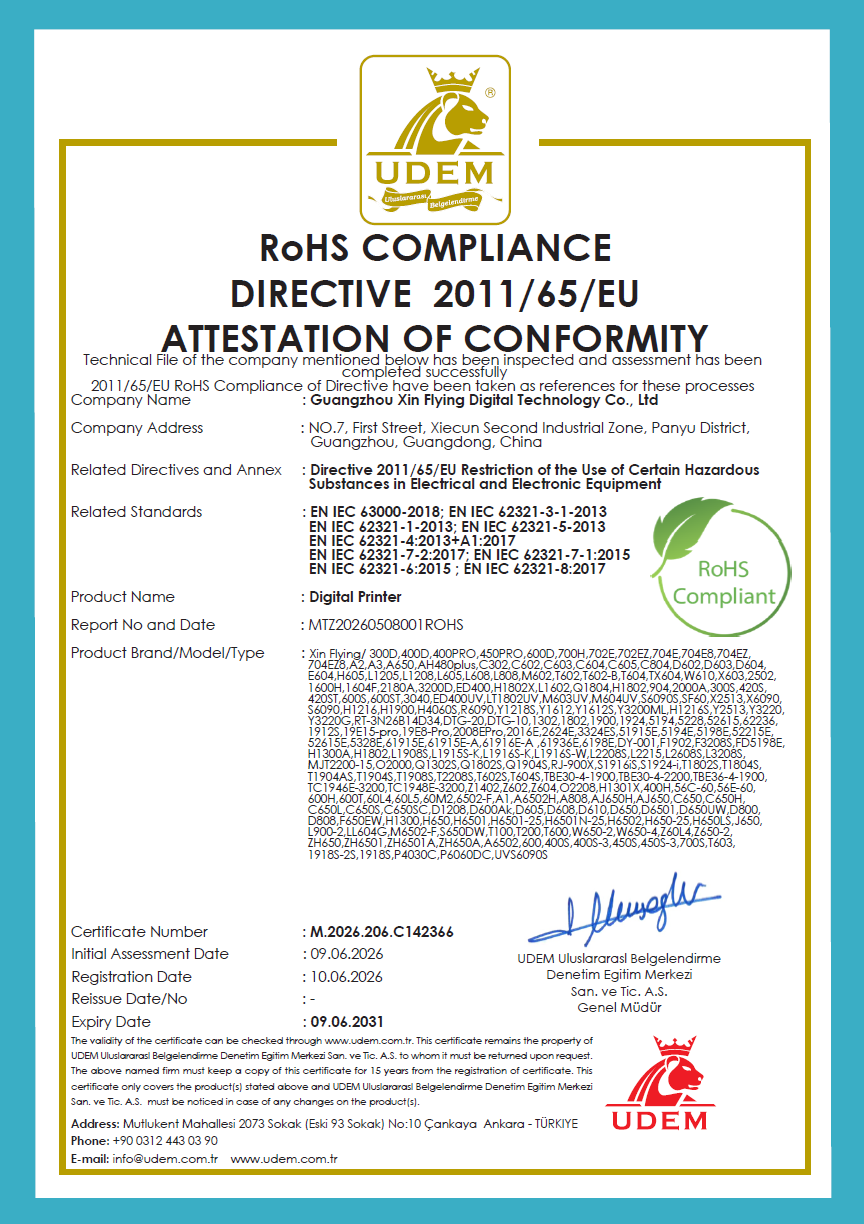
RoHS Compliance Certificate M.2026.206.C142366 — scope: RoHS Compliance (Directive 2011/65/EU); standards: EN IEC 63000:2018 and the EN IEC 62321 series; valid until 2031-06-09.
Layer 4 — Model coverage
A certificate matters only if your model is on it. The applicable-product list for M.2026.206.C142366 includes the sublimation models XF-O2000-4I32A1, XF-19E15-PRO, XF-19E8-PRO, XF-H1802X-2I32A1 and XF-H1301X-1I32A1, as well as XINFLYING DTF models including the XF-C604, XF-C602, XF-C605, XF-704E, XF-702E, XF-F606, XF-F808, XF-L608, XF-400D and XF-450PRO. For a distributor building a catalogue, model coverage is a commercial asset: one RoHS certificate can support a product range rather than a single SKU.
Layer 5 — Unit-level match
The final layer is the machine. The XF-O2000-4I32A1 uses four Epson i3200-A1 print heads in a CMYK plus CMYK plus CMYK plus CMYK configuration, with a 195 cm (1.95 m) print width and piezoelectric inkjet technology. Print speed is 180 m²/h at 2PASS and 92 m²/h at 4PASS. It runs on 220 V, 50/60 Hz with 8.5 kW rated power, uses sublimation ink supplied as a 220 ml cartridge plus a 3 L ink tank, and supports heat transfer paper rolls of 1000–1500 m. Machine dimensions are 3311 × 1278 × 1670 mm; packing dimensions are 3640 × 760 × 1740 mm; net weight is approximately 490 kg and gross weight approximately 675 kg.
Those parameters are not decorative detail. They are the fields an auditor compares against the nameplate, the commercial invoice and the packing list. A voltage or configuration mismatch between the tested unit and the delivered unit is the most common reason a valid certificate fails to protect an importer.
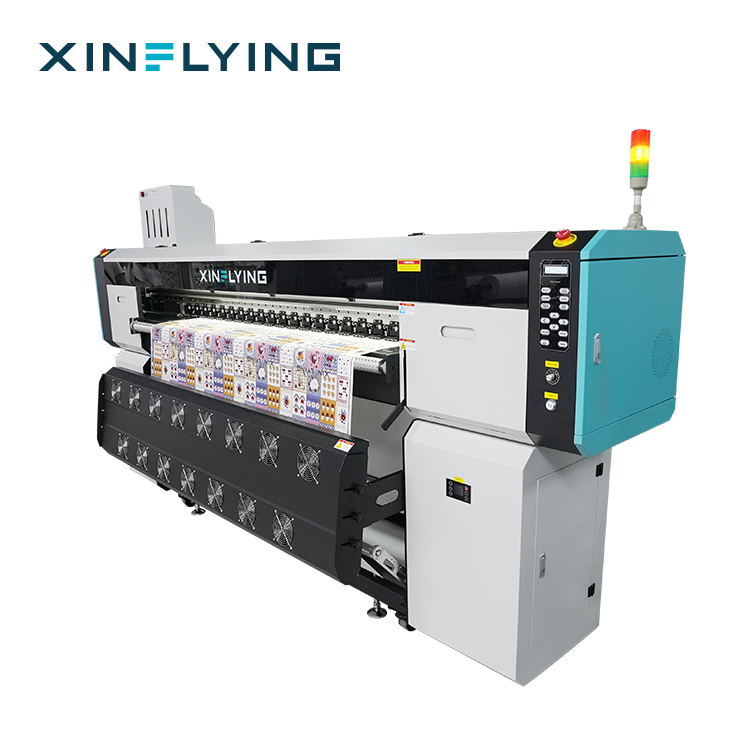
The XF-O2000-4I32A1 in the configuration described on the certificate: 195 cm print width, four Epson i3200-A1 print heads, 220 V / 50–60 Hz.
The documents around the RoHS certificate
RoHS rarely travels alone. The same machine appears on the applicable-product lists of the CE documents covering the other conformity routes: Machinery Directive conformity under certificate M.2026.206.C142365 issued by UDEM and assessed against EN ISO 12100:2010, EN 60204-1:2018/A1:2025 and EN ISO 12643-1:2023; combined Low Voltage Directive and EMC conformity under certificate M.2026.206.C142475, assessed against EN IEC 62368-1:2020/A11:2020, EN 55032:2015/A1:2020, EN 55035:2017, EN 61000-3-2:2014 and EN 61000-3-3:2013; CE EMC certificate TQT1550D270EC together with CE LVD certificate TQT1550D271EC from TQT, also known as Shenzhen Tianqi Testing Technology Service Co., Ltd.; and CE Certificate of Compliance BSTXD211021006201EC issued by BST Testing (Shenzhen) Co., Ltd.
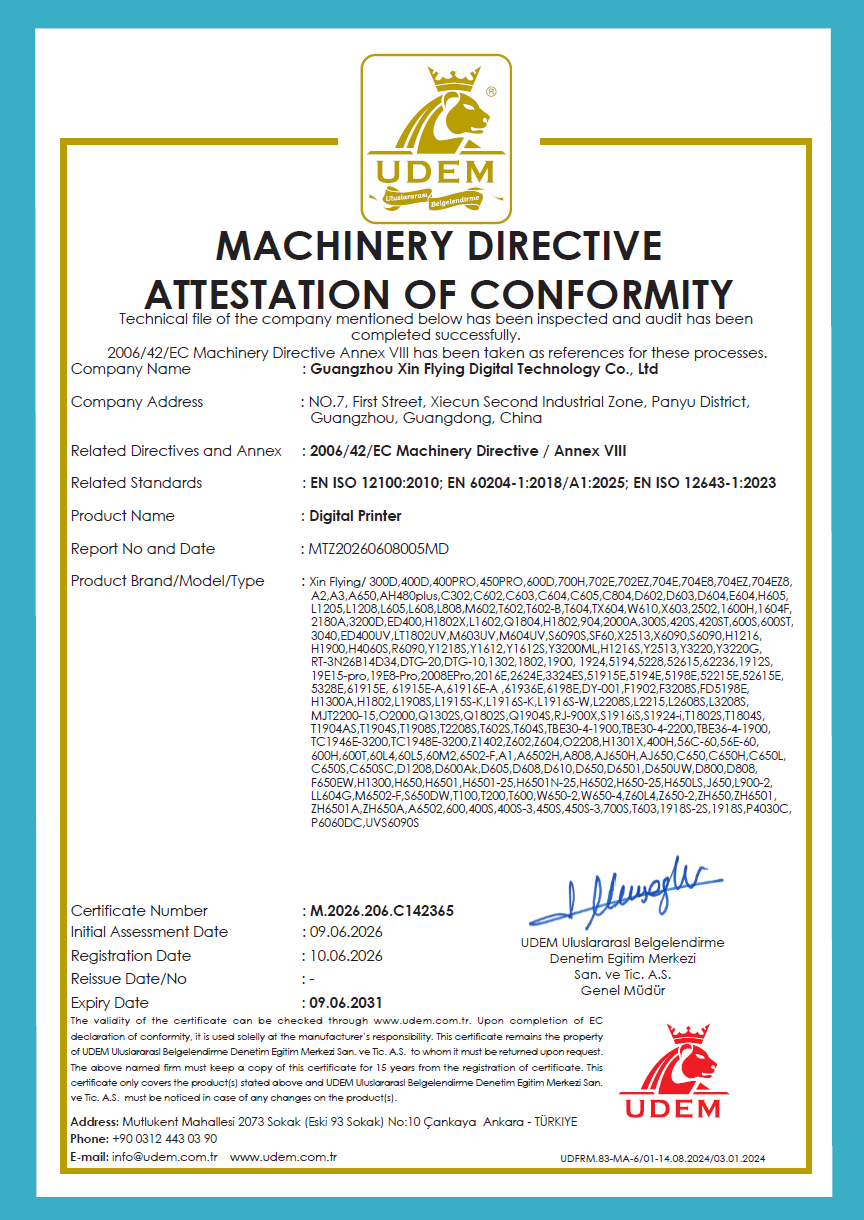
CE Machinery Directive Certificate of Conformity M.2026.206.C142365 — the safety route that runs alongside the RoHS certificate on the same machine.
Chemical compliance for consumables is a separate track. OEKO-TEX ECO PASSPORT certificate SH150194016, issued by TESTEX AG and valid globally through 2026-12-31, covers textile printing inks and printing pastes under EN ISO 17050-1. It does not evidence machine compliance, and the RoHS certificate does not evidence ink compliance. Keeping the two files separate prevents a buyer from presenting the wrong document at the wrong moment.
What the trail does not cover
- RoHS addresses hazardous substances in the machine itself. It says nothing about ink chemistry, the printed fabric, or the finished garment.
- RoHS is not market access on its own. Electrical safety, EMC and machinery safety documentation sit alongside it, and customs or buyers may ask for any of them.
- A certificate is tied to a design. A new configuration, a different power supply or a new model variant generally requires a fresh conformity assessment, not a re-use of the existing certificate.
- Coverage is by model, not by shipment. Matching a certificate to a serial number remains the importer's task.
A Six-Step Verification Workflow for Importers
Step 1 — Define the scope sentence. Before contacting suppliers, write one sentence describing what you are importing and where it will be placed on the market. For a 1950 mm commercial sublimation printer sold into the EU, that sentence determines which directives apply and which documents you will accept as proof.
Step 2 — Request the document set in one message. Ask for the certificate, its applicable-product list, the standard list, the issuing body and the validity dates in a single request. Suppliers with a genuine technical file can answer in one reply; a fragmented answer usually signals a fragmented file.
Step 3 — Match the model string exactly. Compare the certificate entry against the proforma invoice, the packing list and the machine nameplate. XF-O2000-4I32A1 should appear in full; an abbreviated or approximate reference is not the same thing.
Step 4 — Verify the assessment route. For RoHS, confirm that EN IEC 63000:2018 and the EN IEC 62321 series are named. This distinguishes a documented assessment from a supplier declaration.
Step 5 — Check the issuer and the dates. Certificate M.2026.206.C142366 was issued by UDEM and is valid until 2031-06-09. Record that expiry in your supplier file rather than leaving it inside a PDF folder.
Step 6 — File it at unit level. Store the certificate with serial numbers, configuration details (220 V, 50/60 Hz and the print-head count for each unit) and the date of receipt. Set a review reminder before the certificate expiry, and again before any mid-life machine modification.
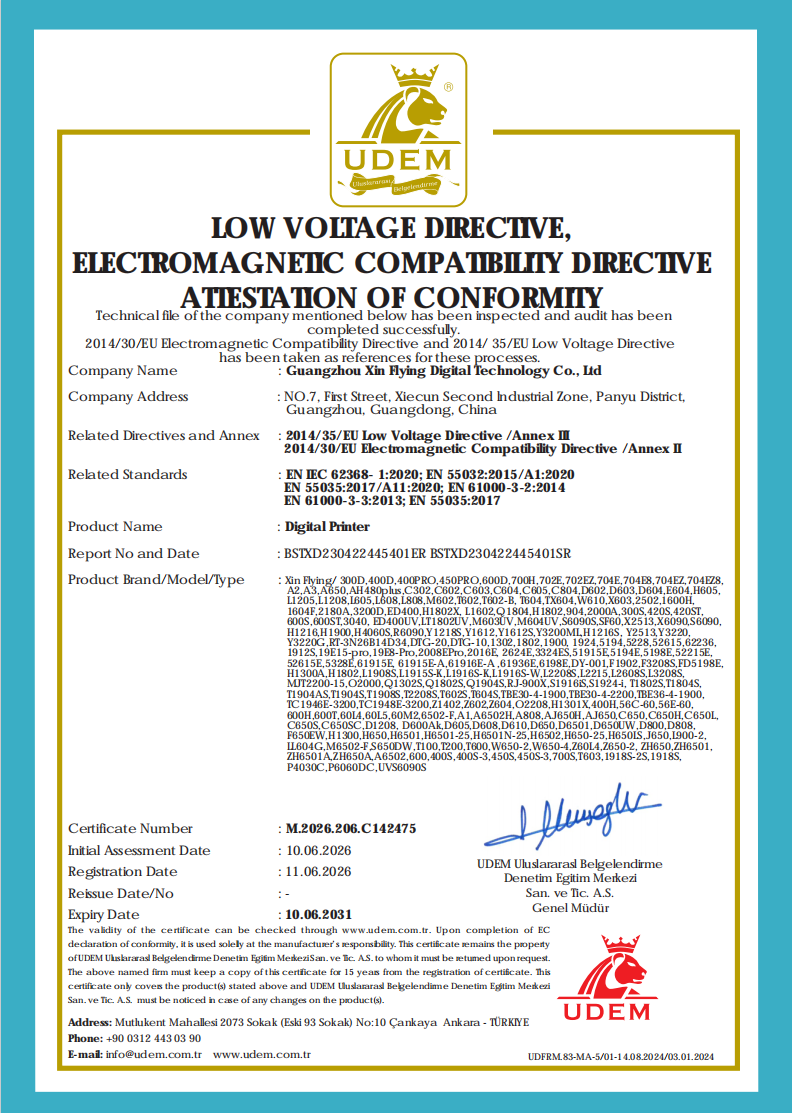
CE LVD and EMC Attestation of Conformity M.2026.206.C142475 — the electrical safety and EMC layer that supports the same unit-level file.
Where the Trail Is Tested in Practice
For an EU importer of soft signage and home textiles, a 1950 mm roll-to-roll sublimation printer replaces or supplements 1900mm units in a production environment held at 18–30 °C and 35–65% RH and often run around the clock. Matched equipment typically includes RIP software, a heat press calender, dye sublimation paper, dye sublimation ink and a laser cutting machine. When the machine changes, the certificate model list determines how much paperwork the change actually costs.
Teamwear producers face the same checks from the other direction. One sportswear manufacturer has run 15 units over four years producing football jerseys, basketball uniforms and customized sportswear on polyester fabric, while a sports uniform supplier has run 8 units over five years on customized kits, training uniforms and team apparel carrying names, numbers and graphics. In both cases the machine file supports the supplier's own promises to brand customers.
Home textile manufacturing adds a second audience. One home textile manufacturer has run 10 units over four years printing curtains, cushions and decorative fabrics, where downstream buyers frequently ask for documentation that the production equipment behind the fabric is compliant. Digital textile printing service providers follow the same logic: one provider has run 5 units over three years servicing sportswear brands, apparel factories and customized textile businesses, and presents that equipment file as part of its commercial package.
RoHS Coverage Across XINFLYING Sublimation Models
Every sublimation model below appears on the applicable-product list of RoHS Compliance Certificate M.2026.206.C142366, issued by UDEM for the EU market.
| Model | Print width | Print heads | Fastest print speed | Power supply | RoHS certificate coverage |
|---|---|---|---|---|---|
| XF-H1301X-1I32A1 | 130 cm (1.3 m) | 1 × Epson i3200-A1 | 4PASS 28 m²/h | 110/220 V, 18 A/9 A, 50–60 Hz | M.2026.206.C142366 |
| XF-H1802X-2I32A1 | 180 cm (1.8 m) | 2 × Epson i3200-A1 | 4PASS 52 m²/h | 110/220 V, 27.2 A/13.6 A, 50–60 Hz | M.2026.206.C142366 |
| XF-O2000-4I32A1 | 195 cm (1.95 m) | 4 × Epson i3200-A1 | 2PASS 180 m²/h | 220 V, 50/60 Hz | M.2026.206.C142366 |
| XF-19E8-PRO | 190 cm (75 in) | 8 × Epson i3200-A1 | 1PASS 306 m²/h | 210–230 V, 45 A | M.2026.206.C142366 |
| XF-19E15-PRO | 190 cm (75 in) | 15 × Epson i3200-A1 | 1PASS 524 m²/h | 210–230 V, 45 A | M.2026.206.C142366 |
Rated power rises with head count, from 2 kW on the XF-H1301X-1I32A1 and 3.5 kW on the XF-H1802X-2I32A1 to 8.5 kW on the XF-O2000-4I32A1, 10.2 kW on the XF-19E8-PRO and 14.5 kW on the XF-19E15-PRO. The 1900mm models are the 1.9 m format widely used for high-volume textile output; the 195 cm XF-O2000-4I32A1 trades some top speed for a wider web and a lower power envelope.
FAQ: RoHS and EU Import for Wide-Format Sublimation Printers
Does RoHS Directive 2011/65/EU apply to an imported wide-format sublimation printer, and what document proves compliance?
RoHS restricts hazardous substances in electrical and electronic equipment placed on the EU market, and a standalone industrial printer is normally assessed as in-scope equipment rather than assumed to be excluded. The evidence you need is a certificate that names both the directive and your model. For the XF-O2000-4I32A1 that document is RoHS Compliance Certificate M.2026.206.C142366, issued by UDEM for the EU market, covering RoHS Compliance (Directive 2011/65/EU) against EN IEC 63000:2018 and the EN IEC 62321 series, valid until 2031-06-09. A supplier declaration without a certificate number and a model list does not provide the same level of evidence.
Which XINFLYING sublimation printers are covered by certificate M.2026.206.C142366, and what production capability does that coverage represent?
The applicable-product list includes the sublimation models XF-O2000-4I32A1, XF-19E15-PRO, XF-19E8-PRO, XF-H1802X-2I32A1 and XF-H1301X-1I32A1, together with DTF models such as the XF-C604, XF-C605, XF-F606, XF-F808, XF-L608, XF-704E, XF-702E, XF-C602, XF-400D and XF-450PRO. Across the covered sublimation range, print widths run from 130 cm (1.3 m) to 195 cm (1.95 m) and print-head configurations run from one to fifteen Epson i3200-A1 heads. The XF-O2000-4I32A1 within that range prints at 180 m²/h at 2PASS with a 195 cm width and supports heat transfer paper rolls of 1000–1500 m.
How does compliance documentation affect the cost of importing a sublimation printer?
Documentation is not a line item in the way a print head is, but it changes cost in three places: the time needed to review a supplier file before ordering, the risk of paying for re-assessment if the delivered configuration differs from the tested one, and the cost of delay if a shipment is held while documents are clarified. XINFLYING supplies from a minimum order quantity of one unit, offers OEM and ODM customization, and quotes a lead time of 5–40 days, so buyers who need certification to match their own model and configuration should confirm that match before the order is placed rather than after production.
Can buyers validate compliance documentation and printed samples before committing to a production order?
They can, and for evaluation-stage buyers it is the least expensive risk control available. Request the certificate and its model-list page for the exact model you intend to buy, confirm the configuration you will receive, and treat pre-shipment testing as part of the order terms — XINFLYING applies pre-shipment testing as standard quality control. Buyers who want a physical and documentary reference before scaling can request samples, a quotation or the full document pack through info@xin-flying.com or the company website at www.xin-flying.com.
What is the lead time for a compliant unit, and how long does the certification remain valid?
XINFLYING quotes a lead time of 5–40 days depending on model and configuration, with OEM and ODM customization available where branding, machine appearance, colour, logo or packaging changes are required. Certification validity runs longer than production: RoHS Compliance Certificate M.2026.206.C142366 remains valid until 2031-06-09, and the associated CE Machinery Directive certificate M.2026.206.C142365 carries the same expiry date. Because those dates relate to the product as assessed, any later change to the machine build should trigger a new assessment rather than reliance on the remaining validity. For a quotation, a model-coverage confirmation or the complete document pack, contact info@xin-flying.com.
Conclusion: The Trail Is Built Before the Container Is Loaded
Meeting EU standards for imported textile machinery is not a single certificate exercise. It is a chain of five layers — directive, harmonised standard, certificate, model coverage and unit-level match — supported by the electrical safety, EMC and machinery safety documents that cover the same machine. The XF-O2000-4I32A1 demonstrates how that chain is documented in practice: RoHS Compliance Certificate M.2026.206.C142366 covering Directive 2011/65/EU to EN IEC 63000:2018 and the EN IEC 62321 series, valid until 2031-06-09, issued by UDEM for the EU market, with the machine itself configured at 220 V, 50/60 Hz and a 195 cm print width.
XINFLYING was founded in 2010, employs more than 200 people with a 20-engineer R&D team, produces over 20,000 units annually from a monthly capacity above 1,600 units, and supports installations with more than 50 engineers providing 24/7 online technical support. For importers, the practical rule is simple: verify the model string, the standard route, the issuing body, the expiry date and the delivered configuration before the order ships — because after the container is loaded, every missing link becomes your problem.
Next step: request the RoHS certificate pack, the model-coverage confirmation and a quotation for the XF-O2000-4I32A1 or another covered sublimation model. Sample requests and document verification are handled directly by the export team.
Email: info@xin-flying.com | Tel / WhatsApp: +86 188-1322-1357 | Website: www.xin-flying.com
Address: No.7, Xiecun 2nd Industrial Zone, Panyu, Guangzhou, Guangdong | Download the XINFLYING company brochure (PDF): XINFLYING Company Profile
Have Questions or Need More Details?
Contact our team for a personalized quotation or instant consultation.
Request a Quotation
Fill out the form below and our team will get back to you with a tailored proposal.
WhatsApp Direct Chat
Prefer to chat in real-time? Message us on WhatsApp for instant assistance & quick answers.
- Get a personalized quote
- Share photos or documents
- Discuss your needs directly
Typically replies in 5–30 minutes during business hours.