
Checking UDEM Certificates: How to Verify Your Sublimation Printer Supplier
Checking UDEM Certificates: How to Verify Your Sublimation Printer Supplier
Verifying a UDEM-issued MD certificate for a sublimation printer is a documentation exercise, not a trust exercise. Four data points have to reconcile: the certificate number, the machine configuration it covers, the directive scope it was issued against, and the legal manufacturer named on the document. Xinflying (Guangzhou Xin Flying Digital Technology Co., Ltd.) documents its machinery-directive evidence under certificate references M.2026.206.C142365 and M.2026.206.C142385, and those two references are the anchors a buyer should quote when confirming scope with the issuing body or the supplier.
This guide is written for importers, distributors and textile producers who have already shortlisted a supplier and are now moving into execution: configurations are being locked, contracts are being drafted, and the documentation pack has to hold up at customs, at commissioning, and on every reorder that follows.
Why Certificate Verification Fails in Practice
Most buyers do not fail to ask for certificates. They fail to reconcile them. The evidence usually arrives as a forwarded PDF — scanned, cropped, sometimes re-saved at low resolution — and it is accepted because it carries an official-looking number. Five patterns repeat across first-time and repeat purchases:
- A number that is quoted but never resolved. The reference is printed on the quotation, but nobody contacts the issuing body to confirm that the record exists, is current, and says what the supplier says it says.
- Family scope mistaken for unit scope. Certificates are commonly issued for a construction or model family. A machine that changes printhead count, print width or electrical configuration may sit outside the tested construction.
- Model naming drift. Commercial model names and certificate designations do not always match character for character. The mismatch is usually clerical — and occasionally not.
- Legal manufacturer mismatch. The certificate names a legal entity. If that entity differs from the entity on your purchase contract and commercial invoice, warranty traceability and customs documentation become harder to defend.
- Superseded revisions. Directives and standards are revised over time. A certificate issued against an older revision may not satisfy a buyer, an insurer or an importer's compliance team today.
For a single machine, each item is an inconvenience. For a distributor planning scheduled reorders from the same supplier, the same gap repeats on every shipment. That is the practical difference between a purchase decision and a long-term supply decision.
Industry Background: Why Documentation Now Decides Orders
The commercial context explains the pressure. Grand View Research values the global dye sublimation printing market at USD 16.4 billion in 2025, projected to reach USD 39.0 billion by 2033, with a projected CAGR of 11.5% from 2026 to 2033. Asia Pacific held a 36.5% revenue share in 2025, led by China as the largest country market. Within that wider figure, Mordor Intelligence sizes the dye sublimation printers segment at USD 1.88 billion in 2025, expected to reach USD 2.53 billion by 2030, while Fortune Business Insights puts the broader large format printer market at USD 10.57 billion in 2025, rising to USD 16.52 billion by 2034.
Two structural effects follow. First, more equipment crosses borders, which means more units are exposed to import documentation checks. Second, the standard configuration has consolidated: FESPA describes roll-to-roll sublimation printers at 1.9m (1900mm) widths as standard for high-volume textile and soft signage work — a class of machine expensive enough to justify a proper conformity review before purchase.
Regulatory expectations are layered rather than single. European buyers verify CE compliance covering electrical safety and electromagnetic compatibility; US buyers ask about FCC documentation and, depending on configuration and sales channel, UL; environmental documentation such as RoHS is requested for electrical and electronic components. Machinery-directive evidence issued by a certification body sits on top of that stack, because it is third-party verified rather than self-declared by the manufacturer.
On the output side, ISO 12647-8:2021 provides the standard for validation print processes working directly from digital data — relevant whenever colour accuracy has to be defended to an end customer rather than merely achieved once.
What Xinflying Documents, and What Each Document Proves
Xinflying is a Guangzhou-based digital printing equipment manufacturer founded in 2010. The company operates a 37,440 m² facility with more than 200 employees, an annual output of over 20,000 units, and a 20-engineer R&D team. The production range covers DTF printers, dye sublimation printers, DTG printers, UV DTF printers, UV flatbed printers, printing consumables and complete digital printing solutions.
Two company-level facts matter when a certificate check is part of a long-term supply decision. Export business accounts for 80% of total sales, with major markets in North America, South America, Europe, Asia, the Middle East and Africa. The company also maintains local warehouses and technical support in key markets. Both facts describe continuity rather than product performance: a supplier that already ships 80% of its output across borders has established processes for the documentation that has to accompany those shipments.
The two MD certificate references
Xinflying documents its machinery-directive evidence under certificate numbers M.2026.206.C142365 and M.2026.206.C142385. Both use the same reference structure — an M-prefix, a year segment, a serial segment and a unique C-number — which makes them straightforward to quote back to the issuing body during verification.
Treat these two references as a starting point rather than a conclusion. They tell you which certificates exist and where to look. They do not, on their own, tell you which of the machines on your order are covered. That question is answered by the scope entry attached to each certificate, and it is the step most buyers skip.
Matching a certificate to the machine you actually ordered
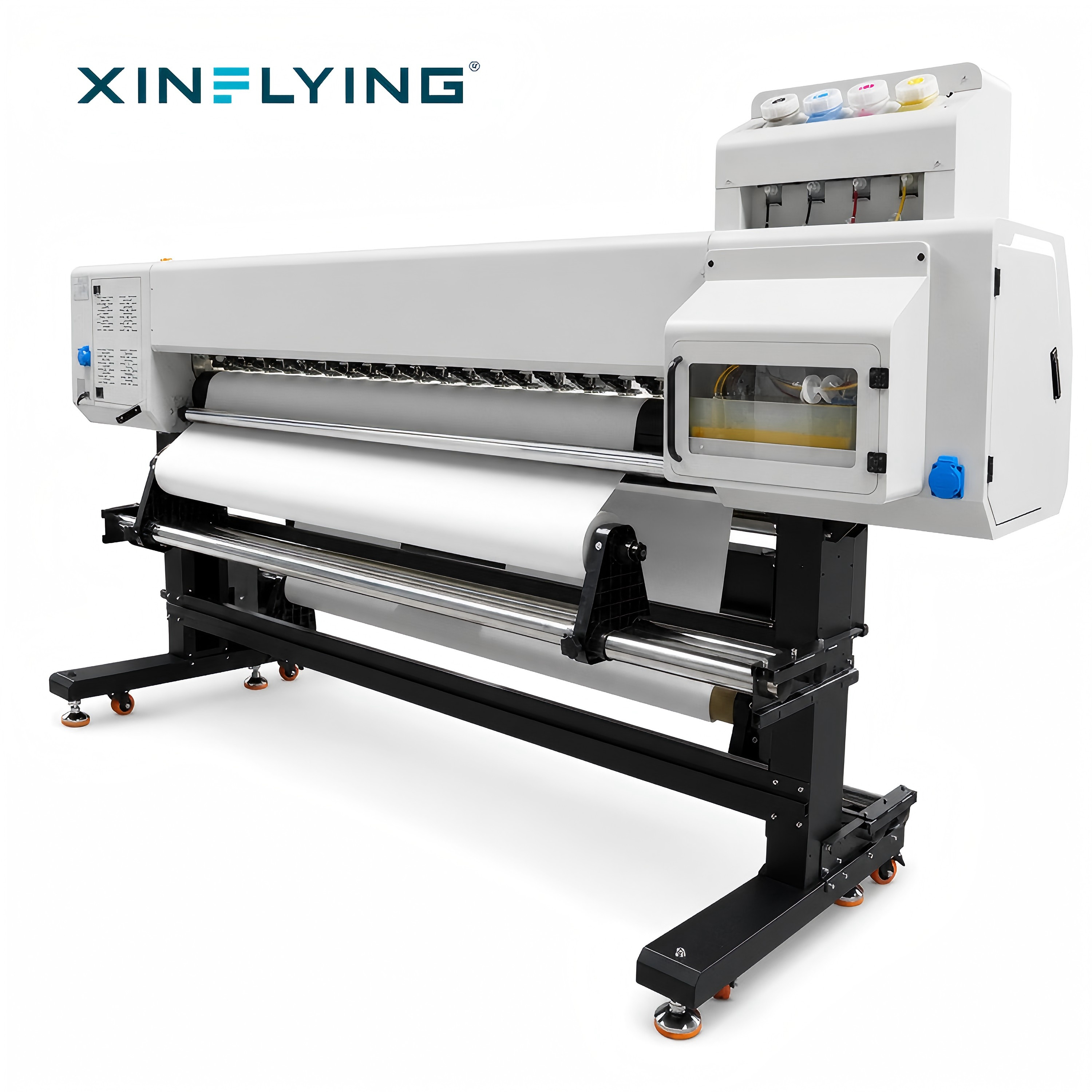
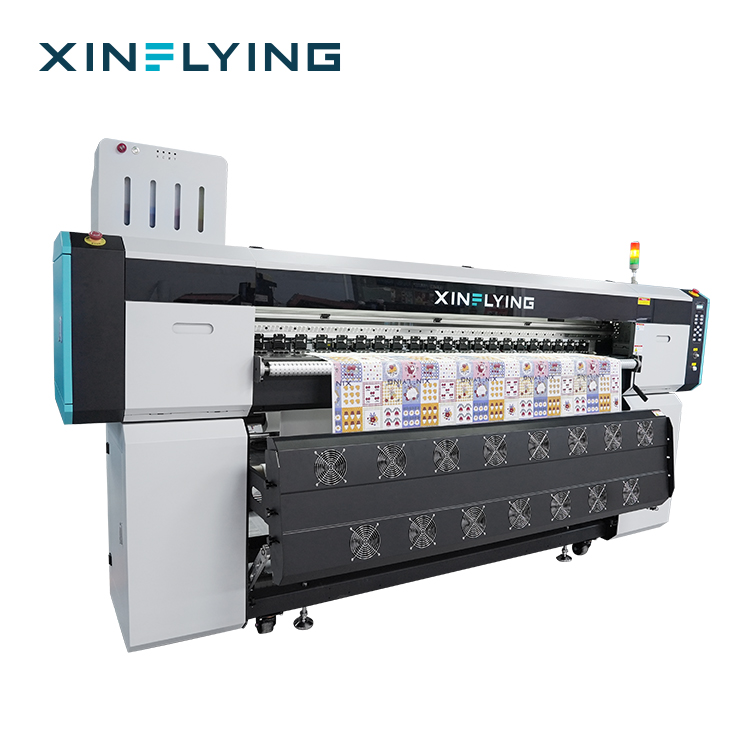
Certificate scope is configuration-specific, and Xinflying's sublimation range spans five published configurations that differ in printhead count, print width and electrical load. A scope that fits one configuration does not automatically fit another, which is why the model designation — not the brand name — has to be the matching key.
| Model | Printhead configuration | Print width | Fastest print speed | Power supply |
|---|---|---|---|---|
| XF-H1301X-1I32A1 | 1 × Epson i3200-A1 | 130 cm (1.3 m) | 4PASS 28 m²/h | 110/220V, 18A/9A, 50–60Hz |
| XF-H1802X-2I32A1 | 2 × Epson i3200-A1 | 180 cm (1.8 m) | 4PASS 52 m²/h | 110/220V, 27.2A/13.6A, 50–60Hz |
| XF-O2000-4I32A1 | 4 × Epson i3200-A1 | 195 cm (1.95 m) | 2PASS 180 m²/h (4PASS 92 m²/h) | 220V, 50/60Hz |
| XF-19E8-PRO | 8 × Epson i3200-A1 | 190 cm (75 inch), 3200 dpi | 1PASS 306 m²/h (2PASS 153 m²/h) | 210–230V, 45A |
| XF-19E15-PRO | 15 × Epson i3200-A1 | 190 cm (75 inch), 3200 dpi | 1PASS 524 m²/h (2PASS 254 m²/h) | 210–230V, 45A |
Published specifications for Xinflying sublimation printers. Configuration differences of this kind are exactly what certificate scope statements refer to.
Six-Step Verification Workflow
Step 1 — Resolve the number at the source
Take the reference the supplier gave you — M.2026.206.C142365 or M.2026.206.C142385 — and ask the issuing body for the certificate record: issue date, current status, scope and legal manufacturer. A PDF held by a salesperson is a copy; the register entry is the evidence. If a supplier cannot tell you which body issued the certificate, that is itself an answer.
Step 2 — Reconcile model and configuration
Compare the model designation and technical construction on the certificate against your proforma invoice line by line: printhead count, print width, electrical configuration. If your quotation is for a 1900mm eight-printhead machine and the certificate scope describes a different construction, request the certificate that covers the ordered configuration rather than accepting a series-level reference.
Step 3 — Check directive and standard scope
Confirm what the certificate was issued against, and whether that matches your destination market. European imports need CE compliance covering electrical safety and electromagnetic compatibility; US imports typically require FCC documentation and, depending on configuration and channel, UL; environmental documentation such as RoHS applies to electrical and electronic components. One certificate rarely covers all of these, so treat them as separate verification lines.
Step 4 — Confirm the legal manufacturer entity
The entity named on the certificate should be the entity that appears on your purchase contract and your commercial invoice. For Xinflying equipment, that entity is Guangzhou Xin Flying Digital Technology Co., Ltd. If you are buying under a private-label or OEM arrangement, obtain written confirmation of which entity is the legal manufacturer for your specific order. This is the point where documentation checks most often break down.
Step 5 — Re-verify at every reorder
A certificate is tied to a configuration and an issue period, not to a brand. When you place a second or third order months later, re-check the same three items: number, scope, legal manufacturer. Distributors who file a certificate once and reuse it as blanket proof for future shipments are the ones who discover the gap at the port.
Step 6 — Close the loop at pre-shipment test
Documentation and physical acceptance answer different questions. Xinflying conducts product acceptance through pre-shipment test procedures before delivery. Use that acceptance step to confirm that the machine matches the configuration the certificate was issued for. A certificate that covers the right construction, applied to a machine built differently, is a failure no paperwork review can catch.
Four Scenarios Where This Check Changes the Outcome
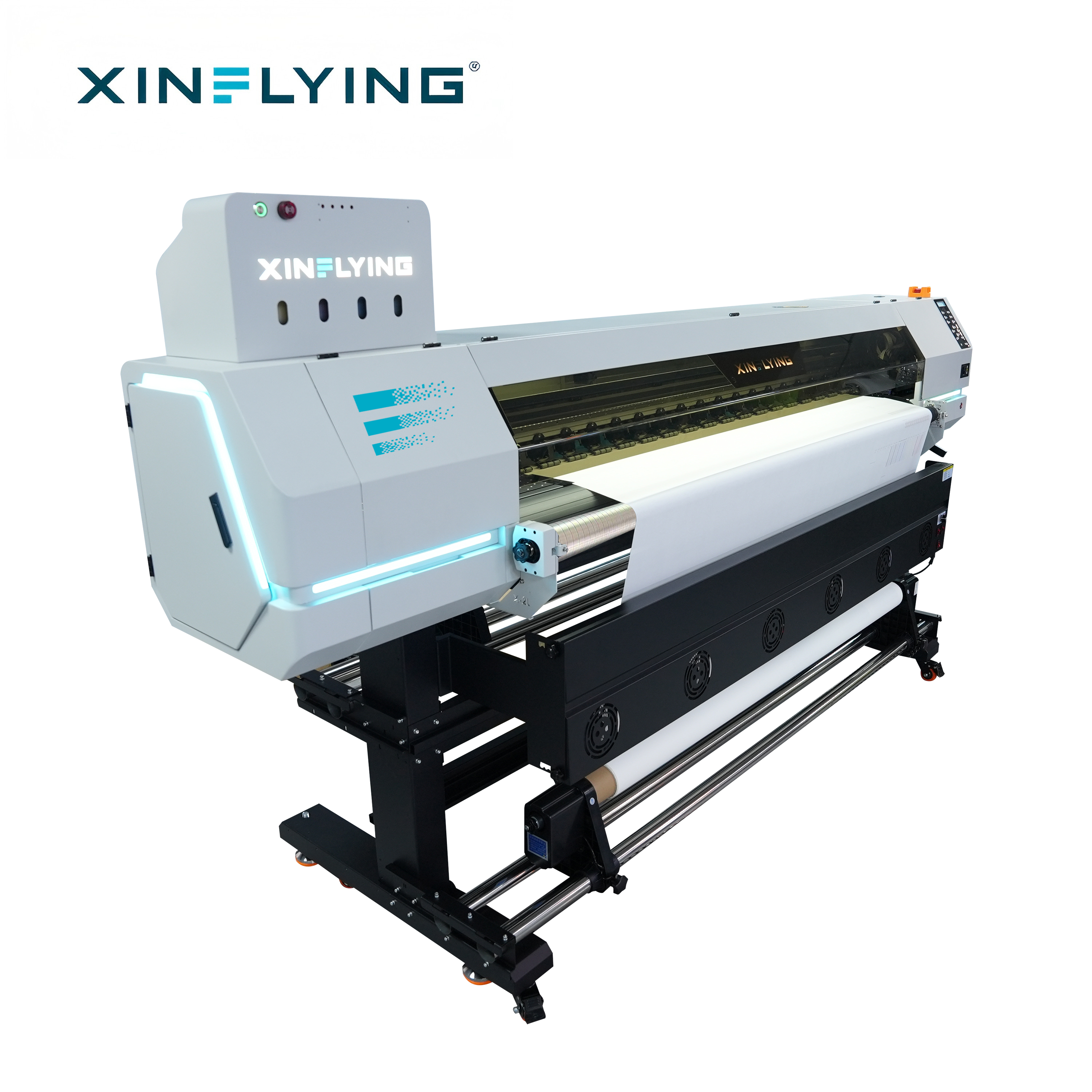
Scenario 1 — European distributor importing 1900mm roll-to-roll machines
A distributor placing a repeat order of 1900mm industrial units needs per-model machinery-directive evidence, kept on file for customs and for its own resale documentation. Because Xinflying's export business already accounts for 80% of total sales across Europe and other regions, the documentation chain and the logistics chain are managed by the same supplier — which shortens the loop when a scope question has to be resolved before shipping.
Scenario 2 — Textile producer upgrading print width
A producer moving up from an 1800mm two-printhead configuration to a 1950mm four-printhead machine is buying a different construction. The certificate evidence held for the smaller machine does not transfer automatically. Verify the reference that covers the new configuration before the deposit, not after the container arrives.
Scenario 3 — Private-label and OEM buyers
When equipment is sold under the buyer's own brand, the legal manufacturer question becomes the critical one. Confirm in writing which entity appears as manufacturer on the certificate, and how that aligns with the contract, customs declaration and warranty terms. Entity mismatch is a paperwork problem that later becomes a commercial problem.
Scenario 4 — Multi-year supply agreements with scheduled deliveries
Where the relationship is expected to run for years, verification becomes recurring rather than one-off. Keep a simple register: certificate number, scope, model list, issue date, and the date the record was last confirmed with the issuing body. The company-side facts that support this — local warehouses and technical support in key markets — are the ones to reassess at each contract renewal.
Certificate Claims Versus Verification Evidence
The table below maps the claims buyers most often hear against the evidence that actually settles each one. It is a checklist for the documentation request, not a substitute for the register check.
| Claim made by a supplier | Evidence that settles it | What to confirm |
|---|---|---|
| Machinery safety conformity | MD certificate issued by a certification body, referenced as M.2026.206.C142365 or M.2026.206.C142385 for Xinflying equipment | That the reference resolves at the issuing body and that the scope matches your ordered configuration |
| EU market readiness | CE documentation covering electrical safety and electromagnetic compatibility, with technical files matching the printer model | That the certified model equals the model on your invoice |
| US market readiness | FCC electromagnetic compatibility documentation; UL where required by configuration and sales channel | That the test reports correspond to the supplied unit |
| Environmental compliance | RoHS documentation for electrical and electronic components | That the declaration applies to the actual equipment model |
| Colour process control | ISO 12647-8:2021 as the standard for validation print processes working directly from digital data | That workflow and calibration records align with the standard |
| Long-term supply capability | Operational facts: 37,440 m² manufacturing facility, 20,000+ units annual output, export at 80% of sales, local warehouses and technical support in key markets | That service coverage exists in your own market, not only in the supplier's home region |
Frequently Asked Questions
How do I verify a UDEM-issued MD certificate for a sublimation printer?
Request the certificate number from the supplier — for Xinflying sublimation printers the documented references are M.2026.206.C142365 and M.2026.206.C142385 — then confirm the record with the issuing body. Four fields decide whether the certificate is usable for your order: the certificate number, the issue date and current status, the model and configuration it covers, and the legal manufacturer named on it. A PDF is only a copy; the register entry is the evidence.
What should a long-term sublimation printer supplier be able to document beyond certificates?
Certificates answer conformity questions; continuity questions need different evidence. For Xinflying, that evidence is manufacturing scale (founded in 2010, a 37,440 m² facility, more than 200 employees, over 20,000 units of annual output, and a 20-engineer R&D team), export capability (80% of total sales exported across North America, South America, Europe, Asia, the Middle East and Africa), after-sales infrastructure (local warehouses and technical support in key markets), and product acceptance handled through pre-shipment test procedures before delivery. A supplier that documents conformity but not continuity is a purchase, not a partnership.
What commercial terms should be confirmed when setting up long-term supply?
For Xinflying equipment, standard terms are a minimum order quantity of 1 unit, delivery under EXW, FOB, CIF or DDP depending on the buyer's import structure, payment by T/T, Western Union or PayPal, and acceptance through pre-shipment testing. Confirm each term against your own customs and financing setup, and make sure the configuration named in the commercial documents matches the configuration named in the certificate scope. No pricing is implied by these terms.
Can pre-shipment testing replace certificate verification?
No. Pre-shipment testing confirms that the machine you receive matches the machine you ordered. Certificate verification confirms that conformity evidence exists and covers the configuration being shipped. They check different risks, and a strong result on one does not compensate for a gap in the other.
What keeps a long-term sublimation printer supply relationship stable after delivery?
Three things: service coverage in your own market, documented support for installation, training, maintenance and spare parts availability, and documentation that stays consistent across reorders. Xinflying's local warehouses and technical support in key markets are the operational side of that; the certificate register you maintain is the documentation side. If you want to open the conversation with a specific request, download the company brochure below or contact the team for a quotation and the certificate scope covering your target configuration.
Request the documents, then the machine
Ask for the certificate scope, the model list and the pre-shipment test procedure together with your quotation. Download the Xinflying company brochure for the full product and service overview, or send your target configuration and destination market to info@xin-flying.com.
Download brochure: Xinflying Company Brochure (PDF)
Website: www.xin-flying.com | Blog: blog.xin-flying.com
Tel / WhatsApp: +86 188-1322-1357
Conclusion: Verification Is a Recurring Habit, Not a One-Time Formality
Certificate numbers M.2026.206.C142365 and M.2026.206.C142385 are useful precisely because they are specific: they give a buyer something to resolve, a scope to read, and a manufacturer entity to match against the invoice. That is what turns a supplied document into supply assurance. The sequence does not change with order size — resolve the number, match the configuration, check the directive scope, confirm the legal manufacturer, repeat at every reorder, and close the loop at pre-shipment test.
In a market where dye sublimation printing is projected to grow at 11.5% annually from 2026 to 2033, and where 1900mm roll-to-roll widths are the standard for high-volume textile work, the suppliers worth keeping are the ones whose documentation survives contact with the issuing body. Verify first; the relationship is easier to build afterwards.
Have Questions or Need More Details?
Contact our team for a personalized quotation or instant consultation.
Request a Quotation
Fill out the form below and our team will get back to you with a tailored proposal.
WhatsApp Direct Chat
Prefer to chat in real-time? Message us on WhatsApp for instant assistance & quick answers.
- Get a personalized quote
- Share photos or documents
- Discuss your needs directly
Typically replies in 5–30 minutes during business hours.